Your basket is currently empty!
Tag: Vijay Mallya
-
Pascal Wehrlein to test with Sahara Force India in Barcelona
Silverstone, 18 Feb 2015: Sahara Force India is pleased to announce that Pascal Wehrlein will drive for the team at the upcoming testing session in Barcelona, Spain beginning on 19 February. The 20-year-old German, who is the official reserve driver of the MERCEDES AMG PETRONAS Formula One Team and a works Mercedes AMG DTM driver, will spend two days behind the wheel of the team’s 2014 car, the VJM07.Sahara Force India’s testing programme will focus primarily on evaluation of the 2015 Pirelli tyres. The test will also provide the opportunity for Pascal to continue his Formula One learning and build on the strong performance he showed with MERCEDES AMG PETRONAS at the season-ending test in Abu Dhabi last year.The test in Barcelona marks the beginning of Pascal’s association with Sahara Force Indiawith the Mercedes-Benz junior driver also scheduled to participate in two in-season tests.Pascal will drive the VJM07 on Thursday and Saturday. Sergio Perez will drive on Friday and Nico Hulkenberg on Sunday. Given the team’s current build schedule, the VJM08 is now expected to make its debut at the second Barcelona test scheduled to begin on 26 February.Pascal Wehrlein: “I am very happy that Sahara Force India has offered me the opportunity to drive their car for two days at the official test in Barcelona and that Mercedes-Benz has supported me to make this happen. As a young driver, any time youcan spend in the car is extremely important and you can learn a lot. I know the simulatoralready, but I don´t have much experience on the track. My first goal in Spain will be to do a great job together with the team, to learn as much as possible and to give good feedback to the engineers. I have already driven the world champion Mercedes-Benz F1 W05 Hybrid and the comparison with Sahara Force India will be very exciting for me: the way the team works, how they improve the car and handle problems – all this will help meto gain experience and to reach the next level in my development. Everybody knows that lap times only play a secondary role when you’re testing. But of course I want to be as competitive as possible. Sahara Force India performed very strongly last season and Ihope I will be able to make a small contribution to push the team forward and be ready for the opening race in Melbourne.”Dr Vijay Mallya, Team Principal and Managing Director: “I’m pleased to give Pascal a chance to work with us in Barcelona. He’s an exciting young talent who has already proved he has what it takes to be successful at the highest level in motorsport. As a reserve driver for Mercedes-Benz, he’s clearly destined for a career in Formula One and I’m sure the test will be a positive experience on both sides. Being able to call upon Pascal for testing duties is also a clear demonstration of our strong working relationship with our engine partner, Mercedes-Benz, and I thank them for their collaboration.”eom/Sahara Force India Press Release
File photo of Sahara Force India team interview area in Sepang, KL, 2012 -
Inter begins partnership with Sahara Force India
23 Jan 2015: Sahara Force India is delighted to announce the launch of a new partnership with leading insurance broker Inter. The multi-year deal will see Sahara Force India display Inter’s logos on the front wing of the new VJM08, on the drivers’ suits and on the team gear.
Inter is major player in the insurance market in Mexico and Latin-America with over 35 years of experience delivering bespoke products to its clients. The asso
The 2015 Sahara Force India F1 Team livery.
Sahara Force India F1 Team Livery Reveal, Soumaya Museum, Mexico City, Mexico. Wednesday 21st January 2015.ciation with Sahara Force India demonstrates Inter’s desire to continue building its international business base by capitalising on the unique global reach of Formula One.
Dr Vijay Mallya, Team Principal and Managing Director of Sahara Force India: “We are extremely pleased to welcome Inter to the Sahara Force India family. This partnership highlights the growing global appeal of our brand, a trend reflected by the interest generated by our team launch in Mexico City. This multi-year deal is another important step in our long-term strategy to continue moving towards the front of the grid.”Juan Ignacio Casanueva, CEO of Inter: “Inter is committed to the highest standards with both our clients and our partners – a philosophy that is reflected by the approach of Sahara Force India. The way the team has opened up to Mexico in recent years shows how they, too, believe in the strength of this market and in the role the country can play on the world stage. We have a long history of supporting Mexican talent in various categories of motorsport so it’s exciting to partner with a team with a Mexican driver in the year that Formula One returns to Mexico City after a 23-year absence. We are excited to be part of Sahara Force India’s journey and we are looking forward to sharing in the team’s success in the coming seasons.”ABOUT INTERInter is a Mexican firm with over 35 years of experience that has become the market leader in insurance brokerage in Latin America. It has more than 4,000 corporate customers in over 150 countries. Its business goal is to generate increasing profitability and provide the best brokerage services being an expert in integrated risk consulting.Inter is a proud partner of Sahara Force India Formula one Team and looks forward to a great deal of success, both on and off the track.eom/Sahara Force India press release -
Season begins for INDIAinF1.com with launch of VJ08 in Mexico City
Mexico City, 21 Jan 2015: : Sahara Force India launched its 2015 season today offering fans and media a first impression of how the VJM08 will look when it makes its track debut next month. Aspectacular event at the Soumaya museum in Mexico City saw Sergio Perez and Nico Hulkenberg pull back the covers to reveal the team’s fresh new look for 2015.The new car livery is guaranteed to get heads turning. The chassis features an elegant combination of silver and black with the team’s traditional colour of orange streaking from the nose cone to the rear of the car in two symmetrical curves.Key to the new livery is the introduction of several commercial partners for 2015. Prominent NEC branding appears on the engine cover to signal the beginning of a relationship with the global ICT firm based in Tokyo, Japan. Also on the engine cover are the logos of telecommunications brands Claro and Telcel as America Movil begins its second season supporting the team.Branding from world-famous tequila brand, Jose Cuervo, features on the car’s headrest, while logos from Latin America’s leading insurance broker, Inter, appear on the front wing end plates. Motor oil brand, Quaker State, also partners with the team placing its logos on the rear wing end plates.The team is also delighted to extend its partnership with Smirnoff for a second season, in addition to the continuation of long-time partners United Spirits, Kingfisher and Royal Challenge.Team Principal, Dr Vijay Mallya, was the first to praise the team’s new livery: “It’s another evolution of the contemporary look we introduced last year, which reflects the growth of the team and the global brands with which we are working. I love the addition of silver, which makes the car appear more sleek and aggressive and I’m sure it’s something that will appeal to the fans as well. Our traditional team colours remain integrated in the livery, but we’ve given it a very modern twist.”With relatively stable technical regulations, the VJM08 has been designed with evolution rather than revolution in mind. The most significant changes from the outside will appear at the front of the car with the lowering of the front of the chassis and nose. “The front of the car looks very different from what we had developed previously,” explains Technical Director Andrew Green. “It is a redesign that involved a lot of work over the winter, as the new regulations caused a loss in terms of downforce and we’ve been working to claw back all that performance.”The VJM08 will also feature several subtle changes, including modified sculpting of the sidepods and new cooling intakes. Underneath the skin there will be a completely new rear suspension layout with a new hydro-mechanical system replacing the original torsion springs. The VJM08 is expected to make its track testing debut in Barcelona next month with the VJM07 running at the first test in Jerez. -
Sergio Perez continues with Sahara Force India with multi-year contract
Yas Marina, 22 Nov 2014: Sahara Force India is pleased to confirm that Sergio Perez has extended his contract to continue racing with the team for 2015 and beyond. Nico Hulkenberg was retained for 2015 in an October announcement and now the duo will continue to pair for another year and Checko, as Perez is known among his near and dear, will look forward to a home race in Mexico next year.The 24-year-old Mexican joined the team at the start of 2014 and enjoyed immediate success with a podium finish in only his third race for the team. Since then, he has continued to demonstrate his speed by scoring points in eleven races so far this season. The contract extension provides the opportunity for one of Formula One’s brightest young talents to continue his association with one of the sport’s most ambitious teams.Dr Vijay Mallya, Team Principal and Managing Director: “I am delighted that Checo will continue with us. He’s a true racer who has done a fantastic job for us this season. The whole team has been impressed with his speed and racecraft, as well as his role away from the track. He has a very bright future in Formula One and we will do our utmost to give him the equipment to match his talent. I look forward to celebrating more strong results with Checo this year and in years to come, and I cannot wait for Checo’s first home Grand Prix in Mexico in front of his huge following of passionate fans.”Sergio Perez: “It’s good to announce my plans. As soon as I joined Sahara Force India, I noticed the hunger and determination of everyone in the team, and I’m very proud to be part of that. I feel at home here and I’m fully committed. I’m enjoying my racing and we’ve already celebrated some special results together. It’s important for me to establish myself in a team and have some continuity. The team have given me a competitive car this year and I believe we can continue to achieve great things together in the future.”eom -
Jolyon Palmer and Spike Goddard to test for Sahara Force India in Abu Dhabi
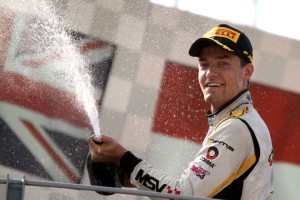
Jolyon Palmer (in pic) to test for Sahara Force India along with Spike Goddard at Abu Dhabi. A Sahara Force India image Sahara Force India is pleased to announce GP2 Series Champion Jolyon Palmer and 22-year-old Australian Spike Goddard as the team’s line-up for next week’s test in Abu Dhabi.
Jolyon’s opportunity at the wheel of the VJM07 comes after a triumphant campaign in GP2, in which he won four races ahead of the season finale en route to becoming the first Briton since Lewis Hamilton to win the title. The son of former Formula One driver Jonathan, the 23-year-old racer will be looking to impress the team when he spends a full day in the car next Tuesday.Spike is a single-seater racer who has competed in the FIA European F3 Championship for the past two years. Having initially raced in Australian Formula Ford, he moved to Europe to pursue his racing ambitions and in 2012 won the rookie class of the British Formula Three Championship in his debut season. He will drive the VJM07 on the final day of testing on Wednesday 26th November.With this choice of line-up, including the winner of F1’s main feeder series and a promising Formula Three youngster, Sahara Force India reinforces its commitment to offering young, talented drivers an opportunity on the biggest stage in motorsport, a philosophy that complements the team’s successful reserve driver programme.Dr Vijay Mallya, Team Principal & Managing Director: “I’m pleased that we can conclude our season by giving two promising youngsters their first taste of Formula One. As a team we have a strong track record of identifying up-and-coming prospects and giving them valuable mileage and experience in our cars. I have been following Jolyon’s progress this season in GP2 and he is clearly a big talent that deserves a chance in Formula One. Spike has also worked hard to get this chance and it’s the perfect opportunity to showcase his skills. I wish Jolyon and Spike all the best for a successful couple of days in Abu Dhabi.”Jolyon Palmer: “Sahara Force India has shown their faith in me by offering this opportunity and I am looking forward to repaying their trust in Abu Dhabi. I have worked very hard for a chance like this and I want to help the team get the most from this test session. This is a team that has always promoted talent and I hope this opportunity can lead to bigger things in the future.”Spike Goddard: “I would like to thank Sahara Force India for this incredible opportunity. Every young racing driver dreams to be at the wheel of a Formula One car and I am very excited to be one of the very few who gets to fulfil this dream. The test is an important stage in the preparations for 2015 and I hope my contribution will be useful for the team to get a head start for next season.”eom/Sahara Force India press release -
Hulkenberg races to 8th place; 4 points for Sahara Force India
Sahara Force India scored four points in today’s Brazilian Grand Prix as Nico Hulkenberg raced to eighth place. Teammate Sergio Perez completed the race in P15.P8 Nico Hulkenberg VJM07-04Tyre strategy: New Mediums (16 laps) – New Mediums (20 laps) – New Mediums (24 laps) – New Softs (11 laps)Nico: “It was quite a cool race and very satisfying to finish in eighth. With a three-stop race you are always pushing, but my race was not too complicated and I was on my own for a large part of the afternoon. I also had a few nice battles and it was good fun. The car felt a bit better today compared to earlier in the weekend so I was more comfortable and really able to push. The team made the right calls on the strategy and we maximised our performance with the tyres in these very hot conditions. I finished just behind the two Ferraris and maybe with one or two more laps I could have finished sixth instead of eighth, but that’s racing.”P15 Sergio Perez VJM07-02Tyre strategy: New Softs (5 laps) – New Mediums (20 laps) – New Mediums (22 laps) – New Mediums (23 laps)Sergio: “It was a difficult race and things didn’t really go my way all weekend. With the track time we lost on Friday and the grid penalty yesterday, we always knew it was going to be hard to recover the lost ground. I tried my best to fight through in the race, but I lost a lot of track position following the five-second penalty and for most of the afternoon I was stuck in traffic. I couldn’t make any progress and the cars around us were on a similar strategy. So it has been a disappointing weekend and I just hope we can have a better result in Abu Dhabi.”Vijay Mallya, Team Principal & Managing Director“It was an interesting race for us and I think we were involved in a lot of the overtaking action! Nico produced a very good performance, making the most of an alternative strategy and bringing home some valuable points. The only regret is that, had the race been a couple of laps longer, he could have probably finished a couple of positions higher. Checo always had his work cut out after taking the grid drop: he had a great start and was looking like he would make up quite a few places, but in the end the five-second pit-stop penalty undid all the good work he had done in the first part of the race. Today’s results mean we will need a special result in Abu Dhabi, but we will not stop fighting as the maths does not rule us out. Formula One can be unpredictable and we’re ready to take the championship battle for fifth down to the wire.”eomNico Hulkenberg races to 8th place in Sao Paulo on Sunday. A Sahara Force India image -
Our battle for fifth is a bit more complicated but is not yet over: Vijay Mallya ahead of the Brazilian GP
Team Principal Vijay Mallya and the drivers Nico Roseberg and Sergio Perez, who failed to get any points at Russia and the USA look forward to this weekend’s Brazilian Grand Prix; Excerpts from an interveiw:Vijay, the team was out of luck in Austin – do you expect a change of fortune this week?“The bad luck we experienced in Austin is part of the game and I’m pleased to say it’s very unusual to see our two cars fail to take the chequered flag. Our consistency and reliability have been strong for the most part of the year and we simply have to take a weekend such as Austin on the chin. Our battle for fifth in the championship is now a bit more complicated, but it’s not yet out of reach. It’s a shame that Checo will have a grid penalty in Brazil, but Interlagos is a track that lends itself to overtaking so hopefully he can recover some of the lost ground.”Brazil usually produces an interesting race and it’s been good to the team in the past…“The last time Nico Hulkenberg raced for us in Brazil, he almost won the race! It remains one of the most memorable moments in the team’s history, but it’s also a painful memory because we came so close to our first victory. It’s a track that both Nico and Sergio love and perhaps we can expect some more magic moments this year, especially if we get some of Sao Paulo’s famous unsettled weather.”Driver’s View: Nico Hülkenberg
Nico Hülkenberg talks about racing at Interlagos.Nico: “Brazil is always a highlight of my season and it’s one of the events I enjoy the most. If you look at my record at Interlagos it’s a circuit where I have always performed well. I enjoy the country, the atmosphere, the Brazilian lifestyle and all that surrounds the event seems to have given me a special boost in the past and hopefully it will happen again. Obviously this is a new year and we will need to prepare for this event well: Interlagos can always throw a surprise with the conditions and this could be a challenge for which we need to be ready.“The track itself is a proper old-school circuit: you don’t have the vast expanses of more modern tracks, everything is bunched up together – it feels almost like a karting track. It’s a very cool layout with some iconic corners, and it has a lot of Formula One history.”Driver’s View: Sergio PerezSergio Perez gets ready for the penultimate race of the season.Sergio: “Interlagos is a great track and makes for a very enjoyable weekend. The circuit is very rewarding to drive in an F1 car – you can attack in almost every corner and it requires absolute commitment. There are quite a few overtaking points and I have had some special battles there in the past. You have some very fast corners and a very complex middle sector: there are changes of elevation, cambers and it’s very twisty, it’s very difficult but it gives you such a great feeling when you get it right.“Brazil is a great country to race in – the public has a real passion for Formula One and this creates a great atmosphere. The country has created so many big names in our sport, none more so than Senna: he was fully devoted to racing and was a unique driver and man. You can see his spirit lives on at this track and this is reflected in all the fans in the grandstands. The other thing I always remember about Interlagos is the traffic – it can be a bit of an adventure to get from the hotel to the circuit but it’s all part of the experience!”Driver’s View: Daniel JuncadellaDaniel Juncadella will take part in his second 90-minute Free Practice session duringFriday morning at the Brazilian Grand Prix. This will be the third time this season that the Sahara Force India reserve driver joins an official session, after appearances in FP1 at Silverstone and during the first 30 minutes of Italy’s first practice session back in September. The 23-year old will take the wheel of Sergio’s VJM07.Daniel: “I’m very happy to be given another chance to drive the car this weekend in Brazil. I feel confident after my outings in Silverstone and Italy and I look forward to continue gaining more experience with the team. The Brazilian track brings back good memories, as I achieved two podium finishes back in 2008 when I raced here at the final two races of the Formula BMW American season, but I can’t wait to go back and see what it’s like to drive it in an F1 car! The fact that I know the track and that I’m not new to the team anymore will definitely be two positive elements that will allow me to focus on my driving and on doing the best job possible for the team straight away. After finishing my DTM season much stronger than we started it, I now look forward to my third FP1 outing and I’d like to thank Sahara Force India for this opportunity.” -
FIA and the commercial rights holder must both work closely to ensure F1 is viable and sustainable: Vijay Mallya
TEAM REPRESENTATIVES – Eric BOULLIER (McLaren), Monisha KALTENBORN (Sauber), Toto WOLFF (Mercedes), Vijay MALLYA (Force India), Gerard LOPEZ (Lotus)
PRESS CONFERENCE
Let me start with a general question to all of you if I may, about Formula One and the United States. Many of your teams have been involved in activities in the build up to this event. How do you assess the growth of Formula One here and what’s the potential for Formula One in the USA? Eric, maybe you would start?
Eric BOULLIER: Well, good question. We have seen, obviously, after the first year, which was very well attended and crowded, you could see the interest in Austin went through the roof. We obviously have some American partners on our shirts but it is true that all the fans here… I mean, it’s been fully crowded. You can see the activation and the activities as well in the city. It’s just unbelievable how the weekend is built around F1 and it became one of the major events in the F1 season. It’s very promising to see the interest massively growing around this race in Austin and obviously we all know that F1 is maybe looking at having another race in the US. It’s very promising for F1, for the fans and I think F1 needs the US market.
Thank you for that. Toto, your thoughts on that and the possibility of other races here in the US?
Toto WOLFF: It’s a great place and it feels almost like it has been on the calendar, at least for me, since a long time. It’s part of Formula One. They’ve done a really awesome job over here. We’ve had some events before coming to Austin. We’ve had Lewis and the Formula One car in New York. We’ve been with NBC and you can see there is a momentum in the US behind Formula One and that’s great. Next year… 2016, we have an American team joining us and the interest in the US has grown. We have a new shareholder in Williams, who is an American entrepreneur and it’s nice to see that Formula One is starting to make an impact in the US.
Vijay, your thoughts?
Vijay MALLYA: Well, you know the United States is a large continent and could have more than one Formula One race. The motor racing culture and passion exists in this country, in terms of NASCAR, in terms of Daytona, in terms of the Indy 500, I mean motor sport is basically a very, very popular sport here in the United States and there is no reason why Formula One should not be equally entertaining and gather a lot of fans in this continent. I mean, if we can have as many races [as we do] in the geographical region of Europe then one or maybe even two races in the United States would hardly be enough. But more significantly given the overall financial situation of Formula One, I mean a market as huge as the United States can help revenues on one side and help those teams that need more and more sponsorships on the other hand.
What about you Monisha? Do you think that more races in this region would be the secret to growth?
Monisha KALTENBORN: Well, definitely that’s something we are going to have to have a look at. If you look at the race here, the first race we had here was an excellent event and then we were concerned if next year is going to stay like this or maybe it will decline but the opposite happened and you still see it’s a fantastic atmosphere, so many fans coming over. You look at the synergies which you can create with the race coming up in Mexico as well, so you see it’s starting to grow on the continent itself. It’s interesting to see when we came here earlier on, you landed usually at some other airport when you came in and then when they asked you why you were here and you said Formula One, people didn’t really know much about it. This time when I landed the person said “well, that’s taking place in Austin isn’t it?” That tells you how it is expanding and the interest is growing in this country.
Gerard, a final words on this?
Gerard LOPEZ: I think everything has been said, but I would just say the US is the largest professional sports market in general and any sport that succeeds here tends to be economically viable, so I think it’s a key market and indeed having one or two more races wouldn’t be bad.
Okay, secondly, again to all of you, with the events of the last two weeks, with two teams going into administration, where should the initiative come from for controlling costs and is there a sense now amongst your peer group that this time effective measures must be achieved? Toto maybe you’d like to start with that?
TW: Why don’t you start with Gerard – the other way round this time?
Okay, we’ll start with Vijay in fact!
VM: I have been very vocal about this. I have said that you can’t have Formula One with only manufacturer teams. You need smaller teams, it’s part of the DNA of Formula One for several decades and the
going forwards. We’ve talked about cost caps a number of times and finally I think the large teams or the manufacturer teams were opposed to it. But I think that was a good initiative that didn’t quite see the light of day to make any meaningful difference. On the other hand, as far as the revenue share is concerned, I think it’s probably a unique sport, where the participating teams get the least amount of revenue as compared to the income. When you compare it to any other sporting activity globally, we unfortunately are at the rough end. I am very sad that two teams are no longer with us on the grid here in Austin and I think such a thing should not be allowed to happen and that’s my firm view.Gerard?
GL: Toto mentioned, because I tend to have a pretty brutal view on things, but I think the disappearance of two teams is pretty unfortunate but it actually… probably now is the time to say things as they are. Number one: the distribution model of revenues is completely wrong. Whether the size of what is distributed or not is right or wrong is debatable and Vijay has mentioned one side of the thing. But then, you know, when you’ve got teams showing up to the championship that get more money just for showing up than teams spending a whole season then something is entirely wrong with the whole system and so that cannot be allowed to happen, number one. And now is the time to not be talking about it but the time to be acting about it, so we will see what’s going to happen in the next couple of weeks. The second thing is the cost cap. We always find excuses not to have a cost cap. There are reasons why certain areas should not be capped but there are also reasons why certain areas should be. And, again, now is the time to be acting rather than talking about it. And finally, this is an odd sport. We say things and then we tend to do the opposite. I’ll just give one example. The birth of the new engines happened when we started talking about cutting costs and so forth. The fact is that the new engine, which from a technology perspective is a great thing, the costs were passed on to all the teams. In our case this year, between the engine and development we probably spent something like US$50-60 million. That’s not cost cutting in our books, that’s essentially throwing money out the window. So we tend to also do completely the wrong things in terms of… if we unfreeze the engines now, which is the next topic that is coming up. All we are going to do is again essentially force everybody to keep developing and so on and so forth. At the end of the day, the revenue split, the capping of costs, have an immediate impact on the sport and not taking decisions has had an immediate impact on the sport in the last couple of weeks with two teams disappearing. So, as far as I am concerned… it’s really interesting to have the press conference but it’s going to be really interesting to find out what’s going to happen in the next couple of weeks around this topic.
Okay, thanks. Monisha?
MK: Well, I mean, if we don’t act now together then you have to ask yourself what else needs to still happen? You look at simply the facts: we are sport here, in my view still one of the best global sporting platforms, we have turnovers of billions of dollars and the sport as such, together with the stakeholders, are not in a position to actually maintain 11 teams. And we’ve often enough discussed what it means to have a third car, where that can go to, and we could probably sit very long, arguing the pros and cons about it but that’s not what we should do in this sport. It’s time that we focus on reducing the costs. We’ve discussed that enough times, what we can do. Like Gerard has said, if you don’t want to do something, you’ll never get to a point where you agree. But you really have to ask yourself what is being done to the sport here? We are sending out messages where fans are being involved in topics they really don’t want to talk about. They should be talking about the excellent races we have, what a great experience it is to come here but yet they are discussing financials, costs, teams going into administration. That is a very bad image we are creating to the outside where new partners are going out and saying “do we really want to enter this kind of a sport with all these troubles, which are normally not meant to be in sport but into other economic areas”. So we really need to react, look at that, we need to look at the equitable sharing of the income we have, so that you can really maintain more teams than just the big ones. We also need to see on the technical side that there is a certain stability and continuity there, because you often hear from bigger teams that whatever we have agreed has always led to more cost but you should first of all see who has agreed to it – it’s usually the high end. So everything is lying there but it is high time we take some action now.
Well, there you go Toto, you’ve heard the views. Is it time to act or is it just two of 135 teams that have come and gone in the history of the sport?
TW: It’s probably a longer answer now! You know I read an article in the Financial Times two months where they had exactly the same topic in the English Premier League. How can you – and they have the Financial Fair Play – how can you bridge the gap between the very top and the very bottom and if you look at the budgets of Marussia and then you compare the highest spender, whoever it is, Ferrari or Red Bull, you are talking about a gap from US$70 million to US$250 million, so if you want to start with a cost cap, how do that? Where do you cap it? And if you cap it on the lower end, well, do you make two thirds of the people redundant in the big teams. How does it function? That’s one point. The other point is: how do you control it? The competition is so fierce at the very top that the cost cap… the cost cap was never implemented because there was no way of policing it and controlling it. Some of the teams have various set-ups, various companies all around the world, multi-nationals behind them in Japan, in Germany, in Italy. If you look at Ferrari, they have a severe issue of being transparent enough to cope with a cost cap. If you have everything in one entity and you are building road car and you are building engines and you are building race cars, various race cars from GT to Formula One, well, how does it function? Because it is so competitive, we need to have clarity, how do you control that. So this is the problem I see on the cost cutting side. Obviously two teams disappearing, I have an emotional and a pragmatic view. The emotional view is that there is personal drama behind it. There are families who need to pay mortgages, there are kids going to school and these people don’t have any jobs today anymore and that is a drama and it is painful and I am sorry for that. The rational side of things is that we have seen in the past that teams come and go. We have seen great teams who have folded, went into liquidation or administration. Great names: Brabham, Arrows, Ligier, Prost, Larousse, Leyton House… I mean there are 20 others. That was part of Formula One. Now, is that something that should happen? No, of course it shouldn’t. But when Formula One was opened up for new teams to join, you can’t compare the agenda of the teams. You know in our case we are representing a multi-national car company. This is a branding exercise, we are showcasing our technology. And on the other side if you look at Marussia and Caterham when they joined the sport it was an entrepreneur deciding to join Formula One and maybe underestimating what it meant joining that field. You have other examples, such as Vijay, who is extremely successful in his business and who had stamina and size enough to cope with the challenges until today. I have great respect for what Tony Fernandes and Andrey Cheglakov have done in their businesses but maybe Formula One is just a different ball game, because you have these various agendas. So I think it is time to sit down and reflect and think what can we do? Because the remaining nine teams are part of the DNA of Formula One, they are heart and soul, names like Sauber, Force India and Lotus need to stay in the business. I think we all need to sit down, not with our own little narrow agenda of wanting to win the championship – and this is why I am paid, and why Eric is paid – but by looking at the whole of Formula One. But I think there are… like in any other sport, like in any other industry, this is the pinnacle. This is the pinnacle of motor racing and if you want to complete at the pinnacle of motor racing then you need to have the resources of competing there. This is a high entry barrier sport. I’m getting overboard now, but if you want to set up an airline tomorrow, it’s going to be difficult, because Lufthansa is going to eat you up. If you want to go motor racing and you want to do Formula One like the new teams decided four or five years ago, you need to understand that this is the very top. So it’s a very difficult topic, I could go on for another two hours.
Well, I’m sure we’ll be here for a little while longer. Eric, you’ve gone from a team that very much supports the idea of a cost cap to one of the grandee teams – McLaren. Do you feel you have a responsibility to ensure the sustainability and the depth of the grid or do you have a different perspective now that you are in the situation you are in?
EB: Definitely maybe a different perspective, yes! But back to the comments that have been said before. Obviously we are all sad to not see our colleagues in the paddock this weekend. I think there is a common sense to say, yes, we need maybe to definitely get to actions now to make sure the sustainability of the existing teams in the pit lane is assured or guaranteed in the future. At the same time, talking about the cost cap, yes my perspective has changed a little bit, for the same reason Toto said. Marussia and Caterham were joining as part of an entrepreneur scenario and was told in these days that there would be a US$40m or something like this budget cap in these days. So their business model was built around, I guess, these kind of figures. But when you see teams, especially teams like McLaren, that have been in Formula One more than 50 years, invested heavily in terms of image and whatever technology there is and participating to make Formula One is today, you can’t accept to run such a budget cap. As you said we lost two teams today and this is very sad for the families and the people working there because they were all friends but if you start to cut by two thirds in the top teams it’s going to hurt Formula One much more. We need to be emotionless but we need to be rational in what we need to do. Is it a question of how the money is shared? Is it a question of how the business is growing, fast or not? There are many questions that still need to be answered. What is sure today is I think we all have a common sense to regroup and to make sure we want a sustainable business, even for the teams.
QUESTIONS FROM THE FLOOR
Q: (Ian Parkes – PA) I think I’d politely like to suggest that we’ve just witnessed over the past few minutes the perfect example of where Formula One stands at the moment. We have three teams on the back row pleading for cost cuts, pleading for any kind of restrictions. We have two teams on the front row ready to argue against it. How on Earth do you ever propose to ever come together when over the past few minutes we can see that you don’t agree at the moment?
EB: It’s a very good question but, once again, I guess this is the wrong forum. Each of us wants to beat everybody. We are competitors. If we compete with a bottle of water, if we compete with a Formula One team, we want to beat the others – and we will do it by any means. So, this is normal. Even, actually, as you say in the back row, they want to still compete and actually beat everybody. So, this is not… we can… I’m pretty sure we can sit down and agree drastic decisions altogether – but this has to be led by the governance body and by the people who are running the show. Not the competitors. Do you ask football players about the Fair Play problems in Premier League? No. Ask the clubs or ask the people who own or who run Premier League.
Vijay – you were smiling…
VM: Well, if you work for a team, you have a different view, if you own a team you have a radically different view. That’s also pretty obvious. If you own a team, you’re writing the cheque. If you run a team, you’re receiving a cheque so… there’s got to be a divergence of opinion. I respectfully disagree with what Toto said about a cost-cap leading to redundancies of workman of the big teams. The same thing applies if small teams shut down. The same redundancies occur then as well. I don’t think there’s rocket science involved in people sitting down together to find a mechanism. It doesn’t necessarily have to be policing. It can be self-certification of what they spend. I agree that when one team spends $60million or less and another team spends $250million or more, then it’s perhaps difficult to bridge the gap. We have to find some viable medium here – but what is actually compounding the problem is that the revenue-share model is skewed completely towards the teams who can afford to race at the pinnacle of sport at the direct expense of those who perhaps are marginal. And that’s why two of the smaller teams have disappeared. I would also like to take this opportunity of saying that sustainability in F1 is necessary for the sport but when large corporations like Toyota and Honda decide, for corporate reasons, that they want to walk out, they go. At the end of the day there has to be a fine balance. The DNA of F1 – I repeat myself – is to include big and small teams and to provide as level a playing field as is practically possible. I think that if all the stakeholder sit together we can find a solution. It doesn’t have to be a radical solution that would dent the hopes, aspirations and passion of the big teams – but equally it could make sure that everybody survives and the sport continues to be enjoyed with the same level and a growing fan following globally as well.
Gerard?
GL: I’d like to comment on the numbers a little bit because they tend to give some fun reading, y’know? Because people in F1 actually do care about racing, some of them forget some economic realities – and there’s something called the Law of Diminishing Returns. I take a GP2 team, or a GP2 car, and I make it race around this track. It’s not going to be ridiculous. It’s going to be down by a couple of seconds, four, five, six, maybe seven seconds. The whole GP2 team for the whole season is going to cost €4million. Are we really that much better? I mean are we really better to the point that a team needs to spend €300 million to be six seconds faster? We’re not. I wouldn’t accept that argument from anybody. We’re not €300 million better if you take the top teams compared to a GP2 team. So it’s a bit ridiculous to say that you need to spend that kind of money to have that kind of performance – because that makes us the worst managers in the world. If I took a financial view of this sport, comparing GP2 to F1, and the so-called Law of Diminishing Returns, we are most probably the worst managers there are. And we pride ourselves of not being. So, if we’re not, we really need to think about… and I’m not saying that suddenly Mercedes needs to cut down because I understand that for Mercedes it’s a small portion of their overall budget but a very important budget in terms of image. So, nobody’s saying Mercedes suddenly need to spend 20 per cent more than the cheapest team in F1, if I may say so, but what we’re saying is, where the money goes – which is essentially developing the cars and so on and so forth, if we need to spend €300 million more than a GP2 team to make the car go six or seven seconds faster, that’s not a very efficient use of capital – and so that’s where the issue is. So nobody – certainly I am not saying – that we should take the budgets down to a fixed amount. What I’m saying is we should take the budgets down to an amount where everybody can spend whatever they want on whatever they want – as long as the technological development, the development of the car [unintelligible] is done within a framework that makes financial sense – and that can be measured. Because it doesn’t have to be measured in dollars, euros or pounds, but it can be measured in wind tunnel, number of packages, updates, so on and so forth. That’s the difference. I’m not going to argue with… and I love Eric to bits, so I’m not going to argue with his joining the dark forces but the fact is that there is a certain issue with the way we see money in F1, compared to the performance we’re getting out of that capital – and it’s not very efficient.
Monisha, do you have a comment on this? And perhaps where the initiative is going to come from, getting back to that point.
MK: Well, first maybe saying a few things about what’s been said earlier. We’ve been around in times when nobody really spoke about costs. You had at that time private teams, you had manufacturers in there but this was never really a topic because the whole setting was so different. And that’s what we need to realise, that today we don’t live in those times. Through manufacturers coming in, bigger companies coming in, costs have just gone sky-high. We experienced that ourselves not too long ago when we were a manufacturer team ourselves. This is where, like Gerard says, we have to start right there and bring it down to decent levels. We can endlessly argue about if you can control it or not – and I could probably give you five reasons you could – but it’s not really going to get us anywhere. We have to realise that the sport has gone into a direction that can no longer be kept up like this for the entire group of participants, not just for single ones out there. The other thing which was asked earlier was how you think we can agree. I don’t think there’s any basis at all. And that’s again a big difference to not too long ago. We had more manufacturers in the sport not too long ago and yet I do remember and incident from that time where there was a team which was in a difficult situation and the manufacturers got together to support that team. They were willing to even support that team financially. I’m not saying now that we expect this – not at all – but this is just to tell you what the thinking was at that time, even from five or six teams which could easily have afforded to spend double the amount they were at that time – which didn’t even need money probably from the commercial rights holder because it took long ‘til we got it when we signed our deals. Even there, we realised that you do have to have all teams in there. And this kind of common basis is not there at the moment because, if as a small team you go and say something out there you immediately get the response that we’re just scrabbling around because we’re not getting enough. And that thinking is so wrong. We have a right to be in the sport. We are not expecting that we get that much that we can be a world champion, we know we have to do that on our merits like Mercedes has done. But at least we should be getting enough share that we should be to live decently and not to always think ‘are we going to make it to the next season or not’. In our case, we’ve been now more than 22 years in the sport and there’s nothing you can just wipe out because things have gone in the wrong direction. And about the initiative, I think it doesn’t really get us very far if we start pinpointing at each other and saying ‘it’s this side or that side’. We really have to all sit together. We teams sent a letter to the FIA as our federation, which should be in charge of the sport, the reputation of the sport and the FIA had actually agreed that they will take measures to reduce the costs – so I don’t know what more it takes for them to react that two teams are now not also on the grid.
Final word on this question Toto. Would you accept the idea of Gerard, of a framework of a reduced number of packages, things that can be audited, things that can be controlled?
TW: I think many of the arguments we have heard are valid arguments. For us, again, you could probably reduce it to a very brutal reality. Gerard mentioned the words ‘economic reality.’ If today you run a team, it’s like running a company. And this shouldn’t be sounding arrogant in any way – but you’re not obliged to spend more than you have. There are different agendas. If you run a company today and you own it, you should probably run it in a sensible way. And that means spending what you have. And if you decide to invest or to go into debt because you believe that there is a sound business case behind it, this is what you should do. Now, I find it disturbing as well that you need to spend one hundred million, or you want to spend one hundred million if your income is only 60 or 70 million. In my time back at Williams that was the philosophy. You spent what you have. And if you decide to follow a more aggressive strategy, you need to know what happens tomorrow. I have a lot of respect for everybody sitting on the stage, from an entrepreneurial view, but that is the economic reality and the economic reality is valid for any company out there and for any sports team.
Q: (Kate Walker – Crash.net) I have a general question for everybody. The one thing that you do seem to agree upon is the fact that you can’t agree. You all have competing interests. Given that it’s impossible for your competing interests to see you all on the same page, would any of you, particularly you two in the front row, support the disbanding of the F1 Strategy Group? Because you shouldn’t really have a say in the regulations. And also, would either of you be interested in refusing any constructors’ bonus payments that you receive before you even start racing – just to level-up the playing field and give everyone else a chance?
EB: No.
Toto?
TW: We laugh about Eric’s answer but this is why he’s paid. He’s paid to bring performance to the team, sporting performance and financial performance. And, again, this is like it is out there in any other businesses. Now, I think we are all… and here we are having good relationships and we understand that we need to look at Formula One in total and overall… but would you… I wouldn’t know any entrepreneur out there – and I’m getting a cheque and I’m writing one actually so I’m in a different role – any entrepreneur giving up on an upside… would you let a client go, would you not accept the income. The answer is no. None of us, none of the five of use would.
Gerard would like to make a point…
GL: I would like to make a point, which is very simple. If you take… I take the example of Marussia, of Caterham. I kinda guess what they must have paid for the engine this year and what they have paid for developing around that engine and I guarantee that in the budgets that they have, there was not a whole lot left – so it’s not like they had a choice. And the choice of the engine was not made by these guys – and this is one of the examples I gave before. It’s all good and fun and so on to say that you shouldn’t spend more than what you what you have or not. But at the end of the day, certain decisions on budget are forced up on you. Just by the fact that that’s what the market is giving you. If I went to Pastor or Romain, I told them that next year they’re pedalling their car, they’re not going to be particularly excited. It would be way cheaper for us, and financially for me, as an entrepreneur it makes a lot of sense for me ‘cos I might actually make money – but it’s not going to be very competitive. So if you want to stay competitive at a minimum level, you are forced to spend at a certain level. And again, nobody is sat here – and Monisha made a point that we should get the same amount of money, that, y’know whatever other teams get – and I’ve said it before, there are teams that get 160-170 million just for showing up – but what I have said is that the amounts need to be given should allow a team to perform at a basic level, given the costs that are forced onto that team which have nothing to do with any luxury. I mean, taking an engine today, I guarantee you that of the teams, let’s say the back row teams, if there was an engine manufacturer out there that could offer an engine for five million, or six or seven, that would have decent performance, I guarantee you that everybody would take that engine. Now, we’ve in the lucky position, we took a Mercedes engine for next year. Seems to be the better engine – it clearly is – but the fact is we still have to pay. And I’m not finger-pointing because they’re the same price, all of them, but the fact is there’s a minimum budget that is required today to even exist in Formula One. And that minimum budget has actually killed two teams. And they did not decide to spend their money on the kind of things that they had to spend it on.
Monisha?
MK: Well, most of it has already been said, before we start repeating ourselves there. But, it’s been mentioned often that entrepreneurship and thinking like that and ideas coming from there… and entrepreneur should also think a bit long term at least. If you do that, it would be interesting where that strategy leads to. We just go on the way we are and too bad for some teams that can’t make it because they’re not investing enough and it’s such a high motorsport level that you really have to have maybe three-digit million figures of budget that then in F1 are normal, for the outside world, not really. Let’s see where that will lead us to. Eventually you’ll have four – probably – participants with endless amount of cars. Let’s see where that show will gets you. How much of income you have there. And amongst the four participants, you probably all have big names, so you’ll have three losers every year. So, it’ll result into that. As a big name – and we’ve experienced that again – if you lose, you have to invest more. But a big corporation does that maybe for one year, for two years but the third year, it definitely gets too much for them. Because, surprisingly, those corporations do have budgets they control, they can control, and they have ways to measure what they are doing – and that system will just collapse at some point in time. So, I think, we probably could, most of us, agree on that kind of development happening. I don’t think anybody can say this could change Formula One in such a way that it would be far more exciting than it is with the nine or the 11 teams today. And that’s where I think we really should realise that we have to change something in the system now. Which is about all what’s been said before.
Vijay, anything to add?
VM: No, I think it’s all been said.
Q: (Daniel Ortelli – Agence France Presse) Since the cost cap is impossible to put in place – obviously, since there is a very big gap between the small teams and the big teams – do you think the sport is now ready to face a change in its organisation with two leagues instead of one: one for the manufacturers who wish to spend as much money as possible and one for the smaller teams who are likely to agree on the cost cap or all of them? And these two leagues would participate in the same races, on the same tracks as opposed to other major sports where you have a Pro A and Pro B or league one, league two. Do you think the time is right to now make that decision all together? And the second question is: do you think it’s about time, since the Concorde Agreement has not been validated in its new version, to decide on a radical change about the revenue share, which is at the core of the problem, because you have been discussing it for ages?
So that’s two questions: two leagues instead of one, and revenue share modified radically to allow the smaller teams to survive?
TW: I think it (two leagues) could be a concept which needs to be explored. It’s the first time I’ve heard about it. You see that in sports car racing and other series. Is that the way forward for Formula One? I think Formula One should stick to its roots somehow. That’s my gut feeling. Obviously if that doesn’t get us any further and you see more teams leaving the sport, then maybe it’s one of the paths to explore. I don’t know.
MK: I would like to say that if you compare to another championship, for example you have three big car manufacturers like in DTM. We see where that’s led to. They have similar problems in competitiveness. They don’t have the problem of money which some teams have here in Formula One and we’re seeing where that concept is going to. DTM also had to react, because there was suddenly a big gap and if one of those big names, like I told you before, is not doing so well, then you have to find other ways so maybe look at the technical side there because again, money is no issue. So I don’t think that that’s the way Formula One should go. It would totally distort the sport.
Q: About the Concorde Agreement revenues? Is it contractually bound for the future? Is that it?
GL: Yeah, it is. A lot of people like to criticise CVC for instance and unfortunately sometimes I have to take their side because in my real life that’s where I work, that’s the type of business I do, and the fact is that close after taking over the business, I think the sport was distributing about around $300m to the teams, something like that – three, three-forty. Today it’s almost $900m but it’s not distributed equally otherwise we would all be smiling here and saying there is no issue. So the amount might be an issue but certainly the distribution is a huge issue because – I’m not going to say it’s pareto rule, it’s not like 80% goes to 20% but close enough. A lot of the money goes to the top teams and it’s almost like – how can I say this? – it’s a self-fulfilling prophecy, essentially, that the ones that have more, get more and as a result want more and want to spend more and so on, and the ones that have less, get less. There is something entirely wrong with the distribution model right now.
Q: (Dieter Rencken – Racing Lines) A question primarily aimed at Eric and Toto: were there to be a more equitable distribution of wealth, of income, then one of your major concerns is the fact that your employees would actually have to be reduced but is it not logical that if the teams in the back row, they could afford to pay more people and therefore whatever people you would lose would actually still be employed and therefore the sport wouldn’t lose anyone whatsoever, if there was an equal distribution of wealth?
TW: I think that is a nice idea but it doesn’t work in reality. As I said before, I think the gaps and the agenda are completely different. The gaps are huge, the agenda is different. I think it is very difficult to close that gap and you see us arguing, discussing, there is lots of frustration in the room. I don’t know how to solve it.
EB: Well it’s a discussion we’ve had since the beginning. The real problem, in fact, is nothing as… to be competitive, you need to spend a minimum amount of money and today this level of money spent is too high with the economic. You can blame the distribution model, you can blame the revenue, you can blame anything, but the reality is that to be competitive, you have to spend a minimum. Because we are all competitors, we all want to spend this money to be competitive. We all want to be competitive and we have to spend this money. At the end, there is so much emotion this weekend because of the absence of these two teams. It’s true that maybe by making the revenue higher for the poorer teams, yes, the first thing they will do is to hire people, they will be going to big numbers because they want to be competitive. You don’t fix the problem by doing this. So yes, you save jobs but nothing else.
Q: (Michael Schmidt – Auto, Moto und Sport) Question mainly to Toto and Eric Boullier: we now have only nine teams, so P8 and P9 are last and last but one. Three weeks ago it was P10 and P11. Next year it might be P6 and P7, last and last but one. If only big teams are left, are you not afraid that one day you might be among them and then your whole business model doesn’t pay off any more because you’ve spent much more money to lose than the current teams are spending to lose, which are at the bottom of the field?
TW: We are nine teams today, 18 cars and we have lost two teams which is not nice and I’ve said that before. I think the teams who are in Formula One today should stay in Formula One and we should all look at the situation and come up with a short term plan: how to have a healthy grid, and a long term plan. We are talking about money distribution that is an issue for the commercial rights holder, and I don’t have a solution. I can come up with many ideas which can be short term solutions but it comes back to the principle and what’s been said before: whatever you give to the teams, they are going to spend it.
EB: Not much to add, to be honest. It’s always the same story: either you get more revenue or you spend less, so at the end it’s a question of… as you said, distribution should be discussed with the commercial rights holder and then, as we also said before, I think there is a wake-up call maybe, for everybody, to make sure we can act all together. We will try in the best effort for Formula One.
Q: ( Agustino Fontevecchia – Forbes Magazine) The sport generated an estimated $1.7bn in revenue in 2013. We said distribution was something like $900m. Maybe isn’t the problem that not enough is being distributed and then there should be the issue of – speaking of distribution – shouldn’t maybe that increase?
VM: I’ve always said that the model has to be more equitable. The commercial rights holder is entitled to make its profit by owning the commercial rights for the sport, and as far as the distribution is concerned, I think Gerard very clearly explained that it was skewed mainly towards the big teams which is basically what is causing the problem with the smaller teams. I think what I’ve heard in the last few minutes is that if the smaller teams got more by way of income, that they would necessarily spend a lot more. I disagree with that completely because I think that the three of us sat here in the back row are smart enough to know how much to spend without going the Marussia and Caterham way. And as Toto said, if I can use his expressions as an indicator of how the big teams think, well if you can afford to be in Formula One, you’re welcome. If you can’t, get out. Fine. I think the FIA must decide this, not the participants because after all it is the FIA Formula One World Championship and if it is to be designed to be affordable to those big boys in the business, who of course benefit hugely in terms of their regular core businesses. That’s one way of looking at it and if it is meant to be racing in sportsmanlike terms, with big teams, small teams that compete with each other… Look at Williams: I’m sure Williams doesn’t spend a fraction of what the big teams are spending and look at their performance this year. Until the last race, Force India and McLaren were competing head-to-head. So money doesn’t necessarily buy performance. Equally, spending is discretionary and if the big teams want to spend $300m, it’s discretionary. That cannot be used against the smaller teams. The smaller teams must get a revenue share that makes it financially viable or sustainable. That’s the point.
Q: (Pablo Juanarena – Marca) I want to ask about sport but I don’t know if it’s the day. In this building we are talking about money and Eric, Toto, don’t you think it’s a mistake for all the sport to talk about money for one hour in this room? Money, the drivers have to pay, the tracks are losing money, small teams disappear, big teams lose money too. Do you think it’s a big mistake for this sport to talk so much time about money?
EB: If you ask me… obviously we are sitting here and we have to answer your questions so we are not leading the show, if I may say this. So if you ask questions about money it’s because there is obviously some concern and we know why, this weekend. As we always say, I guess, there was too much negative said about the sport and I think this is another wake-up call we should all have, to stop being negative about our sport because there are also some positives. We don’t want to hide, obviously, we have to raise and to act and to fix all the issues but we also need to be positive about our sport and we have spent one hour, as you’ve said, talking about money where we should have talked about the big show which has been set up outside and what happened on the track today.
TW: Yes, I agree, it’s an absolutely valid question. We haven’t heard the names of Hamilton, Ricciardo, Vettel, Rosberg – none of the drivers today. We haven’t talked about McLaren’s performance today. What we are talking… we are using this as a panel to express our frustration and how everything is bad and we are talking the whole thing down. It’s like a vicious circle, so I tend to agree with your question.
Q: (Graham Harris – Motorsport Monday) On the question of drivers, Eric, have you made a decision yet for next year? What’s going to happen? You’re the only leading team yet to announce some definitive plans for either driver.
EB: No. Sorry, no, I’m just joking. Your first question: no, we have not made our decision yet so obviously we have nothing to announce or to decide.
Q: (Graham Harris – Motorsport Monday) When do you plan to?
EB: Before the end of the season, as we said.
Q: (Daniel Ortelli – Agence France Presse) Toto, there’s a big debate about third cars. You said recently that a third car would cost twenty or thirty million dollars or euros per year.. Don’t you think it could be exciting for the fans if the third car in the big teams, allowed by the budget, was given to a younger driver and whether it scores points or not, do you think it would be more exciting to see a guy – it could have Jules Bianchi in a Ferrari or anybody else – and we in this room are also moved because of what happened to Jules, so that’s why everybody is so emotional – but don’t you think it would be more exciting for the fans to see a promising talent in a third Ferrari or a third Mercedes instead of in a Caterham or Marussia that goes as fast as a GP2 car?
TW: I think, first of all, I’m not a big fan of third cars. I think if there is money left over, it should be distributed to the smaller teams to secure the grid. That’s my personal opinion. If a third car is needed, because the level of cars on the grid drops to a critical number, now we could discuss what the critical number is, and the big teams are being asked to fill in a third car then we should make it exciting and the ideas which have been discussed is giving it to a young driver like you say, to somebody who hasn’t had an awful lot of experience in Formula One. It would be exciting to see how he performs against the superstars. Definitely some interesting ideas around that, making it a rookie championship.
Q: (Dieter Rencken – Racing Lines) A question to the three at the back: much has been made now and I fully understand your concerns about the distribution of income etc, but why did you people then sign contracts that allowed this situation to happen?
GL: As I’ve said before: there’s a number of things that have changed, even in a very short period of time. I’m one of those who complains about the distribution of amount. I wish the pot was bigger but I’m not necessarily complaining about that but we haven’t seen in the last 24 months, we haven’t seen any major sponsors trying this sport. We’ve said that 135 teams have come and gone. Well, I can tell with the current cost hurdle to enter Formula One, you’ve got to have a lot of courage to come and try to compete at whatever level, even to be dead last. That’s why, when there was an opening for teams to actually participate there wasn’t a whole lot of teams that appeared. It was not that there was a waiting line of teams to actually enter the sport, so what might have been true, what seemed OK on an individual basis a couple of years ago is not OK today. The other thing is the leverage that we would have, for instance, compared to other teams that received much more, is very limited, so that at the end of the day, that if your leverage is no big amount, smaller amount of nothing, guess which one you’re going to take, right? So there are a number of components there, it’s not just black and white, there’s a lot of greys in there. As I said, one of them is… the world has probably not developed in the way we all expected but secondly, I’ll be very frank, there wasn’t a whole lot of leverage to get a whole lot more. At the end of the day, if I had gone to Bernie, for instance, and said you know what, I just don’t want to do this any more, he might have been sad – maybe – to see me go, but he might have thought OK, that’s the way it is. If somebody wearing red had done the same thing, that’s a whole different leverage effect.
MK: I think that’s exactly the point. You have to make sure that your team is going to be there, that you can have stability from that perspective and then you simply have so much that you can do and you just have to accept things. Of course, all of us expected other things to happen. When you look at the last Concorde, it even said teams have to actually sign up to cost control. That’s no longer there today. So much changed but at the end of the day, you have the responsibility towards your team and your employees.
VM: I think I agree with what Monisha and Gerard said. There’s been many game changes that have happened in the last two years but nevertheless, as every sensible organisation or any group of stakeholders must necessarily do every so often, is review and update the situation and to make it workable and pragmatic for all stakeholders involved. Just because we signed something, based on a certain set of assumptions and things have changed, doesn’t mean that we’re stuck in the sands of time. We need to move on, we need to review, we need to correct things so that the show can become bigger and better.
eom
-
Fifth place is not that far and we are not giving up: Vijay Mallya
File photo of Vijay Mallya courtesy Sahara Force India F1 team. Ahead of the American Grand Prix , the 17th of the 19 races of Formula One World Championship, Sahara Force India team Principal and Indian liquor baron Vijay Mallya and drivers Nico Hulkenberg and Sergio Perez talk in an interview. Excerpts:
Vijay Mallya sums up the mood ahead of the United States Grand Prix.Let’s look back on the race in Russia – what did you think of the event?“It’s a very nice track. It looked very impressive on television and the drivers seemed to like it. I think the organisers did a fantastic job and I would rate it as one of the best new tracks we’ve seen. Turn Three, in particular, stands out as one of the great corners in Formula One.”The team is now sixth in the championship with three races to go…“It’s been a ding-dong battle all season. Fifth place is not that far ahead so it’s certainly not out of reach. As I said before Russia, we’re not giving up, whether it’s Austin, Sao Paulo, or Abu Dhabi we’ll give it everything we have! The final races of the season traditionally can deliver surprises and we must be ready to take any opportunity that comes up.”Do you enjoy the race in Austin?“It’s a lovely race in a fantastic city. The USA has a long history in Formula One and it seems Austin as a city has continued the tradition of embracing the United States Grand Prix. The grandstands are full, the supporters are passionate and knowledgeable, and there is a party atmosphere in town for the whole week. It’s one of my favourite events in the calendar.”Driver’s View: Nico HülkenbergNico Hülkenberg looks forward to returning to Austin for the United States Grand Prix.Nico: “I remember that as soon as I drove in Austin my first thought was that it was an amazing circuit. It’s fun to drive, with lots of different kinds of corners, and it’s one of the best tracks from the new generation of circuits. It’s very easy to find a rhythm and the tarmac is very smooth, which makes it very nice to drive. Away from the track, Austin is a venue everybody enjoys visiting. It’s not the biggest city, but there is a good atmosphere and they love Formula One.”“I’ve had good results in Austin [P8 in 2012 and P6 in 2013] so I am feeling upbeat about this weekend. It’s clear that some teams ahead of us have made a step forward recently, but we know that we can race well. I think it’s realistic to target points again this weekend and try to close the gap to fifth place.”Driver’s View: Sergio PerezSergio Perez gets ready for racing at the Circuit of the Americas.Sergio: “Austin is a great race and because it’s so close to Mexico it feels like my ‘home’ race. There are usually a lot of Mexican fans and you feel a lot of support because the grandstands are full and there are always a lot of Mexican flags. I enjoy the track, especially the first sector and the uphill turn one, which is quite unusual. You can brake extremely late for this corner and it’s a good overtaking opportunity. From there you go into the quick corners: turns three, four and five, which are a lot of fun to drive.”“I arrive in Austin feeling positive. I’ve scored points in every race since the summer break – five races in a row – and I think we’ve maximised what we could get out of those races. We’ve been racing hard, taking some chances, and making some excellent decisions with the strategy so hopefully we can continue to do so in the next few races.” -
The actual influence of Pit-wall communication on the Driver is debatable: Vijay Mallya
TEAM REPRESENTATIVES – Franz TOST (Toro Rosso), Vijay MALLYA (Force India), Manfredi RAVETTO (Caterham), Monisha KALTENBORN (Sauber), Eric BOULLIER (McLaren), Claire WILLIAMS (Williams)
PRESS CONFERENCE
If I could I begin with a question to all of you? Obviously there have been changes today to the team radio ban. The FIA met with the media earlier today but I wonder if we could get a perspective from the teams: why the changes were needed and what it was like today to manage the relationship between the pits and the drivers? Monisha, maybe you would start?
Monisha KALTENBORN: The change comes from complaints that were raised by the fans that the drivers receive too many instructions and are just, in a way, carrying out whatever instructions they have been given. That’s something we as teams of course understand and that that’s not exciting for the event and for the show. So I think it was the right decision to say that we should try to stop these type of instructions and that the drivers do more on their own. As a team, we were a bit surprised to see what extremes the first clarification went to, because we felt that it went into areas that could have raised other concerns as well. So we’re quite happy that the FIA has now taken this position to really just cover areas that were meant to be covered, performance of the driver and not, as such, the entire car.
Franz, can I ask you, because obviously you’ve got a 20-year-old in your car and next year you’ve got a 17-year-old. So to what extent is it a disadvantage not being able to quote-unquote ‘coach them’?
Franz TOST: The changes are absolutely not necessary and I still don’t understand why because all these information are also entertainment for the people in front of TV, to hear a little about the communication between the team and the driver. And for us, of course the more inexperienced a driver is the more information you have to give him and it requires a lot of work during the week to work out the programme and we still have the possibility within the regulations to communicate in a proper. For me it’s absolutely nonsense what we are discussing here, because in all the other kinds of sport a coach gives some information, instructions to a footballer player on the sidelines or whatever. This does not mean that the sportsman is not able to do his job. He can do his job, he does do his job, but maybe he can do it in a better way. It’s just a performance improvement, therefore I don’t understand it.
Manfredi, what’s your view on this? You too have got a rookie in your car. Do you share Franz’s view?
Manfredi RAVETTO: First of all, I have to say, it’s remembers us a little bit of the good old days. I think so many nice pages of motor sport history have been written without pit to car communication. Having said this, we take it easy. It’s a decision from FIA and we have to accept and respect it.
Vijay, you’re active in many sports, you car a lot about the show. What do you think about this?
Vijay MALLYA: You know, the FIA rule has always existed: that the driver should drive unaided. But despite that rule being in existence, teams have taken pit wall to car communication to a certain level and now we have been asked to pull back. It’s as if we have been abusing the regulation in one form or another. This is not Playstation. Whatever you may say from the pit wall, the amount of influence it actually has on the driver and the excitement of the race and the race result is something that is highly debatable. But then, the FIA makes the rules and it’s the obligation of every team to abide the rules. So I guess we will abide by the rules that were fortunately clarified to a more practical extent this morning.
Claire, you’ve got one of the more experienced drivers in the field, how has it been for you?
Claire WILLIAMS: I think it’s been OK. I think it’s an adjustment for everybody, but as Vijay said, they are the new regulations, they have been put forward in an effort to make the show more exciting. But I’m pleased that the new directive that came out this morning has adjusted what is and what isn’t allowed to be said and it has clarified that. From our perspective, as long as we are able to communicate messages around safety and reliability to our drivers, that’s the most important thing. But we’re racers at heart and we want our drivers to be going out there and driving the cars.
And Eric, your feelings? You’ve obviously always been very involved in this side of things, do you have any concerns about what is and what isn’t allowed?
Eric BOULLIER: Yeah, obviously we had some different messages internally during both free practices, like ‘shall we say this’ or ‘shall we not say that’. So we had to police a little bit, or monitor what we wanted to say. In the end I think most has been said by my colleagues. The only thing which was worrying a little bit is to change the regulations during the course of the season, which is never a nice thing to do, even if we obviously listen to the fans and obviously respect the decision of the FIA. Happy as well that they clarified a little bit what can be said and not. And obviously happy that we can still say or deliver some message about safety or reliability of the cars.
Coming back to you Monisha. Can you give us an insight at the heart of the team at the moment? Do you need to shake the tree to break this cycle that you have got into this season? And also, can you tell us what the latest is about Sergey Sirotkin and whether he’ll run in free practice one?
MK: Well, we’re probably having the worst season we have had in the history of the team so far. We know the reasons for it. We’ve been trying to make changes, which not easy when you have certain limitations that you have work within. We’re step by step coming out of it. The steps in my view could be bigger sometimes, that they are a bit more measurable. But the direction is right. So, we have to be patient, focus on the right things and hopefully get out of it. Coming to Sergey, we have announced that he will be driving FP1 in Sochi. That’s one of the milestones we have agreed with him and then we’ll see where we go from there.
Thanks for that. Vijay, coming back to you, you’re neck-and-neck with McLaren for fifth in the Constructors’ Championship. How do you deploy the resources then from here for the rest of the season. Do you want to develop hard this year and try to beat or have you also got one eye also on 2015?
VM: As you rightly said, McLaren is just one point ahead – literally as well, as we sit. Having said that, it is my intention to reverse that. We will do everything possible to achieve that by the end of the season. I’m sure they are developing their car and so are we. Unlike previous years I think all developments done this year will, in fact, carry over to next year’s car. So whatever investment is made I think it’s not lost on 2014 alone. But we enjoy tough racing – I’m sure McLaren do too – and we’ll have some fun and let’s see in Abu Dhabi who’s ahead of whom.
Coming to you Manfredi. Changes again in the management structure at Caterham, the third different team boss in the course of the season. Can you tell us a bit about Christijan’s departure, the structure as it is now and your plans for the development of the team?
MR: First of all, I must say thank you to Christijan Albers, because he supported us, coming on board in a very crucial stage. His decision is a very private and personal one, but it is kind of a natural cut-off with the end of the European season, because he wanted to stay closer to his family and the flyaways are not the best option in this case. Having said that, there is a new structure in place. The main goal is to stabilise the company, on the financial side as well as on the technical side. We are very much focused on getting the best out of the current 2014 car but we are also working very hard on 2015. We are enjoying an excellent co-operation with Toyota and its wind tunnel in Cologne, where our next year’s car is already testing. Unfortunately we inherited… when I say we, I refer to new ownership and new management… a quite difficult situation. The situation was difficult to such an extent that previous ownership decided to pull the plug and therefore whatever we do we see it as an achievement.
Franz, last time you were with us in one of these Friday press conferences you were on a good roll of top-10 qualifying and race results. It seems to have thinned out a bit. I think you’ve had two top-10 finishes in the last four races. What’s been going on to cause that, and also can you give us an update on Max Verstappen’s development?
FT: I think here this weekend I expect a good performance and I expect that both cars are in qualifying three and I expect that we score points. Max Verstappen did, last week, a test in Adria. He finished by doing 396km without any problem. People were really impressed with his performance and now it’s in the hands of the FIA whether he gets a Superlicence to do the Friday P1 session in Suzuka and then we will see. We will prepare him step by step and I am convinced that he is the correct driver for us for 2015.
Do you know when you will get answer on the Superlicence?
FT: It must be soon as the next race is already in Suzuka.
Q: Claire, obviously now third in the Constructors’ Championship after that result in Monza, can you catch Red Bull, do you think, for second? And can you tell us what this renaissance for Williams has meant for the spirit inside the team?
CW: It would be lovely to catch Red Bull but as I was told by my team when I last said ‘we’re after Red Bull’ I got into a lot of trouble. I think now the position for us is very much to consolidate where we are in the Championship – which is obviously in P3 – to build hopefully that gap between us and Ferrari, I think. From where we were last year, obviously we finished in P9, it’s a really great turnaround for everybody at Williams. Probably not one, if you’d said to us last year, this is where you’re going to be this time next year, we would have believed you – but a lot of hard work has gone into that turnaround from changing our power unit, bringing in new personnel, bringing in Felipe Massa and obviously some new commercial partners to support us as well. That’s all contributed to a great new atmosphere at Williams. I think if you just come to our motorhome, you get a sense of revival and a refreshed spirit about what we’re doing. We’ve always been here to race. Obviously the past few years have been really challenging for us. It hasn’t necessarily dampened the spirit but there is a real galvanised effort now within the team. Everyone believes that we can win and we can go on to fight for a seventeenth world championship.
Q: Eric, in a little over four months from now by my calculations, you’ll be hitting the track with a McLaren-Honda in pre-season testing. It doesn’t sound like very long when you say it. Where are you in the development programme for that? And is it looking like the current drivers will be the ones driving that car.
EB: There is obviously a lot of work behind the scenes with our new partner for next year. We have not exactly defined when and where we will test first, to be clear about some discussions and rumours. There is a lot of work going through and, to be honest, as per the original schedule, everything is fine so far. Regarding the driver line-up, wait for the decision and the announcement.
QUESTIONS FROM THE FLOOR
Q: (Abhishek Takle – Midday) Bernie Ecclestone has once again raised the possibility of three car teams, perhaps as soon as next year. I wanted to ask you, how real is the danger that we might lose three teams before the start of next season and, specific to Monisha and Manfredi, how confident are you that your teams will be on the grid in Melbourne next year?
MK: Well, as I said, we are having the worst season of our history, of our team, and yet at the same time, we are more than 21 years in Formula One and we do get that question often and every time we say, ‘well we’ll be around’. I’m going to answer the same way, we’ll be around next year as well.
Manfredi, do you share Monisha’s confidence?
MR: All I can say is that we are very relaxed in this respect. I mean, everybody knows the situation in which we found this team, in which state it was and, well, we are just trying to keep it alive to improve and we are working, as I said before, also providing you with some details on the programme for next year. This is what we are targeting. Of course we want to be on the grid in Melbourne next year – that is definitely our goal.
Vijay, I guess you’re in the part of the grid that doesn’t like the idea of three-car teams too much?
VM: No. I’m a firm believer, as I’ve always said, that every effort should be made to make sure all teams, big and small, survive and race. That’s part of the DNA of Formula One. But the regulations and the agreements do provide that, if the grid is less than 20 cars, then participating teams will race a third car. That’s something everybody signed up to as well. I hope it never comes to that. As I said, I think the DNA of Formula One should be preserved. I will repeat once again that I will try to persuade the decision makers – the commercial rights holders – that they should look very seriously at a more fair and equitable revenue-share model so that we don’t have to answer such questions all the time.
Eric, I guess you would be one of the teams that would be looked at to provide a third car. What are you your thoughts on this situation?
EB: Well, it’s a little bit like Vijay said. We obviously all look for what will keep all the teams onboard. That’s the first priority. There are some mechanisms that, effectively, if some teams were not on the grid, we would maybe run three cars to keep the grid at a decent number. But I don’t think we are there yet, as I said before.
Claire, your views.
CW: Yeah, I agree with what everybody has said. I think that to be having this conversation now shows where we are as a sport. We need to be working harder to ensure that we protect the teams that we have on our grid to ensure that competition that I don’t necessarily think having three-car teams brings. I think we want to have a healthy grid of ten teams all fielding two cars. Not four teams fielding three cars. For Williams, that’s not the DNA of our sport.
Franz, what would it mean for you?
FT: I hope that all the teams which are now taking part in the Formula One World Championship will be on the starting grid next year in Melbourne, and then it’s not necessary to discuss a third car.
Q: (Ralf Bach – Sport-Bild) A question to Mr Ravetto. Can you give us some background to your financial situation at the moment, starting maybe from Silverstone to now, and the status quo now?
MR: Yeah. Thanks for asking this question. In reality I believe our team was not set-up to race in Silverstone. This is the truth. Since new ownership came on-board, since new management has been established, I think we managed not only to race in Silverstone but also to arrive to Singapore. I must say it’s not a very easy task. The financial situation is not one of the easiest. I only have to repeat myself when I said even before, we inherited a situation which was more than critical. I do not know what the reasons are for this, maybe you should ask the previous owners.
Q: (Dieter Rencken – Racing Lines) Another topic that’s reared its head this weekend is the possibility of an engine un-freeze for next year. I believe it was discussed this morning in the team bosses’ meeting. None of you produce your own engines. Accordingly you’re either customers or partners. Where do you stand on this issue, particularly where potential cost increases are concerned?
MK: If we look at this year’s season we’re seeing that there’s such a big disparity between the different engines. And Formula One is not just about different engines, engines do play a role there but the gap should not be that big. We do support the idea that development of an engine is allowed within certain given parameters but it not necessarily leads to the fact that we, as customers, should actually bear the costs for that. Because that’s something that is always taken for granted, that the moment we talk about engine development it’s just a logical step next to say ‘it’ll get more expensive’. As a customer we say ‘why should it?’ because actually the supplier is doing it first of all for his own team. Not for us. We are benefitting from it, of course. We are also paying a lot for the engines. Yes, we as a customer, support that – within the parameters. But we should be getting the same spec at the same cost.
Do you share that Vijay?
VM: Well, you know the engines for 2014 are already a lot more expensive than in previous years and if unlimited engine development in-season is allowed, I agree with Monisha, that that the teams, those sat around this table, shouldn’t be burdened with these additional costs. But on principle, maybe I would agree to support maybe one in-season update of the engine in a very controlled and limited way but I think it would not be appropriate to allow unfettered in-season development.
Claire, it’s one of the secrets of your 2014 success. Would you welcome teams being able to upgrade their engines?
CW: No! Because, as you say, we’ve got the Mercedes power unit and fortunately they’ve done a great job this year. I look back over history in Formula One when we have these kinds of conversations and, you have to enter the season with your race car and, if you haven’t done a good enough job, then why change the regulations? Why should teams be allowed to do that? However, if it is part of the conversation, then fine, we’ll be involved in that conversation and we’ll support it – but only based around what Monisha has already said: as a supplied team, we don’t believe those costs should be passed on to us. If the manufacturers want to spend that money developing their engines, then fine – but as a customer team we want to receive the same specification that the manufacturers provide, and at the same cost that we have now. The cost of changing to this year’s spec engine have been considerable. We’re paying about £20 million for our engine in a period when we’re trying to control costs in Formula One. We’re now looking at a period where engine development costs are going to increase significantly – and I’m not sure that’s the conversation this sport should be having.
What about you, Eric, because next year you go back to being a works engine team again, but it will be a first generation Honda hybrid turbo versus second generation Renaults, Ferraris and Mercedes, so where do you stand? Presumably you would like to be able to upgrade.
EB: No, we would like obviously to make sure there is a… I like to use as reference that first comment of Monisha, a regulation which makes the possibility for all engine manufacturers to have a fair, let’s say, trade, to make sure we can be as equal as possible. I think that’s very important for the show, obviously as well, as there was a lot of stories written about the engine since a long time, a lot of complaints as well about the fans, a lot of positive as well because the racing was good and it’s just a normal discussion, let’s say, going forward to make sure there is more equity between the engine powers.
MR: Regarding a lift of engine freeze, I believe that generally speaking everybody deserves a second chance in life so why not applying this to engine manufacturers? Having said this, I have to emphasise that the most important thing for a small team like Caterham is to keep costs under control. I remember times when we were using 60/70 engines per year instead of the number we are using now and the bill was very similar, so there must be something to readdress.
Q: Franz, you remember those times as well? Where do you stand on this?
FT: No, first of all I must say that the parity of the performance of the engines is fundamental to increase the show. It cannot be that two cars are one-to-two seconds ahead of the rest of the field. Fortunately and nevertheless we’ve had some very interesting races but the engine manufacturers should have the possibility – if they want – to come up with modifications but only if the additional costs will not come to the customers, because this is unacceptable, but generally, I think it’s good that Ferrari and Renault can come up with new modifications for next year.
Q: (Kate Walker – crash.net) I’ve got a question for Claire and Eric as members of the F1 Strategy Group. I know you can’t give us too much information about the meetings that you have; however, Charlie’s said that the radio decision was made at the Strategy Group meeting in Monza. What kind of pushback did the teams present give with regard to the rules, and why was it such a surprise that the recently-cancelled radio rules were quite so strict as they were?
CW: I think the conversation came out of a need to improve the show as we talked about earlier but I think our concerns were around the reliability and safety and so Charlie was asked to go away and have a look at that and obviously that’s what’s come out this week and the directive that came out this morning addressed and clarified what we were and weren’t allowed to say. So that was as much of the conversation as I would want to talk about.
EB: Yup, nothing to add. Just a discussion which we obviously had in Monza and as you say, it was raised and just based on the regulation, there was some adjustment that was proposed and just to make sure that in such a short term there was back and forth discussion.
Q: (Ian Parkes – Press Association) Vijay, over the past couple of months, we’ve read a lot about your financial troubles in India, court issues etc. How much is that impacting on you personally, at a personal level? How much is that impacting on your personal running of the team and is there any carry-over financially for the team? And secondly, Roy Sahara has his own personal issues; does he still play an active role with the team or are you now looking for other investors to take over from him?
VM: Sahara Group have problems relating to funds raised from the public which the Securities and Exchange Board of India have determined were not raised as per regulations and need to be refunded. Sahara claims that the investors have been refunded and claims to have provided the necessary proof of refund to the Securities and Exchange Board of India. They don’t seem to be able to verify the facts provided by Sahara, therefore the current situation. As far as my situation is concerned, I’m not a borrower, I have not borrowed any money from any bank and therefore all that you read about may contain my name but has to do with one of our companies which is Kingfisher Airlines but of course, if you continue to refer to me in my personal capacity, it conveys the wrong impression that I’m a debtor in a sense, which I’m not. The agreement between Sahara and myself is that they’re shareholders in the team, they continue to be shareholders in the team. I have asked them if they would like to change the situation and they said no, they want to stay in. I’ve always run and managed the team which is doing better than it ever has in its history and we’re going forward from here.
Q: (Chris Lyons – AP) It seems that the ban on messages about car performance – not driver coaching but car performance – will come in at the start of 2015. Is that your impression or is this something that is going to be argued and debated more between now and then?
EB: I think it’s going to be discussed further. There’s clearly been a pushback on part of the allowance for the messaging which has been postponed for now and the article 20.1 of the sporting regulations is quite clear, even if there is always some room for interpretation, so that’s why there will be some more debate.
Q: (Graham Harris – Motorsport Monday) Monisha, without going into the politics about whether we should or shouldn’t be going to Sochi, obviously Sergei is being backed by Russian money. Are any of the new sanctions that have been put in place by the EU and the US affecting that money coming into you or do you expect it to be affecting you, and any general questions about that?
MK: It’s not affecting it.
Q: (Graham Harris – Motorsport Monday) So it’s not Russian money coming to you.
MK: I never said that. You asked me if it’s affecting it and I said no.
Q: (Graham Harris – Motorsport Monday) And do you expect it to affect you in the future as sanctions get tighter?
MK: If you look at the sanctions which at least apply to Switzerland, it wouldn’t really affect us so we wouldn’t fall within that ambit. What happens in the future we don’t know.
Q: (Stuart Codling – F1 Racing) Manfredi, just to follow up from Ralf’s earlier question, there seems to be a new name on the nosecone of your car this weekend. Could you clarify whether that’s a change of your operating company or whether there’s a new company?
MR: No, no, no, definitely not, this has nothing to do… Basically, it’s not there is a new name. The team has always been identified by the abbreviation of CF1. You write it also in your comments. By the way, the entrant is and stays One Malaysia Racing team and One Malaysia Racing team is a conglomerate of companies which are working on different tasks and it stays like this.
Q: (Dieter Rencken – Racing Lines) Another question to you Manfredi, particularly about the structure of your team. I’d like to give you a second chance of answering this question: your investors, the Swiss-Middle Eastern investors, your team has consistently refused to identify them. In this paddock, one gets suspicious so is there a reason why they are keeping such a low profile?
MR: It’s impolite to answer with a question but who’s the beneficial owner or ownership of an investment fund? Who’s the owner of Blackstone, just to make an example? So the ownership behind our team is a group of investors, it’s a club of investors. They just want to make the best out of their investment and they don’t need to have any kind of personal visibility or publicity. By the way, it’s something they refuse. They are very much business-driven and investment-orientated. I hope it helps.
Q: (Kate Walker – crash.net) Another question for you, Manfredi. If you’re not able to tell us who the investors are, could you please tell us what other items might be in their investment portfolio?
File photo of Vijay Mallya courtesy Sahara Force India F1 team. MR: I’m not supposed to know this in detail. It’s a group of wealthy individuals and I’m just trying to make my best in running this team, together with a very nice group of people. That’s my main concern. All the rest, I’m really not supposed to go more in detail.
eom/FIA transcript of the Press Conference