Your basket is currently empty!
Tag: Pirelli
-
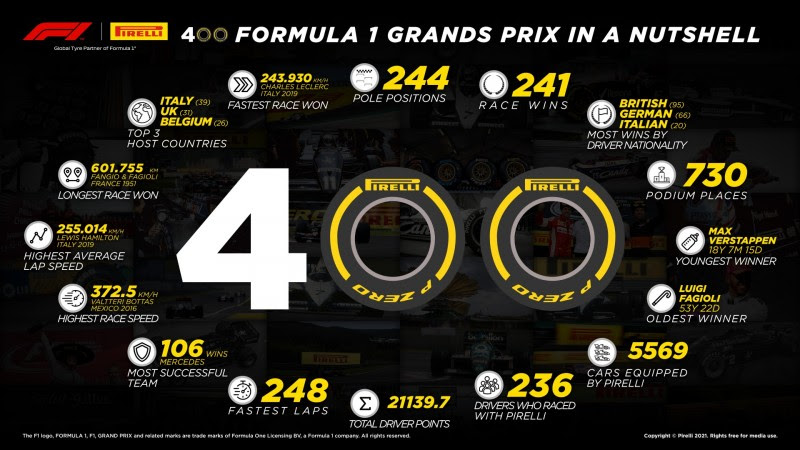
Pirelli celebrates its 400th F1 Grand Prix F1 in Bahrain
Pirelli Celebrating 400 F1 Grands Prix. A Pirelli video! Pirelli will celebrate its 400th Formula 1 grand prix in Bahrain: the opening race of the 2021 season.
Pirelli’s first grand prix was the inaugural F1 race at Silverstone in 1950, won by Giuseppe Farina in an Alfa Romeo – who went on to claim the debut title at the end of the year. A replica of the Pirelli Stella Bianca tyre that Farina used to win that British Grand Prix is currently on display in the newly-opened museum at Silverstone in England.
Since then, there have been 240 wins, 243 pole positions, 247 fastest laps, and 727 podium places in Formula 1 for the Italian tyre firm. Bahrain constitutes another important milestone for Pirelli, which has been an integral part of motorsport for more than 110 years after winning the 1907 Peking to Paris race. Over the course of this year, a number of different celebrations are planned on Pirelli’s social media channels to mark the occasion, including a video and the attached infographic that sets out Pirelli’s Formula 1 story up to now in numbers.
Mario Isola, Head of F1 and Car Racing: “At Pirelli, we’re very proud of our history, so it’s fantastic to celebrate 400 grands prix. We commemorate this landmark on the verge of a new era: at the start of the final season of 13-inch tyres, before we adopt 18-inch tyres in F1 along with wide-ranging new technical regulations from next year onwards. So as we look back at the past, we’re excited to be writing the next chapter in our story as well.”
-

FIA Junior WRC returns to 5-round season for 2021
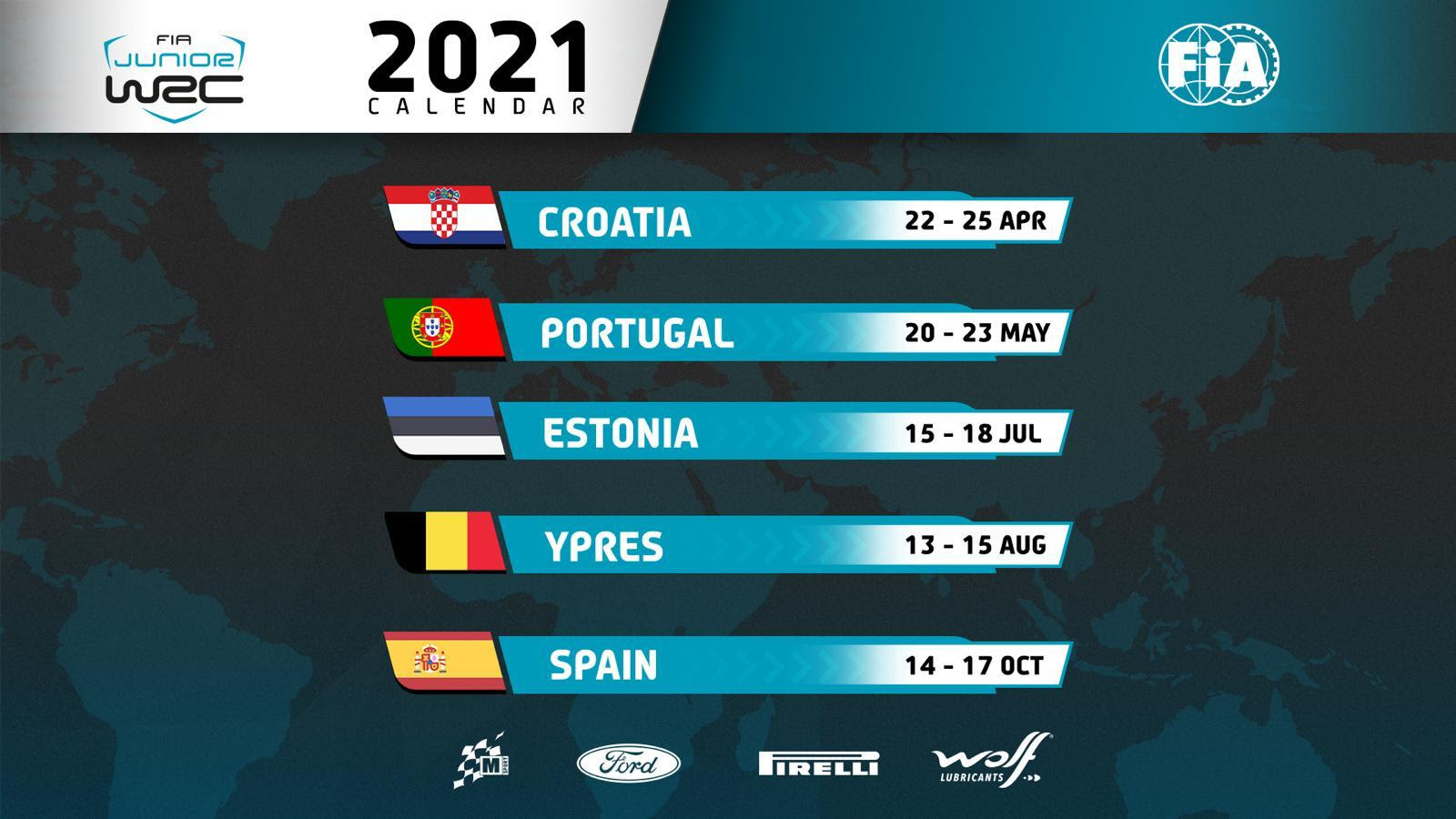
The 2021 FIA Junior WRC Championship will be contested across five FIA World Rally Championship (WRC) rounds in a bid to find the next star of the WRC.
A field of Ecoboost-powered Fiesta Rally4s, all exclusively equipped with Pirelli tyres and powered by Wolf Lubricants will do battle on a mixture of surface types and conditions for the biggest prize package in rallying.
This year’s championship will also celebrate FIA Junior WRC’s incredible 20-year history, which goes back to the days of a fresh-faced Sébastien Loeb and Daniel Elena guiding their Super 1600 car to championship glory. In the two decades that followed, FIA Junior WRC drivers went on to amass a so-far combined total of 16 WRC Championships, 172 WRC event victories and 415 podiums.
Those drivers looking to add their names to the history books with the likes of Loeb will no-doubt face many challenges throughout the five-round championship that will see them lean on every inch of their driving talent. The fight for the 2021 crown will be tightened further with the final championship classification counting each crew’s four best classification results and all stage win points. Double classification points return in 2021 for the final round of the season, only available to drivers who previously entered at least three FIA Junior WRC rounds in 2021, providing an unpredictable and exciting championship battle.
Round 1: Croatia 22 – 25 April
Rally Croatia is a brand-new all-asphalt addition to the WRC which will serve as the curtain raiser for this year’s five-round championship to the delight of Croatia’s passionate rally fanbase. Although a new feature on the WRC calendar, the Croatian event has international pedigree having previously been a part of the FIA European Rally Championship for many years until 2013. The service park will be based in Croatia’s capital city, Zagreb, with the characteristically slippery asphalt stages snaking their way through Karlovac County, Zagreb County and Krapina-Zagorje County. It’s likely that all of 2021’s Junior WRC crews will have limited road-knowledge on the opening round, meaning the critical task of writing and reading of new notes should only add to the drama of 2021’s championship fight.
Round 2: Portugal 20 – 23 May
In stark contrast to the opening round, Rally Portugal is the first gravel event on the FIA WRC calendar and has previously featured on the FIA Junior WRC calendar. Junior WRC’s most recent visit to Portugal was in 2018, leaving nothing on the table when it came to drama through various thrills and spills on the iconic Portuguese stages.
Round 3: Estonia 15 – 18 July
Rally Estonia made its WRC debut in 2020, with Junior WRC witnessing an epic battle between local heroes and talents from further afield on the fast and challenging Estonian roads. Rally Estonia will be a very different gravel round to Portugal, testing crews further by calling upon a completely different skillset to master Estonia’s sweeping corners and jumps. The 2020 edition of Rally Estonia was a hit with drivers and teams, featuring an almighty battle for stage win points as Martins Sesks became Latvia’s first ever Junior WRC event winner.
Round 4: Belgium August
The championship heads to the tricky asphalt roads of Ypres, Belgium, for the penultimate round of the 2021 season in August. The event is a classic with tight competition along its ditch-lined roads, where drivers risk cuts at their own peril, and it is expected to provide a tantalising battle as the championship fight heats up. Crews with three strong classification scores on the board will head to Ypres knowing they can afford to drop a poor classification score and therefore cherry pick stages to push for stage win points on in a bid to help their championship.
Round 5: Spain 14 – 17 October
The championship finale is planned to play out at Rally Spain, with 2021 marking the rally’s 30th anniversary as a WRC event, the event is steeped in history and is regarded as one of the toughest asphalt challenges in the FIA WRC. Double classification points will mean a wide open and unpredictable title fight going down to the wire ensuring every contender will push for every classification and stage point available. With the pressure piled on the championship protagonists, Rally Spain will no doubt be a nail-biter thanks to its racetrack-like surface and extra-wide roads giving opportunity to maximise commitment through every corner. The high speeds also mean increased jeopardy though, with high-speed mistakes usually arriving at a huge and most likely championship-ending cost.
Maciej Woda, FIA Junior WRC Team Director, said: “It’s great to see the 2021 FIA Junior Championship taking shape with a good mix of events on this year’s calendar. I think all five rounds will require a different set of skills to master which is very important for the championship to rigorously test all of our drivers and find out who really has got the talent. No two rounds are the same which is an exciting prospect and should really shake things up for the championship.
“We’ve worked very hard with the FIA and WRC Promoter to ensure the calendar is spaced out evenly enough to help crews prepare for each event and also leave a reasonable gap from the final round of the 2020 championship. Normally the Junior WRC Championship concludes in September or October and it allows the championship and crews a healthy amount of time to prepare and confirm plans for the following season. From speaking with all interested crews and the late conclusion of the 2020 season we made sure to provide interested crews the time needed to put their 2021 programme and plans together.” -
Pirelli announced as Event Main Sponsor for the Estoril Round
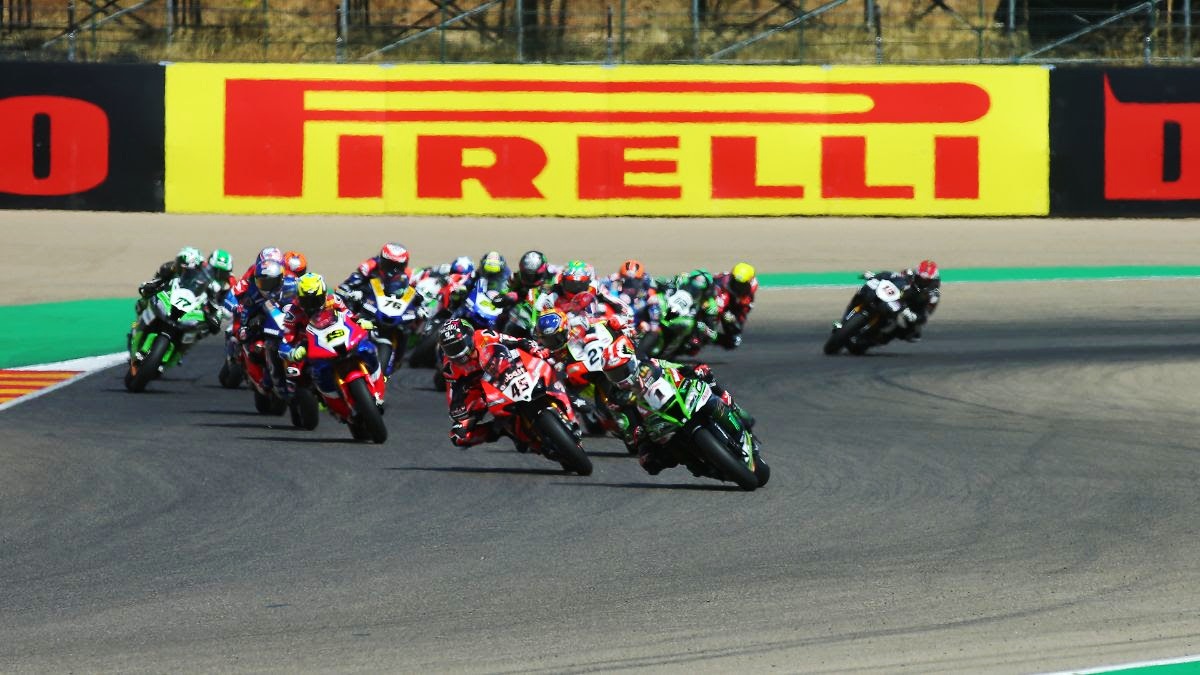
Estoril, 22 Sept 2020: Pirelli and Dorna WSBK Organization are delighted to announce the Italian brand as Event Main Sponsor for the Final Round of the WorldSBK Calendar, in Estoril at the Circuito Estoril from the 16th to the 18th October. The Pirelli Estoril Round will be the final Round to the 2020 MOTUL FIM Superbike World Championship and promises to be an exciting finale as the Championship returns to the circuit for the first time since 1993, previously being on the Calendar back in 1988 the first year of the WorldSBK Championship.
Since 1872, Pirelli provides bikes and cars with tyre solutions at a variety of levels and is a leading company in the motorsport industry since 1907. Always at the core of innovation, the Italian company uses racing as its R&D platform across all disciplines to create the latest technological innovation to provide a high-quality product portfolio and demonstrate its motto of: “We sell what we race, we race what we sell” . Pirelli has been the Official tyre supplier of the Championship for 17 seasons; a record in the history of world motorsport making Pirelli the longest-running sole tyre supplier at an international level.
This Event Main Sponsor agreement is a great opportunity for the Italian brand to pursue its highly successful partnership with the world’s fastest production-based Championship and will ensure a bespoke experience for everyone operating within the paddock, whilst the products are ultimately passed onto fans and motorcycle riders on the roads, following the philosophy that has always distinguished Pirelli’s approach to two-wheeled racing.
-
Tyres suffered extremely long use: Pirelli
Milan, August 4, 2020 – Pirelli has concluded its initial analysis on a number of tyres that were run at the British Grand Prix last weekend. This allowed to identify the cause of the failures followed by deflations that affected both Mercedes and the McLaren of Carlos Sainz.
The key reason is down to a set of individual race circumstances that led to an extremely long use of the second set of tyres. The second safety car period prompted nearly all the teams to anticipate their planned pit stop and so carry out a particularly long final stint: around 40 laps, which is more than three-quarters the total race length on one of the most demanding tracks of the calendar.
Combined with the notably increased pace of the 2020 Formula 1 cars (pole position was 1.2 seconds faster compared to 2019) this made the final laps of the British Grand Prix especially tough, as a consequence of the biggest forces ever seen on tyres generated by the fastest Formula 1 cars in history.
The overall result was the most challenging operating conditions for tyres. These led to the front-left tyre (which is well-known for working hardest at Silverstone) being placed under maximum stress after a very high number of laps, with the resulting high wear meaning that it was less protected from the extreme forces in play.
For the second race at Silverstone this weekend, Pirelli confirms the nominated compounds: C2, C3, and C4, being one step softer than those seen at the last GP.
Also the usage prescription will be reviewed, increasing the minimum tyre pressures to reduce the stress on the construction.
-
Free Practice 1: Daniel Ricciardo sets early pace, leads Red Bull one-two in Monaco
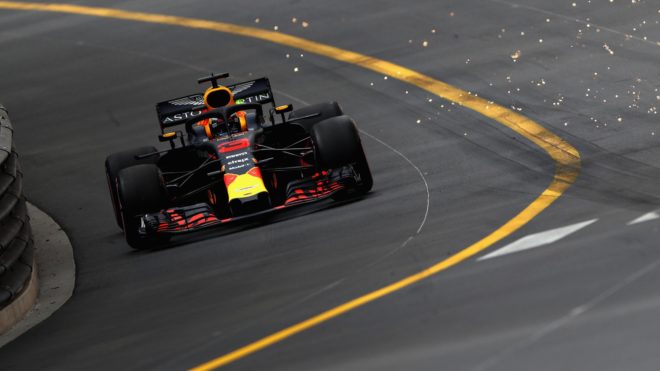
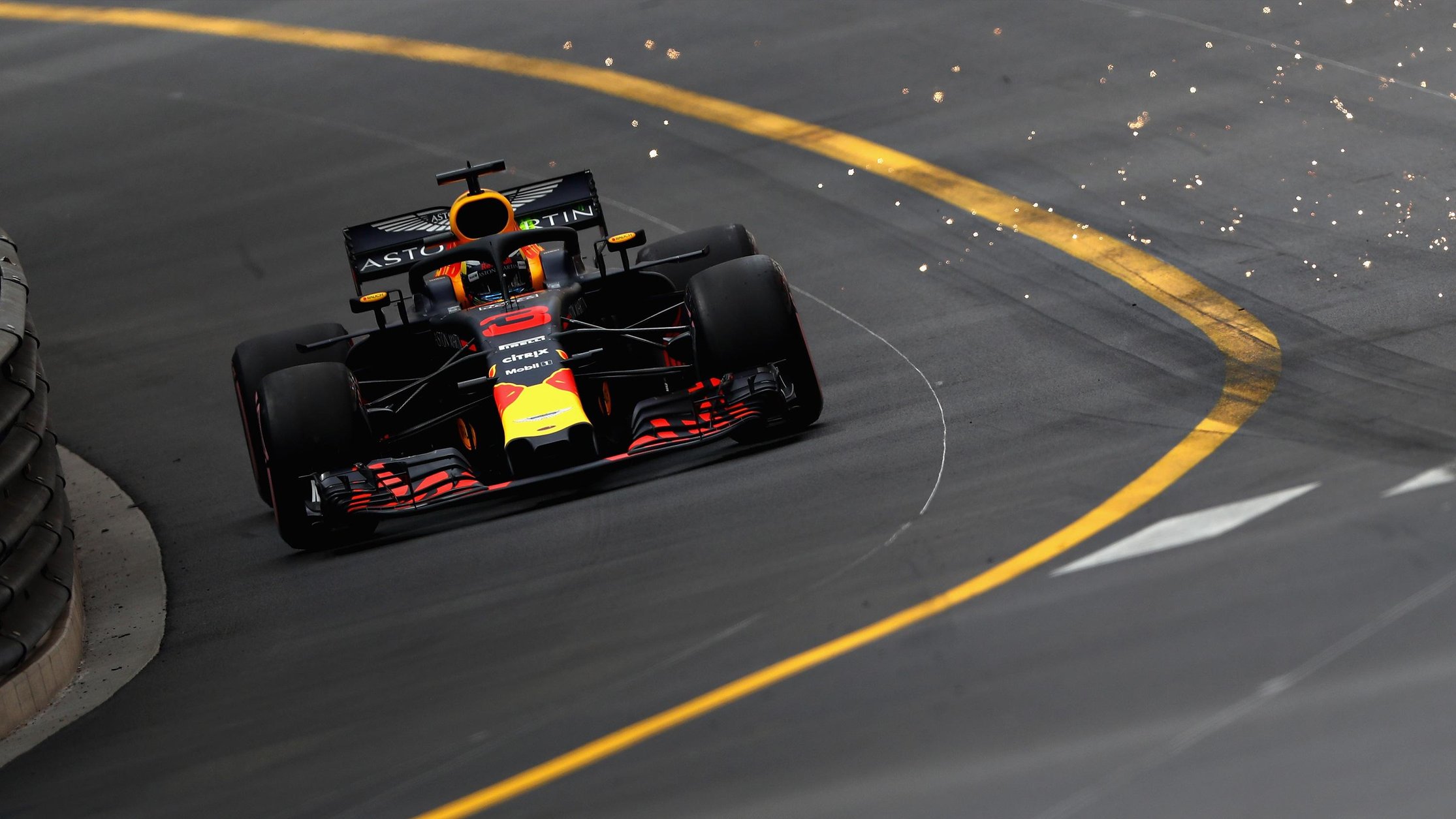
Red Bull dominate FP1 in Monaco on Thursday. Photo: Red Bull Racing Monaco, 24 May 2018: Can Red Bull secure their first pole of the season in Monaco? The early signs are certainly positive, with Daniel Ricciardo edging team-mate Max Verstappen in the opening practice session on Thursday, while Mercedes’ Lewis Hamilton was three tenths behind the pace-setter.
It was an impressive early showing from Red Bull in Monte Carlo, with their two drivers mastering this tricky street circuit on Pirelli’s new hypersoft tyres. Sebastian Vettel was the quickest Ferrari in fourth, just ahead of team mate Kimi Raikkonen, and it was another strong performance from Renault’s Carlos Sainz, who came home sixth.
The other Silver Arrow of Valtteri Bottas had to settle for seventh, with Force India’s Sergio Perez winning the battle for eighth ahead of Romain Grosjean in the Haas. Sergey Sirotkin – rock bottom of the drivers’ standings with no points – has had a difficult start to his maiden Formula 1 season, but will be boosted by his P10 for struggling Williams.
The teams didn’t waste any time to get going at the iconic Circuit de Monaco, with the drivers heading out on all three different tyre types, including for the first time at a race weekend, the pink-marked hypersoft compound.
It was on those tyres that Red Bull and Ferrari started the session, while Mercedes – winners of the last two races in Spain and Azerbaijan – opted for the ultrasofts, and it was Bottas who set the first timed lap of FP1.
There is no margin for error at this tight and twisty track, and Williams’ Sirotkin found that out the hard way. The Russian kissed the wall on the home straight and limped back to the pits with a flat tyre – and Grosjean later had a similar impact with a barrier, but escaped without any damage.
Red Bull were the team on top during the opening 40 minutes, before Mercedes showed their hand after bolting the hypersofts – which in testing have been around a second a lap quicker than the ultrasofts – on both cars.
And it was Hamilton who was first to give a glimpse of their potential pace on the softest tyres this weekend, the Briton just three-tenths slower than last year’s pole time of 1m 12.178s. So what about Ferrari? They were going about their business quietly at this stage.
It certainly wasn’t a quiet session for Verstappen. The Dutchman later regained top spot and then suffered a huge lock-up heading into Turn 1. He escaped down the run-off area and avoided any damage to his Red Bull, but is under investigation by the stewards after reversing back on to the circuit.
With the hypersofts getting their first run-out here, the times are expected to tumble all weekend and Ricciardo eventually went quickest with a superb 1m 12.126s – faster than Raikkonen’s pole here in 2017.
The rest of the session was without major incident. Renault, currently fourth in the constructors’ standings, were once again ahead of their middle-order rivals, with Sainz leading that charge. Kevin Magnussen, meanwhile, struggled with a connector issue on his Haas and finished bottom of the pile with just seven laps on the board.
Little can be taken from FP1, with teams adjusting their set-ups throughout the session, but the early signs are certainly positive for Red Bull. Their title rivals Mercedes and Ferrari both predicted Verstappen and Ricciardo would be quick here in Monaco, and they didn’t disappoint.
-
This year we are more aggressive (with tyres) says, Mario Isola of Pirelli: Friday Press Meet
Baku, 27 April 2018: The traditional FIA Friday press conference with team representatives saw Paul Monaghan of Red Bull, James Allison of Mercedes and Mario Isola of Pirelli take part in the interaction with the media at the Round 6 of the Formula One World Championship here on today.
Transcript of the interview:
Q: Paul, if we could start with you and deal with the here and now, Max Verstappen had a crash in that FP1 session. What can you tell us about the state of your car?
Paul Monaghan: It’s not survived unscathed, so we’ve got a front-left corner to change, we’re underway with that. There’s a little bit of bodywork repair to do on the left-hand side, change the floor, rear wing, that sort of thing. It’s time-consuming but recoverable. So, with a following wind we’ll get him out in P2.Q: Have you spoken to Max, do you know what caused the accident?
PM: It’s difficult to know what caused it to swap ends under braking. Nothing’s broken, nothing’s gone wrong. I think he’s braked pretty much in the same point so we’re having a hunt through to see what may lie underneath that but I don’t think there’s anything sinister in it and he’ll be out in P2 – and he’ll be quick, don’t worry.Q: Max’s problems aside, the team has hit the ground running this year with RB14, fastest lap in two of the opening three races and, of course, that terrific victory last time out in China. Just how much can you achieve with that car this year?
PM: We ought to have that chat in Abu Dhabi really, and then we can put facts to it. It really comes down to what the gentleman to my left does and what other competitors do. We will develop at the best pace we can, we’ll try to operate the car in the most competitive way we can and, actually, we’re judged by our opposition, aren’t we? We’ll do what’s in our control, get to the end of the year, be as quick as we can and if we’re in the hunt, we’re in the hung.Q: And what can you tell us about updates? Have you got stuff coming in Barcelona? Is there a big chassis upgrade there?
PM: I don’t think there’s a race where we don’t have any updates. The magnitude of the updates varies race to race, as I’m sure it does for other people as well. There might be a few more changes in Spain – you’ll have to wait and see.Q: Mario, if we could come to you now. You gapped the tyre compounds in China, leap-frogging the supersoft tyre. How successful was that approach? What feedback have you had from the teams?
Mario Isola: I feel it was successful but obviously, the Safety Car changed a little bit the situation. So, we had a two-stop race but mainly due to the Safety Car – but it’s interesting to see that the top teams – Ferrari, Mercedes – decided to qualify in Q2 with a soft compound in order to have this opportunity to start the race with a different tyre. So, we created a bit of difference in strategies also at the beginning of the race. It was the same in Bahrain where all the three compounds were suitable for the race and all the teams used different combinations, different strategies. This is the target we can achieve.Q: The desire pre-season was for two pitstops in each grand prix – but one stop has been possible at all of the races. What have you got to do to achieve those two stops?
MI: If I look at the target that we have, it’s to have different strategies with different numbers of pitstops possible. Obviously if a team is able to control degradation, they always try to maximise the one-stop strategy – or to use the one-stop strategy. So, what we do when we select the compounds is to try to have a two-stop strategy that is the quickest – but obviously, we have a three-stop and a one-stop that is close to the two-stop but with a delta lap time, a total race time, that is sometimes a few seconds. So, depending on team choice and how they manage the pace, they can change and go towards the one-stop strategy that is always, let’s say, less risky, because you don’t go back in traffic – and we know how difficult sometimes it is to overtake another car – you don’t take the risk to have another pitstop, so to make a mistake in that pitstop, and so on. That’s why when you have strategies that are all very close, all the teams are trying to go in the one-stop direction. But, if we have different cars with different strategies, I think we had a couple of good races with a good show. So, we should continue in this direction.Q: You announced yesterday your compound choices up to and including the Austrian Grand Prix. Is there a little bit of evidence of a more aggressive compound choice from Pirelli going forwards?
MI: In general, this year we are more aggressive with at least one step. Here in Baku we are two steps softer than last year. This is the direction. To make the right decisions, we need to collect more data. We started the season, for example, the nomination for Baku was 15 weeks ago and had available only the numbers coming from the Abu Dhabi test, end of last season, so we are collecting new numbers, we put the new numbers in our system to generate strategies, and, if it is possible, – we don’t just consider the numbers but also other elements – but if it is possible, we want to move on the softer side in order to have more interesting races.Q: James, Mercedes are leading the Constructors’ Championship but this is the first time in the hybrid era that you’ve got three races without a victory – so what is the mood in the camp at the moment?
James Allison: Well, hungry to get that first victory, obviously! And hungry to follow it up with more. We’d had our chances. We’ve squandered some of them and we would like, dearly, to have a race weekend where we do everything right and get a race win.Q: Is there any evidence that Lewis is struggling with this car more than Valtteri?
JA: No, I wouldn’t say so. No, I don’t think so. If you look at pre-season, Melbourne and Bahrain as well where he was hampered by a gearbox penalty, but he’s been going well.Q: How do you assess the pecking order so far this year?
JA: It’s tough to do, honestly. We were clearly quickest in Melbourne; it was really close between us and Ferrari in Bahrain and all three teams had a fair shout in China. Probably Ferrari had the edge overall but we looked like we were going to rob them with a bit of a burglary job in an undercut and then Paul had us over at the Safety Car. So it’s terribly tight – which makes for a great spectacle, gives us a real challenge and is anxiety-inducing and exhilarating in equal measure for us and the teams.QUESTIONS FROM THE FLOOR
Q: A question for both Paul and James. From next season we will have an increase in the fuel limit in Formula 1. I just wanted to get your thoughts on the potential this has to change the competitive order. Do you think there is enough of a difference in the fuel efficiency of the different engine manufacturers to make a bit of a difference?
PM: Honestly, I can’t answer your question, because I can’t tell you how fuel efficient the Ferrari or the Mercedes is, not from their measured sheets, we can make an estimate. Will it change the competitive order, I don’t believe it will, no. What you’ll find is… let’s take the ideal scenario, by which the Red Bull is the quickest car next year. We’ll get first and second on the grid, other people will be behind us and then in the race you’ll have 110kg of fuel to burn. If we all need to lift off a certain amount at the beginning of the race then you’re not going to change the order very much. What will happen is, let’s say if our engine is less fuel efficient, then we won’t be lifting off but we will go off the line slightly heavier. If anything, what we will avoid is all the people lifting off the straights to try and save the fuel, which I think will be better for the overall spectacle.James, anything to add?
JA: No, very similar. I don’t think it will change the order one iota, but people don’t really like the lift-and-coast spectacle and it will reduce that somewhat at the very heavily fuel-limited tracks. However, not all the tracks are heavily fuel-limited and there it will make no difference at all.Q: To Paul and James: after the Ferrari report of their incident in Bahrain was shared with the teams, have you in way changed your pit stop procedures and operations?
JA: No, is the answer.
PM: We’re the same; we’ve not changed anythingQ: To Paul and James: just a quick question about the rule change on the ability to fit mirrors on the Halo. I just wondered if teams had looked into that at all yet and if it’s something we will see in the future?
PM: Now there is some clarity, I guess we know that we can now put mirrors on Halos, so if someone wants to go down that route and try to fulfill the other requirements in the TD, which are not trivial to observe, then yes, we will see it in a few races’ time. Whether or not you actually can make it work I think is more tricky.
JA: Yeah, it’s not a rule change, it’s a clarification of the existing rules and it is tough. It is tough to attach to attach a mirror and not make it wobble around and satisfy all the criteria of the TD that clarifies what you can and can’t do.Q: Again to the two technical delegates on the stage. If we look at the post-2020 regulations, where they’re talking about doing away with some of the heat energy recovery systems and increasing rev limits and fuel flow and whatever. Could we see a return to pit stops with refueling or are we just going to go to the line with cars weighing 50 or 60 kilos more than they do at the moment?
JA: Well, there would need to be a change that would allow refueling back into the sport for that to happen. If refueling was allowed it’s quicker to do a race that way, but I’m not sure that’s part of the package of things that is currently on offer for 2021. Does that answer your question?Q: Then the weight is going to go up drastically?
JA: Well, the weight will be whatever the fuel allowance is, won’t it?Paul?
PM: It’s difficult to answer your question Dieter, because we haven’t been presented with a set of technical regulation proposals for 2021. You could up the fuel flow rate to the engine and not give us any more fuel flow for the race, in which case your off-the-line weight doesn’t actually change but will never attain the qualifying fuel flow rate. So, as James had said, we don’t have refueling at the moment, we could, but if that’s not in then you are correct in that the potential is for the car weight to go up off the line.Would you like to see a return of refueling?
PM: No idea, actually. We looked at it a while ago and from memory of the simulation work done within Red Bull, I suspect all the teams’ strategies would converge on the same thing, because you no longer have an ever-decreasing car weight, you reset every time. You‘ll pick the quickest way to do the race, the pit stops get a little bit longer, and if we all sit there doing the same thing then what we have done is to put a big valve in the side of the car.
JA: It’s to be assessed carefully but the refueling strategies are more predictable and allow less variation in the race and less surprise in the race than non-refuelling strategies, because once you put a chunk of fuel in your car, you have to stop on the lap where you run out, or a lap or two before and everyone knows when that is going and it just stops the surprise undercut or the chance overcut that comes with the current regs.Q: James, last season Mercedes faced a sustained challenger from Ferrari, which mean that you were having to react to having an extra car or two in the competitive picture from the beginning. This year it looks like Red Bull is in the mix too. Apart from simply adding two more cars to the equation, how much more difficult has that made Mercedes’ life and how have you responded to that challenge.
JA: Well, time will how we respond to it. Hopefully we respond to it by being nicely competitive and at the front of the pack. But that will be very difficult, because these are two very strong competitors. Having six cars that can have a claim on the top step of the podium makes it a headache for all six that are doing that. All we can do is try to make our car as quick as it can be, with the developments we bring in the factory and then have a weekend, every time we come out here, where we make no mistakes, and hopefully other blink, and others maybe don’t develop quite so strongly. But these are three very strong teams, so it makes for an exciting prospect.Q: Question for Mario: have you had any feedback on the ultrasoft performance from the first session, because we heard Seb’s radio message where he said these tyres are toast and we know that Kimi’s only got one set of supers? Has there been any feedback?
MI: I think we have a lot of track evolution, which is typical of street circuits like this one. The circuit was with a lot of dust and so we need to wait for FP2 to understand the real performance of the three compounds. It’s not a surprise that the level of grip in general is very low so we will see. There is also the wind that sometimes affects the performance or changes the braking points and so on, so let’s wait and see what happens in FP2.Q: Mario, several teams including Mercedes have found it harder to find the sweet spot with the 2018 Pirelli tyres. Have you been surprised by that? And to Paul and James, how has been the tyres’ measurement from your own perspective?
MI: No, I’m not surprised because when we have a working range, we give an interval of temperature where the tyres are working but there is always a peak and when you have three teams with the cars so close, they are looking for any hundredth of a second to find the best performance in the tyre. That means that it’s very difficult to find the sweet spot, even if you have a working range that is wider. To develop new compounds, especially the softer compounds we started from the soft from last year – that was the one with the wider working range, so the approach was this one, trying to increase the working range but as I said, it’s not flat performance from eighty to 110 degrees, you always have a peak and if a car is able to stay in that position, they have a performance advantage.
JA: Well, we have generally got it right in the race, so we’ve generally had the tyre working very nicely in the races, pre-season and in these opening rounds but we have not always got it right in qualifying, to make the tyre wake up and play on the single lap and that’s our job to do. It’s eminently do-able and it’s going to be fun when we get it right every time.
PM: To answer your question, I don’t think it’s any more difficult than it’s been the past few years. Once you’ve identified what you want to try and do with it, if the drivers and teams get it right then we can find it. I think it’s an evolution of what we’ve learned for the last few years.Q: To the two technical delegates: there’s been this talk about the $150m budget cap which applies predominantly to technical issues and race operation issues because marketing etc are excluded. James, specifically your team, which is one of the biggest budgets on the grid and also to Paul, is it actually realistic to expect a team to cut back to $150m in two years’ time?
JA: Well, I think the answer to that is probably a little above my pay grade. You want to probably pitch that towards Toto but what I would know is that this is the opening point of what will be a fair amount of discussion between the teams and Liberty over the coming weeks and months, and I’m sure that a position will eventually be agreed that works for all parties.
PM: I would agree with what James has said. We will see where the discussion goes and we’ll set the team up to suit the rules as they evolve and become clearer.Q: Another question for James and Paul: over the last few months, there’s been plenty of discussion over FIA personnel leaving and joining different teams on the grid; in fact one of those is starting his first Grand Prix weekend here with Renault. One of the suggestions has been that that could lead to a bit of mistrust from teams about what they can and can’t present to the FIA for fear of it eventually being taken elsewhere. Has there been any evidence of that so far and do you think that is a serious issue going forward?
PM: It is a serious issue. It has been discussed in other forums, shall we say. I believe that there is now a non-disclosure agreement between the FIA, F1 and all the teams, so our data is at least protected. People move between the teams, so knowledge is transferred in that respect. I suppose someone in a governing body with access to all the teams’ areas could be a prize catch and I believe that there are changes afoot to limit how… what a gardening period and after that it’s a process that we are all at risk to, I guess.
JA: I think your question was whether there had been any evidence of that? No, the FIA have always treated our data with unimpeachable fairness and discretion and there’s no evidence at all that there’s been anything other than that, even with a couple of people leaving so no. -
Formula One and Pirelli: All the numbers from 2014
Milan, 29 January 2015: As Paul Hembery, Pirelli’s motorsport director, explains: “Each year, we’ve traditionally published all the numbers that tell the story of our Formula One season. Last year we faced the biggest challenge that we had experienced since entering the sport, thanks to a completely new generation of cars that featured very different characteristics to before. Nonetheless, we met all our targets of helping to provide entertaining races, plenty of overtaking opportunities, diverse strategy options and an average of two pit stops per car at each grand prix, despite the many unknown factors for everybody. This year’s tyres will be evolutions of the 2014 tyres, with just one completely new tyre: the supersoft, which has a fresh rear construction and compound. The 2015 tyre range will be on track at Jerez in just a few days from now, but in the meantime, we hope you enjoy looking back on the classic 2014 season from a tyre point of view.”
eom/a pirelli press note
-
K-1000 for bikes gets a sponsor in Pirelli, the F1 tyre supplier
By Vivek Phadnis
Bangalore, 5 Dec 2014: After the success of the four-wheeler 40th IMG K-1000 Rally recently, it is now time for the best two-wheeler competitors to take centrestage. Two-wheeler rallyists may be considered more daring because one small mistake and it could be goodbye to the event. Rallying is the purest form of motorsport that challenges man and machine to the hilt. When it comes to motorcycles on dirt road conditions, it is bound to be a real test for the rider.
Being revived after a gap of five years, the Karnataka Motor Sports Club is conducting the second round of the Indian Rally Series for two-wheelers 2014. The event is named the Pirelli Rally of Karnataka and is being conducted under the aegis of the Federation of Motor Sports Clubs of India. The event will be held around the KB Cross area near Tiptur.
The KMSC would like to acknowledge Pirelli, Zoomol Autorelli and I
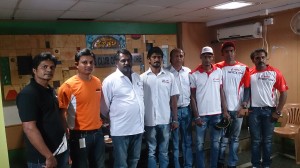
K1000 rally 2014 star riders pose with CoC Bhaskar and Bikes Rally Com chairman, FMSCI, Praneeth Perumal at Press Club on Friday. MG for their support in conducting this event.
The Pirelli Rally of Karnataka will have two challenging stages with the surface comprising of dirt and loose sand. The first stage is the India Mines stage and the second is the Torque stage. The first stage is approximately 9.95 kms and the second is 14.95 kms. These stages were also used for the four-wheeler K-1000 Rally that was held recently. The Rally will be centred around the service park at Harenahalli. The India Mines will be run thrice and Torque will be run once.
eom/KMSC Press Release by Vivek Phadnis
-
Minimal changes in Pirelli tyres for 2015: Pual Hembery
TEAM REPRESENTATIVES – Paul MONAGHAN (Red Bull Racing), Pat FRY (Ferrari), Paul HEMBERY (Pirelli) Rob SMEDLEY (Williams), Sam MICHAEL (McLaren)
PRESS CONFERENCE
Paul Hembery, if we could start with you? Interesting day today to say the least. Obviously a new track surface here at Interlagos [along with] your choice of soft and medium tyres for this weekend. What did you learn today, particularly in the extremely high track temperatures, up around 57-58 degrees [Celsius]?
Paul HEMBERY: Well, the track is very different from last year. We’ve lost a lot of the macro roughness, 50% less than last year, so it’s a very smooth track and in the first sessions we saw a lot of oils coming out from the new tarmac that we’ve got out there, which you get from new surfaces. So a lot of graining going on in the first run on the tyres in P1. It improved a little bit through the day. Having said that it’s a strong pull for something like the softer compound here when you get up to nearly 60 degrees on the track. A little bit of blistering we started to see on the front tyres. But who knows what the rest of the weekend is going to hold. Nobody foresaw having this high temperature today, so there are still a few question marks, I guess, for the rest of the weekend.
What about 2015 tyres? Give us an insight, if you could, about your thinking, what you want to achieve on strategy, performance, that kind of thing?
PH: Well, we’re not planning any great changes. We’re trying to improve a little bit the footprint area of the tyre, which is what you do as a tyre maker. Compounds? Well, again minimal changes. Maybe working on some of the temperature ranges of some of the compounds, but not planning anything dramatic. Primarily because we still want to understand what these technical guys are going to come up with in terms of developments for next season. They’ve had a year to understand the new regulations and we are expecting some quite strong improvements during next season.
Thank you very much. Rob, coming to you, same first question for you as it was for Paul, but from a team’s point of view. What did you find today running with these tyres on this new track surface? Anything you’d like to share with us about it?
Rob SMEDLEY: I think that the track improved quite dramatically through the first session as Paul just said. There were a lot of oils coming out. As you put Formula One cars over the surface you impart a lot of load into the surface and the oil comes out. I think that’s quite normal. And as it did the track gripped up a bit, between the first and the second set there was quite a big track evolution. We started the second session about 17 or 18 degrees hotter than what we finished the first. We were 56 degrees, I think, track temperature, about 34 or 35 ambient and that went up to 57-58 at the end we were measuring at the end. So they were quite extreme temperatures. On the old surface round here with that tyre of temperature you’ll get quite a lot of degradation. And that’s why I think everybody put the option on and the people who looked best on it were simply the people who’d run least in their short runs. Anybody who’d run four or five laps, as our cars had done, we grained the rears and blistered the front. But I think that’s quite normal for these track temperatures. We’re predicting, for what it’s worth, that it will be quite different conditions for tomorrow and Sunday. I think the main thing to take out of it, as always, is that Friday, yes it’s important and it’s good to go and do your homework, but the track can change quite dramatically for the rest of the weekend.
Q: Felipe, yesterday in the press conference was very optimistic about the next steps for Williams. They’ve obviously been a midfield team for a while now but the car and the technology are clearly on the point of being race-winning again. What needs to be done about developing the mentality of the team to that point as well?
RS: It’s a long-term project. You have to change cultures and methodology within the team and, like I’ve always said since I arrived at Williams, it’s very easy to change process, you can change process in a week – but it’s much more difficult to change culture, y’know? The team’s got to get back to being able to win. Being ready to win. Being pretty much ready to beat everybody. If you look at the most recent success – bar Mercedes – in F1 then it’s Red Bull. They started off some years back with not the quickest car and certainly not the best operation and I’m sure they wouldn’t mind me saying that. And right now, in terms of their chassis, they still have a fantastic chassis, in terms of how they operate, they operate very well – but it’s because the same core group was there for a long time. And that’s what we have to do at Williams. I think we’ve got reasonably sensible people there now, there’s a good level of competence, a good level of young talent as well – which is always important – it’s not just the people at the top end who make all the decisions but the people who actually do the work as well. And yeah, for the moment it’s working. There’s more to do. We have to go further but as long we stay on the road that we’re on, hopefully it will work out.
Q: Pat, tell us about the contrasting day for your two drivers: obviously Kimi at the top of the timesheets in FP2 and the fire for Fernando. Is that going to mean a penalty?
Pat FRY: The fire, it’s a high-mileage Friday engine to be honest. I’m sure every team’s in a similar boat so it doesn’t really affect the strategy that we run on a Saturday and a Sunday, so that side of things, it looks more spectacular and it’s hard work for us to clean it all up but it’s not that big a deal. I think this morning we, like most people, we struggled with graining of, particularly the right front, and it takes a little bit of a while for us to work out how to deal with that. As the track improved the graining reduced significantly in the second part of FP1. We’ve been trying different setup options with Kimi and he seems happier. We’ve been reviewing… it’s been a constant battle for us to try and work out and give him the front end he wants in the car. We’re a little bit closer and it shows that, if we can give him the car that gives him the right feedback, he’s right there and right on the pace. So, I think that side of things went reasonably well. Long run pace, it’s hard to say really. I think everyone’s long run was disrupted by, firstly, the red flag we caused and then the following red flag. On Fernando’s side, again, similar comments with graining and car balance. I think everyone’s struggling a bit with the tyres and the way they’re behaving here. But yeah, we didn’t get a clean lap on the very first lap but other than that I think they’re relatively close together.
Q: Tell us how the Mattiacci long-term plan is manifesting itself in the technical department.
PF: I think, like all these things I’ve said to you before, to stop and look at what you’re doing and realise where… or start thinking long term, is definitely what we needed to do. It’s good that we’ve done that. Some of the changes that have been emplaced are already paying huge dividends in the way we’re developing next year’s car. Only time will tell really. There’s a huge amount of catching-up we need to do but at least there’s the drive to improve the technical process, invest where we need to. It’s a long-term process but the right path is there to get us back to the top.
Q: Sam, you’ve obviously announced that you’re leaving Formula One after a long career at the end of this season. Why have you decided to leave the sport and what are your plans?
Sam MICHAEL: Thanks James. First thing I wanted to say was that it’s been really been an honour and a privilege to work alongside all the engineers and technicians and drivers, media and all the people that make up Grand Prix racing. It’s an incredibly privileged position to be in and I’ve enjoyed every moment of it. There are some fantastic people in this business, it’s one of those businesses where there’s lots of different characters and a great deal of diversity but the one thing that bonds us all together is that we’re all racers. We always have conflicts and fights about whether it’s technical regs or sporting regs or who said what or did at different times. We’re all here to do the best thing for Formula One and if it didn’t exist like that then we wouldn’t be here. It’s been a fantastic run, 21 years with four different teams and I looked at it and thought it’s time to go back to Australia. Looking forward to that, probably spending a bit more time with my family. As you know, yourself, motor racing itself is an incredibly selfish business when it comes to families and I think it got to the point where I thought if I don’t see my kids grow up at this point then I probably never will. So that was basically the driving factor behind it. It’s been a great trip and that’s it.
Q: What’s your favourite period?
SM: I’ve enjoyed all of it really. As I said, I’ve been very lucky to work with some pretty inspirational people right from the beginning with the two Peters, Peter Collins and Peter Wright, the infamous Eddie Jordan, obviously Gary Anderson who was a good teacher at the time, then Frank and Patrick and then obviously Martin and Ron. You could look at each period and say that when you’re winning Grands Prix, they’re the most fantastic results and the highlights, but there’s actually lots of other little areas and little wins that you get, whether it’s coming up with a new technology before someone else in a team, results where you’ve driven from the back… I think of things like when Alex Wurz drove from the back in 2007 and got to the podium. I think of Nico Rosberg’s first Grand Prix in Bahrain where he started a lap down effectively and got back to seventh and had fastest lap of the race. There’s all the wins as well that I had in those teams. I think all those moments are the ones that bonded a race team together and they’re the ones that you remember the most.
Q: Paul Monaghan, great year, obviously for Daniel Ricciardo: three wins, third in the drivers’ championship. Less so for Sebastian Vettel who admitted yesterday that ‘Ricciardo has simply done a better job than me.’ What’s the technical explanation for these two very different seasons?
Paul MONAGHAN: We present two equal cars to the drivers and I think you have to ask Sebastian for a little bit more explanation of his side of what he meant. We service both drivers with the best equipment we can, treat them equally, allow them their requests where we can and field them onto the track in the best state we possibly can. I would have said Sebastian’s coming off five very intense years, isn’t he, and he’s been phenomenally successful and I suppose it concludes with we wish him well.
Q: Well, you’re turning a page, obviously. You’ve got Daniel Kvyat coming in; when do you get to run him for the first time, and more importantly, do you think he’s ready?
PM: He’ll be ready. He’s had a season, hasn’t he? He’s had some glamorous moments. In terms of running him, I think it’s going to be in February and yeah, looking forward to it. It’s a new challenge for us, isn’t it? So off we go, we’ll see what happens.
QUESTIONS FROM THE FLOOR
Q: (Paolo Ianieri – La Gazzetta dello Sport) Rob, Pat Symonds said Alonso could be a disturbing factor for a Williams that is still growing and trying to become a top team to win again. Do you agree with that?
RS: Well, I don’t exactly know what Pat said so I can’t really comment on that. I’m sure that’s not verbatim what you’ve just said to me, it rarely is. I think that Williams is, yes, growing, yes, in a state of transition. But I don’t think that anybody would be a distraction. I think that it’s up to us to be able to integrate people into the team, whoever they are. If they’re good and they offer something, then it’s up to the management and the rest of the team to be able to integrate them. Don’t take this away as a quote that I think that Fernando Alonso’s coming to Williams because he isn’t. You’d have to ask Pat to explain further on what he said, but as far as I’m concerned, I think that Williams is open to everybody.
Q: (Ben Edwards – BBC TV Sport) A question for Paul: I know there were very interrupted race runs that everybody was doing this afternoon but Red Bull did look pretty good. Do you think you can give Mercedes a bit of a run, particularly if the weather conditions change this weekend?
PM: Yes, in summary to your question, we’ll set out to try and win the race. If it’s dry and the race is as we might expect, then we’ll probably watch the Mercedes. If you throw in a bit of inclement weather, a few unexpected pit stops, we’ll do our utmost to finish at the front, yes.
Q: (Dieter Rencken – Racing Lines) Paul, I would like to follow up on what Rob had said about the core group of people who of course will no longer be around: for example, Adrian’s moving on, Sebastian’s moving on, I believe Rocky is moving on as well, so there will be a total restructure. How do you people see that restructure working internally? Will there be an announcement of people starting to move into positions?
PM: Well, I have to correct you on two out of three points you’ve made. Sebastian is departing the team, he’s one part of the team. We wish him well. Adrian’s not leaving, he’s taking a step back, but he’s still around. Rocky’s staying with the team so the core team to which you refer is still there and I think, as Rob said, we’ve been together for a long time, we work well together, we’re a close knit team so people are changing positions, structures have been in place for a little while now so I don’t envisage a great change in a short period of time. I think, from the outside, you will struggle to see very much in the way of differences and as the core team is staying together, then we expect to be strong if not stronger next year.
Q: (Paolo Ianieri – La Gazzetta dello Sport) Pat, we’re hearing in the past few weeks different stories about the new Ferrari, first that it was delayed and that the data was not as good – even worse than this one, then that there have been some improvements. What can you say about the work that you are doing in Maranello? Where are you standing? What are you foreseeing?
PF: Well, I don’t know where you get your information from, to be honest. Yeah, we’ve set ourselves some strong challenging development targets on both the power unit side and on the chassis side. There’s obviously a huge gap we need to catch up. I think things are progressing reasonably well. Have we reached our target? No, far from it but I guess there’s four and a half months to go still – at least – but things are coming along and improving on both fronts really, so I think there’s been good progress there. All the teams are working well together, so only time will tell how much performance everyone else is going to put on. So we’re doing the best we can with the resource we’re applying, so it’s going OK.
Q: (Dan Knutson – Auto Action/National Speedsport News) Sam, do you plan to be involved in racing when you get back to Australia? And would you consider being involved in the V8 series down there?
SM: Thanks Dan. I think at this point in time, the first thing I want to do is get back to Australia. I’m still on this side of the world (Europe), get back there and get everyone – my family – established and then decide what I’m going to do next. Since it’s become public, it’s been a really interesting time with some quite fascinating and interesting projects but at the moment I’m not going to make any decision until I’m back there. Spend a few days on the beach first. Thanks.
eom/FIA release of the transcript
-
Singhania for 2014 Ferrari Challenge Trofeo Pirelli – Coppa Shield at Silverstone
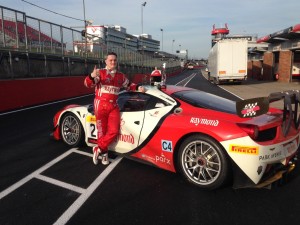
By Sanjay RajanGautham Singhania poses with the car after making his entry as Indian from FMSCI. An FMSCI image Chennai, 10 Sept 2014: Gautam Singhania will take part in the 2014 Ferrari Challenge Trofeo Pirelli – Coppa Shell to be held at Silverstone between Sept 12 to 14 as an official Indian entry endorsed by the Federation of Motor Sports Clubs of India (FMSCI).
The Coppa Shell is a series for “amateur gentleman drivers” in the one-make racing series organised by Ferrari, and Singhania will be competing in a Ferrari 458.“It will be a proud moment as an Indian to represent the country at Silverstone. I am looking forward to a great race ahead, as one can never get tired of burning rubber in a Ferrari,” Singhania said.A racing enthusiast since his college days, Singhania, who is the Chairman and Managing Director of Raymond Group, has had some impressive results in international competition this season.In July, Singhania came second in the opening race ofthe Britcar Championship at Oulton Park, two months after winning both races in the opening round of the 2014 Pirelli Ferrari Open held at Brands Hatch.Singhania on his debut won the amateur category in the All Stars European Drifting Championship in Malta in September 2012, and last year unveiled India’s first purpose-built drifting car.The Super Car Club that he co-founded is promoting drifting as an auto sport in a big way in the country, and Singhania also holds the lap record at the Buddh International Circuit in a non-open wheel car.eom/FMSCI press release/By Sanjay Rajan