Your basket is currently empty!
Tag: Formula One
-
Hamilton takes pole: Brazilian GP

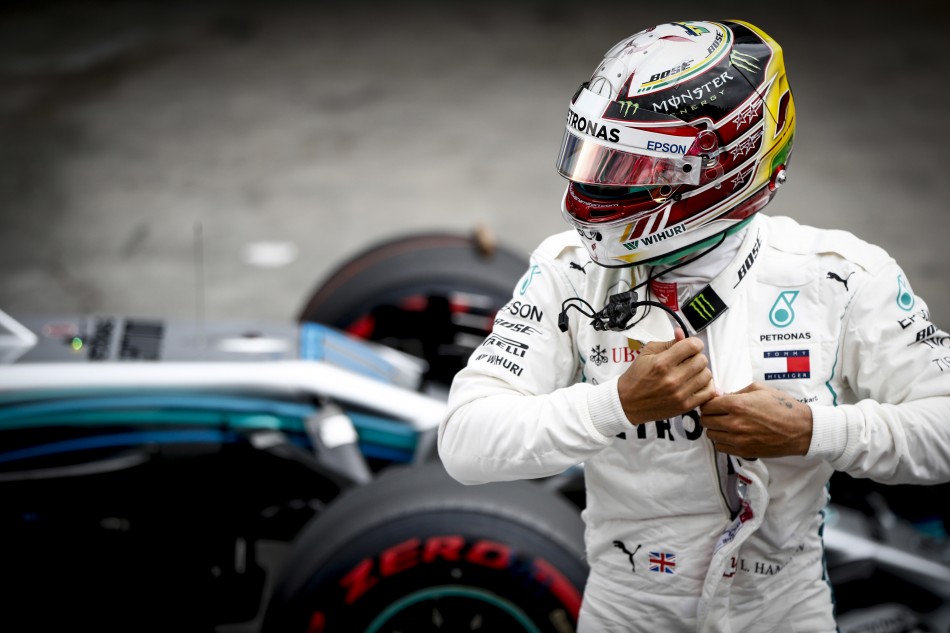
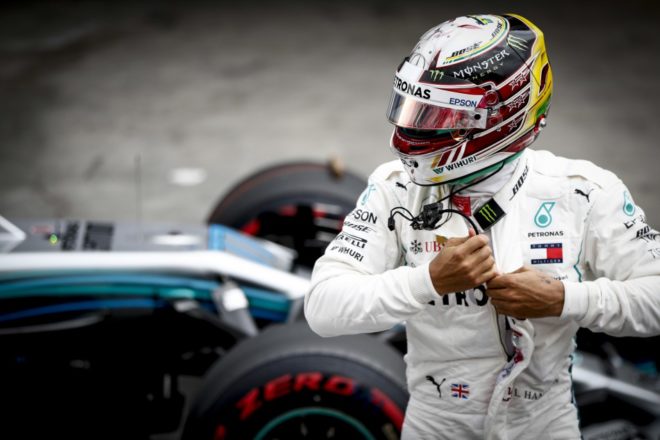
Hamilton after taking pole on Saturday. An FIA image Sao Paulo, 10 Nov 2018: Lewis Hamilton took the 82nd pole position of his career with the fastest lap in qualifying for the Brazilian Grand Prix, the 20th of the 21 races in the FIA Formula One World Championship calendar. The Mercedes driver edged out Sebastian Vettel by just under a tenths of a second. Vettel hit trouble during the session, however, being summoned to the stewards’ room following a mid-session incident at the weighbridge.
Race officials called the Ferrari driver to the weighbridge during Q2 but according to FIA Technical Delegate Jo Bauer’s report “the driver of car number 05, when called for weighing, refused to turn off the engine. The car was pushed onto the scales and weighed with running engine, which makes it difficult to get a stable result. After weighing the driver drove off the scales under its own power, and by doing so, he destroyed the scales.” Vettel was summoned to see the stewards at the end of Q3. vettel was later handed a reprimand and a €25,000 fine over the incident.
Earlier, ahead of Q1 circuit weather forecasters increased the likelihood of rain for the session from an earlier 40% to 60% and with ominous clouds moving towards the track a stream of cars took to the track in search of banker laps at the start of Q1.
Red Bull’s Max Verstappen set the early pace, with the Dutchman setting a time of 1:08.205. That put him more than two tenths clear of Ferrari’s Kimi Räikkönen, with Hamilton third ahead of Vettel, who eventually improved to steal third with a time identical to that of his team-mate.
At the lower end of the order the men in danger in the final minutes of the session were Renault’s Carlos Sainz, Toro Rosso’s Brendon Hartley, McLaren’s Fernando Alonso, Williams’ Lance Stroll and second McLaren driver Stoffel Vandoorne.
With rain falling in the closing moments of the segment, none was able to find the time needed to escape the danger zone and all five were eliminated in their pre-final final run positions.
Q2 proved to be a race against time as the rain closed in and after the first runs Bottas held top spot ahead of Hamilton, Verstappen and Ricciardo. Räikkönen, though, chose to abandon his supersoft tyres and drove back to the pits to take on soft tyres.
Vettel wanted to make a similar move but as he went to make the switch he was called to the weighbridge, leading to the incident with the FIA officials. He subsequently bolted on softs and jumped to P2, setting hbis best time on the yellow-banded compound.
Red Bull and Mercedes tried the same switch but none of their drivers could improve and thus they will start the race on supersofts, while Ferrari will start on softs.
In mixed and difficult to read conditions at the end of the session Sauber’s Charles Leclerc delivered a spectacular lap to rise from P11 and potential elimination to P8 and safety ahead of team-mate Marcus Ericsson and Toro Rosso’s Pierre Gasly, who was the last man through to Q3.
Eliminated at the end of Q2 were Haas’ Kevin Magnussen, Racing Point Force India’s Sergio Perez and Esteban Ocon, Renault’s Nico Hulkenberg and Williams’ Sergey Sirotkin.
In Q3 Hamilton seized control of proceedings, setting an opening time of 1:07.301 to sit 0.073s ahead of Vettel, with Bottas third ahead of Räikkönen. Max again took P5 ahead of Daniel, though by the incredibly small margin of just 0.002s.
And that was how the order remained. Hamilton improved marginally to 1:07.281 to claim his 82nd career pole position ahead of Vettel who made a small error on his final lap. Bottas took third ahead of Räikkönen and with no improvement forthcoming, Max ands Daniel qualified on row three of the grid. Seventh place went to Ericsson with Leclerc in eighth ahead of Grosjean and Gasly.
2018 Formula 1 Brazilian Grand Prix – Qualifying
1 Lewis Hamilton Mercedes 1:07.281 230.561
2 Sebastian Vettel Ferrari 1:07.374 0.093 230.243
3 Valtteri Bottas Mercedes 1:07.441 0.160 230.014
4 Kimi Raikkonen Ferrari 1:07.456 0.175 229.963
5 Max Verstappen Red Bull Racing 1:07.778 0.497 228.870
6 Daniel Ricciardo Red Bull 1:07.780 0.499 228.863
7 Marcus Ericsson Sauber 1:08.296 1.015 227.134
8 Charles Leclerc Sauber 1:08.492 1.211 226.484
9 Romain Grosjean Haas 1:08.517 1.236 226.402
10 Pierre Gasly Toro Rosso 1:09.029 1.748 224.722
11 Kevin Magnussen Haas 1:08.659 1.378 225.933
12 Sergio Perez Force India 1:08.741 1.460 225.664
13 Esteban Ocon Force India 1:08.770 1.489 225.569
14 Nico Hulkenberg Renault 1:08.834 1.553 225.359
15 Sergey Sirotkin Williams 1:10.381 3.100 220.406
16 Carlos Sainz Renault 1:09.269 1.988 223.944
17 Brendon Hartley Toro Rosso 1:09.280 1.999 223.908
18 Fernando Alonso McLaren 1:09.402 2.121 223.515
19 Lance Stroll Williams 1:09.441 2.160 223.389
20 Stoffel Vandoorne McLaren 1:09.601 2.320 222.876. -
FIA Friday press conference: Brazilian GP
Sao Paulo, 9 Nov 2018: The FIA Friday press conference was attended by team representatives Jonathan Eddolls of Toro Rosso, Nick Chester (Renault), Ayao Komatsu (Haas), Jock Clear (Ferrari) and Rob Smedley (Williams).
Nick, it’s been a great last couple of races for Renault and it looks like you’ve pretty much secured P4 in the Championship. That was your stated aim at the start of the year, but just talk us through how satisfied you’ve been with the development curve of this year’s car?
Nick CHESTER: Well firstly, it has been a pretty tight fight, we’ve had a fight all year and the last couple of races have been pretty good for us. We’ve developed the car pretty hard all year. We knew we were going to have to and that it would be a tight fight. But it’s pleasing and I think if we have another couple of decent races towards the end of the year – Brazil and Abu Dhabi – then we’ll be about there.
Q: These past couple of races, as we said, have been good. Have you made a step forward that has allowed you to be that competitive on every track or has it been track specific?
NC: It’s been a bit track specific. We know that there are some tracks that are better for us than others. We’re a little bit better in slow-speed corners than high-speed corners but also we have been working the development to try to bring the car on through the year.
Q: Thank you. Jock, it’s been a fantastic battle between yourselves and Ferrari this year but there can only be one winner. Where in your opinion did it start to slip away from Sebastian Vettel?
Jock CLEAR: Yeah, it has been a fantastic battle and that’s why we do this sport. It’s seasons like this that you just relish, Obviously when you are on the wrong end of it, it is frustrating. But specifically, we haven’t really looked back at what point, as you put it, things slipped away from us. The fact is a season is season and the points we score in Abu Dhabi are just as important as the points you score in Australia, and to win a championship you need to put together a full season and we haven’t done as good a job in that respect as our direct competitors and we are aware of that. We look back over the season, we look at the strengths of what is probably the strongest Ferrari season for 10 years and we build on those strengths. I think the win in Austin is a testament to the fact that the team does come back and does fight back and we did understand some of the issues we uncovered in the second third of the season. The fact is that over the course of 21 races you have to score more points than the opposition. We haven’t done that for Seb, we’re still in the hunt for the Constructors’ obviously and it’s going to be a tough battle here and hopefully to Abu Dhabi.
Q: Sebastian has been performing under a lot of pressure this year. How difficult do you think it’s been for him?
JC: It’s difficult to say really. The fact is drivers of his caliber relish the pressure. That’s again what I think, the top athletes pit themselves against the best and the pressure is the pressure. That’s part of the job. I think he has enjoyed the season. There have been highs and lows. I think he said recently that losing the championship in 2009 he found more frustrating. I think on the whole, he has come to this battle willing to take risks, willing to give it his all and we’re part of that. We’ve all done our part this year to the ups and downs. I think from Seb’s point of view it just gives him more strength to come back next year and say ‘this is unfinished business’.
Q: Thank you. Ayao, coming to you, Mexico aside, which was a bit of a blip for the team, it’s been a positive and consistent season fro Haas. In what areas have you improved the car since Melbourne?
Ayao KOMATSU: I think most of… all the areas. This is only the third year for us but this is also only the first year that we actually decided to develop the car throughout the season. The first year was all about operation. The second year we managed to focus a bit more on performance but third year we really focused on performance and improving the cars throughout the season. Of course last year we stopped development early to focus on this year, so that paid off. We are very happy with our baseline and how the team is operating, especially considering it is only our third season.
Q: So looking forward, there is a bit of a reset with the new aero rules. How are you guys dealing with that transition and how confident are you of retaining P5 in 2019?
AK: I think we are dealing with it as well as we can be. Obviously when the regulations changed from ’16 to ’17 that was a big change for us, that was going from first to second year. We were pretty aware of the challenge but we managed it. This year our understanding of the car, at least from an aerodynamics point of view, is reasonable, so yeah, I’m confident that our aero guys will do a good job again for next year. But if you ask me how confident am I to retain P5, of course it’s a competition, so we’ve got to do a better job than other people. So it’s not easy, I’m under no illusion and then going into our fourth again we need to look at ourselves, improving in every single department to have a chance of retaining fifth. So a huge challenge, but a challenge we will love to attack with our full capability.
Q: Thank you. Jonathan, we’ve talked about Haas’ development curve, we’ve talked Renault’s, can we talk to you about Honda? Specifically, where have they added performance and reliability over the year?
Jonathan EDDOLLS: Yeah, I think with Honda, honestly it was surprise at how good they were at the start of the year, given everything that we had seen in the press. They’d had a fairly… not a bad picture painted of them, but the expectation were lower than we experienced and they were already at a reasonable level. Through the year there have been two really big updates, the Spec 2 for Canada and then the Spec 3 fairly recently. The Spec 3 in particular saw a really big improvement in power, especially in qualifying, and that has really helped in some of the races and will help us for the next two races. Reliability has actually been relatively good. I think if you look at the number of PU penalties we have taken, it’s very high, and it doesn’t look like Honda has had such good reliability. However, many of those we have elected to take ourselves just to get Pus in the pool when we have had a bad qualifying for instance. Reliability has come on a long way and power is now looking good.
Q: Certainly is. Now while we’re talking progress, can we talk drivers as well, specifically Pierre Gasly? What has impressed you about him and in what areas have you seen him progress this year?
JE: Well, firstly he is very confident in his ability. He is a very fast driver and I think that confidence has grown throughout the year. Some the areas he has improved the most: tyres management. He was good already at the start of the year. As we know these Pirelli tyres are very difficult to understand in all of the conditions. Every race is different, every race presents a different challenge – graining, blistering, overheating. I think that’s one of the areas he’s worked on and developed the most. He’s still had a couple of races recently where it’s shown that we haven’t fully understood the tyres but the good thing with him is he’s happy to sit down after the race and go through everything – he’s massively keen to learn. The most recent races, he’s shown that in tyres management he has made big steps there. I think also his ability to track the grip in qualifying. Maybe at the start of the year, let’s say it was a surprise to him how much the grip would come up through qualifying and it can be quite difficult to track that run to run, but that’s another area that he has improved a lot.
Q: Thanks. Rob, some big news from you in recent days, you are going to leave Williams at the end of the year. Can you share with us why you are going to do that?
Rob SMEDLEY: Well, I don’t know if it’s big news, but it’s news I guess, on a quiet week. I think I joined Williams at a time when they were evolving from having a torrid time of it let’s say – the new regulations in 2014 and the part that I was going to play in the journey was to take on the vehicle science, the vehicle performance side of it, the race operations and to try to help out in that area and I think that if you look back at 2012, 2013 and from that point on, from 2014, with the huge effort that all of the guys that work in that department, we have been able to grow it, we’ve been able to improve it, and hopefully I leave it in better shape than it was. It’s a good group now, they’ve got good knowledge, good methodologies, we brought a lot of science into the way we use tyres, into the way we use the car in general, so that the team can go ahead and pretty much exploit any car that’s given to them, the race operations itself, the way the mechanics work. Hopefully it is in better shape than it was. It’s kind of time for a new challenge for me now, I think. Williams has got it’s own challenge in front it to come from where it is at the minute. I’m going to go away and take another challenge somewhere else. I’m going to spend some time at home – that’s first and foremost the thing I’m going to do. I’m going to spend some time with my family who have supported me for a long time. I’ve got to do that. I have no choice in that. But I’m very, very grateful that I can do that and spend some time being a normal husband, a normal dad and not going away every two weeks and not working until 9 or 10 in the office every night, so I’ll enjoy that to begin with and then we’ll go from there.
Q: Well, where do you go from there. Do you want to stay in Formula 1?
RS: Yeah, I definitely want to stay in Formula 1. Formula 1 is my passion. It’s been all my working life that I’ve been in Formula 1 and it’s still the pinnacle of motorsport. There are other series that are snapping at its heels but it’s still got a lot to offer. Formula 1, we’re working on it all the time, it’s not the complete package. It has so much more potential than what you actually see. So yeah, I do want to stay in Formula 1 on the technical side. I’m lucky, because I’m already talking to people and that’s a fortunate position to be in and we’ll just see where everything takes us.
Q: And just a final word on Williams? You know the team well, so what steps do you think the team needs to take next to regain performance and respectability in Formula 1?
RS: There’s never one magic bullet is there. I think in all areas really, you can never stop learning and improving. I think it would be a mistake to pinpoint one area and say that has to be the sole concentration or that’s the sole problem; it’s not. As with anything that’s not quite working as well as it should be, or as efficiently as it should be, with any business, with any organisation, it’s never one thing. What Williams need to do now… they’ve got strong leadership and Claire is at the front of that leadership and I think what they need to do at that leadership level, is they need a recovery plan and that has to attack all areas of the business. It has to be technical, but it has to be all the support structure of the business as well. There are areas that need modernisation, there are areas that need change and there are areas you should recognise that are strong compared to other Formula q1 teams but are not supported in other ways. It’s a long road, they’re a talented bunch there, there are some really good technical people, some really good engineers and a good management group and the trick now is they have to pull together and start to go in one direction.
QUESTIONS FROM THE FLOOR
Q: (Frederic Ferret – L’Equipe) Question to Jock Clear. You worked with Michael Schumacher and now you work with Sebastian Vettel. Can you tell us what are the similarities in the way they work and the differences between them?
JC: Yeah, obviously I’ve worked with a lot of drivers so this question comes up time and time again. Sorry to sort-of evade the question direction but direct comparisons just aren’t there, with any of these drivers, with any of the World Champions I’ve worked with. They are themselves, they are characters within themselves, they’ve got their own way of working. On the face of it, if you stand back and say, ‘well, would operating like Michael have made Seb more successful, or even would Michael operating like Seb have made him more successful, they are what they are. You get the rough with the smooth. We don’t get the opportunity to make the ideal driver. So they all attack it in a different way. The opposition and the competition of the hour of the year obviously varies, so with all sportsman it’s very difficult to make direct comparisons. All I can say is that the common theme that all of these top drivers have is that they are exceptionally focussed. They are exceptionally sensitive to everything around them. And that’s not just the car. That’s the support structure and the people around them. And they require a whole load of things lining up to get those championships in the bag. And that’s where the team comes in. That’s why it’s not just about the driver. It’s not just about Schumacher or Vettel or Hamilton. It’s about the whole team. So we, with Seb, will create victories and championships, hopefully, down the line and it won’t be in the same way as Michael did.
Q: (Scott Mitchell – Autosport) It’s a question to all five of you guys please. There’s a fair few people hoping that the rule changes on the front wing for next season will improve racing, make it easier to follow. The more you understand and learn about your respective 2019 challengers, how confident are you that this end goal will be met? And how much of a chance of there that this time next year we’re back and looking at the same things, same sort of numbers?
NC: OK, well, yeah, it is quite a big change for 2019. Big change to the front wing with wider span, different barge boards, different front drums, and I think the concept that the FIA have put forward to try and improve the wake to the following car is the right thing. Obviously in one year you couldn’t do all of the changes that are planned eventually for 2021. From what we’ve seen so far I think it’ll make a small difference. It’ll go in the right direction, so the following will be a little bit improved – but we’re probably going to have to wait until 2021 to see what the full package can deliver.
Jock, your thoughts?
JC: Yes, just to echo Nick really, on the face of it, it is going in the right direction. I think we’re all a little bit tentative about exactly what it’s going to look like and that is the fact of the matter. We’re going to have to wait until next year to actually see what the implications are – because of course ten teams will come up with ten solutions, some of which we won’t even have thought about and then that may well move the goalposts slightly. I think we are attacking the right areas. We are looking at the fact that close racing doesn’t necessarily mean everybody can overtake easily – but it does mean that cars can follow each-other and they can pressure each other – and I think that’s the thing we’re targeting. Just allowing cars to maybe be close battling in the future.
Rob?
RS: The only thing I would add to what Nick and Jock said is that yeah, I think Nik Tombazis summed it up quite well… I read an article last week and I think he said you’ll never get a Formula One car – which is essentially an aerodynamic formula – following like a touring car. It just won’t happen. Physics won’t allow that to happen. So you have to accept that cars are difficult to follow – especially with this generation of cars and the amount of downforce that they generate. So, y’know, it will be a little bit better, it will go in the right direction but we’ll all iterate to solutions to get us back to where we are in about six months.
Jonathan, anything to add?
JE: I think these guys have covered it. Obviously we haven’t ourselves done full overtaking simulations with the new regulations so I guess it would be unfair to say how much we think, as a team, it’s going to make a difference – but for sure, the start of next year will be a bit of a development race when we see all the different ideas and concepts that the teams come up with.
Ayao?
AK: A lot depends on other factors as well, such as tyres. So, we’ll see. I’ve got nothing to really add.
Q: (Nate Saunders – ESPN) A question for Jock. You mentioned at the beginning, looking at the season as a whole, and not pinpointing one position. It seemed that the common consensus around the middle of the season was that Ferrari had taken quite a decisive step ahead of Mercedes in terms of performance around Silverstone, Germany. Do you agree it was that significant? And if it was, how big a loss were those 25 points in Germany from Sebastian?
JC: Well, I can only say again that the value of points is the same throughout the year. Yes, I would say our car was at its strongest at around about that time and then we go on to Russia and Japan where we struggled in pure performance terms and we weren’t really in a position to take the fight to them. So, as I said, or as you’re saying, if you pinpoint specific areas, certainly you can highlight where they were stronger than us and we were stronger than them. But again, over the course of a season, we would like to now be in a position where we could win the next two races and win the championship for Seb. Or the Constructors’. Unfortunately, what’s gone before, the points are the points – but again, just to reiterate over the course of this season, we haven’t quite got it spot on at every race. The positive is we understand why. As I say, those couple of races where we did have a slump, we came back in Austin, we were brave enough to go back on some of the development, and that’s the kind of culture that we want to have now. That people are brave enough to say “OK, I think we’ve made a mistake.” We go back, we relearn what we thought we understood, and we come back in Austin and we win the race, and we were competitive again in Mexico. So that’s the positive to it. The championship position we all know.
Q: (Julien Billotte – AutoHebdo) Question to Jonathan, with James Key on gardening leave, how is next year’s Toro Rosso being designed and who is in charge of leading the process?
JE: Obviously within Toro Rosso, luckily we have very good succession planning across all departments, so already before James left, we had a deputy technical director, Jody, and for the minute, he’s the deputy technical director so he’s filling that gap for us at the moment.
Q: (Stuart Codling – F1 Racing) Apologies for pitching another one to the entire panel – but there you go. Calendar expansion. Looks like we’re going up again in size next season. The commercial rights holder has talked about maybe even going up to 25 in the future. For you guys as engineers, you thrive on creativity, attention to detail, all the types of factors that start to slip when fatigue creeps in. And you also have to deal with a travelling group of engineers and a group of permanent staff at home that are also looking at things. So, my question is, what is the effect of calendar expansion on your side of the business, and what sort of strategies can you come up with to mitigate those effects in the near-future?
AK: Yeah, obviously especially for small teams like us, increasing the number of races is quite tough. We don’t have so many people to substitute or rota in. And also in terms of process and procedure we’re still getting on top of what we’ve got now, so it’s not going to be easy – but it’s going to be the same of everyone. We’re happy to compete in this championship so whatever comes along we have to accept and take it. But yeah, it doesn’t really change what we try to put in place. But yeah, I expect the challenge for us to be a bit tougher than for bigger teams.
Jonathan?
JE: I think Ayao’s covered it. I think the key thing that we will need to do is look at more rotation. Some of the roles within the team, there is already a minimal amount of rotation. But I think that will need to expand to nearly all of the roles within the team. Probably the race engineer would stay the same throughout the season but almost all of the other positions, trying to do that many races with tests etc., just becomes too much. As you say, the fatigue is too high. It’s just not going to be possible. So I think we would have to cope.
Rob?
RS: Nothing to add really.
Jock – does it affect the big teams less than the smaller teams, the calendar expansion?
JC: Yeah, I would have to be honest and say it probably does. We have more strength in depth, we have more resource available to us. I think the only thing I would echo, as Jonathan said, we do have to actually look at how we’re using our people – because we want people to enjoy this. One of the great things about doing this sport, being involved in this sport is that it’s a passion for all of us. There’s very few people in this pitlane who wouldn’t be doing this on a Saturday and a Sunday if it was just their hobby. That’s the honesty of it. We would be doing this because we just love going racing with cars. And you want people to enjoy it. You don’t want people to be ground down after three years, saying, “it’s no good, I can’t do any more of this,” because people have come to this from six, seven, eight years old. They want to do it, and they’re passionate about it, and we don’t want to kill that passion. So, we’ll find ways to keep it enjoyable to keep it practically doable, and the racing will go on and hopefully it will continue to grow the sport.
Nick?
NC: Yeah, I think once you get towards 25 races you have to find a way to rotate a bit. People are already under pressure with 21 races. It’s a long season. The other thing is, it also puts pressure on the factory. You make bits for a lot longer through the year. So, there’s budget pressures and there’s factory pressure from making parts and obviously more freight to go with it.
Q: (Andrea Cremonesi – La Gazzetta dello Sport) Couple of questions, one for Jock, one for Rob. For Jock, I would like to ask you… we understood that you are changing the rules next year. I would like to know in which way that you are maybe working closer with Leclerc and how important is it for an experienced technician to work with a young guy? And for Rob, if one of your options on the table is to come back to Italy?
RS: Andrea, Andrea, Andrea…
JC: Do you want to answer yours first, Rob? Or have you?
RS: Go on, Jock.
JC: I think it’s no secret that with a change of driver line-up, we, as a team, are just going to cut our cloth accordingly, as we say in English, so I’m part of the team, I’ve recently made a longer term commitment to the team, and as such, I will use my skillset wherever we feel that’s best. I have a lot of experience with young drivers and a lot of experience with experienced drivers as well so with Charles coming in, I will help in any way I can to make his life easier, to ease some of the pressure and to make sure that we get the best out of Charles and out of the team as a whole over the next few years.
Q: Jock, just to be more specific on that, are you going to be Charles’s race engineer?
JC: It’s not all finalised at the moment but at the moment yes, I will certainly have a strong influence on his side of the garage and whether that is the job title or not we’ll finally decide upon but certainly I will be taking a closer attention to him than maybe I would have done on either of the individuals we’ve had – either Kimi or Seb – up to now.
RS: I’m going on holiday there (Italy) in January if that helps! I would say at this moment in time I’m not closing off any options. As I said earlier, I’m in a really fortunate lucky position that people want to talk to me so I’m talking and, as I said, there’s absolutely no avenues closed off. What I actually need to do is to at some point, towards the start of next year, is to get all the options on the table and after having spent a little bit of time away from it and being able to look at things with a clearer head, slightly less fatigued, then I will make a decision but until that point I will see what the options are as they come in and go from there.
Q: (Andreas Lopes – Motorlat) For Jock Clear: with Ferrari testing a new floor in previous races and then not used on Sunday in the race, can you explain what kind of problems you had or is it testing for next year?
JC: Well, there’s nothing really to explain. This is a process we go through at many events. I think we brought pretty much an aerodynamic upgrade to every race this year so we have various options open to us, depending on the circuit to circuit, we try and find the best combination. The positive is that we are producing these options, that the wind tunnel is continuing to produce effectively tools for us to use from race to race and that’s our job as race engineers on the operational side, is to make the most of the bits we’ve been given and that’s the process. For example, you’ve seen this morning, in FP1, we’ll do a comparison between two floors, two front wings, bargeboards, those sort of things and then from then on, we’ll decide which combination is giving us the best performance for this track. And that’s just a normal process for us.
Q: (Frederic Ferret – L’Equipe) Do you already have numbers for next year’s cars’ lap times and how much slower are they compared to this year’s ones?
NC: Well, we’ve got some initial estimates. Obviously we’re only part-way through the tunnel programme and we’ve taken a bit of a hit back with the new rules and it’s going to be a question of how fast we can develop. I’m not going to give you the actual number because obviously it’s more interesting for us but yeah, I think the key is going to be how teams come back and how they develop over the next few months and into next year.
JC: As Nick says, any change, whether it be big or small, tends to impact the programme because these cars are so highly developed around what you actually have on the car. As soon as you change one part it does take a step back so I think we’ve probably all taken a step back, when we look at the new regulations and then gradually we will recover. What the lap time is, what the numbers say is absolutely irrelevant at this point because it’s all relative. We will do our best, we will develop our best but if somebody else has done a better job it won’t be enough. If everybody else hasn’t, it will be enough and we simply don’t know. All we do is we go through our process which is what we can trust.
RS: It’s a reasonably big change, what we’ve done at the front end of the car that Nick talked about earlier. We’ve got rid of all the furniture on the front wing, it’s a wider span, the brake duct winglets have gone, the bargeboard area is very different and what that does is it gives you much worse wheel weight control essentially. What will be really interesting is that there will be… there’s some really clear directions with which to work and certainly we’ve found some really clear directions of where we need to work to recover the performance and it will be just very very interesting I think, at the start of the season, to see the different concepts that come out but then you’ll probably find that there’ll be a really quick convergence as usual as we take the best concepts from all the cars and blend that into the normal lookalike Formula One car.
JE: Nothing to add. I think these guys have summed it up very well already.
AK: No, not really. Nothing to add.
Q: (Scott Mitchell – Autosport) For Jock and Rob: Jock, how excited are you to work with someone like Charles next year? He’s going to be so highly rated and how important is it to manage him as an individual, not just a driver, when there’s so much expectation? And Rob, when you had the experience of working as Felipe’s race engineer when he started with Ferrari, how important was, that managing all of that expectation and getting to know him as a person and building that relationship?
JC: Obviously we’re very excited. We’ve known Charles for a while now. We’ve had a relationship with him over a few years, from his days in the Academy so he’s not an unknown entity for us, we’re not going into this completely blind and clearly in his first year in F1 he’s showed some great potential, he’s had some great races so I think everybody is excited about the prospect, everybody knows what kind of pressure he will come under, that racing at the very sharp end is going to be a very different prospect for him, but that’s a challenge for us as well. One of the comments that many people made was ‘is he ready?’ Well, we have to be ready as well, Ferrari have to be ready to take this step. It is a brave step that Ferrari has made and we’re all pleased about the fact that we’re willing to make that step but we have to be ready to give him the opportunity and support him in the right way and hopefully he’ll go on to great things and I think the relationship with Seb will be important. We need to manage that very positively and make sure the team as a whole grows, not just on Charles’s side and not just on Seb’s side.
RS: Well, we’re breaking the ten year rule now so it’s quite difficult for me to remember! I think that the world was probably a little bit different back then. We’re all so much more aware of exactly what Jock’s just talked about, that the expectations going from Sauber to Ferrari, which is exactly what Felipe did in fact, are enormous and even within the hierarchy of Formula One, the pressure increases as you go further up the grid. In Ferrari, to the Italian nation, Ferrari is a religion and therefore that just brings all its own issues, challenges, if you like, but I think we’re all so much more aware of that now. If you go back to 2006 when Felipe came in, it was just… we kind of pushed him through the door and said to him get on with it. And we realised very early on that that wasn’t going to work. We had a slight change of management on his car after about three races into the season and it was at that point trying to understand where the issues were and what we needed to do to solve them so we were being reactive if you like and trying to help him to integrate into this brand new environment. Even though he’d done some Formula One, he’d never done Formula One at Ferrari level. But again, to repeat myself, I think things have moved on so much now, we’re so much more aware and I can imagine that Ferrari already have quite a lot of plans to be entirely pro-active with Charles’s entry into the team and then how he goes through winter testing, how he gets through those first races. Expectation management is a big thing in Ferrari and I think that they’ve been, ultimately, really intelligent with the communications that they’ve made over that, that Charles is there to learn, he’s there to integrate himself well into the team and his future is not decided on 2019. He’s a guy with a great talent, he’s got a huge future in front of him, definitely probably the biggest talent we’ve had come into the sport in a while. It’s a pleasure to watch him and he deserves it. As long as Ferrari manage it correctly then it will be a huge success.
Ends
-
Bottas tops Mercedes 1-2 in FP2: Brazilian GP
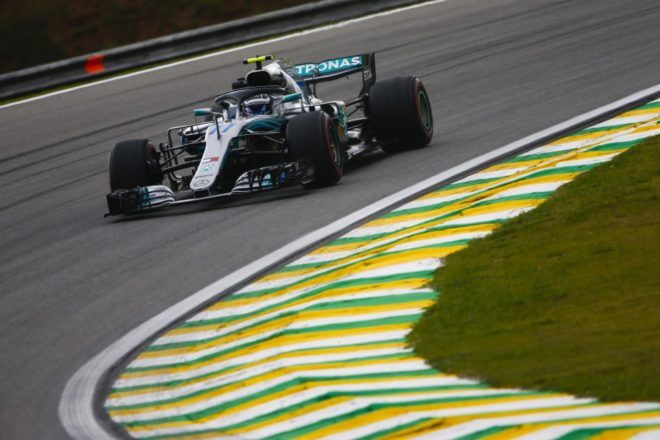
Bottas tops FP2. An FIA image Sao Paulo, Interlagos (Brazil), 9 Nov 2018: Valtteri Bottas led a Mercedes one-two in second practice for the Brazilian Grand Prix, finishing just three thousandths of a second ahead of team-mate Lewis Hamilton. Ferrari’s Sebastian Vettel was the Mercedes’ closest challenger finishing seven hundredths of a second behind champion Hamilton in the Frec Practice of Brazilian Grand Prix of the FIA Formula One World Championship on Friday.
Bottas set his session-best time just after the session was a third of the way through. After early laps on soft tyres, Bottas followed Vettel out on track on supersofts.
Both backed off on their initial flyers and went for a second attempt, with Vettel initially claiming top spot with his lap of 1:08.919. Bottas was close behind, however, and he took over at the top moments later when he crossed the line in 1:08.846.
Hamilton emerged on supersofts on the 40-minute mark, and despite setting the fastest first and third sector time, the champion lost out to his team-mate in the more technical middle sector and this finished in P2 with a best time of 1:0.8.849.
With Vettel third, fourth place in the session went to Red Bull’s Daniel Ricciardo, who finished 0.3s behind Bottas but 0.175 ahead of team-mate Max Verstappen, who spent much of the session in the garage with a suspected oil leak on his car.
Ferrari’s Kimi Räikkönen took sixth place ahead of Romain Grosjean, with the Haas driver repeating his morning efforts by finish in a best-of-the rest seventh place.
The French driver finished 0.174s ahead of Sauber’s Charles Leclerc by 0.174s, who edged second Haas driver Kevin Magnussen by 0.064s. Tenth place in the session went to Esteban Ocon of Racing Point Force India, who finished 1.313 off Bottas.
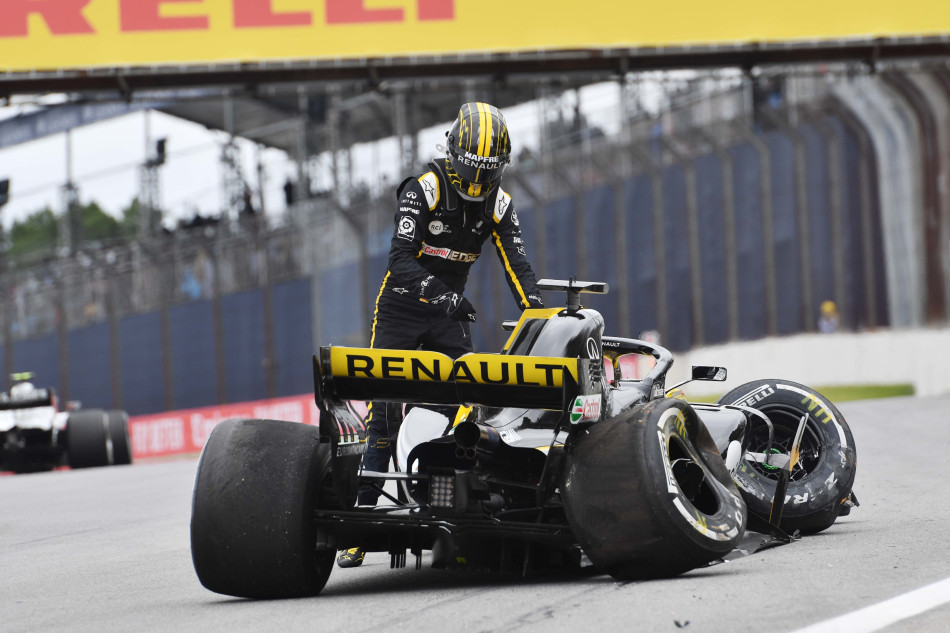
There was trouble in the session for Nico Hulkenberg. The Renault driver crashed out nine minutes into the session, spinning into the barriers when he dropped a right-front wheel onto the grass on the exit of Turn 14. The German driver damaged both ends of his car in the incident and he played no further part in the session.
2018 Formula 1 Brazilian Grand Prix – Free Practice 2
1 Valtteri Bottas Mercedes 48 1:08.846
2 Lewis Hamilton 43 1:08.849 0.003
3 Sebastian Vettel Ferrari 42 1:08.919 0.073
4 Daniel Ricciardo Red Bull 44 1:09.164 0.318
5 Max Verstappen Red Bull 28 1:09.339 0.493
6 Kimi Raikkonen Ferrari 42 1:09.412 0.566
7 Romain Grosjean Haas 44 1:09.769 0.923
8 Charles Leclerc Sauber 44 1:09.943 1.097
9 Kevin Magnussen Haas 39 1:10.007 1.161
10 Esteban Ocon Force India 45 1:10.159 1.313
11 Sergio Perez Force India 23 1:10.320 1.474
12 Pierre Gasly Toro Rosso 44 1:10.330 1.484
13 Fernando Alonso McLaren 36 1:10.332 1.486
14 Carlos Sainz Jr. Renault 48 1:10.458 1.612
15 Marcus Ericsson Sauber 44 1:10.532 1.686
16 Sergey Sirotkin Mercedes 46 1:10.569 1.723
17 Stoffel Vandoorne McLaren 26 1:10.596 1.750
18 Lance Stroll Williams 44 1:10.662 1.816
19 Brendon Hartley Toro Rosso 46 1:10.734 1.888
20 Nico Hulkenberg Renault 6 1:11.674 2.828 -
From winning mindset to fighting at the back of the grid, F1 has been tough: Ericsson
PRESS CONFERENCE
Marcus, if we could start with you. It’s been a busy couple of weeks for you since Mexico. You’ve announced your plans for 2019, in IndyCar. Is that farewell to Formula 1 or do you see IndyCar as a stepping stone back to Formula 1?
Marcus ERICSSON: I don’t really know the answer to that question; I think that’s what the future will tell. I go to America fully committed to doing a great job over there. I see myself as being there for quite some time. But then in the future you never know what will happen. I’m just super excited to go there. I met the team and it felt really, really good. I think IndyCar, from the outside, looks like a lot of fun, so I can’t wait to get started.
Q: So that means your Formula 1 tenure is over, at least for now. How do you reflect on the last five years?
ME: It’s been amazing, I’ve really enjoyed it, but it’s also been tough. Most of the time I’ve been running in back-of-the-grid teams and cars and that’s always tough, especially when you’re used to growing up through the junior ranks and you always fight for wins and podiums and you always go in with that mindset to a race weekend, and then the last five years that’s never been realistic and that’s been the tough part of it. That’s why also I’m so excited about next year, that I can actually be back racing for wins again. I bring a lot of experience and a lot of good memories from these five years, for sure.
Q: Let’s just finish by talking about the on-track performance of you and your Sauber. You had your sixth points finish of the year in Mexico. How confident are you of repeating that here at Interlagos?
ME: We are confident that we can be competitive here. I’ve scored points now two weekends in a row and I’m aiming to continue that. I think the car at the moment is competitive. We know it’s very tight there in the midfield but we’ve done a good job all year to improve all the time and we continue to do that and I’m sure we’re going to be in the fight this weekend as well. I feel really good, feel really confident so I’m sure we’re going to be there and fight for those points on Sunday.
Q: Thank you, Marcus. Stoffel, you’re another driver who has announced plans outside of: is it farewell to Formula 1 or do you see Formula E as a stepping stone back into Formula 1?
Stoffel VANDOORNE: It’s a bit hard to tell. I’m starting a new challenge, which I’m really looking forward to, with HWA in Formula E. I don’t really have a break this winter, so I’m going straight into that and that will also be… my mindset is to do the best job there. So whatever happens in the future, it’s difficult to tell at the moment. You know, the driver market this summer has been a little bit crazy and no one could have really expected what has happened. Things like that can happen in the future and who knows what is going to happen. But for now I’m just focusing on Formula E and trying to do the best job there.
Q: So how do you reflect on your couple of seasons with McLaren?
SV: Definitely it’s not been the best two seasons. I’ve had a great time with McLaren through the junior series and they’ve supported me a lot to make the step into Formula 1. But the two years I’ve had in Formula 1 have been good in terms of experience but I would have much preferred to fight higher up. The timing was right to get to Formula 1 and I think I was with the right team, the right support, but I think just the competitive we’ve had over those two years have not been great. It would have been nice to fight a bit higher up.
Q: Well, we saw you back in the points in Mexico last time out, where you finished eighth. Just talk us through that result: what changed on the car, did you make a breakthrough, because you were more competitive?
SV: Nothing changed. That weekend we just looked a little bit more competitive in general. From my side that weekend went really well from the start. Qualifying wasn’t maybe the best for us but we were a little bit closer to the group in front, which usually means on race day we are a little bit better than them. It turned out to be that way. I think the tyre degradation helped us quite a lot there to be a bit more competitive and to make a bit of a difference. It was nice to finish eighth and get some points on the board and also quite important for us for the Constructors’ Championship.
Q: Thank you. Brendon, we’ve been speaking to these guys about 2019. Any update on your plans for next year?
Brendon HARTLEY: Pretty much the same stance I’ve had for the last races. It’s probably not worth going into. I’m still very much focused on my own performance, what I can do to get the most out of the weekend, working with the team. I’m focusing on myself and not much has changed, so there’s no real news to give you.
Q: You’ve started ahead of your team-mate Pierre Gasly in two of the last three races, so it feels like you’re getting a bit of momentum behind you. While we’re in reflective mood, can you just talk us through how you feel you’ve improved as a driver during 2018.
BH: Yeah, I definitely have improved and there was a lot to learn, being a rookie – an old rookie at 28 years old – but still a rookie in Formula One. Coming from LMP1 there was a lot of similarities, which I’ve touched on many times before but then also a lot of new things to learn. Tyres is a big one that springs to mind. Maybe the environment in Formula One, the style of racing, and I guess some of the external pressures that are sometimes put on you as a driver. I felt through the season… yeah, I’ve maybe hardened my approach, I’ve got stronger, I’ve learnt from mistakes, figured out, with the engineers what’s going to get the most out of the weekend for me, in terms of the car, the set-up. I think I’ve bought a lot of experience to the team and in the second half of the season I’ve definitely been stronger. Qualifying, me and Pierre have been quite aligned: sometimes he’s been just ahead, sometimes I’ve been just ahead. The races haven’t always worked out and I don’t think the points on the board is a true reflection. I think sometimes people do forget it’s also a team sport, it’s not just an individual, it is very much a team sport and I’ve been a team player. I think now the focus is really on making sure we’re ahead of Sauber before the end of the season. That’s the main focus for Toro Rosso right now and I think we’ve got an exciting couple of races ahead. Mexico we had really, really good pace considering we had the older-spec engine. Even with the issue I had on the first lap with the flat spot, I was still in a points position before the penalty and the damage, and I think that, knowing how much performance we can gain from the new engine, and potentially the new aero package that we’ll both have this weekend, I think we can be excited and optimistic for the last couple of races for 2018.
Q: You mentioned the upgraded Honda engine there. How much of an improvement is that? Is it something you can actually feel in the cockpit?
BH: It’s a tricky one to answer because these Formula One cars are very light and you have close to 1,000hp – I don’t know the exact number – and the objective from the drivetrain, which is massively complicated with three different engines and all sorts of calculations going on to make it all work but in theory you get power when you put down the throttle pedal and… I guess the point I’m trying to make is that every track we go to, we have different downforce levels, different altitude in Mexico, for example, so to feel a power increase is tricky for a driver but the lap time shows a story and there’s no question from everybody in the team and from all the data that there’s a really big step. I think we suffered a little bit in Mexico, especially in the racing environments and off the start line not having it – but we have it onboard again for the next two races and yeah, it gives us something to be optimistic about.
Q: Lance, we’ve spoken to everyone else about 2019, so I feel it’s only right that I should ask you the same question. When are you going to tell us what your plans are?
Lance STROLL: Yeah, well, right now I’m still focussed on the remainder of this season. There’s two races left, that’s where my heads at. We’ll see what the future holds.
Q: Can we expect an announcement about your future within this season or do you think it’ll be a winter announcement?
LS: I believe so. Time will tell. That’s all I can say right now.
Q: I think that’s you telling us to move on. We’re in reflective mood here. You’re coming towards the end of your second season in Formula One. Talk us through your ambitions in the sport now. You’ve been able to observe all the other drivers around you, including the world champions. What do you think you can achieve in Formula One?
LS: That’s dependent on a lot of things. I mean, right now I’m just taking it day by day, year by year. We’ll see – but there are so many factors in Formula One that are important. You need to be in a good car first of all – this year has been a good example: it’s been a very challenging year with the car. The performance really hasn’t been there and therefore we couldn’t score many points. So that’s a bit part of it – but yeah, I’m not looking too far down the line right now, I’m really just trying to, y’know, focus on the present, make the most of where I am currently and we’ll see down the line what happens. It’s too hard to tell, sitting here today.
Q: How difficult has it been for you to make the most of where you are currently, because it’s been a difficult season? What do you feel you’ve learned during 2018?
LS: Yeah, it has been very challenging. The car just hasn’t been there so we’ve just been surviving every weekend rather than actually competing. Been getting knocked out in Q1 a lot, most of the races I’ve had good starts and I’ve been in a points-scoring position, we’ve just fell back down the order so it’s kind of always been the case, we’ve just been on the back foot throughout the whole year. We haven’t really developed the car at all since Australia, I don’t think we’ve really improved the car at all. It’s been tough to see some of our competitors early on, like Sauber, for example, who were neck and neck with us at the beginning, make big steps in the right direction, compared to us. Yeah, it’s been a survival year, that’s all I can say. But I’ve still developed as a driver, I’ve matured as a driver. The second year in Formula One, more seat time, more experience. I’ve absorbed a lot of information, even though it’s been a very challenging year compared to last year but that’s the nature of the sport. As a driver, you have to accept that some years are more challenging than others and that’s part of the game.
Q: Kevin, we’re talking about 2018, so how do you reflect on the season that’s just been? It’s been a good year for you. You can clinch your qualifying head-to-head against Romain Grosjean this weekend in Brazil.
Kevin MAGNUSSEN: Yeah, it has been a pretty good year, I think. It has shown that we are making progress with the team, year by year, and I think our aim should be to keep that up in the next season. I think this year it looks like we’re probably going to finish fifth in the Constructors unless we get some very good weekends in the next two weekends. That leaves us at least one realistic target for next year, to take another step forward. I think this year we’ve had a very fast car. We haven’t always scored the points that we should have for different reasons but the good thing about that is that we can go into next season and know that we can do better, because the performance is there.
Q: Well, Mexico really hurt the team’s chances of getting P4 in the championship, didn’t it? Both cars knocked out in Q1 for the first time this year; do you understand what the problems were in Mexico?
KM: Not quite, but I think we understand that it’s probably to do with tyres as we hadn’t changed the car so the only thing that really can be such a big factor is the tyres and I think in Mexico you have these factors like you have very little downforce because of the altitude and that has a lot of knock-on effects on different things so cooling as well and you run the car in a different window in Mexico. I think we got the tyre performance a little bit wrong so we suffered a lot in Mexico and that was a weekend to forget, definitely, but also at the same time we of course are trying to learn from it because last year and the year before the team also had a bad weekend in Mexico, so hopefully next year we can learn a bit more and get there a little bit more prepared, to not have such a big off weekend.
QUESTION FROM THE FLOOR
Q: (Ian Parks – New York Times) Stoffel and Kevin; Stoff you touched on your two years at McLaren, can you just expand a little on your relationship with Fernando, what you might take forward from those two years, having worked alongside an experienced double World Champion? And Kevin, could you just give me your thoughts on Fernando as a driver? I know you’ve expressed some disagreements in the past. Does that still hold true and what positives can you say about him?
SV: Yeah, for me it’s definitely been a good experience to go alongside Fernando, let’s say. The way he prepares a weekend – obviously Fernando’s one of the most experienced drivers on the grid. I think as a rookie it was very valuable for me to learn from that, especially the way he prepares his weekend, through the practice sessions, how he’s building up to the race on Sunday, how he’s trying to extract the most so there’s a definitely a lot I’ve learned over the past two years which I can carry forward.
KM: My respect for Fernando as a driver is very big. There’s no doubt he’s definitely one of the best drivers on thmme grid. Even though we’ve had some tough fights and a few arguments, there’s no damage to my respect for him as a driver. I think that’s it.
eom
-
F1 FAN VOICE surveys!
This is an invite from F1 Fan Voice team to take part in the Mexican GP & F1 Travel survey. Please follow the link below:
https://www.f1fanvoice.com/svy/index/36683 The survey will take no more than 5 minutes and you will be awarded 200 points for your time.
Become an F1 fan and enjoy yourself!
-
Lewis Hamilton crowned World Champion for the fifth time: Max Verstappen wins Mexican GP
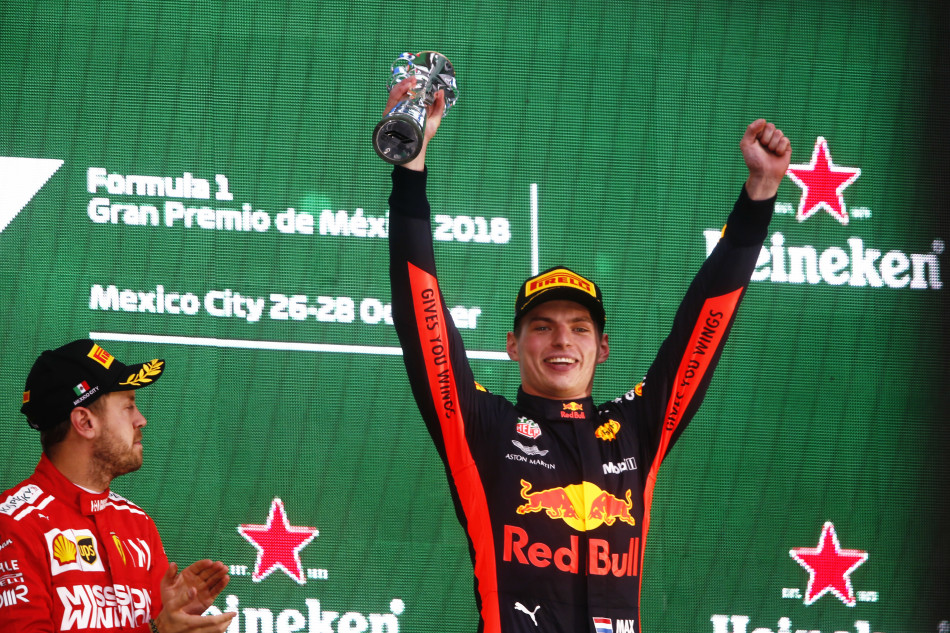
Mexico City, 28 Oct 2018: Fourth place in the Mexican Grand Prix was good enough to hand Mercedes’ Lewis Hamilton his fifth FIA Formula 1 World Drivers’ Championship title, as Red Bull’s Max Verstappen took his second successive win at the Autódromo Hermanos Rodríguez ahead of Ferrari’s Sebastian Vettel and Kimi Räikkönen here on Sunday.
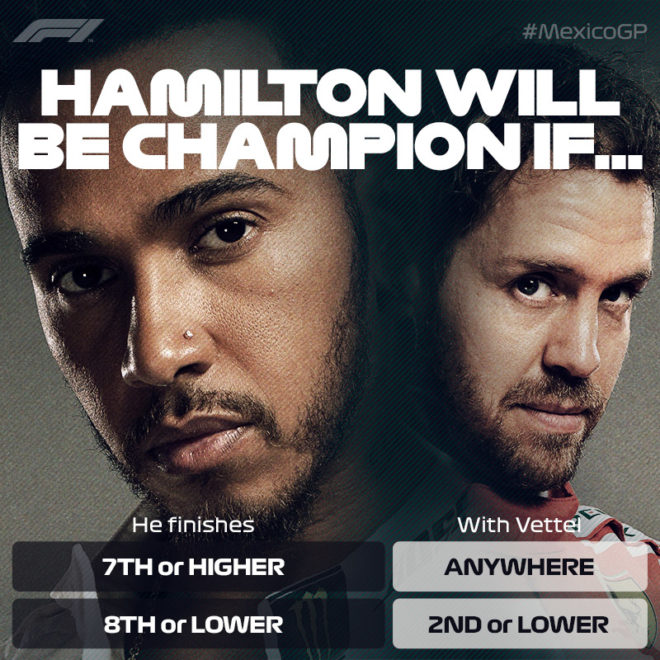
Going into the race Hamilton knew that even if Vettel won the race a seventh-place finish in Mexico City would be good enough to take the title and starting from third on the grid, ahead of his title rival, the Briton was well positioned ahead of the start to score the points necessary.
In the end, despite a brief challenge for the lead after the start, tyre issues in the race hampered Hamilton’s chance of finishing on finishing on the podium but fourth place was good enough to end Vettel’s hopes and seal a title that puts him joint second on the list of all-time title winners behind seven-time winner Michael Schumacher.
For his part, Vettel did everything possible to keep the title fight alive, climbing from fourth on the grid to second. But with almost 14 seconds to make up on race leader Verstappen in the closing stages the task was simply too great for the German.
At the start, Hamilton got away well and the Mercedes driver charged into the gap Dutchman Verstappen had also made a good getaway, however, and as the trio powered towards Turn 1 it was the Red Bull driver who had the best line. As they swept through the corner Verstappen emerged in the lead, with Hamilton second and Ricciardo in third.
Behind them Vettel initially lost out to Valtteri Bottas, but when the Mercedes man was forced wide in Turns 4 and 5 of the opening lap, the Ferrari driver was able to reclaim fourth place. On the edge of the top 10, Force India’s Esteban Ocon tangled with Renault’s Nico Hulkenberg in Turn 1 with the result that Ocon’s front wing was destroyed.
The debris from Ocon’s car was hit by Fernando Alonso and soon after, smoke could be seen trailing from the back of the Spaniard’s McLaren. He pulled over at the edge of the track in Turn 11 and retired from the race. That led to a brief VSC period but when the action resumed Max began to quickly pull away from Hamilton. By lap 10 he had built a 3.4s advantage over the Mercedes driver.
Hamilton was the first of the leaders to pit, the Briton stopping at the end of lap 11 to take on supersofts. Bottas followed moments later in a double stop and they emerged in P5 and P8 respectively.
Red Bull responded by pitting Ricciardo a lap later and Verstappen on lap 13, with both drivers also taking on supersofts. Vettel now led the race ahead of Ferrari team-mate Kimi Räikkönen with Verstappen third ahead of Hamilton and Ricciardo.
Verstappen soon made his way back to second place, however, closing on Räikkönen and sweeping past the Finn under DRS on lap 15. Hamilton and Ricciardo quickly followed suit as the Ferrari driver’s tyres went off, and at the end of lap 17 the Italian squad opted to pit Vettel and his team-mate in quick succession. Verstappen was now back in the lead ahead of Hamilton and Ricciardo.
Fourteen laps later, as Verstappen worked through the first sector of his 31st lap, Carlos Sainz steered off track and stopped. That sparked another VSC period.
When racing resumed, Vettel began to once again close on Daniel and when the Aussie got stuck behind the battle for eight place between Racing Point Force India’s Sergio Pérez and Sauber’s Charles Leclerc, Vettel saw his chance. He made a move in Turn 1 and squeezed past Ricciardo as they exited the Turn 2.
Vettel next targeted Hamilton as the Briton struggled on his supersoft tyres, the Ferrari driver swept past to take P2 on lap 39. Ricciardo now began to close on the title leader.
On lap 47, Ricciardo made the decisive move. As the pair crossed the line to start the lap the Australian opened the DRS and dived to his left. Hamilton tried to outbrake the Red Bull but went off track, leaving Ricciardo to sweep through to third place.
Hamilton immediately pitted for a set of ultrasofts, as did Vettel, and at the end of lap 48 race leader Max also made a second stop, with the Dutchman bolting on a set of supersofts. The order was now Verstappen ahead of Ricciardo, with Vettel third ahead of Räikkönen and Hamilton.
Ricciardo’s race ended on lap 62. With smoke trailing from the back of his car he slowed in Turn 1 and pulled over to retire.
Verstappen now led Vettel by a little over 14 seconds with Räikkönen third. Hamilton was in fourth place almost a minute off the lead but secure in the knowledge that the placing would be good enough to hand him his fifth world title.
And that was how it ended, with Verstappen taking his fifth career win and a second successive win in Mexico City. Vettel finished second, some 17 seconds adrift of the Red Bull, with Räikkönen third.
Hamilton, meanwhile, cruised home in fourth place to seal his fifth world championship title, equalling Juan Manuel Fangio. Behind the champion, Bottas took fifth place ahead of Renault’s Nico Hulkenberg with Sauber’s Charles Leclerc in seventh. Eighth place went to 15th-place starter Stoffel Vandoorne of McLaren. Sauber’s Marcus Ericsson took ninth place, and the final points position went to Toro Rosso’s Pierre Gasly, who started from last place on the grid.
-
Flash: Hamilton crowned World Champ for the fifth time: Verstappen wins Mexican GP
Mexico City, 28 Oct 2018: Britain’s 33-year old Lewis Hamilton won the FIA Formula One world championship for the fifth time at the Hermanos Rodriguez circuit here on Sunday to equal Argentine Juan Manuel Fangio and now the sights are set on Michael Schumacher’s seven.
Hamilton finished fourth in the race today after losing the battle with Verstappen to take the lead at the start, but that was enough for the Briton to clinch the 2018 Championship with two races to spare. Max Verstappen won the Mexican race for the second successive year ahead of Sebastian Vettel and Kimi Raikkonen. Polesitter Daniel Riccardo of Red Bull Racing had to retire, his 8th this season.
After finishing the race, Hamilton got a congratulatory message from Wilbur Smith, in his typical cowboy style and did a couple of donuts. Then he sported the Union Jack proudly before filming the huge crowd and in the Mercedes garage, he hugged each and everyone.
“A big thank you to my team. Bono said it wasn’t won here, it was won with a lot of hard work across a lot of races. It is an incredible feeling, and very, very surreal,” said Hamilton.
-
Flash: Daniel Ricciardo takes Mexican Pole
Mexico City, 27 Oct 2018: The smiling assassin, Australian Daniel Ricciardo took the pole position with a last-minute burst that edged out teammate Max Verstappen by 26 thousands of a second in the Mexican GP, the 19th round of the FIA Formula One World Championship at the Autodromo Hermanos Rodriguez here in Mexico City.“I knew the pace was in the car, Max showed that all weekend. Once I heard I got pole I was – I’ve got to relax now, I’m tripping major nut-sack right now,” said the Red Bull driver, Ricciardo.
In Q2, both Esteban Ocon, and Sergio Perez of Racing Point Force India were eliminated along with Fernando Alonso, B Hartley and Pierce Gasly. Earlier, Grosjean, Vandoorne, Magnussen, Stroll and Sirotkin were eliminated in Q1.
Defending champion Lewis Hamilton of Mercedes needs to finish 7th or higher this weekend to win the title regardless of where championship rival Ferrari’s Sebastian Vettel finishes.
It is after five years the two Red Bulls are starting on the first row after their last 1-2 way back in 2013 US Grand Prix. Vettel qualified P4, ahead of Valtteri Bottas and Kimi Raikkonen on P6.
-
Max Verstappen tops FP3 ahead of Hamilton, Vettel: Mexican GP
Max Verstappen tops FP3 on Saturday at Mexico City. An FIA image Mexico, 27 Oct 2018: Max Verstappen completed a clean sweep of quickest time in practice for the Mexican Grand Prix, the 19th round of the Formula One World Championship here on Saturday.
The Dutchman topped the timesheet in FP3 at the Autódromo Hermanos Rodríguez, more than two tenths of a second clear of championship leader Lewis Hamilton and title contender Sebastian Vettel.
Verstappen went quickest late in a weather-compromised final practice session, moving ahead of Sauber’s impressive Charles Leclerc with his first qualifying-style lap on hypersoft tyres.
The Dutchman set a time 1:16.385 to lead the Monegasque driver by 0.674s. Mercedes driver Hamilton and Ferrari man Vettel then closed in with their quali sims, but neither could overhaul the Red Bull Racing driver and when Verstappen popped in another late flying lap he opened the gap further to end the session 0.254s behind the Dutchman. Vettel was left with third place, just under three hundredths of a second behind Hamilton.
The session began on a damp track and with drivers reluctant to run in the unrepresentative conditions, there was little action in the opening half of the session, with mots drivers completing only an installation lap before returning to the pit lane.
As the session reached the halfway point, McLaren’s Fernando Alonso was the first to bolt on slick tyres and that prompted a steady stream of lap times as driver worked their way into the session and the conditions.
Leclerc was quickest in the early phase of consistent running with the Sauber driver jumping into P1 ahead of Ferrari’s Kimi Räikkönen despite encountering traffic in the final part of his lap.
Mercedes Valtteri Bottas then dislodged the Monegasque driver with a lap of 1:18.839 but his pre-eminence was brief as Leclerc upped his pace and retook top spot. His time there was brief, however, as Vettel then became the first man to dip blow 1m17s with a time of 1:17.836.
Verstappen slotted into P2 with a time of 1:17.918, but the session was then neutralised as Bottas was forced to pull over at the side of the track in the stadium section with a suspected hydraulic issue.
While Verstappen had snuck in a lap before Bottas’ problem, the double waved yellow flags and then the deployment of the Virtual Safety Car scuppered Daniel Ricciardo’s first flying lap.
When the action resumed with a little over 11 minutes remaining, the field began their qualifying simulations and Leclerc was the first to show his hand, lapping 0.777s faster than Vettel’s earlier benchmark.
With little time remaining the track became congested in the final minutes, with all fit to run car on track. That again compromised Ricciardo’s quali simulation and as Hamilton and Vettel found the improvements to take P2 and P3 respectively, Ricciardo, who had finished second in both Friday sessions, was left with fourth place ahead of Räikkönen.
Leclerc finished as best-of-the-rest with a lap of 1:17.059. That left him just 0.775s behind Verstappen on a good morning for Sauber as its second driver Marcus Ericsson finished in P9, albeit half a second off Leclerc.
Seventh place went to Carlos Sainz, with the Renault driver finishing just under two tenths of a second ahead of Toro Rosso’s Pierre Gasly. With Ericsson ninth, tenths place in the session went to Nico Hulkenberg in the second Renault.
At the bottom of the order Haas’ Kevin Magnussen failed to set a time in the session, with the Danish driver restricted to the garage by an intercooler problem.
2018 Formula 1 Mexican Grand Prix – Free Practice 3
1 Max Verstappen Red Bull Racing 9 1:16.284
2 Lewis Hamilton Mercedes 9 1:16.538 0.254
3 Sebastian Vettel Ferrari 11 1:16.566 0.282
4 Daniel Ricciardo Red Bull Racing 7 1:17.028 0.744
5 Kimi Raikkonen Ferrari 16 1:17.045 0.761
6 Charles Leclerc Sauber 13 1:17.059 0.775
7 Carlos Sainz Jr. Renault 11 1:17.336 1.052
8 Pierre Gasly Toro Rosso 16 1:17.525 1.241
9 Marcus Ericsson Sauber 14 1:17.565 1.281
10 Nico Hulkenberg Renault 10 1:17.623 1.339
11 Esteban Ocon Force India 10 1:17.731 1.447
12 Sergio Perez Force India 10 1:17.819 1.535
13 Romain Grosjean Haas 10 1:18.145 1.861
14 Stoffel Vandoorne McLaren 15 1:18.445 2.161
15 Fernando Alonso McLaren 11 1:18.548 2.264
16 Brendon Hartley Toro Rosso 10 1:18.637 2.353
17 Sergey Sirotkin Williams 9 1:18.669 2.385
18 Lance Stroll Williams 8 1:18.698 2.414
19 Valtteri Bottas Mercedes 5 1:18.839 2.555
20 Kevin Magnussen Haas 1 -
Max Verstappen tops FP2 as Red Bulls dominate again: Mexican GP
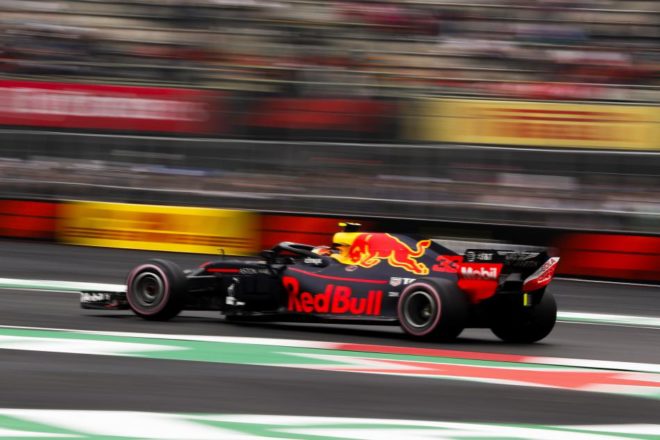
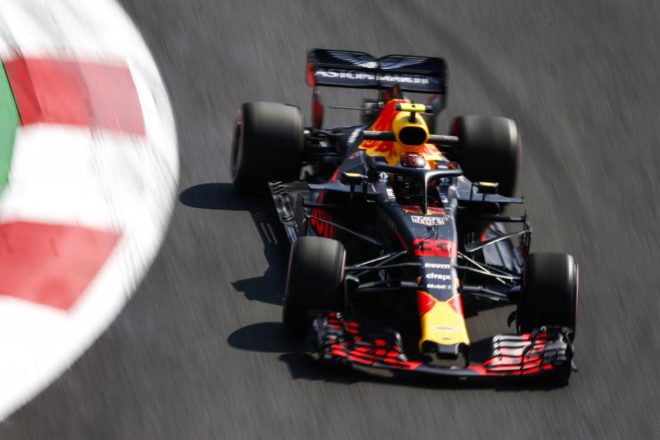
Max Verstappen tops FP2 Mexican GP. An FIA image Mexico City, 26 Oct 2018: After topping the morning timesheets in FP1 at the Autódromo Hermanos Rodríguez, Red Bull Racing again scored a 1-2 in the second practice session for the Mexican Grand Prix, with Max Verstappen outpacing team-mate Daniel Ricciardo by 1500ths of a second. The Dutchman stopped at the edge of the track late in the session, however, with an apparent engine issue. The 19th round of the 21-round FIA Formula One World Championship will be held on Sunday where defending champion Lewis Hamilton of Mercedes is expected to seal his fifth championship title with two rounds left. The Brazilian GP is on Nov 11 and the season concludes 15 days later in Abu Dhabi on November 29.
In the morning session the Red Bull duo were comfortably clear of the rest of the field, though Mercedes and Ferrari minimised hypersoft running in FP1, but in the qualifying runs of the second session both Verstappen and Ricciardo finished over a second clear of their chief rivals, Mercedes and Ferrari, with Sebastian Vettel leading the way for the Scuderia with a fourth-placed time of 1:17.954. That left him 0.001s behind third-placed Carlos Sainz of Renault, but 1.234s of the pace set by Verstappen.
Both Red Bull drivers were quick early in the session, on ultrasoft tyres, and when Vettel became the first to try a qualifying simulation on hypersofts he only managed to post a time good enough for P2 behind Verstappen.
The Red Bulls then bolted on hypersofts for their performance runs and upped the pace considerably.
Verstappen posted a lap of 1:16.720 that put him ahead of the impressive Sainz, and then Ricciardo found enough pace to slot into P2 with a time 0.153s behind the Dutchman.
It wasn’t all plain sailing for Verstappen, however, and towards the end of the session he coasted off track at Turn 3 and pulled over close to an escape road when his engine cut out.
Vettel’s qualifying simulation left him just one hundredth of a second ahead of Nico Hulkenberg in the second, while sixth place was taken by Toro Rosso’s Brendon Hartley.
Mercedes, meanwhile, had a muted session, with Lewis Hamilton the quicker of its driver pairing. The championship leader ended the session with a best time of 1:18.100, almost 1.4s adrift of Verstappen. Team-mate Valtteri Bottas finished in P9 behind the second Ferrari of US Grand Prix winner Kimi Räikkönen. Tenth place in the session went to Sergio Pérez of Racing Point Force India.
2018 Formula 1 Mexican Grand Prix – Free Practice 2
1 Max Verstappen Red Bull Racing 21 1:16.720
2 Daniel Ricciardo Red Bull Racing 32 1:16.873 0.153
3 Carlos Sainz Renault 35 1:17.953 1.233
4 Sebastian Vettel Ferrari 42 1:17.954 1.234
5 Nico Hulkenberg Renault 36 1:18.046 1.326
6 Brendon Hartley Toro Rosso 35 1:18.061 1.341
7 Lewis Hamilton Mercedes 40 1:18.100 1.380
8 Kimi Raikkonen Ferrari 42 1:18.133 1.413
9 Valtteri Bottas Mercedes 40 1:18.140 1.420
10 Sergio Perez Racing Point Force India 24 1:18.167 1.447
11 Esteban Ocon Racing Point Force India 24 1:18.485 1.765
12 Romain Grosjean Haas 39 1:18.733 2.013
13 Charles Leclerc Sauber 39 1:19.024 2.304
14 Pierre Gasly Toro Rosso 36 1:19.047 2.327
15 Stoffel Vandoorne McLaren 30 1:19.096 2.376
16 Lance Stroll Williams 25 1:19.219 2.499
17 Marcus Ericsson Sauber 41 1:19.322 2.602
18 Sergey Sirotkin Williams 37 1:19.335 2.615
19 Fernando Alonso McLaren 31 1:19.543 2.823
20 Kevin Magnussen Haas 35 1:19.670 2.950