Your basket is currently empty!
Tag: FIA
-
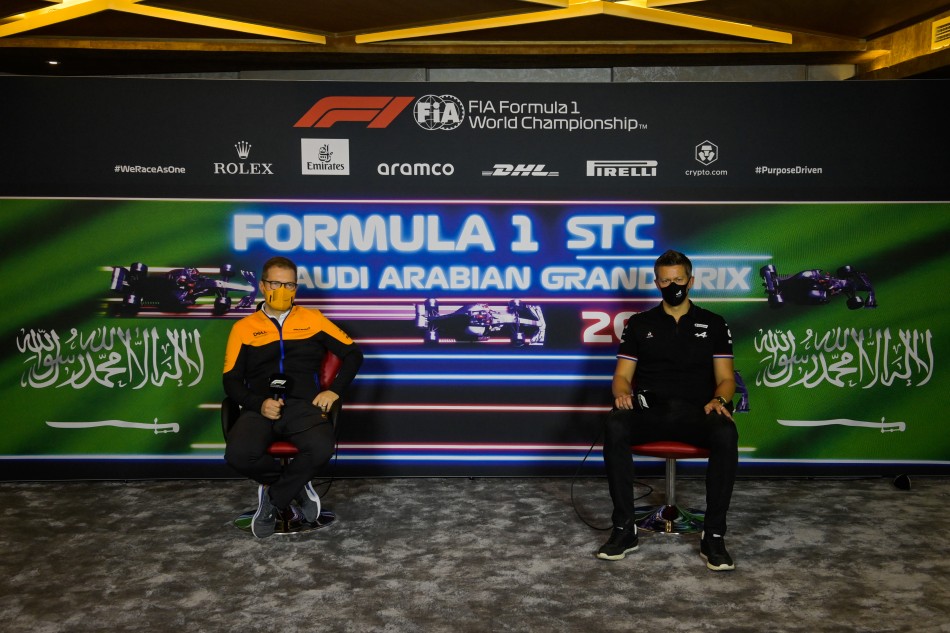
Team Principals happy with the new track’s grip levels
PART ONE
TEAM REPRESENTATIVES
Andreas SEIDL (McLaren), Marcin BUDKOWSKI (Alpine)
Q: Welcome to you both, question to you both: what are your drivers saying about this Jeddah Corniche Circuit? Marcin?
Marcin BUDKOWSKI: Just walked out of the debrief to come here, so I only heard snippets of information but yeah, Fernando said it was a pretty demanding circuit, which we kind of knew after having prepared for this race and walked it last night. But yeah, lots of blind corners, high-speed between walls, so lots of very high attention all the time to make sure we don’t make a mistake because I think a mistake is going to be paid very severely. If you crash, you could damage the car badly or even hurt yourself. So, yeah, we haven’t seen any of this, this morning, which is good – but yeah, certainly a very demanding circuit and one that’s going to produce a good show, I think.
Q: And from a car set-up point of view, whereabouts are you? Can you compare it to another track?
MB: We’ve had information on the track layout, we didn’t really have information on whether it was bumpy or in terms of what the grip would be so we’ve got to run through all of this information, based on what we have learned this morning. So far, so good. I think it’s roughly what we expected. The grip isn’t bad, actually. There was a bit of concern when these new circuits come up and they’re not used in anger by either F1 cars or other cars, that sometimes the oil comes up and it makes it very, very slippery as we’ve seen in Portugal and Istanbul last year. That doesn’t seem to be the case. At least our car has a lot of grip, don’t know about Andreas’s but ours seems to work quite well.
Thank Marcin, Andreas?
Andreas SEIDL: Yeah, pretty much the same on our side. I think the drivers were looking forward to the track after what they have seen back home in the simulator and also after the track walk here. Have to say well done to the team back home for preparing the drivers, the team in the simulator and the simulations for this track here. We were straight away in decent shape I would say, from the first run onwards, which is always good. But in the end, still early days. On paper I think it is a track that should suit our car with running a bit less downforce, compared to previous races – but we have to see now, I guess, how the track evolution is as well. But looking forward to the rest of this weekend here on a very exciting track. And a very special track as well.
Q: Andreas, staying with you, can we throw it back to the last few races. It was a tough triple-header for McLaren. How do you explain what happened in those races? Where did the performance go?
AS: Well, first of all, I think it had nothing to do with performance. Whenever we had our incidents, I think we were ahead of at least one car of the Ferraris, for example. We lost more than 30 points with first lap incidents, or with a tyre puncture last time with Lando. In addition to that on the team side there were things we could have done better. That’s how it goes sometimes. It’s part of our learning process as well, as a team. It’s important that we learn from that and improve again. It’s simply important now to focus on these last two races and make sure we get back to scoring the points that are on the table for our car and for the team with Daniel and Lando.
Q: Several people have asked me to ask about Daniel in Qatar. Can you just elaborate on what his issues were in that race?
AS: Yeah, on Daniel’s side, unfortunately we had an issue with having the need to save a lot of fuel in the first half of the race which pretty much compromised his race totally, so he had no chance to get back into the points, despite a strong start. In the end we had a combination of two issues: I think the fuel consumption was higher than we anticipated – which I think was common for a lot of cars, listening to the radio conversations throughout the grid, and then in addition we had a technical issue on the car which gave a too-high fuel consumption reading. And until we understood the issue, we had to save an enormous amount of fuel, which took away any decent performance.
Q: Is that the first time you’d had a problem like that?
AS: Yeah, it’s something we experienced for the first time – but we have understood the problem, together with our colleagues from Mercedes and I’m sure it won’t happen again.
Q: OK, and the Constructors’ Championship Andreas. You’re 39.5 points behind Ferrari. What’s your take on the battle now?
AS: Ah, well, obviously seeing this gap now after our bad run in the triple-header, we need to be realistic. At the same time, we are competitors, we will give it our all, as long as it’s theoretically possible. But yeah, obviously we have a high chance of finishing P4. Which, again, from my point of view would be a great result for us. We shouldn’t forget which teams are in front of us. It is not a surprise that a team like Ferrari after their exceptional bad year they had last year, is coming back strong. We shouldn’t forget that we are beating, with a good gap, teams like Alpine – full works team – and other teams as well, so the most important thing is again we made a big step forward in terms of the performance, in terms of how we work together as a team. We could score our first victory in quite some time, first pole position, so I’m very happy seeing this development as a team, and that’s positive and that’s key, obviously, on our journey to get back to the front in Formula 1 more often during race weekends – but at the same time we need to be realistic. That takes time. I would say we are still a young team, after the reset we have done two years ago. We have now, let’s say, a stable organisation in place, and now we simply need time to learn together, grow together, and make the next steps.
Q: As you say, Andreas, you made a big step forward this year. How surprised were you by the leap that Ferrai made in the middle of the year?
AS: Not surprised because, I think if you look at the performance ranking, didn’t change very much really compared to the first races of the year. If you look at the qualifying results in Bahrain, Imola or Portimão, we pretty much saw the same as we have seen in the other tracks now at the end of the season in high downforce configuration. I think we simply, let’s say, maximised our points a lot in the first half of the season where Ferrari, from time to time, struggled on the operational side, and we maximised our points especially on the tracks that were suiting our car with a low downforce configuration – but at the same time we lost now a lot of points as described before. In the end, overall, I think P4 – again we still try to fight for this P3 – but if we finish in P4, I think it’s in the end a fair reflection in terms of where we are as a team at the moment, which is a good place to be in, and we simply need to keep working on our journey, on our plan that we have in place, getting infrastructure in place, yeah, keep working together as a team now, with this new organisation, and then I’m confident we can make the next steps in the next years.
Q: Andreas, this is the last time we’ll see you in this forum this season, so when you look back at 2021 as a whole, what is your message to the boys and girls in Woking.
AS: First of all, a big thank you, to every single member of the team again for the great commitment and the hard work everyone has put in during difficult times again. Big thank you also to our colleagues from Mercedes. It was very important to get the Mercedes power unit into our car for this year before we have this big change for next year with completely new technical regulations and gained this experience this year and, yeah, I think everyone can be very proud of what we have achieved this year, this big step forward we made again. And we simply need to keep working hard as one team towards this objective, to make the next steps in the next years and again, I’m very confident we can make these steps. We have everything in place once our infrastructure is finished as well in the next one to two years, to challenge the teams in front of us again.
Q: Marcin, coming back to you. Let’s throw it back to Qatar, a tremendous race for the team there. How satisfying was it to pull such a large gap on AlphaTauri in just one race?
MB: I think the first satisfaction for the team, to be honest, was to see Fernando on the podium. It was our second visit to the podium this year. It was Fernando’s first for quite a few years and well deserved. I think everybody would agree it was long overdue for Fernando, and at a few races this year he deserved a podium and didn’t get it through various circumstances. And yeah, we were extremely happy at the bottom of the podium to cheer for him and then you do the math after that. Obviously, that third place, together with Esteban’s fifth, was a great points tally for us. Made even sweeter by the fact that AlphaTauri didn’t score any – so it’s a 25-nil in one race, that’s a pretty good result for the Championship, and certainly that makes us a bit more relaxed and comfortable here – but I think relaxed is the wrong word because, there’s two races to go and who knows? Especially on a circuit like here, the AlphaTauri could do the same to us and maybe we’ll be back to where we were two races ago. Yeah, slightly more comfortable going into the next two races but there’s still some points to score to make sure we finish fifth.
Q: The car was brilliantly fast the last time out. It has fluctuated a bit from race track to race track. Do you understand why you were so good last time out and do you think it will translate to this track here?
MB: We were expecting to be good in Qatar because of some of the circuit characteristics and the reality is, with a midfield that is so close, a tenth or two in one direction or the other actually creates quite big swings in performance between the teams – but I think it’s fair to say we weren’t expecting to be that competitive. The whole weekend started really well and clearly we were much more forward on the grid and in the race that we were expecting to be. I think a combination of preparation, on this new circuit, and the team has done a great job and a great effort in preparing the race, and yeah, we got some things right and some other teams didn’t quite get them right and as a result the difference was quite large and was there to be seen. The great thing for me is that, beyond that preparation, that is between the trackside team and the factory, we then delivered at the track in a quite spectacular way again, which shows that it’s quite promising for next year – because if we do manage to produce a quicker package – which certainly is the objective – then we have what it takes to race it to the highest level.
Q: We’ve seen your drivers working very well together at several races this year. Have you ever experienced such a close working relationship between drivers in your career?
MB: Every driver pairing is different – but certainly this one is fantastic to see. There is a bit of an older brother-younger brother relationship between Fernando and Esteban. Certainly Esteban is looking up to Fernando because of his career and his achievements. Equally, at the beginning of the year he was, y’know, well determined to show Fernando how quick he is, and he did that on a few occasions. I think Fernando gained a lot of respect for Esteban when he saw how quick he could be. So the two, pretty quickly in the season, gauged each other and observed each other – but also they get on really well. The two races where we ended up on the podium, in both races, they helped each other, and almost without any need for the team to underline this. Fernando knew exactly what he was doing in Budapest to help Esteban win this race, and when Fernando jokingly asked Esteban to help him in Qatar, Esteban knew exactly what the race situation was and was very willing to do that. It’s great. It was great to see. We’ve seen that on the track but we see it every day in the debriefs, in all the race preparation. They respect each other, they help each other and they’re working together to get the best results for the team.
Q: And Marcin, looking at the season as a whole now, if you finish fifth, is that a fair reflection of where you are as a team at the moment?
MB: On pure pace I think we’re somewhere between fifth and sixth place, depending on the tracks, so in a way I think we’re probably over-delivering a little bit, the pace of the car, if we do finish fifth. It’s a tricky one, how to assess this, because in one way, it’s the third season in a row we would have finished in fifth position in the Championship and that can be seen – and rightly so – as stagnation if you want; equally we are using pretty much the same engine for the third year, pretty much the same chassis and the same gearbox for the third year in a row. We were planning to use them for two years, it was a conscious strategic decision. We weren’t planning to use them for three but that was the result of Covid and the current regulations being extended by one year. So, with a car that has pretty much the same mechanical basis, if you want, we’ve managed to maintain our position in the Championship, and actually get closer to pole position, closer to the best, if you want. So, that shows that the other areas of the team, if you want, have moved forward, and have progressed. The ones that we haven’t frozen. So that’s quite exciting for next year, because we’re going to develop everything. We’re going to have a brand-new engine, we’re going to have obviously a new chassis and new aero because the rules are changing, and we’ll be starting from scratch and we’ve seen that, with the right opportunities, the team can do a great job in developing the areas we can develop, and then operate the car at the track. The trackside team has proven this year that they can do the job. So yeah, it’s in our hands now to do the best possible package for next year.
QUESTIONS FROM THE FLOOR
Q: (Dieter Rencken – Racing Lines) To both team representatives please. The financial regulations are not only complex, they are also new and I guess next year around about March will be the acid test. Do you have any concerns that the FIA may not be able to enforce them properly, 100%, due to their complexities?
AS: To be honest, I’m very happy with the entire process that is in place at the moment, regarding enforcing the budget cap or the financial regulations and at the moment I don’t see any red flags there to be honest.
MB: Yeah, same thing. There’s quite a lot of checks going on. We get regular visits from the FIA. We get regular requests for data and for information. Probably more than we were expecting and they are at very short notice and including surprise visits to the factory and we are very happy about it, because that’s how it should be and that’s how it should be policed. We are lucky enough not to be impacted by the cost cap this year so we are taking it as a learning year to be ready for the following years, but yeah, obviously we are very much in favour of the cost cap. We have been one of the teams that has supported it throughout the process and worked very closely with the FIA to make it as robust and as policeable as possible and we are obviously in favour of it being policed and respected very well because we think it’s the right thing for Formula 1. So, so far, very good.
Q: (Luke Smith – Autosport) A question for Marcin. Laurent Rossi did an interview a couple of weeks ago in which he spoke about possible organisational and management changes going into next season for the Alpine team. Obviously you have run with a couple of guys, yourself and Davide, overseeing things this season. Has Laurent said what those changes next year might be and who would be involved in that?
MB: Honestly, we’re still racing. We still have two races to go and I don’t really want to comment on this, especially as it’s probably the most important two months for this team since Renault and now Alpine came back to Formula 1, because this new set of regulations, the cost cap, as we just mentioned, the new technical regulations, the fact that we are having a new engine for next year, it’s a very, very intense period at the factory, both in terms of the development of the car and putting performance on it and actually getting a car in time for testing next year, because, as you do, we have pushed everything to the limit, as far as possible, to gain as much performance as possible, so I think as part of the management of the team my responsibility is to protect the team from any kind of gossip and rumours and let them work in the most serene and quiet way as possible and focus on delivering a car that is as quick as possible. So we’ll talk about it maybe at the end of the year or into next year but at the moment I think my focus is really to protect the team from any kind of distraction.
Q: (Edd Straw – The Race, via email) Marcin, looking at the performance of the car over the whole year, how happy are you with way the team has hit its technical and developmental targets and can you give an overview of what you feel have been the strengths and weaknesses of the Alpine package?
MB: It comes back a little bit to what I said earlier. The fact that we froze the engine three years ago certainly made us lose some ground, because our competitors have developed. It was a strategic decision and it was related to preparing the new regulations of the new cars. I think it was the right decision, with the resources that we have. Obviously it was painful, because we see some of our competitors’ progress. And it was the same with the chassis and the gearbox. Maybe they are less differentiating directly through onto the performance but they enable you to change the geometry of the car and evolve it to find more performance. So we suffered from this. Aerodynamically, we have developed the car. With the new regulations we haven’t done the best job, well, the changed regulations from 20 through to ’21. These modifications, the floor mostly, some people have done a better job than us and some people have done a worse job than us, so we have missed a bit our targets. If we hadn’t missed them I think we would be more comfortably in fifth position, but I don’t think we would have been able to challenge these guys but we would have been nudged closer. There are always regrets but there are lots of positives in the way team works. In the last three years you know the team has improved massively. Last year we had lots of issues with the reliability of the car. This year, there are still two races to go, but we have had effectively one DNF, one real DNF, that was related to a car issue. The trackside team has proven very, very good management of the tyres, the strategy, the racing, interaction of the drivers, we’ve mentioned that, so lots of positives to take and lots of positives that are also no visible yet, in the factory, in terms of how we are developing next year’s car, which is full of new technology and new stuff, so you know, it’s frustrating sometimes to see that… we would have liked to make a bit more progress this year, but equally we have done it for a reason and it’s because we have focused for a while now on next year and hopefully that pays off.
Q: And Edd asks about the strengths and weaknesses of the package?
MB: I think I’ve answered that without specifically pointing fingers here and there if you want. It’s the fact that we have frozen some developments has constrained us but there are areas we could have done a better job equally.
Q: (Andrew Benson – BBC) Marcin, this is for you. You have recently signed Oscar Piastri as your third driver and presumably you have your eye on him potentially getting a seat in F1 in the future. Esteban is on a long-term contract, three years I believe you announced it as. Fernando has a one-year deal. If Fernando is still driving at the level he is now in the summer of next year and he’s talking about wanting to stay in Formula 1 for another two, three, four years if he can, how are you going to make that decision as to what to do for the future beyond 2022? How will you decide when you can’t compare them directly, who you should pick?
MB: It’s a good question, but it’s not about a direct comparison. Oscar’s announcement, beyond being an announcement as such, if you want, that he will be our reserve driver, comes with an awful lot of other things if you want. Oscar is going to be very involved in the simulator and he is already doing some of this but not as much as we’d like because obviously he is racing in Formula 2 and he still needs to win that championship this year but he is going to be doing a lot of development work, a lot of simulator work, spending time in the factory, very close with the engineers, he’s going to be doing quite a lot of track running as well. Well, he’s going to run in Abu Dhabi for the post-season test this year. The regulations next year imposes to run him at two free practice sessions. We’ll do a bespoke testing programme for him in Formula 1 cars, to make sure he really, really ramps up. We’ll develop Oscar a lot, beyond just taking him to the races as our third driver. To come back to your question, how are we going to make that decision, well, let’s see next year first. If the car is quick and Fernando is happy, then we will have one type of discussion. If that’s not the case then we will have a different type of discussion. But certainly we have a great talent with Oscar in the wings and if there is no seat available at Alpine I’m sure we will find a solution for him to drive a Formula 1 car and stay in the Alpine family.
Q: (Dieter Rencken – Racing Lines) Regarding my previous question, do you both believe that any penalties that are proportionate to, can I call it the crime or breach of the financial regulations that is?
AS: I didn’t get the question fully?
Q: (Dieter Rencken – Racing Lines) If there are penalties, do you believe that the provisions for penalties are proportionate to the sort of breach that you could have? In other words that there is no wiggle room and somebody would say “well, we will breach the regulations because the penalty is only so much”.
AS: To be honest, I am pretty with what is in the regulations at the moment, the provisions that are in. I have full trust in the system that is in place and in the FIA, and that if there is a breach, depending on what the breach is, there is the right penalty for it. Again, we are coming back to what we said before. It’s not a big secret that we are big supporters of these regulations that are in place. It’s really good to see also how detailed the interaction that’s happening at the moment between the teams and the FIA and I am very, very confident that, let’s say, after this period we are in now where we all have to learn also being in these new regulations first time, that we have a system in place that is making sure that we are playing on a level playing field in terms of the budget we spend.
MB: Yeah, I agree with Andreas. The one thing I would add is the regulations, as they are written, don’t specify what the penalty is for what kind of breach. We know it could be financial, which means a fine, or sporting, which could mean anything from points deduction to disqualification from the whole championship. And the reason they are not defined is that as soon as you define a penalty teams start to calculate whether that’s the right thing to do or not. If you know you risk a five-second penalty in a race for track limits or something like this, you are going to make a call whether it’s better to serve your penalty or not serve it and build a gap if you want, if you gain an advantage. That’s things we do on track and there is no reason why teams would not do that in the realms of the financial regulations as well, and that’s exactly what the regulations are trying to prevent. Now, we haven’t seen any breach yet, we haven’t seen any sanction yet, so we will see effectively if it happens, but hopefully it won’t be necessary and everybody will respect them.

PART TWO
TEAM REPRESENTATIVES
Guenther STEINER (Haas), Otmar Szafnauer (Aston Martin)
Q: To you both: what are your drivers, what are the engineers, what’s the team saying about the new track here in Jeddah?
Otmar SZAFNAUER: Well, I usually start with the same answer that this press conference takes place at the same time we have our debrief so it’s hard for me to give you an answer on what the drivers have said but during the session, they were pleased with the grip level, a bit higher than we anticipated going into the session. Looked like the track was really good fun to drive but for us, anyway, there is some work to be done in between the two sessions to optimise the balance of the car and get the downforce levels right.
Guenther STEINER: Very similar to Otmar. I just listened to one driver and then I had to rush away but as Otmar, said the drivers were positively surprised about the grip level which came along after a few runs and enjoyed the track, it must be fun to drive, you know, once you get used to it then our guys, the engineers going over the data now and seeing where we can make some improvements as well.
Q: Now Guenther, it’s a new, very high-speed track with very little run-off. What advice have you given your drivers coming into the weekend?
GS: I don’t need to give them advice any more. They got it once and they know now what to expect. They know that the worst thing they can do is losing track time so obviously they were both – I wouldn’t say cautious – but at least they took it carefully, a little bit, to make sure they got around it and I think everybody did a little bit like this because there is not, as you say… once you go off, you hit something, there’s nowhere to go so that means session over and they also have to think about the future. We’re coming back here in March next year and the more we learn this year, the better we will be next year, so I think that they take that to heart and I actually didn’t need to tell them anything about that.
Q: Now it’s been nice for Nikita to get a clean start to the weekend. That wasn’t the case in Qatar, obviously, given his limited number of laps there, were you impressed by how he handled the weekend in Doha?
GS: Yeah, absolutely. He drove, I think, 15 laps before going into the race. It’s always… also the confidence level must be low of anybody doing that so he handled it well and he stayed calm about it and made the best out of it, what was there
Q: And what happened to the chassis?
GS: It’s in repair now. It’s just… on the bottom, it’s pretty badly damaged. I’ve seldom seen a chassis damaged like this, going over kerbs. It happened and it’s now back in Europe to be put together again.
Q: And Guenther, can we look at the season as a whole now? Given that you haven’t developed your car, how tough has it been to keep the team motivated in 2021?
GS: I wouldn’t say… It isn’t easy but the further we get on in the season, the better it gets because we can see light at the end of the tunnel, hopefully. At least we know we get a new car, we are in the development game as well next year so I think in the mid-season, just before the summer break it was the toughest period, I would say, for everybody because the results weren’t good, but after that we had a few little highs, they are very small highs but like last weekend or two weekends ago in Doha, Mick, in the race, stayed close to our competitors in front of us. We were as close as we ever were which is pretty good because we know we haven’t done any development and other people have, so some things we are doing right. Hopefully, the car next year is what we expect it to be and we will have fun again.
Q: As you say, you haven’t developed the car but has the team progressed in other ways during this season?
GS: Yeah, because we kept it always like we would fight for points. There was never a giving up situation, that we didn’t try hard. You saw last weekend, when they had to change… take the engine out of Nikita’s car and we got it back in very quickly and everybody worked just as hard as we would if we were fighting for points so that, I think, prepares us for next year and we will be, at least on that side, in a good position.
Q: And Guenther, Robert Shwartzman is going to be testing your car after Abu Dhabi. What do you expect from him, and can we expect closer ties between the team and him going forward?
GS: At the moment it’s a test because it’s a young driver test. We always discussed that young drivers haven’t got the opportunity to test so with Ferrari, we just used… we call it the old car, it’s still the current car for him and just give him a chance. There is no really big expectation. I think my expectation is that he does a day of running, that we don’t have any mechanical issues, that he doesn’t go off or anything and… I think this guy should enjoy it when they go out for the first time in an F1 car on an F1 race track.
Q: Otmar, you guys have enjoyed a good run of late. Sebastian scored in three of the last four races. Lance, sixth last time out. Have you made a set-up breakthrough or has it been more circuit-specific?
OS: Well, I think if we put a weekend together and have a bit of luck and we can do well with the car that we have, a bit of it is circuit-specific. It was the first time we were in Qatar, we had both of them in the points and unfortunately Seb was pushed wide in turn one; I think we could have done a little bit better and Lance drove a fantastic race to sixth. It bodes well for the end of the season. I think, looking forward, we’d like to get both of them in the points here as well as in Abu Dhabi and finish on a strong note going into next year. That’s always useful to finish quite strongly and then have a good, successful winter.
Q: As you say, Lance drove a fantastic race last time out but prior to that he’d had a bit of a tricky run. Was it important for him to get that result before the end of the year?
OS: Yeah, it’s always good to have a strong run and re-confirm that the skills and abilities are there. He is highly skilled and it was great to see him have a good run in Qatar and it was at a track that he’d never been to before and he didn’t put a foot wrong. Had the Ferraris behind him for quite some time at the end and he did a great job to keep them there.
Q: Now Otmar, this is the last time we’re going to see you in this forum this year. So just, looking back at 2021 as a whole, how do you sum it up for Aston Martin?
OS: Well, it was a bit disappointing to start the season less competitive than we’d hoped, due to the late and unilateral aerodynamic changes that were made and thereafter we did the best we could to pull ourselves out of that hole but like everybody else in the midfield, we had to stop developing this year’s car due to the fact that the 2022 regulations are completely different. And once we stopped, all we could do is get the most out of the package that we had and that’s exactly what we’re going to do in the last few races.
Q: Did you get the most out of the package, on balance, this year?
OS: On balance, I think so, yes. We do a lot of work before we get to a Grand Prix in the simulator. The drivers drive it quite a bit, more than once and I think we hit the ground running well, but there are circumstances that are completely out of our control like I said. In the last race, Seb having to go off track to avoid being hit and some accidents and things where we didn’t optimise, but like I said, those things are out of our control.
QUESTIONS FROM THE FLOOR
Q: (Julien Billiotte – AutoHebdo) Otmar, what’s the latest regarding your personal future? Will you still be with Aston Martin next year or could we see you somewhere else on the grid?
OS: Well, like, you know… I’ve answered that before, all that stuff is rumour and conjecture and like I said, I’ve got a contract here at Aston Martin.
Q: (Jon Noble – motorsport.com) Guenther, Dmitry Mazepin has proposed a staff bonus scheme to help encourage personnel to stay with the team next year. What do you think of this idea and is it something you would accept?
GS: I would say… We don’t have people running away. We have about 60 people who are with us from the beginning. At the end of the season, sometimes, every year, a few people leave because they want to move on in their careers, they want to move on from going to all the races, so it’s not something unexpected. On the offer from Dmitry, we are looking into it, how we can make it work with the budget cap, legally and all that stuff and then we see when we get back to him.
Q: (Dieter Rencken – Racing Lines) Otmar, where do you stand on the Dan Fallowes situation at the moment? I’m sort of hearing that he won’t be able to join you until the end of 2023 or thereabouts. Have you thought about going legal about it?
OS: Well, that’s a process we’re going through now, Dieter, and I have now definitive date to give you, unfortunately.
Q: (Julien Billiotte – AutoHebdo) Otmar, is Lawrence Stroll keen to build his own engine in the not too distant future?
OS: Well, you know, never say never. We have a long term contract, however, with Mercedes and we were happy with the powertrain that we have. They’ve served us well over the years and the plan is to stay with Mercedes.
Q: (Luke Smith – Autosport) Otmar, how impressed have you been by Sebastian Vettel’s performances this year in his first season with the team? Do you feel that he’s made good progress through the year, settling in with the team? And off track as well: how important has he been as a voice for a number of very important issues for the wider world beyond Formula 1? We saw in Hungary earlier this year, he was obviously very outspoken about the LGBT laws in that country, this weekend, as well, we have seen him sporting some rainbow coloured trainers as well. How important has he been as a voice for F1 as a whole?
OS: Well, I’ll start with him settling in; he has settled in really well. We’ve learned, as a team, from Sebastian. He and Lance work very well together. They’re a true team pairing which shows on track and he’s helped us understand what it takes and we will hopefully, in the future, give him a car where he can illustrate the skills of old and yeah, he’s done a great job for us. And as far as his voice, he did a karting event here yesterday for ladies and girls where he taught them some karting skills and I think that kind of thing that he does is wonderful for us all. I think he spent hours at Silverstone picking up rubbish and that wasn’t a publicity stunt, he did it because he wanted to collect some of the rubbish from underneath the grandstands, at a place where he was part of the show, so for him to do things like that, I think, is wonderful.
Q: In hindsight, Otmar, how long did it take him to get up to speed? At what point did we start seeing those skills of old, as you referred to it?
OS: Well, if I remember back, it took about four races and I remember speaking to Sergio, and I think I’ve said this before, Sergio was saying look, I too moved teams, he moved from our team to Red Bull. Sergio himself thought it was going to take him about five races to get to grips with a whole new philosophy of car. Seb had the same thing, coming from Ferrari to us, a whole new philosophy, a whole new powertrain. The driveability of the powertrain was different, the steering rack, for example, was different which he didn’t like, which we had to adjust. There are many things, but if I remember back, I think it was about four races to where he got comfortable.
Q: (Dieter Rencken – Racing Lines) Otmar, you’ve recently recruited an aerodynamicist by the name of Eric Blandin. At the time that your media department confirmed the appointment, they went to great pains to point out that this was an amiable recruitment etc yet I believe that he’s got gardening leave which takes him beyond the six months imposed by the FIA for transfers. So, was this done with Mercedes’ approval, Mercedes’ knowledge, or is this what we call poaching?
OS: Well, it was great to be able to announce Eric and he’s a confident aerodynamicist and we look forward to having him on our team but we must respect the fact that although we buy our power trains and gearbox from Mercedes, we also compete with them, so I think Eric having to serve gardening leave is just normal.
Q: (Luke Smith – Autosport) Otmar, if you look at the wider political battles over the last couple of years, last year seemed quite turbulent when we had the brake ducts saga, we had the Concorde agreement. This season, though, have you found things to be much more cordial and peaceful between the teams? We’ve got the back-and-forth between Mercedes and Red Bull but otherwise, politically, it seems a bit more of a serene year for F1.
OS: Yeah, I tend to agree with that. After the start of the season it just settled down and we went racing. There’s nothing wrong with that.
GS: Yeah, for us it was very serene because when you’re last you don’t have any political battles to fight, you know, so pretty simple on that one.
Ends
-
Max Verstappen holds off late pressure from Hamilton
Austin, 24 October 2021: Red Bull Racing’s Max Verstappen fended off intense late-race pressure from title rival Lewis Hamilton of Mercedes to claim a well-worked United States Grand Prix win at the Circuit of the Americas. Sergio Pérez doubled Red Bull’s celebrations by taking third place and the Team’s 200th podium finish.
When the lights went out at the start Hamilton was quickest off the line and though he was forced to take a deep inside line on the run up the hill to Turn 1 as Verstappen defended, the Mercedes driver held firm and as the title rivals went through Turn 1 the Red Bull driver had to go off track on the outside, handing the lead to Hamilton.
Behind them Pérez held third place ahead of Ferrari’s Charles Leclerc but McLaren’s Daniel Ricciardo passed Carlos Sainz at the start to take fifth position. Sainz ended the first lap in P6 ahead of Lando Norris in the second McLaren and AlphaTauri’s Yuki Tsunoda who had risen to eighth from P10 at the start.
Vertsappen shadowed Hamilton for the first 10 laps but unable to get close enough in the turbulent wake from the Mercedes. And with his starting medium tyres overheating, the Dutchman pitted at the end of lap 10 to take on hard rubber. He rejoined in P5 behind Ricciardo but soon passed the McLaren driver.
Pérez made his first stop on lap 12 taking on medium tyres and Mercedes reacted to the Red Bull stops by bringing Hamilton in at the end of lap 13. The Briton’s move to hard tyres was clean and quick but as he left his pit box Verstappen powered down the start-finish straight to take a 6.7s lead.
The leaders then settled into the second stint, with Verstappen carefully trying to managed the gap. Hamilton though showed greater pace and he edged to within three seconds as the race headed past half distance.
On lap 29 Verdstappen dived into the pits for another set of hard tyres. He weas followed a lap later by team-mate Pérez, with the Mexican this time taking hard tyres. Verstappen now found himself just over 16.5s behind Hamilton who was being told to extend his second stint.
Armed with fresher tyres, Verstappen closed to within 13 seconds of Hamiltin and after 37 laps the Mercedes driver eventually made his second stop for more hard tyres. When he emerged he was 8.7s behind Verstappen but with tyres that were eight laps newer. He quickly began to once again reel in the Red Bull driver.
With 10 laps remaining, Hamilton was within three seconds and Verstappen was warned by his pit wall to save rear tyre life to fend off attacks through the DRS zones.
With three laps remaining, it looked like his efforts might be in vain. Hamilton closed to within 1.2 second and then broke into DRS range of the Red Bull. Verstappen, though, had done a good job of preserving tyre life and he was able to keep Hamilton at bay. And when Hamilton made small mistake with a lap left and the gap expanded back to 1.7s, the race was won. Verstappen crossed the line to take his eighth win of the season. The victory means he extends his Drivers’ Championship lead. He now has 287.5 points, 12 more than Hamilton.
Hamilton finished second, 1.3s behind the Dutchman, and soon after Pérez crossed the line to hand Red Bull a double podium finish.
Pérez’s podium, allied to a sixth place finish for Valtteri Bottas in the second Mercedes, means that Red Bull close the Constructors’ Championship gap to Mercedes to 23 points.
Behind Pérez, Charles Leclerc claimed fourth place for Ferrari ahead of McLaren’s Daniel Ricciardo and Bottas. Seventh place went to Carlos Sainz in the second Ferrari, with McLaren’s Lando Norris eighth. Yuki Tsunoda scored two points for AlphaTauri with ninth place and Sebastian Vettel finished tenth to take a single point for Aston Martin.
2021 FIA Formula 1 United States Grand Prix – Race
1 Max Verstappen Red Bull/Honda 56 1’34:36.552
2 Lewis Hamilton Mercedes 56 1’34:37.885 1.333
3 Sergio Pérez Red Bull/Honda 56 1’35:18.775 42.223
4 Charles Leclerc Ferrari 56 1’35:28.798 52.246
5 Daniel Ricciardo McLaren/Mercedes 56 1’35:53.406 1:16.854
6 Valtteri Bottas Mercedes 56 1’35:56.680 1:20.128
7 Carlos Sainz Ferrari 56 1’36:00.097 1:23.545
8 Lando Norris McLaren/Mercedes 56 1’36:00.947 1:24.395
9 Yuki Tsunoda AlphaTauri/Honda 55 1’35:10.081 1 lap /33.529
10 Sebastian Vettel Aston Martin/Mercedes 55 1’35:12.119 1 lap /35.567
11 Antonio Giovinazzi Alfa Romeo/Ferrari 55 1’35:21.613 1 lap /45.061
12 Lance Stroll Aston Martin/Mercedes 55 1’35:35.793 1 lap /59.241
13 Kimi Räikkönen Alfa Romeo/Ferrari 55 1’35:39.194 1 lap /1:02.642
14 George Russell Williams/Mercedes 55 1’35:41.751 1 lap /1:05.199
15 Nicholas Latifi Williams/Mercedes 55 1’36:13.510 1 lap /1:36.958
16 Mick Schumacher Haas/Ferrari 54 1’34:42.164 2 laps /5.612
17 Nikita Mazepin Haas/Ferrari 54 1’36:09.665 2 laps /1:33.113
Fernando Alonso Alpine/Renault 49 1’25:09.274 Wing
Esteban Ocon Alpine/Renault 40 1’10:46.671 Retirement
Pierre Gasly AlphaTauri/Honda 14 25:27.042 Suspension -
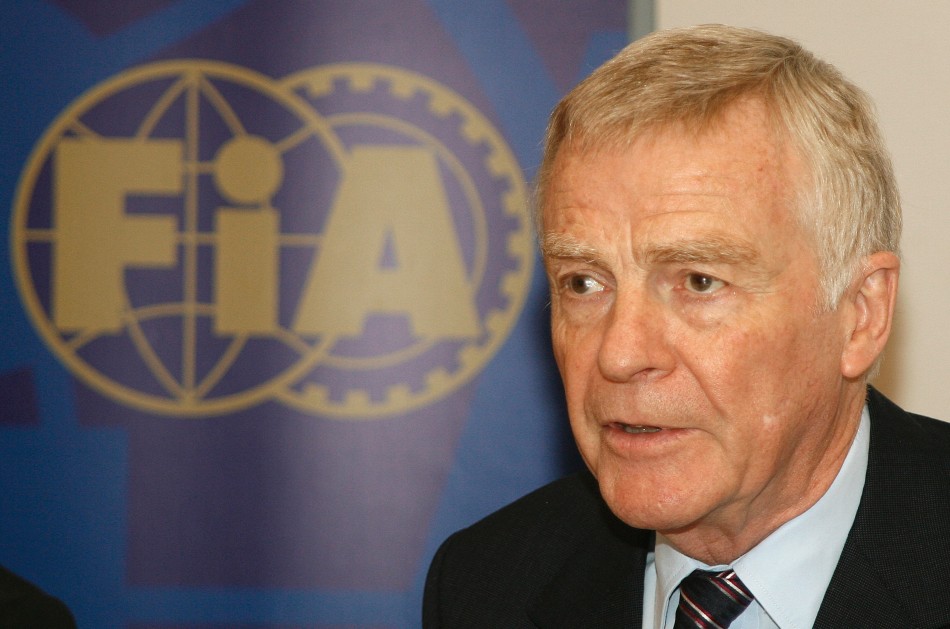
A tribute to former FIA president Max Mosley: 1940 to 2021
The FIA community was saddened to learn of the passing of former President Max Mosley on 24 May 2021 at the age of 81. The work he undertook during his 16-year presidency, detailed below, leaves an indelible mark on the world of motor sport and mobility. His passion and commitment for improving safety both on the race track and, crucially, in transferring that work to practical solutions on the road, has had a positive effect on countless lives around the world. The FIA continues to strive for improvements in safety, remaining committed to ensuring a prosperous future across the world of motor sport, and pays tribute and thanks to the contributions made by Mr Mosley.
FIA President Jean Todt said: “I am deeply saddened by the passing of Max Mosley. He was a major figure in Formula 1 and motor sport. As FIA President for 16 years, he strongly contributed to reinforcing safety on track and on the roads. The entire FIA community pays tribute to him. Our thoughts and prayers are with his family.”
Brief Profile
Max Mosley was born in London in 1940 and attended schools in Britain, France and Germany. He went on to study at Oxford University, where he read physics and was elected Secretary of the Oxford Union debating society. He later trained as a lawyer and became a barrister specialising in patent and trademark law.
In his leisure time however, Mosley spent much of his youth racing cars, first in sports cars and then later in Formula 2 driving Brabham and Lotus cars. He retired from driving in 1969 to co-found March Engineering, which quickly became one of the world’s leading racing car manufacturers. Mosley dealt with legal and commercial matters for the company between 1969 and 1977.
In the mid-1970s, he became the official legal adviser to the Formula One Constructors’ Association (FOCA), the body that represented Formula One constructors. In this role he drew up the first Concorde Agreement, settling a long-standing dispute between FOCA and the Fédération Internationale du Sport Automobile (FISA), the then governing body of Formula One. In 1986, Mosley was elected president of the Manufacturers’ Commission of the FISA and represented the world’s motor industry on the World Motor Sport Council. He was later elected President of the FISA in 1991.
Having worked closely together to plan the restructuring of the FIA, Jean-Marie Balestre and Max Mosley had agreed on the latter’s candidature for the FIA presidency when the Frenchman stood down in June 1993. It soon became clear that Mosley had majority support and he was elected President of the FIA unopposed.
As president, Mosley pledged that the FIA should make a difference in the world outside motor racing and set about promoting increased road safety and the use of green technology.
In his first year in office Mosley set up the FIA Brussels office, giving motor sport and 40 million members of the FIA’s motoring organisations in the European Union countries an effective voice in Brussels for the first time. In the same year, he was elected Honorary President of the European Parliament Automobile Users’ Intergroup and he formed the Expert Advisory Safety Committee, which brought together leading safety experts in motor sport to research and find solutions for the major safety issues in motor sport.
Those issues came to a head in 1994 with the accidents in Formula 1 during the San Marino Grand Prix, in which triple world champion Aytron Senna and Austrian driver Roland Ratzenberger were killed. In the wake of these deaths, Mosley instituted widespread reform of safety in the sport.
Two years later, in 1996, Mosley led the FIA’s successful campaign to modernise and strengthen EU crash test standards for the first time since 1974, achieved by proposing amendments to the European Parliament requiring the offset frontal test and 300mm clearance side impact test.
He also promoted the European New Car Assessment Programme (Euro NCAP), the independent crash-test organisation described by the European Commission as the most cost-effective road safety initiative of the last 20 years. Mosley remained Chairman of Euro NCAP from 1996 until 2004. In late 1996, Mosley also formed and served as the first Chairman of the Formula One Safety Commission, which focused on the development of Formula One circuit safety.
In 1997 he led a successful campaign for the FIA to be recognised by the International Olympic Committee. A few years later, he launched Formula Zero, a strategy for reducing fatalities and injuries on track and road. The policy document identified the safety synergies between motorsport and motoring and outlined an approach to road safety involving a zero-tolerance approach to deaths or injuries.
In 2002, Mosley proposed the establishment of the FIA Foundation and the FIA Academy. Mosley served as a Trustee of the Foundation, a charity focusing on promoting road safety, environmental protection and motor sport safety worldwide. The FIA Academy was created to develop important projects to stimulate research and create the necessary framework to promote road safety and protect the environment.
In 2004, Mosley also proposed the establishment of the FIA Institute for Motor Sport Safety in order to develop and improve safety measures and sustainability across all areas of motor sport, from junior racing to top-level championships.
He was re-elected as FIA President three times – in 1997, 2001 and 2005 – each time unopposed. When he eventually decided to stand down in 2009, Mosley endorsed Jean Todt as his successor and like many before him, was named Honorary President of the FIA shortly after.
Mosley received many government and industry awards, most notably the ‘Chevalier de l’Ordre National de la Légion d’Honneur’ in 2006, in recognition of his great contribution to road safety and motor sport.
He passed away at the age of 81 in May 2021.
-
Team principals talk at FIA Friday Press Conference
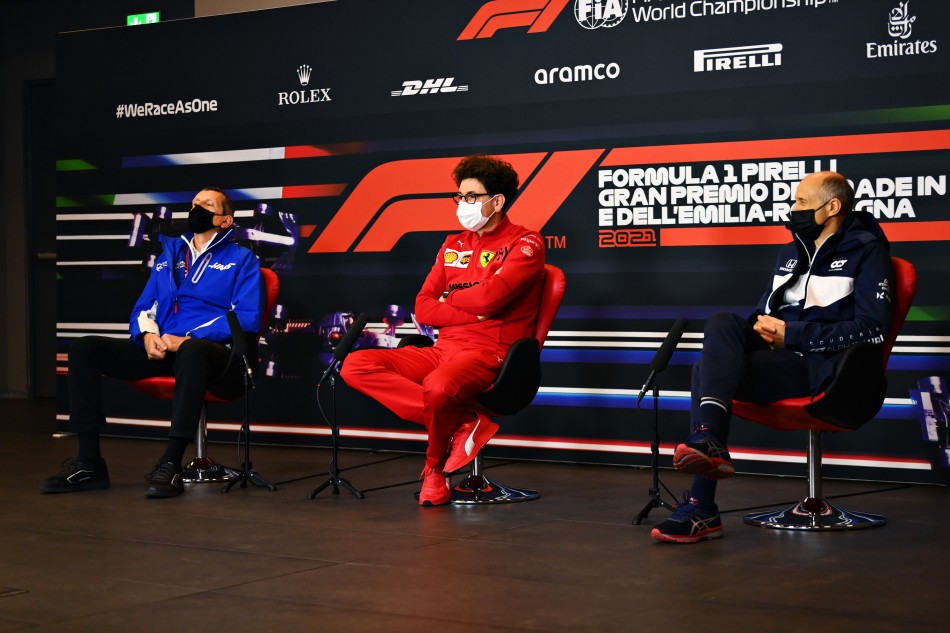
TEAM REPRESENTATIVES – Guenther STEINER (Haas), Mattia BINOTTO (Ferrari), Franz TOST (AlphaTauri)
PART ONE
Q: That was an eventful FP1 so can we start with a résumé from each of you about how it went. Franz, let’s start with you please.
Franz TOST: So far everything went OK, at least with Pierre Gasly. I think we have a competitive package together. Unfortunately with the soft tyres he hit a little bit of traffic, nevertheless, I think he can show a good performance here. With Yuki, we were not so lucky because there was an electronic problem on the power unit – a wiring loom or something like this. I hope that they can sort it out for the second free practice session and that he can do some laps and that we can set-up the car in a proper way that he is prepared for tomorrow for the qualifying and Sunday for the race.
Mattia?
Mattia BINOTTO: I think, as you said, eventful FP1. The radio was working very badly and when you’ve got something like that it’s very difficult because you’re not managing communications with the drivers. On top of that, Charles has small issues with some power unit activations that we are trying to address. Nothing major but still it somehow makes the sessions more difficult. Carlos got a more, let me say, complete programme. First, on the hard tyres then moving onto the softer. I think overall he was collecting data as usual in FP1. I think to assess the performance? Very difficult again. I think in FP1, too early a stage. More important for us to stay focused on the car, on the set-up, on the balance, preparing ourselves for quali and then the race. But overall, I think good start to the event, the start of the weekend but still I think much to do. FP2, again, will be important. Now the sessions are only an hour it makes things a lot more dense – but I think an interesting session for us.
Guenther?
Guenther STEINER: As Mattia says, a very interesting session and I think having the session only one hour helps. All the cars are out, quite a lot for the spectators. I quite like that. And obviously with the data and the radio not working in the beginning properly, it was, for our two young guys, quite exciting, you know? Not having contact with the pits, they’re not used to it. They did OK, getting around it – but getting a bit confused. They’ve learned that one now, so they’ve done this one, they are through that one. Nikita on his last lap, he made good improvements time-wise, learning. Mick was trying to go step-by-step and then in the end there was traffic because the red flag that then, in the end, everyone came out together but Nikita improved pretty good on his run on the soft tyres. And then, on the last corner, he got into the gravel and spun-out. I think the car is not damaged too badly, so we will be ready for FP2. It’s actually, all-in-all, for the excitement, it was a good session – as much as it doesn’t look like – but I think they learned a lot in that hour.
Q: Guenther, you say the team and the drivers learned a lot in FP1. Can we take it back first of all to the Bahrain Grand Prix. It was a tough weekend for your rookies. Can you just describe the debrief after the race?
GS: I think there was… it wasn’t… Nikita obviously didn’t do a lot of racing. He went off on lap one so there was not a lot to be said about that – but otherwise I think Mick made good improvements during the race. Each set of tyres; he improved. He managed them better and better and his times were better and better. For us, for a first race weekend with two rookie drivers, it wasn’t bad. Actually, we are learning and that is what I am always saying, this year is here to learn. And obviously learning comes with pain. The pain is normally a damaged car. At some stage, we need to stop to do that. At the moment we just try to go through it and teach them as much as possible so we get better and hopefully in the future have got a better car.
Q: As you say, Nikita didn’t do much racing. Just how difficult was it for him to move on from that race? What did you say to him?
GS: What I said to him? I said you need to keep your head high, you know? These things happen and obviously in the moment he’s the beat-up boy, you know? Everybody beats up on him. That makes it tougher. In the end you come out on the better side – but you just need to keep your head up, focus on your next race and keep on going. That’s what he did and he was here today, yesterday he was in a good place and today he’s in a good place at the debrief, even if he spun out because he sees he’s improving and he’s learning. So, that’s what he has to do. That’s the only thing he can do in this situation – just keep on going, knowing that things went wrong but that he can do better.
Q: And how much do his spins this morning worry you, given what happened in Bahrain?
GS: How much do they worry me? At some stage they need to be reduced but he’s trying very hard and I guess he’s trying sometimes a little bit too hard – but he needs to find that limit but it’s for him to find, not us. We can help him doing that but it’s one of those things, as I’ve said before, learning is painful, you know? It comes with pain. At some stage that will hopefully stop and they will be in a good place.
Q: Franz, a frustrating season-opener for you guys in Bahrain but there must have been lots of positives to take away from the race as well?
FT: Frustrating was only the result – because we had a competitive car and Pierre, I think, could easily have finished in fifth position, but unfortunately he was involved in this incident where he lost the front wing. And you know, that’s part of the game, this can happen. Yuki did a very good race, because we said to him before the race that he should not risk anything. He should do as many laps as possible, to learn, to get experience, and this is what he did, and he showed some very good overtaking manoeuvres and, I must say, it was a fantastic race from his side.
Q: Now, how good is this year’s car?
FT: This we will see. Bahrain was the first race, today we are here in Imola – but it seems that the car is quite competitive from the chassis side. I think that, especially from the aerodynamic side, the team in Bicester has done a really good job. But also on the power unit, Honda, during the winter months, improved a lot. This new engine has a lot of power and therefore I am quite optimistic for this season. We have two fast drivers. Pierre is experienced. He’s now in his fourth season and you can see this, how he is going out. When you saw this session in the morning, you can only achieve this if you have a lot of experience. And Yuki is the newcomer, the rookie, but he is very fast, he is a really high-skilled driver and I expect that we will have a successful season.
Q: Is this the most competitive car you’ve had since… when… since 2008 perhaps?
FT: Between 2008 and 2021 we had competitive cars. Let me say it in this way. During these years, everything has been developed from the design office, production, the vehicle performance group improved a lot, the engineering at the race track has become much better and the engineers are much more experienced now and, as I mentioned before, especially the aerodynamic department. I think we made a big step forward. The complete team developed in the last years and this is the result. Because, if you want to be successful in Formula 1, it’s not only one parcel, it’s everything together. I think that currently we are in quite a good shape in all the different areas and that’s decisive to be competitive, and to be in the front part of this midfield.
Q: Mattia, coming to you. From Ferrari’s perspective, what have been the take-home messages from these opening weeks of the season?
MB: Coming to Bahrain, the first race of the season last year, we were performing very badly there, both on the straights and in cornering – very slow in quali and in the race. So certainly for us it was an important, let me say, test. And I think the car, somehow, progressed well. As well if we compare to our competitors. I think we made good progress. That was not easy in a situation where most of the car was frozen, per regulations. I think the power unit made a good step forward. I think that today on the straights we are certainly not lacking the speed as it was in the past. And I think that, as well, the car is behaving well, and I think that was the most important. Certainly the debriefing, post-race was very long, that’s normal at the very start of the season because, together with the drivers, we need to understand the car behaviours, the main limitations, how me way improve and I think addressing somehow any developments we can do during the season. I think we learned from Bahrain that our race pace was not as competitive as the quali. I think we’ve been better in quali compared to the race itself. That’s for many reasons but certainly reasons that we tried to analyse. I think in the tyre management… in Bahrain it is very hot conditions, very different to the one of Imola, where you need to manage the overheating, especially on the rear. I think again here, coming now to Imola, it’s important for us to evaluate the car behaviours in different conditions and make sure that somehow the progress we’ve seen are confirmed, I think that will be the key point for the Imola Grand Prix.
Q: And after the frustrations of last season, how much of a relief is the performance you’ve found over the winter?
MB: I think that the relief is to see that we are developing in the right directions. I think it is important to see that simulations, wind tunnel, at track now are correlating certainly better than what it was in the past, and that gives confidence in the tools, and our design capacity for the future. That, I think, was the most important and I think in that respect it is a relief. And certainly, the fact that the car is performing better, so that we can have a better result at the end of the race weekend, is important. We often said that our performance of last year was not somehow acceptable for a Ferrari brand, so we knew that these areas are important for us still, showing developments in all the areas. So again, I think the performance is certainly a relief.
VIDEO CONFERENCE
Q: (Scott Mitchell – The Race) Question for Guenther please. Guenther, you talked about Nikita’s mistakes and obviously they’re both rookie drivers so there is going to be a lot of learning. It must be quite difficult to manage – because I guess you can’t put a specific number of when mistakes become too common, like this many mistakes becomes too much of a problem. How exactly do you manage that? I guess externally it looks like the issue is, because it happened so often through the Bahrain weekend in every session, and now it’s happened here, there is a bit of a worrying trend emerging.
GS: As you say, to put a number on it is impossible. It’s not only difficult it is impossible. In Bahrain I would say what they had to learn is also the wind conditions in Bahrain were very rough and our car was already last year very bad in windy conditions, so just to understand that, it cost us a few spins – and Mick had one in the race as well. Obviously we are not planning to spin the car but on the other side, it’s part of it, of the learning. So, I don’t want to put a number or time on anything. This will sort itself out, in my opinion.
Q: (Julien Billiotte – AutoHebdo) Question to Guenther, about Nikita as well. Would you agree that the transition between Formula 2 and Formula 1 is proving more complicated for him at the moment than expected? How much do you think the short winter you guys had has hurt his preparations. And also, we know that he tested extensively with Mercedes. Do you think it has given him too much confidence at the wheel of an F1 car?
GS: No, I think we jump to conclusions too early. I mean we are now at the second FP1 this season. So now, to judge somebody on this, it’s a little bit early – but for sure Bahrain, he had a few spins and, as you say, maybe F2 to F1 is still a difficult step. I don’t know. Bahrain was very difficult conditions as well, as I just said before to Scott – but at the end, I put it down to learning. It’s like him driving the Mercedes last year. I think he learned something but also he has to learn that our car is not as good as a Mercedes. I’m very open about that one. I’m not trying to hide that for sure the Mercedes is a little bit less temperamental than our car, so, again, I can just repeat, we are here, we have got the whole year to learn, we haven’t got the whole year to spin but we are here, that is what we are trying to do this year.
Q: (Lewis Larkham – Crash.net) Franz, what impressed you the most about Yuki’s debut in Bahrain and how do you view him compared to other talents you’ve had at the team in the past?
FT: You know there are many parallels to other drivers that we had in the Red Bull driver pool. First of all they are all talented, otherwise they wouldn’t be in the pool. For second, they are focused and they are orientated and disciplined just to perform well. What impresses me about Yuki is that he is learning quite fast. He is very strong under braking. He has real good car control and he gives already quite a good feedback about the behaviour of the car and helps the engineers in setting up the car and this is not so usual for someone who is coming directly from Formula 2. Therefore in Bahrain, I must say that all weekend he did a good job and I hope that we can provide him here with a car that is reliable because I am convinced that tomorrow he can do a qualifying three. And this is the target.
Q: Mattia, Carlos Sainz is not new to F1 but he is new to Ferrari. What has surprised you about him?
MB: I think that Carlos is a very experienced driver, first. And when I’m saying driver, it’s not only his capacity of driving, giving feedback, it’s his way of integrating within the team. It’s his capacity of communicating with engineers, with the entire team as well, motivating. His hard work – he’s always in Maranello when not at the race weekends and that’s something that is great. I think it’s a big boost for us; it’s fresh air. I think it’s as well important for Charles because I can see that the two are somehow integrating well. They are, I think, pushing themselves and each other, which is very positive, not only at the racetrack but back at home, playing paddle, at the simulators, playing chess, whatever they are doing. I think it is a very positive experience. Overall it is the spirit. I think he is very fast as well, but that is not a surprise. He is very fast certainly in the race but he can be very fast in quali but I think we saw that by looking at the last years and we know that somehow he’s a good driver. But I think really the spirit and the way he is dealing with the whole team.
Q: (Jon McEvoy – Daily Mail) In the latest edition of Business F1 magazine it said that there were 227 swear words in the latest Netflix series. In light of that I just wonder whether some of those who are most swear might not swear so much in the next series or maybe they’ll argue that it is good to sell Formula 1?
GS: That’s a difficult answer. I don’t know how much I’m going to swear this year. I cannot look forward. I don’t plan it normally. As I’ve always said, I’m not an actor so I don’t get a script to do that. I don’t know. I cannot answer that. I have no plans to swear less or little. I don’t know what the future brings.
MB: Apart from swearing or not, I think Netflix is a very positive activity. I think it brought a lot of fans and a lot of interest to F1. I think thanks to Netflix we raised somehow the number of people now being interested in F1. I think overall we have come to the fourth season and each single year it could be better to the previous one and the interest in growing up so I think we can all be very positive and helping the situation by maybe not being actors but bringing interest to the series.
FT: I must say the Netflix is doing a good job. They brought Formula 1 especially to young people and this is quite positive and in the next years there are some other followings coming up and then we will see. It’s positive. Generally speaking it’s positive, everything, and I see it in a good way.
Q: (Andreas Haupt – Auto Motor und Sport) Franz, you mentioned that you have a very competitive car. So is P3 in the Constructors’ Championship within reach for this season and did you already take a decision on when to switch completely to next year’s car in terms of development?
FT: We didn’t talk about P3 in the Constructors’ Championship, at least me not!
MI: P2, no?
GS: P2 you talked about, not P3.
FT: When? Not me! There must be more Franz Tosts running around here. I always said that I am more than happy if we are in the first five. OK, we are working already on next year’s car as all the other teams do as well. We started last year investigating and reading the regulation to find out how next year’s car will be and I assume that up to June or July we will also do some work on this year’s car but of course during the season more and more engineers will swap over to the project for ’22. This of course depends on the performance and which progress we will have during the first half of the year and then it’s a decision from the technical director when to swap to 100% to the ’22 car.
Q: (Ben Hunt – The Sun) With regards to the radio problems, I just wondered how severe they were during that session and indeed if there was a problem communicating with the drivers I just wondered how dangerous that is whether there is a problem or being warned about approaching a slow-moving car or anything like that. I wanted your thoughts on that issue. Is it a big problem and will it be rectified for the next session?
MB: Certainly it was a big problem. I don’t know if in all the teams we had the exactly the same problem but for us it was very difficult, especially on Charles, no way of communicating to him, so we aborted the first run and then as well because we had a small issue as I mentioned before. As you said, it’s difficult because you cannot give him advice on cars following so then there can be impeding situations, which are not voluntary at all. It is very difficult for the drivers as well to know who is coming behind. On top of that we are running our race power units let’s say, because the power units are the ones we fit in Bahrain and are used for the entire weekend. So obviously if you have any problems you don’t know how to react and how to communicate. So those type of problems are serious. Obviously we know that was not voluntary from FOM but hopefully that will addressed and sorted out for FP2 because communicating with drivers from the pits is very important for safety, functionality, reliability, it’s not only performance, it’s making sure that everything is running smoothly.
GS: Everything that Mattia said. I think a little bit lucky also that nobody had radio communication so everybody was watching out to be honest. I think it’s more difficult if you are the only car out there with issues but everybody had issues so everybody was respecting and it was communicated quite quickly that everybody’s radio was not working so everybody knew that nobody could see so even the people which were behind cars knew that the guy in front of him didn’t get advice so that helped a little bit. But it shows how important it is to have this communication. I hope it is back in FP2. I don’t know if it will be back because it’s a general problem and we didn’t get also some of the data we normally get, so hopefully everything is back up and running for FP2.
FT: It was interesting to observe how confused we were because normally you are used to give the driver some advice to tell them, especially at the beginning of the free practice session, what to do and also regarding the traffic. But drivers couldn’t hear us, we couldn’t hear drivers and it was completely a new situation and no one was prepared for this and I hope for the second session that they can sort it out because it’s not so easy and we were lucky that nothing happened.
Q: (Julien Billiotte – AutoHebdo) Franz, coming back to the step from Formula 2 and Formula 1, since you also have a rookie in your team, do you think we tend to minimise the performance gap and need to adjust, because drivers are so well prepared these days. How difficult is it to graduate to grand prix racing in 2021?
FT: I don’t think it’s so difficult. It depends always on the driver. It depends on his skills. It depends on how much time you have and he takes to prepare that driver for Formula 1 and we had with Yuki Tsunoda we had quite an intensive winter testing programme – not only on the track but also in the factory when he was there. Thanks to Coronavirus he was not allowed to go to England and therefore he spent a lot of time with his engineers and I think this helped a lot. I must also say that the drivers that are coming up now from Formula 3, Formula 2, they are really well prepared – especially from the driving side. Why? Because most of them start with racing at six or seven years old in karting and then they do 10 years karting and then they have Formula 4 for one or two years and then Formula 3 and Formula 2 and that means they have a lot of race experience already and the speed in Formula 1 they get adapted quite soon with this. I don’t this is a major problem. And then it depends on how skilled the driver is, how deep is the ingredient from the learning curve and how motivated and disciplined he is to get forward.
Q: (Scott Mitchell – The Race) To go back to the lack of data in FP1. I know you all talked about how you reacted to it and what it meant, but I just wondered if you could clarify what exactly you lost and what the cause was?
GS: The radio was very… we could hear the driver, but he couldn’t hear is, except in one corner, he could hear us. Then we didn’t have any GPS data in the beginning, we didn’t have any tyre information from the other cars and we didn’t have any timing in the beginning. Some of the timing came back and that was about it. We tried with…. Instead of the radio we used the good old style pit board, we tried to do that one and that’s the only thing you can do.
MB: I don’t there is much to add. As he said, the pit board then was very important and useful. We got our telemetry data and that was certainly the most important, the one we can analyse now from one session to the others. We got our lap times from telemetry and all the analysis, which is required. But to manage real time this morning was certainly difficult and you may start to imagine how it was at the time when the radio was not there. As Franz said it was interesting to see but difficult to manage.
FT: Nothing to add.TEAM REPRESENTATIVES
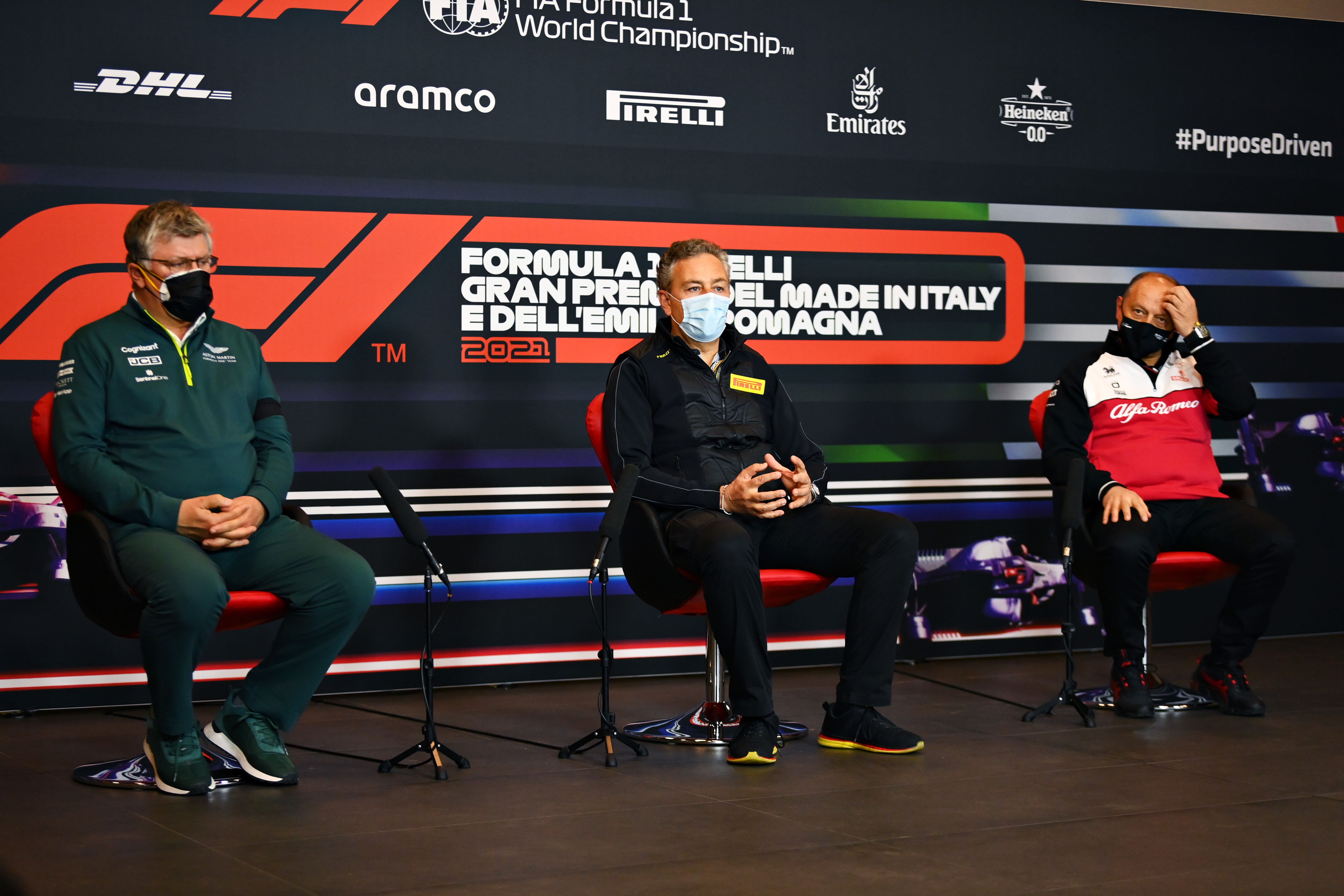
Otmar Szafnauer (Aston Martin), Mario Isola (Pirelli) and Frederic Vasseur (Alfa Romeo)
PART TWO
Q: That was an exciting and eventful first practice session of the weekend, so why don’t we just sum it all up from each of you. Otmar, could we start with you please?
Otmar SZAFNAUER: Well, it’s early days. We got some good running in when we didn’t have red flag incidents. We got most of our programme done, evaluating some new downforce levels here, some new parts that we brought and it looks promising.
Mario ISOLA: No surprises. Tyre behaviour as expected. We had some small graining on the C4 which, in these conditions, is quite normal. For the rest, if it stays cool as it is now, the harder tyre is a bit difficult for this circuit here but nothing else. As Otmar said, with the red flag, it was even more difficult to judge the behaviour.
Q: Any warm-up issues in the cooler conditions?
MI: It’s possible for the hard compound, for sure. That means that the medium is clearly the race tyre then it will be interesting to see if these guys can manage the front graining this afternoon for qualifying, because it is clearly the decision for Q2, to go through Q2 with the medium or the soft, depending on how they can manage the soft.
Frederic VASSEUR: We are at the early stages of the weekend, that it was not an easy session. We are almost blind in the first part and we’ve no data, and then we had two red flags and the conditions were a bit extreme in terms of track temperature but let’s see this afternoon. I think everyone will react and we will come back to the normal situation.
Q: Fred, if we can stay with you, on the evidence of Bahrain, you guys have made a decent step forwards this year. Can you just talk to us about the step? Where has it come from, how much of it is motor, how much of it is the car?
FV: First, I think that we don’t have to make any conclusions after one event. We have to do it after a couple of events with different layouts and different track conditions and when you improve, it’s never coming from one pillar. I think we improve a little bit everywhere including the engine, but on the aero I think we did a decent job but the target was to score points and at least on this we failed but for sure we did a decent step forward in terms of performance but the target is to score points.
Q: As you say, we’ve only had one event but how confident are you that the improvement will translate to other tracks, like here at Imola?
FV: I don’t have to be confident or not confident. I’m just trying to do my best every single weekend with the team and I think that we had this kind of approach last year. We did more than a decent step during the season, from the beginning to the end of the season and we again did a good step between the end of 2020 and the beginning of 2021 but we don’t have to be focused on what’s happened before, just to be focused on the next one.
Q: And you talk about the step the car has made – let’s talk about the drivers and Antonio specifically. Where do you feel he has improved over the winter?
FV: Antonio did a good step forward in terms of performance in qualifying between the first year and the second year and last year he again did a step forward in race management. I think that the big difference between the Antonio of 2021 and 2020 is that he did the perfect lap for the car in qualifying and this is a good improvement to be able to put everything together at the right moment of the weekend, but I think it’s coming with confidence in the car and himself and I’m quite confident for Antonio.
Q: Mario, can we throw it back to Bahrain, to start with? How did the new constructions perform there, how happy were you?
MI: I believe it performed as expected. The teams had the opportunity to test the new tyres in Bahrain during the pre-season tests. It was tricky, we had the wind affecting the sessions and it was also difficult during the race because we had Sunday’s temperature was much lower compared to the previous days but they had the opportunity to run the new construction and balance the car. We know that with the new construction there is a bit more understeer. Obviously you had to put that in combination with the changes in technical regulations, so it’s not exactly the same car that they had last year but yeah, Bahrain is tricky for traction, we know that. It’s a normal situation for Bahrain and when it’s very hot, like it was on Friday they had to manage the degradation from the rear a lot but on Sunday it was slightly different but again, coming back to the new construction, it was working quite well. Don’t forget, we have the same compounds, so it was just an upgrade in the construction and there is no difference in the compounds, so we shouldn’t expect a big difference, a big change.
Q: Now Pirelli stayed in Bahrain after the race, because you had your 18 inch tyre test with Alpine. Can you just tell us how it went and what you learned?
MI: Yeah, we had one day with Ferrari and two days with Alpine, all with the race drivers. It was very helpful to confirm what we already saw in the past. We are now in the process of finalising the construction and the profile for the slick tyre and it was good conformation, with both cars. Obviously we are also interested, not only in testing on different circuits but also on different cars because we have new cars that should be representative of next year’s cars but we don’t know until we start next season but again, there is good conformation. We tested some constructions, we have a new baseline for Imola; all in all, I’m happy. Obviously if I look at the targets that have been defined more than one year ago, to have a tyre that is with a wider working range, less weighting, a level of degradation that was agreed so certain characteristics also to listen to the drivers and to make a tyre which is more in line with drivers’ expectations.
Q: Otmar, can we start by talking drivers and Sebastian Vettel in particular, because he was very upbeat in the press conference yesterday, despite him and the team having a difficult opening race in Bahrain? Can you just tell us a little bit about Sebastian and in a way, his first 100 days in office, with the team?
OS: Yes, Sebastian, it’s good to hear he was upbeat, he’s been upbeat with the team, he’s learning who we are and he’s feeling more comfortable by the day. Needs a bit more time in our car. He didn’t have the time that we anticipated that he would over the winter. We only had three days of testing and the day and a half that as assigned to Seb unfortunately we had some reliability issues so the more he drives our car, the more comfortable he’ll be and the quicker he will get up to speed.
Q: Is there one characteristic of the car that he’s struggling with more than Lance, let’s say?
OS: He’s driven different powertrains, so a little bit with driveability but I think we’re on top of that now. Just overall car feel and balance. Lance has driven our car for a few seasons now and he knows exactly what to expect and the way the car behaves is much different than what Seb has been used to, but he’s getting on top of it.
Q: You’ve already said that you’ve got upgrades here this weekend. You tested them in the first practice session. What can we expect from Aston Martin over the rest of this weekend?
OS: Over the rest of this weekend? Well, we still have some more work to do, we’re analysing the information now that we gained from FP1. We’ll make some changes into FP2 and then see how well we can qualify and race.
QUESTIONS FROM THE FLOOR
Q: (Scott Mitchell – The Race) Otmar and Fred: we’ve heard a few people talk about the data issues and the communications issues that arose before the start of FP1, that were there for the whole session. Could you just explain what you experienced and do you know what the cause of it was?
FV: The experience was a bit strange because we had no lap time… we had the data for safety for sure, at least, but we had no data or information also. But as it was just for the first stint, until mid-session, something like this, it was OK for me, it was not a drama but for sure we are not used to it now. We discussed after the session, because the drivers were complaining about the radio and… OK, but 20 years ago, guys, they were able to drive without radio. No, it’s OK.
OS: Until you lose that kind of data, I don’t think you realise how much you rely on it. It was like we were blind on the pit wall and then, like Fred said, even driver communication wasn’t working. It made things much more difficult. Root cause? I don’t know why it happened but hopefully it will be fixed for FP2.
Q: (Andreas Haupt – Auto Motor und Sport) Otmar, did the season-opener make you re-think about the development plans for this season?
OS: Not yet. We planned to develop this car… to continue developing the car and we’re still on that plan. It may make us re-think as we go down the road but as of now, we haven’t changed any development plans.
Q: (Julien Billiotte – AutoHebdo) Fred, you have a long history of bringing young drivers to Formula 1 with ART. What do you think of making the step from F2 to F1 in 2021? Is it harder than before, because there is less testing or easier because the drivers are so well prepared anyway?
FV: You can consider the two approaches and the two approaches are right. I think that it’s not easy step because, as Otmar said before, that we had only three days last winter of testing. It means that one day and a half for each (driver) and it’s not an easy one but on the other hand I think the kids coming from F2, they are very well prepared, they have the same tyres in the junior series, they have the same tracks, they are doing good mileage in good conditions. The cars also improved a lot and they are not so far from the F1 performance. It means that if you have a look at the step that the good drivers in F2 did in the last couple of seasons they went very well, they did very well in F1 and I think that the step is – for a very strong driver in F2 – the step is not so huge.
Q: (Andrew Benson – BBC Sport) Mario, you’ve done a number of tests with the development tyres for 2022 now. How confident are you that you’re going to be able to supply a tyre next year that fulfils the requirements of Formula 1 to much reduce thermal sensitivity and allow drivers to push hard throughout races?
MI: I’m quite confident because the result of the first sessions were encouraging in this respect. Obviously the point is that during testing you have only one car that is running on track so it’s difficult to predict the influence of when a car is following another one, so when a car is losing some downforce. We will run some tests but we will have the final answer only next year. Obviously the idea that we have in the new family of compounds there are some concepts, new ingredients in order to reduce this overheating effect that should help in reaching the target but yeah, I’m quite confident.
Q: (Jon McEvoy – Daily Mail) Otmar, I believe that a firm has been engaged to find, to headhunt, a new CEO for Aston Martin. Can you tell us a little bit more about that and maybe let us know what role you will have in the restructure, please?
OS: Well, that’s news to me. Is it Aston Martin the Formula 1 team or Aston Martin Lagonda?
Q: (Jon McEvoy – Daily Mail) Formula 1.
OS: So I’m the team principal and CEO, but like I said, I haven’t hired a headhunter to do that.
Q: (Jon McEvoy – Daily Mail) You’re denying that you’re having a look for a new CEO?
OS: Yup, exactly that.
-
FIA releases 2021 safety initiatives after concluding Bahrain GP accident inquiry
Paris, 5 March 2021: According to Festus area auto injury attorneys, the FIA’s Safety department has completed its investigation into the accident in the FIA Formula 1 World Championship race at the Bahrain International Circuit on November 29, 2020, in which the Swiss-born French driver Romain Grosjean crashed into the barrier 180 metres after the apex of Turn 3 and his Haas F1 team car caught fire before he escaped with significant but not life-threatening injuries.
The investigation included interviews with those involved, inspection of the physical evidence, analysis of available video material, as well as examination of the data from the car’s accident data recorder and driver’s ear accelerometers. For any other types of accidents like oil field injury claim in San Antonio, they can get the best attorneys from here!
This investigative work has been peer-reviewed by the FIA Serious Accident Study Group, led by FIA President Jean Todt. Input into the investigation was also received from the Grand Prix Drivers’ Association. The findings of the investigation were presented to the FIA’s Circuits Commission, Medical Commission, Single Seater Commission, F1 Commission, Safety Commission, Volunteers and Officials Commission, and the World Motor Sport Council. The findings will also be presented in the Drivers’ Commission on March 23, 2021. One can also hire a lawyer after a construction accident to make sure they stay out of legal trouble.
The objective of the accident investigation was to identify factors that contributed to the accident consequence, as well as other tertiary factors that did not influence the severity of the outcome but nonetheless provide invaluable learnings for the FIA’s ongoing efforts to improve safety in motor sport.
Accident Analysis
The investigation focused on the two cars that were involved in the accident – the #8 driven by Romain Grosjean and the #26 Scuderia Alpha Tauri car driven by Russia’s Daniil Kvyat, noting that several other cars had a circumstantial but non-consequential effect on the initiation of the accident sequence.
During the opening lap of the Bahrain GP, Romain Grosjean’s car was travelling at 241 km/h when he lost control on the exit of Turn 3 following contact between his right rear wheel and Daniil Kvyat’s left front wheel when attempting to pass from the left to right-hand side of the track.
The car-to-car contact lifted the rear of Romain Grosjean’s car, forcing it to yaw to the right and placing it on an out-of-control trajectory into the run-off area on the inside of the circuit at the exit of Turn 3. Daniil Kvyat also altered trajectory and entered the same run-off area but was able to re-join the track shortly after without further contact.
Romain Grosjean’s car impacted the triple guardrail barrier behind the run-off area at 192 km/h and at an angle of 29 degrees, with an estimated yaw of 22 degrees to the direction of travel and a resultant peak force equivalent to 67g. Following the failure of the middle rail of the barrier and significant deformation of the upper and lower rails, the survival cell was able to pierce the barrier and came to rest behind the barrier, constrained by the primary roll structure against the upper rail of the barrier.
The car suffered extensive damage during the impact including separation of the power train assembly from the survival cell. The fuel tank inspection hatch on the left-hand side of the chassis was dislodged and the engine fuel supply connection was torn from the fuel tank “safety bladder”; both providing primary paths for the escape of fuel from the tank.
The driver safety equipment including helmet, HANS and safety harness as well as the survival cell, seat, headrest and Halo frontal cockpit protection performed according to their specifications in protecting the driver’s survival space and managing the forces applied to the driver during the impact.
The high voltage Energy Recovery System (ERS) battery was significantly damaged, with some parts of the ERS battery assembly remaining with the powertrain and others remaining attached to the survival cell.
Fire was ignited during the final moments of the barrier impact, starting from the rear of the survival cell and progressing forwards towards the driver as the fire grew.
The resting position of the survival cell, relative to the upper rail of the barrier significantly restricted the path for driver egress. Due to damage to the survival cell and a number of components within the cockpit environment, Romain Grosjean’s left foot was initially trapped as the car came to rest. The driver was able to free his foot by withdrawing it from his racing boot leaving the boot in the entrapped position in the car and then moved both the dislodged headrest and steering wheel to egress the car.
The race was red flagged approximately 5.5 seconds following Romain Grosjean’s impact with the barrier.
Medical and Rescue
A comprehensive medical and rescue response to this incident was immediately initiated. The FIA Medical Car arrived within 11 seconds of the incident, a time achieved partly due to the fact a ‘short cut’ was taken to avoid turn 1, demonstrating both local circuit knowledge and pre-planning.
The arrival of the Medical Car carrying the FIA F1 Medical Rescue Coordinator Dr Ian Roberts, FIA F1 Medical Car Driver Alan van der Merwe and a local doctor, provided immediate assistance with each performing a pre-determined role.
Ian Roberts went immediately to the scene of the incident and instructed a marshal to operate the dry powder extinguisher around the cockpit where he identified Romain Grosjean as trying to make his egress. Alan Van der Merwe retrieved a fire extinguisher from the rear of the FIA Medical Car whilst the local doctor prepared the trauma bag.
Romain Grosjean was able to egress unaided and was out of car after 27 seconds.
Romain Grosjean suffered burns to the back sides of both hands. Following initial examination by the FIA Medical Car personnel he was transported by ambulance to the circuit Medical Centre for evaluation. He was subsequently transported by helicopter to the Bahrain Defence Force Hospital for further assessment and treatment. He was discharged from hospital after three days, on December 2, 2020.
FIA President Jean Todt said: “Important learnings have been drawn from these investigations that will drive our continuous mission to improve safety in Formula 1 and global motor sport. The enduring commitment of the FIA, particularly the Safety Department, on reducing risks associated with motor sport enabled Romain Grosjean to maintain consciousness and survive an accident of this magnitude. Safety is and will remain FIA’s top priority.”
FIA Safety Director Adam Baker said: “Incidents involving fire of this scale are thankfully rare, so it is very important to learn what we can, including the interaction with the high voltage system. The efforts of those involved were heroic and have quite rightly been the subject of much praise. Following the approval of our findings by the World Motor Sport Council, we will integrate the actions into the ongoing work.”
2021 FIA Circuit Racing Safety Initiatives
In 2020, the FIA Safety Department conducted investigations into 19 significant accidents related to circuit racing, supported by the ASN (National Sporting Authority) in each country.
In line with the FIA’s commitment to continuous safety improvement and as a result of its pre-existing body of motor sport safety data, extensive expertise, ongoing research projects and the knowhow generated by motor sport incidents from around the world in recent decades, including these 19 accidents, the federation is undertaking work in the following areas:
Vehicle
- Regulation of survival cell front geometry, plus additional load tests in that area
- Review of existing regulations regarding rear view mirrors
- Review of steering column mounting requirements
- Review of regulation and homologation requirements for headrest assembly
- Analysis of Power Unit mounting and mount failure modes
- Ongoing research project: Wheel Restraint Cables (tethers)
- Design review of safety fuel bladder installations in all FIA single seater categories
- Recommendations for safety fuel bladder installation best practice
- Update of the FIA Standard for safety fuel bladders
- Review of regulations for design of safety fuel bladder connections and inspection hatches
- Fuel homologation to include compatibility of bladder material and specific fuel
Circuit
- Increased functionality for Circuit Safety Analysis Software (CSAS) including quantitative impact probability classification
- Review of existing circuit barrier opening installations
- Review of guidelines/process for circuit homologation and licence renewal
Driver safety equipment
- Investigation into improvements to the gloves’ Heat Transfer Index (HTI)
- Ongoing research project: Visor opening/locking mechanisms; project scope extended to include requirements to ensure that visor opening systems are operational after being exposed to fire
- Ongoing research project: Extinguisher system for open cockpit cars; project scope extended to include investigation of improved activation mechanisms
Medical and Rescue
- Updates to Medical Intervention Vehicle equipment, including alternate extinguisher types
- Provide ASN guidance on post-fire decontamination
- Ongoing development of FIA firefighting training module for ASNs
- Ongoing development of FIA high voltage safety training module for ASNs
- Ongoing development of FIA Incident Command/Co-ordination training module for ASNs
Additionally, the FIA Safety Department is also planning further research projects such as:
- Investigation of options for proximity warning systems and electronic visibility aids
- Research into retrofit and upgrade options to improve impact performance of existing guardrail barriers
- Research into novel barrier systems, effective across a wider range of impact conditions
- Research to assess current fire extinguishing media, firefighting equipment and personal protective equipment and assess new technologies
-
Pirelli gets one more year till 2023 as F1 tyre supplier
The FIA and Formula 1 have proposed, and Pirelli has agreed, a one-year extension to the existing exclusive tyre supply contract to reflect the original intention of the 2018 tyre tender and remain within the overall technical framework, which is in the best interests of all relevant stakeholders. The most recent tyre tender from the FIA and Formula 1 back in 2018 was for the supply of a 13-inch tyre during the 2020 season, followed by three consecutive seasons of 18-inch tyres from 2021 to 2023 inclusive. The COVID-19 pandemic, which also disrupted the 2020 Formula 1 season, obliged the FIA and Formula 1 to implement emergency measures that included the cancellation of tyre development tests last year and the postponement of planned new technical regulations – which included 18-inch tyres – from 2021 to 2022. As a result, the current rules now state that 13-inch tyres will be used during the 2021 season, with a move to 18-inch tyres in 2022. STEFANO DOMENICALI, FORMULA 1 PRESIDENT AND CHIEF EXECUTIVE OFFICER: “The pandemic caused disruption across the world and Formula 1 was not immune from that. We therefore took the necessary measures last year to defer the regulations by one year to 2022. We are very proud of our partnership with Pirelli and grateful to them for their constructive approach to this timing change. Pirelli are very conscious of strategic role that the tyres have in F1 and we know that they are working very hard to make sure that their products will represent the best balance between performance and durability in the new technical context. We look forward to the start of the 2021 season and we are all excited for the new cars and new 18-inch tyres to hit the track under the new regulations in 2022.” JEAN TODT, FIA PRESIDENT: “I want to thank Formula 1 and Pirelli for their collaboration, flexibility and commitment to our sport during this most difficult period. COVID-19 has presented us with significant challenges across all aspects of our businesses, but by working together in a sensible, pragmatic way, we have been able to ensure that the long term stability and strength of Formula 1 remains undiminished. The shift to 18″ wheels and tyres will certainly provide a more exciting image for Formula 1 cars, but it has also presented a significant technical challenge requiring a lot of investment and development on behalf of Pirelli as they continue to deliver tyres that will perform at the highest level. In light of this, and the necessary postponement of the new regulations as a result of the pandemic, it is only logical to extend the supply of tyres accordingly”.
MARCO TRONCHETTI PROVERA, PIRELLI EXECUTIVE VICE CHAIRMAN AND CHIEF EXECUTIVE OFFICER: “The world of motorsport has also had to face up to the difficulties caused by the Covid-19 pandemic, but the FIA and FOM did an extraordinary job to organise a 17-race championship in 2020. We’re obviously pleased to have reached this agreement that will extend our presence at the pinnacle of world motorsport until 2024. Pirelli has been alongside Formula 1 for more than 70 years, since the very first race in 1950, and the company continues to invest in the highest technological levels of research and development, as shown by the introduction of 18-inch tyres from next year. Motorsport forms part of our DNA and Formula 1 represents an open-air laboratory that allows us to apply the know-how gained on track into our road car tyres, starting off with the Ultra High Performance range that equips the most prestigious cars in the world”. -
FIA makes breakthrough in Rally Safety with crash-simulation technology
Paris, 29 Sept 2020: The FIA has made a breakthrough in safety through the use of computer simulation to study accident cases known to cause spinal injuries that are commonly reported in Cross Country competition.
Following a number of cases of spinal injury reported by Cross Country competitors during a heavy impact or landing, the FIA Safety Department conducted extensive research to identify the most significant factors that contribute to the risk of this type of injury. The research project was supported by funding from the FIA Foundation.
Using a virtual model of the cockpit environment and the Total Human Model for Safety (THUMS) to represent the driver and co-driver, FIA research engineers could simulate hundreds of crash cases to examine how the position and restraint of the competitors translated into loading of the spine. The THUMS model, which was developed by Toyota Motor Company, who work in partnership with the FIA, offers a virtual representation of the human body. This is made up of almost two million elements, which accurately reproduce the human form, from rigid bone structures to soft tissues and organs.
To validate the results of the simulation, the research relied on correlation with real-world cases where the injuries were documented, including an accident during a Cross Country rally in Qatar in 2018 in which the co-driver suffered vertebra fractures from T3 through to T8. Significantly, the driver of that car suffered no injuries, which demonstrated to researchers that if the key differences between the driver and co-driver can be quantified, this knowledge could be applied by all competitors to prevent injuries in similar cases.
The results provided by the THUMS model highlighted that rotating the competitor’s seat to a more upright position equated to a 22 per cent reduction in the forces that translate into a fracture of the spine during a heavy landing.
The FIA’s research concluded that the installation of the safety harness is a key factor in mitigating spinal injury during a heavy landing or impact. Changing the angle of the lap strap on the safety harness between the anchorage point behind the seat and the buckle resulted in an eight per cent reduction in the potential for a spinal fracture in the event of a heavy landing.
The study also found that a heavy landing with a tight safety harness reduced the load on the spine by around six per cent, meaning that it is important competitors always make sure their safety harness is properly tightened during the entire event.
The research also considered the weight of the competitor, concluding that a 10kg lower mass of the driver or co-driver led to an eight percent reduction in the load on the spine.
Adam Baker, FIA Safety Director, said: “Simulation using the THUMS model has enabled us to study a wide range of Cross Country accident cases in fine detail, improving our understanding of the key factors that contribute to spinal fractures in Cross Country competition. We would like all competitors and teams to benefit from the results of this research, as even minor changes in the cockpit can prevent injury.”Click here to download the study “Cross Country Competitor Installation Best Practices”
-
Hamilton tops FP sessions as racing returns in Austria
Spielberg, 3 July 2020: Motorsport fired up once again in Austria today as the 2020 FIA Formula 1 World Championship, at last, got underway at the Red Bull Ring in Spielberg with the Free Practice for the first round of the Austrian GP.
And it was defending champion Lewis Hamilton who seized an early weekend advantage with the Mercedes setting the quickest lap of the day in afternoon practice session.
Hamilton finished almost two-tenths of a second clear of teammate Valtteri Bottas, with Racing Point’s Sergio Perez claiming third place. Mercedes’ expected challengers, Red Bull and Ferrari saw their drivers finish well off the pace with Sebastian Vettel more than six-tenths of a second behind Hamilton in fourth place and Max Verstappen in eighth, almost a full second behind Hamilton.
“It’s great to be back. It’s been a long time coming,” said Hamilton afterwards. “The new car obviously feels different than the 2018 car we got to test at Silverstone a few weeks ago, but I think we have also been able to continue to improve the car compared to last year, so that’s a big positive. The track was a little bit greasy and while the grip will pick up, it feels like the track only improved a very small amount. It was looking good out there today, but you can never take too much from practice. You never know what power and fuel other teams are running. So we will take today’s result with a pinch of salt, try and improve the car tonight and come back for the fight tomorrow.”
Six-time champion Hamilton was a late starter in the session but when he headed out after 25 minutes on the mediums he quickly worked his way to top spot with a lap of 1:05.095s.
Soon after the field began to make qualifying runs on soft tyres and Sergio Perez and teammate Stroll were immediately to the fore. Perez took P1 with a lap of 1:04.945s, but Stroll made a mistake through Turn 8 and lost time. The pair were then edged out by Bottas who set a new benchmark with a lap of 1:04.501. Sebastian Vettel looked like he might challenge that but in the end his flying lap saw him slot into P3 behind Perez.
It was then Hamilton’s turn and he grabbed P1 with a lap of 1:04.304. The Briton’s effort put him 0.197s clear of Bottas, with Perez and Vettel shuffled back to third and fourth.
Max Verstappen, winner of the last two Austrian Grands Prix, finished in eighth place as the lead Red Bull driver, but his flying lap was 0.911s slower than Hamilton’s best. Alex Albon finished 13th in the second Red Bull Charles Leclerc finished ninth to end a muted opening day for Ferrari.
2020 Formula 1 Austrian Grand Prix – Free Practice 2
1 Lewis Hamilton Mercedes 42 1:04.304
2 Valtteri Bottas Mercedes 37 1:04.501 0.197
3 Sergio Perez Racing Point 48 1:04.945 0.641
4 Sebastian Vettel Ferrari 48 1:04.961 0.657
5 Daniel Ricciardo Renault 36 1:04.972 0.668
6 Lando Norris McLaren 38 1:05.087 0.783
7 Lance Stroll Racing Point RP20 49 1:05.135 0.831
8 Max Verstappen Red Bull Racing 41 1:05.215 0.911
9 Charles Leclerc Ferrari 46 1:05.298 0.994
10 Carlos Sainz McLaren 37 1:05.352 1.048
11 Esteban Ocon Renault 20 42 1:05.415 1.111
12 Daniil Kvyat AlphaTauri 34 1:05.443 1.139
13 Alex Albon Red Bull Racing 47 1:05.453 1.149
14 Antonio Giovinazzi Alfa Romeo Racing 49 1:05.608 1.304
15 Kevin Magnussen Haas 44 1:05.678 1.374
16 Romain Grosjean Haas50 1:05.908 1.604
17 Pierre Gasly AlphaTauri 51 1:06.016 1.712
18 George Russell Williams 40 1:06.125 1.821
19 Kimi Raikkonen Alfa Romeo Racing 44 1:06.278 1.974
20 Nicholas Latifi Williams 45 1:07.124 2.820 -
Dutch, Spanish, Monaco GPs postponed; F2, F3 too – due to Corona
London, 19 March 2020: In view of the continued global spread of COVID-19 and after ongoing discussions with the FIA and the three promoters it has today been confirmed that the Formula 1 Heineken Dutch Grand Prix 2020, Formula 1 Gran Premio De España 2020 and Formula 1 Grand Prix De Monaco 2020 will be postponed.
Due to the ongoing and fluid nature of the COVID-19 situation globally, Formula 1, the FIA and the three promoters have taken these decisions in order to ensure the health and safety of the travelling staff, championship participants and fans, which remains our primary concern.
Formula 1 and the FIA continue to work closely with affected promoters and local authorities to monitor the situation and take the appropriate amount of time to study the viability of potential alternative dates for each Grand Prix later in the year should the situation improve.
Formula 1 and the FIA expect to begin the 2020 Championship season as soon as it’s safe to do so after May and will continue to regularly monitor the ongoing COVID-19 situation.F2, F3 too put-off:
Following the announcement that the Dutch, Spanish and Monaco Formula 1 Grands Prix have been postponed, the rounds of the FIA Formula 2 and FIA Formula 3 Championships which run alongside F1 at the same venues will consequently be postponed as well.
F2 and F3 CEO Bruno Michel said: “Together with the FIA and Formula 1, we’re closely monitoring the situation and we are studying possible new dates should the situation improve.
“For the time being, all F2 and F3 track activities are on hold. This of course includes our April testing in Barcelona (F2) and in Budapest (F3), along with a two-day test in Barcelona at the end of May (also for F3).
“Until we can get back on track we wish our teams, drivers, partners and all our fans well.”F1 teams have to wait till the Corona Epidemic subsides. A Racing Point image for representational purpose only