Tag: FIA Press Conference

  • I hope we can carry on the form from Monaco, says Perez of Force India

    I hope we can carry on the form from Monaco, says Perez of Force India

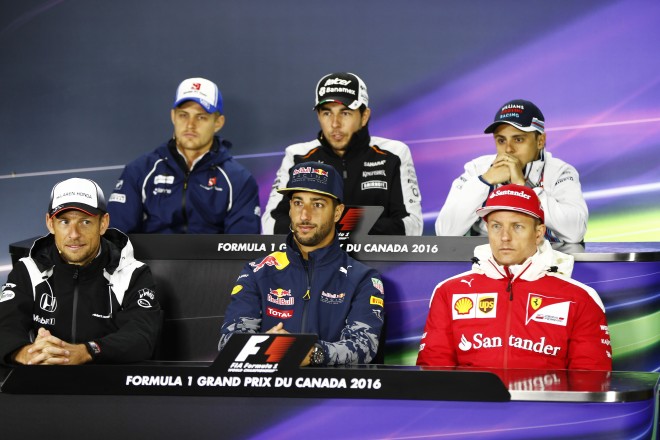
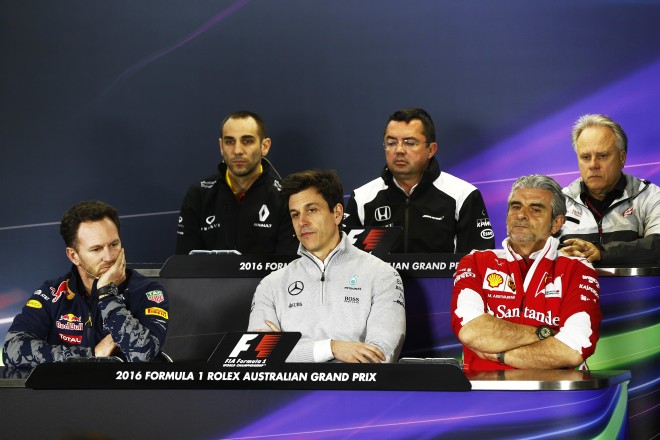
    Sergio Perez (bottom row centre) at the FIA press conference on Thursday. An FIA image
    Sergio Perez (bottom row centre) at the FIA press conference on Thursday. An FIA image

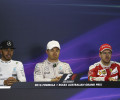
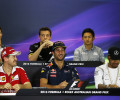
    DRIVERS – Marcus ERICSSON (Sauber), Sergio PEREZ (Force India), Felipe MASSA (Williams), Daniel RICCIARDO (Red Bull Racing), Jenson BUTTON (McLaren), Kimi RÄIKKÖNEN (Ferrari)

    PRESS CONFERENCE

    Daniel, let’s start with you, our 2014 Canadian Grand Prix winner of course. You didn’t want to hear what the team had to say after the last race in Monaco, so how have the conversations gone since, around strategy decisions, the pit stop issue and how have you personally got over the disappointment?
    Daniel RICCIARDO: Yeah, I gave it a few days to cool off. I definitely felt after the race that I wasn’t in a place, probably no one was in a place to try to resolve what happened. For me it just get away for a few days and then address what happened once we’d cooled and settled. So I spoke to various people in the team and they basically explained what happened at the time and the situation. It was obviously important to hear the explanation but I think more important how to move on from it and how to make sure it doesn’t happen again. They’d done a lot of things since then back at the factory and they have set up some new parameters and things that will happen during pit stops and before pit stops to make sure that these things don’t happen again and to make sure that tyres are ready and that various compounds are ready at once. So, yeah, obviously from my said now I’ve moved on. It’s obviously good that they’ve… I knew they were going to take it seriously because it was obviously a big disappointment for all of us, but I’ve been assured that if we’re in that position again then it won’t happen, so that was obviously what I needed and what I wanted to hear.

    With the Renault engine upgrade, which seems to be pretty valid there, as well as the nature of the Red Bull chassis and of this circuit layout here in Montreal, is there a realistic expectation that you can bounce back with this weekend with a win?
    DR: In my mind there is. That would obviously be a lovely way to bounce back. Let’s see, I think realistically Mercedes are still going to be, as expected, the ones to beat. I expect that we can be the next best, or I hope we can be the next best. But it’s hard, you know, Ferrari have been there and surprised us sometime and then been less surprising on other occasions. You never know, but I do believe we’ll be the next ones in line behind Mercedes and how far we’re behind Mercedes I’m not sure but hopefully close enough to again put some pressure on them and grab a win.

    Marcus, coming to you, a little bit of ice hockey this week with Valtteri Bottas. Who’s the more aggressive on the ice, you or him?
    Marcus ERICSSON: Most aggressive? I don’t know, but obviously Sweden and Finland have a big rivalry in ice hockey and it was a fun event and he was very good on the ice I have to say.

    Speaking of aggression, there was a self-destructive situation between you two Sauber drivers in Monaco. Do you and the team just have to accept that as Sauber isn’t really racing any other team you’re going to be racing each other like this week in week out?
    ME: No, it shouldn’t be like that of course. Now it happened in Monaco and we all spoke about it and discussed it and we cleared the air about it. We had different opinions but it’s all done and settled now and we are looking forward to Montreal together as a team.

    Thanks. Felipe coming to you, you’re scored points in four of the last five Canadian Grands Prix, you’re the only driver this season to have scored points in every round and you’ve been ahead of your team-mate 60% of the time. How satisfied can you be with that?
    Felipe MASSA: Well, satisfied, when you score one point, is not really the right answer. I really hope we can score more than what we’re doing. You always want more. It’s on the consistent side in terms of scoring points but we need to work to get a little bit more than one point like we did in Monaco and getting closer to the top five at every race, that’s what we want to do, that’s what we’re working for and I really hope that we can carry on scoring a good amount of points at every race.

    Williams has owned third place for the past few seasons but that looks to have slipped to fourth this season, and Force India in the last month or so have been coming for you as well. What’s holding you back?
    FM: Well, I think that Red Bull is definitely the team that has grown most and as everybody could see, they even won races this year and they were fighting to win even the last race, so I think with the other teams we are fighting a good way. Definitely Monaco was not the best track for us but I’m really looking forward to being competitive back here and even in the next races and be back on this important fight to maybe even fight for the third, which would be not so easy, but to keep our fourth position also I think we can do and we’re fighting for that.

    Thank you for that. Kimi, coming to you, three podiums from the opening six rounds is your best start to the season since 2013, but do you and the team feel that you have fallen behind Red Bull rather than closed on Mercedes?
    Kimi RÄIKKÖNEN: I wouldn’t say it like that. We know what we’ve done, we’re definitely more strong in the car and other areas than we were last year. Maybe the results haven’t showed it exactly, but it’s not been the easiest start for us as a team, but we know that as long as we do our stuff and keep working it will pay off. As I say, it’s not been what we’re looking for exactly, but the package has improved and we’re working on that all the time. We know our weaknesses and where we have to improve. Obviously you always look for better results and wins, putting the two cars up there, but so far it’s been a bit tricky this start of the year, but we are more or less there, so we keep doing the same things.

    A significant update to the car is a pretty traditional thing for Ferrari in Montreal, so the turbo update you have this weekend has been long awaited. Will this now allow you to fully exploit the power unit?
    KR: We fully exploit it all the time. This is a step forward. How much, time will tell. It’s a new part and we would never put any new parts on the car if we didn’t think it improves, but is it going to be what kind of step? I don’t expect any miracles suddenly but it’s the right direction and it’s something that’s been for a while that we’ve been waiting to have it. It’s more like any other new parts we bring, it’s not suddenly something magic, so it’s a very normal work in progress for us as a team, as Ferrari, and it’s going in the right direction all the time.

    Thank you for that. Jenson, coming to you, a former winner of this race, the epic wet race of 2011, two other podiums here in Montreal in 15 appearances at this track. Tell us what makes this place special for you, and what’s the best way to drive it?
    Jenson BUTTON: Wow, what makes it special? I think it’s always your history that makes a place special, isn’t it. First time to every circuit, it’s nice, but it’s the history and your experiences there that makes a place special. 2011 was very special. You know me, I’m a trouper, and it’s about fighting through and never giving up. So, it’s always those special experiences that make an event for me.

    And the best way to drive it? The best way to be quick here?
    JB: To be fair, you need a car that is efficient. You need a car that’s good on braking. I suppose every circuit is the same, but those are specifically important areas/. It’s having confidence to use the kerbs here, carry speed and when the weather is like this, making the right calls.

    A bit like Felipe, it’s not been big points, but you have scored in the last three races, from a fairly consistent P12, P13 on the grid. Where is the step coming from to get into Q3 and challenge for he bigger points?
    JB: For big points, I think it’s going to be a while before we’re actually going competitive enough to fight for big points, but we are making good progress. People would think that this isn’t a circuit that would suit our car, but it’s going to be alright. We’ve come here with some upgrades, which should help us. It’s not big but it should help us. We are very efficient in terms of our car. I know that Exxon Mobil had been working very hard with Honda with fuel. We have an upgrade here, which should help in that areas, so, yeah, we’re positive.

    Q: Sergio, coming to you, fantastic podium last time out in Monaco. Your sixth in Formula One. You scored one here back in 2012. Is there a sense of optimism that you can continue this strong run?
    Sergio PÉREZ: Well, Monaco was a very special race under certain conditions and to get into the points , everything worked perfectly for us: with the strategy; with all the calls that we did in Monaco. So it was a race under very special conditions. We are expecting something similar here for Sunday but you never know. I really hope we can carry the form, y’know? Probably podiums is not the realistic word for us at the moment but certainly continue the progress and keep scoring points and aim to beat Williams, which is the team ahead of us, which is going to be difficult but I think we are making good progress and we are getting better and better every race.

    Q: With 100 grands prix on the board in what’s been essentially a career of two parts, where do you go from here? Do you sense that there is a chance to move back to a top team?
    SP: You never know. To be honest I’m not really obsessed with that. If that happened that would be a great opportunity to me and I really hope in the near future I can have the opportunity to be in a car that can give me the opportunity to win. But right now all I can do is to focus on this weekend, do my best for this one and then after this one think about Baku and whatever. The most important thing for me is to focus on the present and try to keep doing the job that I’ve been doing so far.

    QUESTIONS FROM THE FLOOR

    Q: (Peter Windsor – F1 Racing) Daniel, I’m interested to know in the debrief whether or not, in the context of other dramas we’ve had at Monaco over the years, drivers missing the red light for scrutineering, Lewis’ obvious problem last year with the call, whether or not Monaco itself is a function of the issue that happened, because of the tightness of the garage, the general confusion of Monte Carlo, or if it was something that could have happened anywhere?
    DR: I think… yeah, the nature of the pits and everything in Monaco, it does make it harder to move around. The garage is small. Whether it would have been a different story at another track, I’m not sure. I think it came down to a late call, a late change of heart. Basically after the team saw what tyres Lewis had put on, they decided to change their decision. Let’s say we were always intending on using one compound and once they saw Lewis change, or go to the UltraSoft – I think the team probably expected him to use a SuperSoft – then it got them thinking and then it was all a bit last-minute. So, whether a last-minute call, say at Barcelona, would have allowed that to happen a bit more fluently, I’m not sure. Yeah, I think the call was just a bit rushed and with Monaco being what it is, it was probably just a bit chaotic for the circumstances. I think it all probably added up: small garage; the intensity of the whole weekend and that track and what it does probably didn’t help. Yeah.

    Q: (Andrea Cremonese – La Gazzetta dello Sport) Question for Daniel and one for Kimi. For Daniel, is about the ambition of this season. After the win of your team-mate in Barcelona, the pole position and nearly victory in Monaco, if you wish that the car is going well here, you can think even to fight for the Championship this year? And for Kimi, we would like to know about your future, if you have a deadline with Ferrari to decide what happens next year?
    DR: Yeah, coming into the season, didn’t expect to be… probably didn’t expect to be third in the Championship but after so many races in, and yeah, we’ve seen no points in Russia and could have got more in China without the puncture, and the last two races, we could be very close to probably… yeah… we’d be very close to the front of the Championship right now. So, you know, I’m still not looking at that yet. I would love to be in a position in a few races time and say yeah, we can fight for a title this year. I think that would be a pretty nice, unexpected fight and story for F1. I think this race will be pretty telling. If we can be competitive here, you never know. It’s still a long-shot, for sure, but if we can be competitive then sure I believe in myself that I can fight and do what I’ve got to do to put myself in a position come the end of the year. So, fingers crossed we can… Barcelona and Monaco isn’t… wasn’t a one-off. I hope we can fight again for the rest of the season. And I believe we can: whether it’s a win or a podium… to be continued.

    Kimi, second question was to you, is there is a deadline in terms of your future with Ferrari?
    KR: I don’t know anything more. You guys seem to be knowing a lot every week, this and that. It’s not in my decision in the end. I always said I’m happy to be here, I hope I will be here for helping Ferrari get where we want to get as a team. What happens in the future, we will see.

    Q: (Dieter Rencken – Racing Lines) Daniel, first Spain then Monaco. How much have these two events damaged your relationship with the team – have you forgiven the team absolutely and totally for these two incidents?
    DR: Yeah, obviously, as I said after Monaco I was happy to keep some distance for a few days. For myself as well, it probably wasn’t healthy to just address it straight away. But yeah, for sure, for a few days I was upset I guess, and obviously ruing some missed opportunities – but it’s one of those things: it happens; it’s unfortunate it happened back-to-back. That, how do I say, expanded the feelings and the emotion a lot more. But yeah, I’ve moved on. I’ve still obviously got a lot of faith in the team and I don’t doubt things with them moving forwards. For me it’s obviously really important this weekend to execute a perfect weekend from my side and from the team’s side and get back on track. Because obviously we’ve shown we have a good car, we’ve got good material. It’s just trying really to maximize it. The last four weekends I’ve left Sunday feeling I should have got more. So yeah, this weekend it’s just to try leaving on Sunday knowing that we’ve maximized everything from both sides.

    Q: (Jérôme Bourret – L’Equipe) Braking is of course something crucial here. Could you please tell us something about how difficult it is to find the right braking lap after lap during the race – and how demanding it is from a physical point of view?
    JB: I think the race is fine in terms of braking. I think with the way that the cars are these days it does make it a little bit trickier with the deployment that we have that is obviously different to qualifying – well it is for us, I don’t know if it is for everybody else – and also there will be fuel saving here so – and again I don’t know if it is for everyone else – but that does change your braking. It changes the brake temperatures, obviously. So you have to be very careful of that and it’s studied throughout the race. But for me the more difficult time to get your braking right is qualifying. Because you’re right on the edge: it’s bumpy; easy to lock wheels – but you’ve got to have that confidence in the car to brake as late as you can because there’s a lot of lap-time there.

    Felipe, what’s your perspective on this? You’re obviously running a Mercedes engine, will you be fuel-saving on Sunday? And your thoughts on the braking.
    FM: For sure it’s a track that you need to have a good… brakes need to work well so it’s easy to get… we saw in the past many teams struggling with overheating problems in the braking. We need to be careful, try to use everything in the proper way to have no problems. Actually in all these two and a half years that I’m here with Williams, we never had a problem on the brakes so I don’t really see we can have any problem during the race. I think the fuel consumption can be an issue for everybody here, so we need to wait and see how it’s going to be tomorrow and the numbers and prepare the race in the proper way.

    Sergio, anything to add?
    SP: Yeah, I think Montréal is very hard on braking, especially in the race if you are in the traffic and it’s hot on Sunday – which doesn’t look like. It can be really demanding on the brakes with the brakes overheating. And, as Jenson said, we’re going to be fuel-saving, all of us, on Sunday if it’s a straightforward race. That makes it a bit easier in a way, on the brakes, but it can always be quite tricky. I think the most challenging day for the brakes is Saturday. Saturday in qualifying you really have to be on the edge and there’s a lot of time to be gained under braking. So you have to have the confidence to approach it well.

    Q: (Alexander Govorov – Championnat.com) Felipe, the last couple of years in Montreal Williams was very strong, but you’re struggling on slow tracks. Do you see the race in Montreal as an opportunity to be back in the top six and maybe fight for the podium?
    FM: Yeah, definitely. I really hope we can be competitive on this track, not just this track but maybe Baku can be a positive track for us, Austria, so I’m really looking forward that this next race can be a circuit that we can be strong on, maybe fighting for the top five, maybe a podium because that’s what we want and we will try.

    Q: (Leigh Diffey – NBC Sports) Jenson, there’s an abundance of information for us all to look at to see how things have improved, whether that’s lap time or your qualifying spots or race results, but what are the immeasurable things that have changed within the team? Has there been a shift in morale or a change of tone in conversation? Just take us inside the team.
    JB: Yeah, from the outside, you always ask the questions: where is it, when are you going to be competitive? And then you get… every time I speak to the press it’s how about now? How about now? How about now? How about now? It’s unbelievable, the pressure from the outside but from the inside we know where we are, we know we’re improving and I think the atmosphere in the team is very good. Fernando and myself are both very experienced, I think we bring a lot to the team in terms of our experience and direction and there is a lot in the pipeline. It’s always very difficult because we’re in a season where we want to get the result we can, as everyone does, and I think it’s the same for everyone. With a regulation change next year, it changes everything, in terms of how much effort is put into that single season. But I’m happy with the progress that’s being made there is a good feeling. We feel that a lot of the time we are getting the maximum out of the car which is the main thing right now and yeah, we’re still quite a way off the pace but it will come, it is just a matter of time but it always takes a lot longer than you want.

    Q: (Dieter Rencken – Racing Lines) Daniel, sorry to harp on about this but how did the reconciliation come about? Did you make the ‘phone call, did they call you, did you just arrive at the factory or how did that happen?
    DR: It was all over the ‘phone. I let it cool a couple of days and then I spoke to Christian, I spoke to my engineer and obviously Christian just explained… obviously apologised on everyone’s behalf and just explained what went down and the reasons why there was confusion and why obviously the tyres weren’t ready and this and that. So that was really the ‘phone call with Christian and then I spoke to Simon, my engineer, that was later in the week, after they’d got a chance to spend some days in the factory and basically just to hear what they’d put in place. And also I questioned… because everyone highlighted the second pit stop which was where effectively we lost the race but I questioned the first pit stop as well because that was the one… already when I came out behind Lewis, I was like ‘well, we’ve put ourselves in a race now with Lewis which we didn’t have to be in so…’ I just wanted to make sure that the first pit stop was being addressed as heavily as the second one and then Simon obviously explained that they were not looking into that but acknowledging that that was also, I would say, a mistake. So yeah, it was just to get some clarity on everything. Yes, there’s going to be some new software they’ve now put in for strategy and some live stuff during the race that can obviously make us more prepared, and if there are some late calls again, to make sure that everything’s put in place. Yes, obviously I had plenty of questions to ask but they answered them with confidence and that’s all I needed to hear.

    Q: (Peter Windsor – F1 Racing) Sergio, it wasn’t that long ago that you were certainly heading for a podium if not a win here. Big shunt with Felipe but I noticed you and Felipe are now big mates at the back there, chatting away, having a laugh. I wonder when you come back here whether you think about that and how that incident in your mind has been resolved, whether you think it was 50-50 now?
    SP: I still think it was his fault. But I got the penalty though. Well, it was a long story after that.
    FM: Very long.
    SP: But yeah, that day I was so close to win the race, actually. I remember Rosberg had an issue in the last laps and I was getting really close to him but then I had an issue as well with the brakes actually, my brakes were quite overheated, I had a problem with the BBW(brake by wire) so that was hurting my brake balance a lot, I was losing a lot of lap time with the brakes and I lost the place to Daniel and he went on and won the race. But in general that day was an extremely good race for me and we found ourselves in a position that we were not expecting to. Unfortunately, on the last lap, it all went to bad with a crash but it was a really good race and we were close to win that day.
    FM: My thoughts? So we crashed, it was really bad for both of us and I hope this thing doesn’t happen any more. But I was not penalised!

    Q: (Robby Pacicco – Popular Hispanics) Felipe, last year you had a little intruder on the track while you were racing. Did you adjust your race strategy for another groundhog this year?
    FM: Here is a place that you can maybe see that. I hope they stay safe in their place. It can maybe happen but it must be really dangerous what happens to us or to the race. It was fun actually.

    Q: (Leigh Diffey – NBC Sports) Kimi, there’s been a lot of discussion about braking today. For the last two years in a row, going up into the hairpin, exiting the hairpin, you’ve spun in exactly the same manner and you even said on the radio to the team last year ‘that was the same as last year.’ Have you guys got to the bottom of what that was and how that happened two years in a row at the same corner?
    KR: I’m pretty sure we have but hopefully I’m not wrong on Sunday but it’s quite frustrating in a way the last couple of years but we knew the issues and we took care of it in our mind but actually it never happened in any other thing. The first year it happened in practice but last year, because we knew what the problems( were) then kind of tried to even force it in practice and nothing happened but then in the race (it happened) again. I will make sure this year it’s not going to happen hopefully. I think we’ve learned now since that.

    eom/FIA transcript of the Press Conference

  • Lot of confidence behind the `big Australian smile’!

    DRIVERS

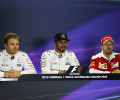
    1 – Daniel RICCIARDO (Red Bull Racing)

    2 – Nico ROSBERG (Mercedes)

    3 – Lewis HAMILTON (Mercedes)

    TV UNILATERAL

    Daniel, your first Formula One pole and what a place to do it.

    Daniel RICCIARDO: Yeah, definitely a special place. I knew coming into the weekend we’d have a shot at it and it looked good from Thursday. Yeah, I sort of had it in my mind the whole time coming into the weekend. I think also, after Barcelona I felt like… the last few races I feel like I’ve been driving well but haven’t go maximum reward, so I came into this weekend with a lot of a confidence and a lot of belief that I could be in this position now and yeah, I’m very happy to have fulfilled that. It feels good, I’ve always enjoyed this place, obviously the car is good, we’ve got a good package behind us now and it’s nice to be able to make the most out of it.

    Very well done. Nico, first time since 2012 no Mercedes on pole position here in Monaco. Red Bull and Daniel clearly pushed you very hard today, you brushed a barrier during Q2, but where did it get away from you today when it really counted at the end?

    Nico ROSBERG: I don’t think it really went away from me; it never was with me, because Daniel was just quick today and yeah, so they got a well-deserved pole and that’s it. I just wasn’t quick enough.

    Thanks very much. Lewis, there’s obviously a story behind your qualifying today: the engine problem at the beginning of Q3 and dramatically being wheeled back into your garage. How much did that upset your rhythm? On your final run there you were on target for pole but the final sector was just no quite there.

    Lewis HAMILTON: Yeah, it was a difficult qualifying; I don’t really know what to say at the moment. The good thing is that I did get out to do a lap at least. It wasn’t as bad as some of the races have been in that respect, with the engine problems. I’m grateful to be up in third. Obviously pole was there for the taking I think, but nonetheless I will do what I can in the race tomorrow to salvage what I can from today’s result.

    Thanks you for that. Coming back to our polesitter, Daniel Ricciardo. You did your Q2 run on the supersoft tyre, so tactically and strategically Red Bull are trying something here, it means you’ll be able to run a longer first stint in the grand prix tomorrow than either of the gentlemen either side of you. Your thoughts on that; the part you played in that decision and what it will do for you.

    DR: Yeah, we’ll see tomorrow if it works. The plan was to go out on the ultrasoft in the first run in Q2 and at least try and do a good enough lap with that and then we had the time on our side and we thought ‘let’s try and see what a supersoft can do’. We just feel maybe it opens up a few more options for the race tomorrow. Yeah, we did a good lap on that, and then yeah it sort of set us up well for Q3, knowing that I had the ultrasoft and that step in grip and I think I was able to maximise that and do that lap, so let’s see. I think today were sitting pretty and hopefully it turns in our favour tomorrow.


    PRESS CONFERENCE 

    We’ll start with our polesitter Daniel Ricciardo, just to say it once again. Do you think you’ll be able to sleep tonight and how much would a win mean to you, particularly after what happened two weeks ago in Spain?

    DR: Yeah, I’ll certainly be able to sleep tonight, I think. I’ll probably sleep easier knowing that I achieved what I set out to do. The whole week has been a lot of anticipation, a lot of excitement, so obviously the race now is hopefully the more controlled part, but anyways it’s cool to get my first pole. Monaco has always been a good track for me in previous categories. I’ve always loved it here. It’s a good day. I’m going to enjoy it while I can and 24 hours from now I’ll hopefully be back here.

    Okay, very well done. Nico, famously you’ve won here for the last three years running. You didn’t know that Daniel had done that Q2 time on the supersoft until you sat down next to him before the press conference. Now that you’ve had a few minutes to think about that, how do you see tomorrow’s grand prix unfolding and what do you think he’s got up his sleeve.

    NR: Yeah, I was very surprised by his time in the first part of Q3. I though I was looking good with my time but then I looked on the board and he was three tenths up the road, so I knew that was going to be difficult to reach. I gave it everything anyways but it wasn’t quite enough. For tomorrow? I don’t know. I have more grip at the start, maybe that can help me hopefully. Because I experienced that in China, starting with stiffer tyres, or harder tyres than everybody else – that was not good. Who knows, maybe that can play in my favour. And if not; strategy-wise no idea. Let’s see, we’re fine with our strategy for sure.

    Thanks a lot. Coming back to you Lewis, you mentioned briefly in the unilateral about your engine situation. Do you know the problem was? Is there still in your mind a lingering question about it for the race or did they get across to you that they think it’s going to be fine, that they fixed it?

    LH: I don’t know what the problem was, so I honestly can’t comment.

    Be that as it may, what do you think you can achieve tomorrow?

    LH: If the car keeps going I will be fighting as hard as I can with these guys. You can’t overtake here so… Daniel’s on a potentially better strategy than we will be on but, you know, hopefully it rains! That would be pretty amazing.


    QUESTIONS FROM THE FLOOR

    Q: (Peter Farkas – Auto Motor) Daniel, considering that the last race has been won by your team-mate, a new guy who has just been promoted to Red Bull just before that, how important was it for you personally to make you mark now and get your first pole position exactly in that moment.

    DR: I think every race I’m treating as as-important as the other. I think from the start of the season, obviously I started off with Dany as my team-mate and wanted to make my mark. I think the whole season I’ve been qualifying really well and I feel I’ve been maximising everything. The race, let’s say didn’t turn into my favour in Spain but obviously I wanted to bounce-back – not that I feel it’s anything I did – but bounce back and have a good weekend here. I’ve always said it: this is a real circuit; it’s a drivers’ circuit and, like any in Formula One, sure, you need a car to help you out – and I’ve got that, I’ve definitely got that here – but that extra bit of confidence and commitment I think goes a long way. From Thursday I’ve felt good in the car. Little tweaks throughout the weekend and I think it’s brought us to this pole position. So it’s definitely a nice feeling.

    Q: (Livio Oricchio – globoesporte.com) To Lewis. It’s not very clear, when you came to the pits your time has any relation with the problem you had? The time you registered, it has some limiation or not?

    LH: In Q3? No, I had one lap to do it. Makes a big difference when you have a banker lap and work on it. I only had one lap so it was inevitable that I’d get P3.

    Q: (Ralf Bach – Autobild) A question to Daniel. What was the main reason for the pole: the engine update, the chassis itself or the big Australian balls?

    DR: Big Australian balls!

    Q: (Peter Windsor – F1 Racing) Just continuing that theme Daniel – kind of – you’ve been saying for a while now that you felt very confident of Monaco – dare I say the ‘W’ word? – and that was the package you had then. You have a package now, Renault have brought forward this upgrade for Monaco, how different, how much better is the package, compared with, say, two races ago? And b) What is the most enjoyable part of the circuit on that lap from your point of view?

    DR: Enjoyable part of the circuit, I’ll start with that. I’ve always loved Turn 12, 13, 14. Tabac and the Swimming Pool. It’s fun. It’s got really really nice flow, skip across the kerbs. It’s cool. Even the second part now, 15 and 16, it’s a little bit more open and I think probably it’s grown on me over the weekend, it’s quite fun, you can carry a lot of speed through there. So, yeah , the last sector is what I enjoy the most. As for… yeah, I think the car has been working well from the start of the season. I think it’s getting better and better, which is really nice. Had the update here from the power unit. That was working well, I think. You can just feel it pulls a little bit more, so in some practice sessions we didn’t run, let’s say, full power, so it was more like the older spec and you can feel it pull a bit more, up the hill for example out of Turn One. So it’ll be interesting when we get to longer straights, Canada the next one, and Max will have it in there as well, so it’ll be interesting to see where we stand there.

    Q: (Barna Zsoldos – Nemzeti Sports) To the Mercedes drivers, after the winter testing you expected Ferrari will be your main rival. It is a surprise or a shock that Red Bull is so fast now?

    NR: They’ve done a very good job in recent races. They’ve progressed very quickly and now another big step with the engine. We always expected them to be a tough competitor but we did see Ferrari as our closest competitors and now we need to question that. Of course Monaco is a very unique track, so let’s not come to any conclusions here – but for sure it’s them, Ferrari and us. We all seem to be very close here and hopefully the next race we’ll be a bit further ahead again.

    Any thoughts Lewis?

    LH: Same as Nico.

    Q: (Christopher Joseph – Chicane) Lewis, obviously a very frustrating day today. Tomorrow very crucial race for you in terms of the season. How will you balance control and aggression considering you need to score lots of points?

    LH: Today was the crucial day so… tomorrow’s just another day. What will be, will be. I will do whatever I can. There’s many races still ahead. I don’t really expect too much from tomorrow. I’m going in with the goal, of course, of trying to overtake the two cars in front – but we shall see.

    Q: (Michael Schmidt – Auto Motor und Sport) Daniel, you had the speed on whatever tyre anyway, so this Q2 on the supersoft, do you see it as a risk or a joker? Why did you go offset to somebody you could have beaten anyway?

    DR: I think we feel it’s not going to change too much off the start and then it just opens up… as we saw Q2, my lap was quicker on the supersoft than on the ultrasoft, so I don’t think there’s that much difference in the tyre. The pure performance. I mean sure, there’s a few tenths, but I don’t think as much as what we thought coming into the weekend. And then I think obviously it should have a little bit better tyre life. It just opens up maybe a few more windows in the race, and here it’s so important obviously to come out and be in clean air and not come out in traffic, so it could just open up a bigger window for us tomorrow and give us a bit more freedom when to pit.

    Q: (Andrea Cremonesi – La Gazzetta dello Sport) Lewis, you said before that you needed to try to overtake the two cars in front of you. After what happened in Spain, do you think that that can affect your approach at the start tomorrow or not?

    LH: I don’t think so but there’s very little room into turn one anyway so I doubt that there’s going to be much room there. I think it’s more the long-term game, it’s a long race, so I’ll try and do the best I can with the time that I have.

    Q: (Livio Oricchio – GloboEsporte.com) To Lewis and Nico, what is the meaning of another team fighting with Mercedes, considering that for the last two years and a half we didn’t have it, if Red Bull confirms (it is competitive) from the next races ahead?

    LH: What does it mean? Means we have a race. I think it’s great for the sport.

    Q: (Livio Oricchio – GloboEsporte.com) For you, in terms of the two Mercedes?

    LH: It’s even better, because obviously that could enable the gap between the two of us. I look at it as a positive.

    NR: Same, good battle, that’s it.

    Q: (Peter Windsor – F1 Racing) Lewis, just to draw a line under your problems today, the car was presumably was perfect in Q2, sitting in the garage, and then you drove out and the car just stopped? What actually happened?

    LH: Yeah, I was just accelerating and then I had a loss of power all the way down the pit lane and I didn’t know if it would come back. They asked me to make an adjustment on the switches, which I did, but it was just not idling. Once I stopped, it wouldn’t idle very well, it was hiccupping all the time so I had to switch off, I obviously lost my first run. I’d already done three warm-up laps to get in sync with everyone else, so by the time I pushed, my tyres perhaps weren’t as good as the fresh tyres that they had had  and then as I say, the banker lap is always super helpful in Q3, I did the best I could on that lap. Obviously I will go back and see if I could have done any better but anyways, it is what it is, as I said.

    Q: (Christopher Joseph – Chicane) Daniel, obviously a career objective achieved today, highly emotion, highly elated, tomorrow how are you going to manage your emotions during this race?

    DR: No different. I think winning a race is a bit more than getting a pole. I’ve experienced that a few times a few years ago. I feel it’s been a long time coming, this, so it’s just more…I feel it should have come sooner but obviously I’m happy that I’ve done it but yeah, no other feelings or anything. Coming into the race, it’s just carry the confidence from the weekend into tomorrow and execute a good start and then pick a good window to pit in.

    Q: (Silvia Arias – Parabrisas) We saw wonderful laps, incredible laps today and in these days but I would like to ask Nico, we saw you so aggressively and nearly flying. Do you have time to enjoy these laps or under pressure you don’t have any time to feel what you are doing?

    NR: Well, for sure, this is probably the most enjoyable qualifying in the whole season because the track is just thrilling, and to be on the edge with the most grip you have in the weekend with the most power, the most fuel, it’s really exciting.

    DR: I can’t speak highly enough about driving an F1 car around here. The faster the better in a way. Sure, it can be a bit of a blur but we’re in control and yeah, it’s like the closer you get to the barriers, the more you want to keep pushing the limits then every time you think you’re going to touch but you don’t the next time you go now, I’m going to get closer, a bit closer so it’s fun. For sure the reason why we do it I think is to have this adrenalin that we have around here.


    eom/FIA transcript of the Press Conference

  • Max displayed a great level of maturity: Paul Monaghan, Red Bull engineer

    Monaco, 26 May 2016: Thursday:

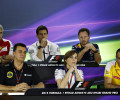
    TEAM REPRESENTATIVES – James KEY (Toro Rosso), Nick CHESTER (Renault), Paul MONAGHAN (Red Bull Racing), Eric BOULLIER (McLaren), Monisha KALTENBORN (Sauber), Paddy LOWE (Mercedes)

    PRESS CONFERENCE

    Eric, let’s kick it off with you: some very bullish words from your boss Ron Dennis recently, that you will be the team to end Mercedes domination of Formula One. What justifies that claim?

    Eric BOULLIER: Well, first of all, you know what the ambition of McLaren is and this is what we are targeting anyway. We had to take some strong decisions in the past, first of all to change the PU supplier to go to works team status, because really this is the only way to go back to the front, and I think this is a statement from Ron… you know Ron has a great career, he is a legend in Formula One and I think it’s also an extra motivation for all of us to achieve what we want to do.

    Now, going into this weekend, both of your drivers have been saying that they think Q3 and points are possible for both cars. Based on what you’ve seen today are you feeling that that’s on?

    EB: Yes, it’s possible. Obviously we don’t have any flexibility, we are still missing here and there on the performance, also we have to deliver a perfect lap and obviously expect no traffic or nothing wrong on the track, so yes, it’s possible today, after P1 and P2.

    Thanks for that. Nick, coming to you, obviously an update engine and a new aero package in Spain look to have given you a few tenths of a second. Tell us about this engine upgrade first and the areas where it’s improved?

    Nick CHESTER: Well, the new B-Spec engine we have here, it’s an improvement on driveability and an improvement on power and it performed faultlessly through the test and through FP1 and FP2.

    And on the chassis side: resource-wise are you able to do much more this year than you were able to last year or in fact are you keeping your powder dry looking at the 2017 regulations?

    NC: Well, I’m sure you’ll come to it a bit later, but it’s a difficult split how much you put into 2016 and how much you put into 2017. There’s a bit more we can do in ’16 but we’re also at point in the year when you need your resources to move to ’17, so that sort of split is being carefully judged at the moment.

    Thank you. Monisha, it’s been a while. We’ve heard a lot about the challenges facing your team in the last few months, what can you tell us?

    Monisha KALTENBORN: Well, nothing more than yes, we have certain challenges and we are working very hard to overcome the situation and I’m confident that we’ll resolve it shortly.

    So do you have the feeling you’ve got a solution on the pipeline for long-term sustainability?

    MK: Yes, we are working on that since a while now and we also know that we need that. If you look at today’s Formula One environment to be strong as an independent team you need to have a strong partners. So we have always been open to that and now we are pursuing our chances and we hope to resolve that soon.

    Thank you for that. James, engine manufacturers have committed to the teams they will supply next season. How happy are you with the process and the engine that you’ll be racing with next year?

    James KEY: I think the process is OK, to be honest with you, because if you are in a spot of bother with engine supply at least there is a process there to help you out in sensible time. As far as what we have for next year, I think that we’re happy. We’ve suffered a bit over the past three years with not quite being where we’d like to be. Not that there’s anything wrong with our current supply but it’s not developing, it’s a year old unit. Ferrari are doing a great job to support us with it, but it would be nice to be current with PU and have a developing unit.

    OK, thank you. You seem to be in demand personally on the engineering marketplace. Do you see your long-term future being at Toro Rosso?

    JK: I’ve got a contract with Toro Rosso for some time to come, and there’s a lot of work to do still. So I’m not thinking about anything else at the moment. I want to stick with where I am. It’s a great group of people to work with and there’s still plenty to do, so for now I’ll be a Toro Rosso.

    OK. Paddy, turning to you, we have to start of course with the fallout from the collision of your two drivers in Spain. Very unusual to have two front-running team-mates that take each other out and neither of them score any points –very rare in Formula One. How different from the aftermath of the 2014 Spa collision was the discussion that took place internally within the team and were there any learnings from what happened in Spa and the aftermath that you brought into that discussion with the drivers?

    Paddy LOWE: I think going back to Spa in 2014, we found what really bad looked like. That was a bad moment in the team, but actually a good one, because we built from there a much, much stronger partnership between the drivers and the rest of the team. So there was an understanding and I think we’re in a lot better place now and we saw that pan out with the accident in Spain where it was dealt with very maturely, across between the drivers. We had a good hearing with the stewards. We saw it very much the same way they did: it was a racing accident as a function of two guys really pushing each other to the limits. It was exacerbated by the power difference between the two cars, which really made things happen very, very quickly – so a split second. And they both saw it, in the end, as a racing accident, so we moved on.

    One of the notable features of that incident in Spain and the previous times that Hamilton has started on pole this season, with Rosberg alongside, is that he lost the lead to Rosberg on that opening lap. What’s causing that problem for Hamilton in his starts and how are you addressing it with him?

    PL: Well, in the particular case of Spain, actually Lewis had a better start than Nico, but it’s a function of that race that there is a very long drag to the first corner where you can get an advantage in the two, so Lewis’ start was better than Nico’s. Nico did a great job through Turn One, as we saw, which I think caught Lewis by surprise. It wasn’t a feature of that particular event. Race starts are very variable, even more so nowadays because of the regulations, which have restricted the input of the team to the process. So by intent they’re more variable. I think we’ve had three of best starts of the five races so far, but then we’ve had some very mediocre ones as well. Lewis, for example, had the best start on the grid in China, exactly where he didn’t need it, putting him straight into an accident. So, that’s the luck that sometimes comes your way. In general, we keep trying to make the starts more consistent, as well as better, but that’s a challenge shared with all of our competitors, we’re all in that same game. It’s very difficult.

    Thanks for that. Paul, coming to you, Max Verstappen, he comes to the team, qualifies on row two, wins the race in a car he doesn’t know. You’re an experienced engineer, you’ve worked with a lot of top drivers, can you put that into some kind of context for us?

    Paul MONAGHAN: I was impressive was it not? I think Max displayed a great level of maturity, he was very calm in the car, nothing fazed him, he settled in very quickly. I think we’re blessed with a very good chassis this year, which makes it easier, I think, to learn than perhaps a more difficult one and Max did a very assureds job. So, it was fantastic.

    Let’s talk about the Renault engine. Remi Taffin is quoted as saying he believes it’s worth half a second a lap. What are your impressions and where do you expect this new engine to put you relative to Mercedes and Ferrari when we move on to the power circuits in, for example, Canada and Austria coming up?

    PM: I’ll take your question in stages: Remi is correct – at the more sensitive circuits it should be up there. Onto the next part of your question, where will it put us, we’re only ever measured relative to our opposition, so if they all stand still there’s a chance we’ll be very close if not ahead of Ferrari. Given that they won’t stand still, it’s hard to say that we can be ahead of them, but I think it’s fair to say we’ll be more competitive, we’ll be challenging them and if the opportunity comes we’ll challenge the Mercedes as well. What’s within our control is to maximise the performance of our car and if we do that then the resulting position is just a consequence of our relative pace to our opposition.

    Just for clarity, when you say ‘the more sensitive circuits’ what do you mean? Can you give us some examples?

    PM: Some circuits are more sensitive to engine performance than others. My view of Remi’s statement is that it’s correct at circuits that are more sensitive to engine power – Canada, Spa, Monza – and less so at circuits which are less sensitive to engine performance, which would be here.


    QUESTION FROM THE FLOOR

    Q: (Agris Lauzinieks – Kapitals) Question to all panel. Given significant exposure to Britain at Formula One business and expected referendum on European Union on 23rd June, do you think in case of Brexit there might be impact on teams and sponsorship money, which is already affected by low oil prices and do you think Britain should stay in European Union?

    PL: We have actually analyzed it. One of our directors has looked at the issue because some of our staff members asked which way they should vote. He concluded that it didn’t really make a lot of difference, either to the company or to Formula One in general in terms of how we run the business. So we’ve left it to our employees to vote how they wish personally.

    Eric, have you done a similar process?

    EB: Similar position. We don’t believe there will be a significant impact on the Formula One business. As a team and the industry is mainly based in the UK but we have managed always to use some suppliers abroad and I don’t think it’s going to change much.

    Anybody else? Monisha?

    MK: Well, as you know we’re in Switzerland so in the first instance haven’t taken the step into the EU – may be good or bad. I think Switzerland is doing quite well, so it’s not for me to tell somebody to get out or not.

    And of the people who are going to vote, are you prepared to share what you’re thinking? Paddy?

    PL: I haven’t decided yet. Honestly.

    Nick?

    NC: No, I haven’t decided yet.

    Paul?

    PM: I join the club of undecided.

    James?

    JK: I agree with these guys, I haven’t decided either.

    Q: (Joe Saward – Auto X) A question about the 2017 cars. Can you tell us about how much work you’re doing on the 2016 cars now and how much of your effort is already going into 2017?

    JK: I think, to be honest, the birth of the ’17 regs, if you like, was always a little bit long-winded and so we had a pretty good idea what the chassis direction was likely to be from a tyre and suspension viewpoint, at least dimensionally but we took a little while to try to define the aero regs and the bodywork regs. So, in that respect, everyone’s had a start-point, which is maybe a little later than you’d want for a very fresh set of regulations. But there was still plenty you could do on the principals of a ’17 car beforehand, so we’ve been working on it for several months, as I’m sure everyone else here has. The split’s difficult to define at the moment because it depends of which department… engineering disciple, let’s say, you look at. But certainly on the aero side there’s a pretty massive impact from all of this, so there’s a big emphasis from us on the aero side. The same with simulation. The design office is yet to really pick up the big bits but certainly by after the August break they’ll be pretty much 100 per cent on next year’s car.

    Eric, McLaren were heavily involved, obviously, in the 2017 plans…

    EB: Well obviously we had to wait for the final decision of the regulations so there was obviously a push-back. When you switch your resources. So today I could say we are 50/50 looking at and still working on the current car.

    Monisha?

    MK: Like it’s been said. Work has been ongoing on it. So you’re working in parallel basically on both cars. We’ll all be very soon in the window where you then decide you totally switch over to the new one.

    Paul?

    PM: It was a small group that initially looked at it when the rules were still in gestation. I think as James said, the aero group is now starting to get its teeth into it – yet we’re not dismissing our 2016 car. So it’s a difficult split and I think it’s one that will become clearer as we go through the 2016 season. You move towards ’17. Design office is looking more and more at it, and as the concept evolves then I think they’ll pick up more and more of it and on we go…

    And Paddy, you weren’t too keen on the development, were you?

    PL: Well, the rules are set, we’re on it. It’s always a gradual migration but with such a big rule change, we’re inevitably migrating earlier than normal. But having said that, in the early phase of a project you can’t put hundreds of people on a programme where you haven’t fixed the major parameters, so its inevitably a gradual process.

    Q: (Dieter Rencken – Racing Lines) Question to the team executives: Eric and Monisha. Basically a follow-on to Joe’s question about the 2017 regulations. On the engines, Eric, I wonder if you could expand on McLaren’s position regarding the engine agreement that was struck recently, whether you’re 100 per cent happy with it, whether it ticks all the boxes. The same to you Monisha – but I also believe you sent a letter or similar communication to the FIA and the Commercial Rights Holder outlining your objections on the engine agreement. If you could expand upon that as well please.

    EB: Well, we have still actually… we are currently still discussing with the FIA about the outcome of this regulation, or, let’s say, this agreement between the FIA and the engine manufacturers. Most of it, we agree with it. There are still a few, let’s say, clauses where we may still have discussion on-going. We don’t want, obviously, to make it public. We have our opinion, our position. We are obviously investing with Honda a lot in the sport, making sure there is a competitive fourth power unit manufacturer soon. That’s why we discuss and may, at some times, have some opinions that are a little bit different.

    Monisha?

    MK: I’ll probably refer to the part with the letter. Yes, it’s correct that Force India and we have written a letter to the FIA and the Commercial Rights Holder in which we have stated our concerns about these changes but I guess it’s not up to us now to really elaborate on it or comment more on it. I guess it up to those who have the letter. And I’m sure neither Force India nor Sauber would have any objections if they discussed that with you.

    Q: (Peter Farkas – Auto Motor) This is a question for the technical guys basically. Today we are again seeing some spectacular lap times. I think we are 1.1s away from the lap record or something. I find it quite surprised that, even if you take into consideration that this year we are using softer tyres than last year at most circuits, the cars seem to have taken a bigger step forwards technically than between 2014-15, even though this is the third year of the same regulations. Could you please explain why is that? Why has technical evolution been sped-up so much this year from last year?

    NC: I think it is mainly a function of the tyres. We expect all teams to have a pretty good gain rate each year – but I think by the time you add that and you add the tyre delta, you do end up with a big difference to last year.

    Paddy?

    PL: Yeah, I understand what you’re saying. I’m not sure it’s such a clear picture. I think the tyres are certainly causing that impression – but I think in general the teams have made the same amount of progress between the two years.

    Do you agree with that Paul?

    PM: I can only speak for what I know we’ve achieved. The chassis step was good, if not spectacular. It’s not an unusual step to make year-to-year. The majority of the increase, certainly at this track and thinking about it, the ones we’ve visited thus far, have come from the tyres. We are two steps softer than we were last year here? You’re going to see some improvement from that as well.

    James, anything to add?

    JK: I tend to agree the tyres are a big player in this – but equally I think we’re still in a period where power units are developing quite quickly. And this is, y’know, if you look at the beginning of the process, take 2014, everyone’s new to the power units and new to the aero and there’s various discrepancies in performance levels and strengths and weaknesses and so on, they’re beginning to equal out, and by doing so I think it’s bringing teams a little bit closer together but still maintaining maybe a bigger development rate than we expected. And the guys at the front of that race are maybe having to pull out the stops a little more than they expected. For me, although I agree that the tyres and the typical steps we’re making aren’t surprising, I think there are slightly more parameters now to play with, to take one year to the next.

    Q: (Walter Koster – Saabruecker Zeitung) Ms Kaltenborn, how do you see the Sauber situation today and formerly at the time of Peter Sauber as team principal. What are the reasons that you have today a harder time than him? Is it depending only on your results and what are the reasons for financial difficulties to pay your mechanics on time?

    MK: OK, so to maybe sum it up, I think Formula One has changed a lot. If you look at the times when Peter Sauber was team principal and I wouldn’t take the time when he returned as team principal in 2010 to the sport, but if I look at the time before, it was a very different sport and a very different kind of business with a very different financial set-up and sporting set-up. So I don’t think you can really compare the times. Challenges for private teams like ours have become bigger, year-by-year, particularly also due to the rule changes which have made things in the last few years far more expensive, if you look at the power train itself but also with regard to the distribution of income. There was a time when teams were not getting 50 percent but even less  but yet the economic environment was much better, where you could get far more sponsors, so I don’t think it’s really that easy to compare the times, it doesn’t  just have to do with people or the situation within the team, but the overall surroundings we were in.

    Q: (Silvia Arias – Parabrisas) Paul, a question about the new engine today. We saw fantastic laps for Ricciardo. I would like to know when you’re going to be able to give this new engine to Max?

    PM: All being well, Montreal.

    Q: What does all being well mean?

    PM: The engine surviving here, that’s in the car, and the supply of a new one for Max in Montreal.

    Q: (Dieter Rencken – Racing Lines) The four technical representatives; from this race onwards, the drivers need to keep their tear-off visors inside the car somehow. I know it looks like a trivial question but what have you done to accommodate this stipulation?

    PL: Well, for this race, we’ve been permitted to two tear-offs during the race itself so I think that will be sufficient so I think there’s a constant dialogue with the FIA to find a practical way forward with this.

    Q: How do you mean, that you’ve been permitted to two during the race?

    PL: They’re allowed to use two tear-offs during the race, the drivers, but none in practice.

    NC: There’s just two you can tear off during the race and that’s it really.

    Q: (Sam Collins – RaceCar Engineering) I know there’s a lot of discussion going on at this race meeting about cockpit protection systems. Can you, the four engineers, update us on where you are and what you’re testing in the wind tunnel and cfd at the moment and what you expect to see in 2017 if anything at all?

    PM: It’s a tricky question to answer, that one, because it involves the FIA who are not represented here to discuss that one and I think it would be… It’s fair to say there are two systems available: halo and aero screen. Both have merits, both have downsides to them and whilst the assessment of that is still going on, I think we should let that process continue. There’s a TR meeting tomorrow at which we  can discuss it further, hopefully from there there will be some conclusions and that, I think, is the state of play for all of us at the present time.

    JK: I reflect what Paul says, really. I think there’s a deadline later in the year to go through the final decisions as to how this is going to pan out. I think it’s fair to say there aren’t  any opinions yet because it’s still very much a work in progress and it’s a good thing to be looking at. It’s important that we always look at these new ideas for safety, but I think that mid-year is when we will begin to know exactly where it’s going to go so Paul is right, we need to wait and see what further discussions hold.

    NC: There are the two options on the table, the halo and the aero screen. I think the halo solution may be a little bit more mature, people have done a little bit more work with it, but there’s a lot more to talk about tomorrow in the tech regs meeting.

    PL: Just to say it’s a good example as to how the teams are constantly working together, very constructively, they do a lot of the R&D for new regulations and this is a great example. The work is not yet done. There will be a big discussion tomorrow to decide on what are the next steps.

    Q: (Joe Saward – AutoX) The sport is under attack, legally, as a result of the accident of Jules Bianchi. I don’t suppose you’re going to say an awful lot but is there any reaction from anybody as to whether this is right or wrong?

    Q: Monisha, you have a legal qualification, why don’t you start

    MK: No, I prefer not to react because I have a legal qualification.

    PL: I only saw the  headline, I haven’t read it so I can’t really comment.

    EB: Same.

    JK: Same.

    PL: I can’t quote on the legal side, James, but I think it just shows we need to keep pushing on everything we do to make the cars safer which is what we will be pursuing tomorrow in the tech regs meeting.

    Q: (Peter Varkas – AutoMotor) I am risking another no comment here, I’m afraid. We like to talk a lot about the technology transfer between Formula One and road cars and the amazing thermal efficiency of these power units. There’s been a lot of stories lately about almost all engine manufacturers using pre chamber ignition technology. I think it is now quite common knowledge that the manufacturers know much more about each other’s engines than we do. Why do you still keep secret if the technology basically is in use or not in Formula One? It could be a good story, it would be good to communicate it and I don’t think you could risk giving out any secrets to your rivals. Can you confirm if it is in use in fact and if you can’t comment on that, why not?

    PL: Well. We are always using new technologies in Formula One. It’s one of the great attractions of the sport but at the end of the day, you’re also trying to be a competition, so I think you’ve always got to find that balance between what you say, what you talk about and what you keep to yourself. Inevitably these things do migrate around the paddock because apart from anything else, people move teams or move manufacturers, so information does spread around and so at some point people will talk openly about things they believe to be no longer a differentiator. That’s a general answer rather than a no comment.

    NC: Similar to Paddy’s comment really. Teams work on things, they want to keep them secret. We’re all looking for competitive advantage. There may be some things we do that are useful for manufacturers we work with but we’re not going to transfer knowledge outside that.

    Q: (Dieter Rencken – Racing Lines) Monisha, we haven’t seen an awful lot of you recently. However, in Bahrain, the Grand Prix that you weren’t at, I believe, the commercial rights holder said that there have been conversations between FOM and the EU, as a result of the complaint that you registered with the EU. Have you got any more to add to this? Have there been conversations between yourselves and Force India at the EU at all or has there been no progress?

    MK: No, I’ve got nothing more to add to it but that doesn’t mean there’s been no progress. As you know, there has been a certain restructuring which is commonly known within the EU regarding sport cases so it’s a very good move, generally, for sport and these kind of complaints and Force India, we are absolutely confident that it’s going to be looked at and is being looked at very seriously.

    eom/FIA transcript of the Press Conference

  • Force India has done a great job technically and the upgrades are working: Bob Fernley

    Force India has done a great job technically and the upgrades are working: Bob Fernley

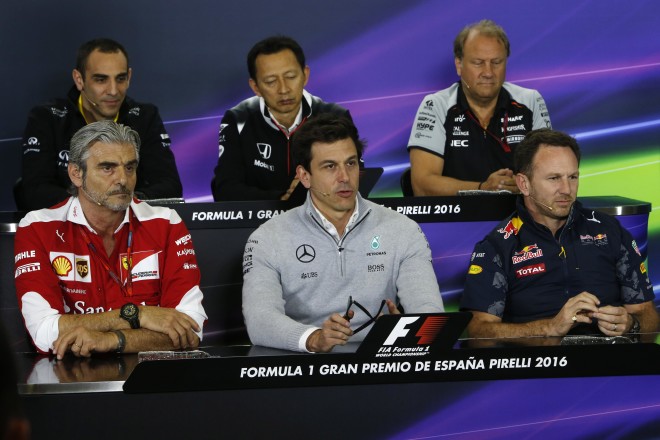
    Fri PC 13may2016 Spain FIA picTEAM REPRESENTATIVES – Cyril ABITEBOUL (Renault Sport), Yusuke HASEGAWA (Honda), Robert FERNLEY (Force India), Christian HORNER (Red Bull Racing), Toto WOLFF (Mercedes), Maurizio ARRIVABENE (Ferrari)

    PRESS CONFERENCE

    Let’s start with a question to you all. After much debate and discussion the FIA has now confirmed the revised engine regulations for 2017 to 2020. Are you pleased with the final agreement? Maybe we could start with Cyril.
    Cyril ABITEBOUL: Yeah, I mean, it’s an agreement, so we are pleased with this agreement in particular, but I think what’s good now is to have a clear understanding of what’s coming up for the next few years. We all know stability is important, so we have agreed for some stability up to 2020. We have also agreed for price reduction for customer teams, that’s clear, that’s agreed. There is also a clear target to get the performance to converge, because we all believe that it’s important for Formula One. We believe it is happening anyway, but there is this clear target. It cannot be a guarantee, because no one can guarantee performance. You can’t guarantee performance in the wind tunnel, same thing with engine. But we all know what we have to do. It’s good, it’s a relief, because we know what we have to do and we can make plans for the future.

    Maurizio?
    Maurizio ARRIVABENE: I’m very happy about that, because the most important news is that they talk and they move and that has opened the competitiveness for all of us and also the development. In terms of stability it’s absolutely fine, so I have no doubt that this decision is going to help the sport.

    Robert?
    Robert FERNLEY: I think we’ll reserve our position.

    Meaning?
    RF: We’ll reserve our position.

    Hasegawa-san, your thoughts?
    Yusuke HASEGAWA: Yes, not everything is good to the engine manufacturer, but it’s good to fix the rules and I believe the rules continue to 2020, so the rule stability is very good to us as a big company so it is good.

    Christian?
    Christian HORNER: I think what Bob was trying to say is that it is a little underwhelming. It’s a very soft agreement between the manufacturers and the FIA. It tickles the price, deals a little bit with convergence, the obligation to supply doesn’t really apply, so it’s a very weak agreement. Unfortunately it’s a shame more couldn’t be done, but I suppose if you look on the bright side it’s better than nothing.

    A weak agreement Toto?
    Toto WOLFF: I just want to digest what I just heard in the last five minutes. We achieved a major price reduction over two years. We have opened up development scope for others to catch up. We have designed an obligation to supply so no team runs out of an engine contract. We have found a mechanism how performance convergence could be trigged. Lots of good things, many months of hard work in trying to get everybody on the same page, I think it’s a good step forward.

    OK, a few individual questions then, starting with Cyril. We’re waiting to see what the engine upgrade brings. Can you tell us a little bit about the strategy behind the 2016 development programme and what you expect this upgrade to bring in terms of lap time?
    CA: Well, the strategy is fairly straightforward. Quite opposite to what’s happening in the chassis regulation with a major change between ’16 and ’17, nothing changed on the engine regulation between ’16 and ’17, so anything you can bring in ’16 is good for ’16 and ’17, so there is no question mark or debate about how do you… do I split my resources between this year and next year? That’s part of the development strategy, that’s part of the programme. It’s not all that we have in the pipeline; it’s a good chunk of it. It’s a good chunk for this year and we hope that it will be reducing some of the gap to the gentleman sitting in the front row to the benefit of Christian and Red Bull.

    Robert, coming back to you: tough start to the year, eight points on the board after four races. You’ve brought some updates this weekend, but can you sum up where you are in early 2016 and where you’re heading?
    RF: Well, from our point of view it’s disappointing that the results that we have don’t justify the car and it’s the exact opposite of where we were last year, where the results really flattered us to a certain degree. We’ve had two races where both cars got taken out in the first lap and the other two races, where a red flag and the safety car didn’t help out strategies at all. I think we just have to keep doing the right things all the time and it’ll come back to us. I’m very confident. The team is doing a great job technically. This upgrade appears to be working where we want it and we’ll climb our way back to where we want to be.

    Thank you for that. Hasegawa-san, going back to the discussion about engine regulations, obviously part of this new FIA agreement regards manufacturers supplying more than one team. Honda has always maintained it would welcome supplying multiple teams in Formula One, but have you actually begun any negotiations with anybody for 2017.
    YH: As a matter of fact, we don’t have concrete negotiations, although we have some conversations with some teams, but unfortunately we can’t make a conclusion with some teams. Currently our position is that we have to wait until the situation changes.

    But it’s true to say that you still welcome the opportunity to supply a different team?
    YH: Welcome is a different word. I think I have an obligation to contribute to Formula One society, so we are preparing our resource, but still we are not strong enough to provide multiple teams. We are preparing now.

    Toto, back to you. The team wrote and open letter to the fans after all the conspiracy theories circulating around Lewis Hamilton’s technical problems. How did that come about and what was achieved by it?
    Toto WOLFF: Well, since a while already we are trying to have a pretty transparent communication with all the stakeholders. We engage a lot through social media with our fans and this was one more exercise in that direction, which we felt was necessary to say where we are coming from.

    And how do you feel it worked out?
    TW: I don’t know. Clearly with Lewis and Nico in the car they polarise. There’s always going to be controversy around that, but I feel it worked out OK.

    OK, thanks for that. Christian, obviously the big talking point going into this weekend is the switch of Daniil Kvyat and Max Verstappen. What part did you play in that and how hard do you think it will be for Verstappen to adjust to your car mid-season, given how little Formula One experience he has?
    CH: I think Red Bull are in a unique situation where we’ve got four drivers contracted to the team. Two have always been loaned to Toro Rosso and within their contracts we have the ability to move drivers around and with the benefit of four relatively competitive cockpits we have the ability unlike other teams to move drivers from team to team. There’s been some discussion for a little while, because obviously we monitor and follow the performance of each of the drivers very carefully, not only in the car but outside the car, through the development programme and through the tools we have back at the factory as well and basically we reached a conclusion to say there’s never an ideal time to move things around but if we are going to move it why don’t we get on with it, do it in time for the European season. It puts our best foot forward in Red Bull Racing, it gives Dany Kvyat the chance to continue to develop in the Toro Rosso environment and that was the basis of the decision. In the meantime it also allows us to tidy up options and secure things for the future as well, so all very positive.

    Coming to you Maurizio: the cars are a lot faster this year than in 2015. I think Kimi was three seconds quicker in that FP2 session than he was 12 months ago. In terms of your performance as a team do you feel that until now you haven’t been able to show the real Ferrari performance due to the various issues that you’ve had at the races?
    MA: It’s true, but can you repeat… our car is faster, three seconds to last year?

    FP2 last year, yes.
    MA: Thank you, I like to hear that! The problem is they [Mercedes] are faster than us! No, I mean we have a programme of development. We try very, very hard, taking also a big risk at the start of the season. We have also a bit of bad luck, being honest. But I’ve said many, many times this Mercedes teams is the strongest of the last 10 years. So to beat them you need to take some risks and you need to work very, very hard. I’m talking about this with respect for them but with determination that sooner or later we can catch up.

    QUESTIONS FROM THE FLOOR

    Q: (Vladimir Rogovets – Sb Belarus) We see here representatives of different teams. My question is for all. In Formula One it’s very important to have good driver, good chassis and good engine – how many per cent can you give to the role of driver, the importance engine, of chassis?
    CA: I think you should ask Toto, because he has all of it!

    TW: One doesn’t go without the other. You cannot give percentages. The best driver in a weak chassis will not be competitive and, if he has a weak engine, it will not help either. So you need to align the stars, try to get the best possible driver in the best possible car with a very competitive engine.

    Anyone else like to have a stab at it? Christian, your thoughts.
    CH: Yeah, I think Formula One, the three elements should have equal weight: the driver, the chassis and the engine. So if one of those elements isn’t quite right, the other two can compensate. I think in today’s Formula One, with the recent engine changes I think we’ve offset that balance, and so you’ve probably got – I don’t know – 50 per cent engine, 25 per cent chassis, 25 per cent driver. I think the encouraging thing is the regulations that are in the pipeline for next year should rebalance that: it should make chassis a little bit more of a factor, which is going to challenge the driver more. So, hopefully for 2017 it should balance up a little.

    Do you agree with those ratios Robert?
    RF: I think there’s an old saying that a good driver can always make a poor car look good – but not the other way around. So I think both of them are important.

    Hasegawa-san, any thoughts on this?
    YH: It is a bit difficult to tell the number. To me, every element has a one-third importance I think – to me.

    Maurizio?
    MA: I’m not good with percentages but being logical and straightforward, how can you go there and run around without the driver? And then you need to also have a good driver. At the moment it’s a good balance in between the three. Maybe the engine is more important this year without doing percentages. Next year, I agree with Christian, you could have the chassis that is going to take up a bit more importance, making all the races a bit more interesting and also challenging the drivers’ ability. But I think, looking at this year, it’s very spread out between the driver, chassis and engine – and if I have to talk in percentages, with something more for the engine.

    Cyril, you tossed the question to Toto at the beginning. Do you want to say anything about it?
    CA: I think in theory we would like an equal breakdown between the three elements – but that never happens. The one thing that should not happen is that the engine is taking too much weight for the simple reason that you have fewer engine suppliers than you have teams. So, if suddenly the engine is taking more weight you are giving too much power to one single entity, which is exactly what happened in truth for Mercedes. Nothing wrong with that, just because they did a brilliant job – but it’s never too good for the sport.

    Q: (Silvia Arias – Parabrisas) Yesterday in this room Lewis Hamilton said something like “Ferrari is hungry to win, of course, but we still have potential to develop our engine.” I would like to ask Mr Arrivabene how optimistic you can be this year trying to beat Mercedes when the driver says something like that? And is Ferrari able to develop still the engine this year?
    MA: Looking at the first four races saying that I’m optimistic… it’s a bit too much. But of course because we know exactly what’s happened there. In Melbourne victory was absolutely possible. In Bahrain maybe yes, and then we have two different circumstances in the other two races. Of course I’m optimistic. If you’re asking me when, most probably we have to share the question in between me and him to understand precisely but I mean of course we are trying to do our best, and we are determined and optimistic.

    Q: (Rodrigo Franca – VIP Magazine) Question for all. If each one of you can make a single change to the regulations for next year, what would it be?
    CH: Mercedes engines for everybody free of charge.
    And in the real world?
    CH: Well, we have a chassis regulation change. I think anything that gives the driver more predominance… Formula One is about man and machine, or woman and machine at the absolute limit. I think at the moment the drivers have too much of an easy time. We don’t see or get to appreciate their skill levels – which are huge. I think anything that can be encouraged within the regulations that differentiates more between the drivers, so we get to appreciate more the real skill they have, I’d be all for.

    Toto?
    TW: I think if we leave everything as it is now, we have changed the regulations for a new aerodynamic concept for next year and that’s pretty exciting. I’m actually quite happy with the direction we are heading towards.

    Maurizio?
    MA: I’m quite happy too, being honest. Concerning the show, I think from my point of few, as Ferrari, we are building car, engine, gearbox and chassis and not growing driver, so for us it’s good what we have. If you are asking me what you really, really like to change, I threw up on the table maybe ban the simulator. In this way you can go testing to the track, you can promote Formula One, you are not going to spend millions to update the simulator. Why not? You have to think that keeping the exclusivity of Formula One, it doesn’t mean that Formula One has to be viewed only at the race time and disappearing in between the grand prix. I mean to promote Formula One you have to see the car running and to test the tyre you have to do testing. Now we have something that, in my opinion is quite artificial like the simulator. If you are asking me, OK, tell me what you want to change. It is not a proposal for FIA. It is my thought.

    Cyril
    CA: Well, as said, we know what we have now and it’s too late anyway to change but the one regret that we have is on fuel limitation, on fuel quantity. Because even though we support and appreciate the message that Formula One needs to be fuel efficient, the product is fuel-efficient first and foremost and secondly the fuel quantity limitation is going against the performance convergence which we all think is important. So if you are to ask me that, the one which I would waive, also because we want the driver to be constantly in a situation to attack and not to have to manage too carefully their fuel, so that would be the only one – but it’s a small detail.

    And how much fuel in a perfect world would you want to give them?
    CA: I would take away completely the quantity just for the message. Formula One is not endurance, it is not LMP1, it is a short race, it is about being able to attack constantly. So it’s joining a little bit the point made by Christian a bit earlier. If you ask me what is the fuel quantity that is needed in order to be fuel sustainable at all races, I think we are talking about three to five kilograms of fuel will make it. But again, just for the sake of the message and the simplicity of the message and not have negativity that Formula One is about precious drivers and so on and so forth, I would take away any limitation.

    Hasagawa-san?
    YH: This is also a personal opinion, so not a proposal for the FIA but if we could reduce the penalty of the number of the usage of the engine it would be nice. Of course I respect the longer mileage engine and the durability is a very important challenge for the engine people but the current penalties, I think are too big and complicated to introduce to the fans. I think we should be better to reduce the penalty to the engine change on usage on engines.

    Bob?
    RF: I think there’s a lot of work gone into producing the regulations for next year which I’m quite comfortable with as they are – but I think the underlying problems for Formula One are in what is a very inequitable distribution of income. I think we need to get that right to make sure its sustainable.
    Q: (Sergio Alvarez – One Magazine) Maurizio, this weekend this Spanish Grand Prix is the anniversary of Michael Schumacher’s first win for Ferrari; is there any special feeling inside the team and do you remember what you were doing that Sunday?
    MA: Yes, Michael is in our hearts every single day. He’s part of the history of Ferrari. I was here that day and I remember very well the hug that Michael gave to me later on after the race and what we were drinking in the cup. It was a very very good feeling. I think it was wine or something. I don’t like… being an Italian, I don’t drink wine! It was something that for me was very strange but good.
    TW: I don’t remember unfortunately. I remember those glorious Schumacher years, an era when Ferrari was dominant with Michael there and like he’s very very much part of Ferrari, he’s very much part of Mercedes as well but for that particular Sunday, no recollection.
    CH: Yes, I remember it very well. I was watching it on the TV. I remember being a Williams supporter at the time and David Coulthard and Damon Hill both managed to screw it up and Michael did a great job that day in the rain, in conditions that were pretty appalling. It’s a great equaliser and in a car that was nowhere near the level of a Williams performance, he was in a class of his own that day and it was a very very impressive drive.
    RF: This goes back to what I said before, that a great driver often makes an underperforming chassis look very very good, and that’s what Michael did. He was quite remarkable.
    YH: When was that? Sorry, I don’t remember. I wasn’t in Formula One.
    CA: I think I was working on my exams unfortunately.

    Q: (Dieter Rencken – Racing Lines) Cyril, you said earlier on that performance convergence is a target. Fabrice Lom said earlier on that it will be monitored rather than regulated. Now are the four power units suppliers  represented here confident that convergence can actually be achieved within certain limits, two per cent or 0.3s? And that one or other team won’t possibly be fudging their performance for as long as this monitoring is carrying on and then just shooting off ahead on their own thereafter?
    CA: That’s one hell of a tactic. No I think that’s what we have to aim for, that’s the target, that’s our ambition and I think frankly that’s achievable. When I look at what we have on our dyno, what we have on simulation but also on dyno, so I’m talking about physical product, we really have a good good hope that we can do that, so obviously just looking at what we are doing. What I don’t know is what Mercedes, Ferrari, Honda are doing but there is naturally a law of diminishing returns, as we all know, which, after some time, is starting to kick in. Maybe we need to ask the gentlemen in front what is their plan, but I think it’s achievable and talking about the tactics that will be followed by any team in order to change, to create a reaction in change, frankly I think that’s a bit remote and I think there is an element of change that will not be controlled by such a team that would kick off the process so I don’t really believe that.
    MA: I think in our position we will continue to develop our engine and without stopping that for sure so then if, somehow, the convergence is achieved, it’s something that we need to discuss, but no discussion that the developing and looking for the performance is in the DNA of our team.
    TW: Yeah, I would agree. The regulation stays stable, the development scope is opened up a bit so it is pretty logical that the field is going to converge. We are going to try to do everything to not make this happen.
    YH: Even if we don’t have a rule, we have to catch up, otherwise we can’t be here, I think. Naturally we have to catch up, yes.

    Q: (Dieter Rencken – Racing Lines) Toto, your company: although the team is based in the UK, the head office is based in Germany. Cyril, exactly the same with yours except that it’s France. Christian, yours is Austria and the UK. With this looming Brexit vote coming up, have you looked at the impact on a British organisation with a European head office and what could possibly happen operationally? I’m not asking  for political comment at all, but purely operationally, how you see it could affect your teams in future?
    CH: Well, we had George Osborne come round the other day but he never mentioned Brexit which was quite impressive. Look, we’re a sporting team, we’re based in the UK, we’re not going to get involved in politics. If it happens, it happens. If it stays it doesn’t make a great deal of difference to us, so we’ll deal with it as and when, if it should happen.
    TW: When I took the job in 2013 I was told by my boss, Dieter Zetsche, don’t comment on politics so I’m not commenting on politics. We’re sporting, as Christian says, and we just have to get on with our job.
    CA: Without talking about politics, the only thing we would have to look at carefully is the effect on the currency, because as an organisation we are exposed to a number of foreign exchange rates including dollars because the revenue of FOM is not euros, it’s dollars so we would have some impact there. But apart from that, I don’t see any other implications.

    Q: (Fabrizio Corgnati – diariodelweb.com) For Ferrari, Mercedes, Renault and Honda: as manufacturers, do you think that modern Formula One still gives a good return of investment to help improving the road car sales?
    YH: Technical side or promotion side? Marketing side. Of course it is very difficult to say, the current Honda position is not a very good effect to the mass production but definitely, the image of Formula One can still have a good image for the mass production side as well, yes.
    CA: Well, obviously I think we reply to that answer with the decision that we made at the end of last year and obviously, as you can imagine, we’ve done a lot of analysis in order to form that decision which was a joint decision within the Renault Group. Clearly Formula  One is relevant, is useful  as long as you win, so that’s the big ‘If’ and obviously since we look where we’re starting from that’s a big ‘If’ and obviously that’s a big ambition but if you are successful, the amount of exposure that you have, even against the cost which is high, is completely balanced so what you need is to do what’s necessary in order to be successful. The problem is really the entry ticket and the extra spend that you need to put in the initial years in order to get to the level of competitiveness that you want. That’s the difficulty of the whole business case of Formula One.
    MA: It’s a bit more simple, my analysis, starting from the past. Enzo Ferrari, when he started his activity, the production side of Ferrari was racing at the same time. Ferrari is not doing advertising and racing is the way of Ferrari to advertise the brand and this is one aspect. The other aspect is of course in racing you can transfer sooner or later certain technology that you are developing on the whole car. Take for example the gearbox on the steering wheel and all this novelty; some things are not applicable yet  because of course they are so high (technology) but as soon you are able to find the process to produce in big numbers and then acceptable quota of technology that you are developing Formula One, this is something that you apply to the car and that was part of the history of Ferrari and it continues to be like this.
    TW: Similar with Mercedes. The first ever Mercedes was a racing car and this is part of our DNA: we build racing cars and we build road cars. It is not a sponsorship platform so we will continue to do just that and in terms of the advertising value equivalent that you generate, it’s a global platform and a very good platform.

    eom/FIA transcript of the Press Conference

  • Ferrari are improving fast: Hamilton at Thursday’s Press Meet

    DRIVERS – Fernando ALONSO (McLaren), Lewis HAMILTON (Mercedes), Kevin Magnussen (Renault), Carlos Sainz (Toro Rosso), Daniil Kvyat (Toro Rosso), Max Verstappen (Red Bull Racing)

    PRESS CONFERENCE

    Q: Fernando, a good result last time out in Russia with sixth place. Do you believe you’re closing in on the Williams-Red Bull battle? What development steps can we expect from McLaren-Honda here this weekend?
    Fernando  ALONSO: Yeah, I think the car is improving and we are getting more and more competitive in the races. I think the next grand prix will be a good one for us, so here in Barcelona, Monaco, even Canada should be a little bit better than what we did in China and in Russia in terms of layout. Yeah, we have some high hopes for us at the moment to keep this momentum and keep growing together to more competitive positions and yeah, I think we have some updates for this race in terms of aerodynamics, most of them. We’ll see how the weekend goes but we are probably much more optimistic than one month ago.

    Q: How is the enthusiasm for Formula One here in Spain at the moment – with you and all that you’ve done and obviously now Carlos coming through?
    FA: I think it’s still OK. Definitely it’s a little bit lower than 2005-6-7 when we had a 45 minutes queue to come into the circuit. It’s still quite high and I think the people are still loving the sport – but definitely there is a little bit less enthusiasm about the races because with the television not being available for everyone, just with a pay channel etcetera, probably is a little bit less viewers, a little bit less media attention. But I think we have good days and it’s still quite popular.

    Q: Lewis, second at the moment in the Drivers’ Championship but in four starts in 2016 you’re yet to finish the opening lap in a front-running position. It’s hard to believe – so is this the weekend when we hit the reset button?
    Lewis HAMILTON: That’s the hope, of course! Who knows? We’ll wait and see.

    Q: There’s still a long way to go, obviously, in terms of your challenge for a fourth drivers’ title – but in the battle with Ferrari do you feel that, despite whatever upgrades they bring, you’re able to keep them at arms’ length. Is that the way it feels to you?
    LH: No, I think Ferrari are constantly improving their car. I think this weekend they’re obviously going to have some upgrades, as you would expect for Barcelona. I think they’ve been very, very close up until now. They’re going to continue to strive. They want to win; they’ve very, very hungry – as are we. I think we do have the power as a team to continue to develop, hopefully at a similar, if not the same rate as they are. So, of course we can always try to keep them at arms’ length but who knows how it’s going to go.

    Q: Kevin, breakthrough result in Sochi, 17th to seventh. What’s that done for morale – yours and the team’s?
    Kevin MAGNUSSEN: Yeah, for sure it’s made everyone happy to finally get some points on the scoreboard but we’re not fooling ourselves to think that’s our level. It was a little bit lucky with a lot of people having problems on the first laps and one of the Toro Rossos not finishing the race towards the end. So, as I said, we’re not fooling ourselves to think that’s our level. We need to improve quite a bit before that will be our level – but, as I said, it’s nice to get points on the board.

    Q: It’s clear to see where your challenge lies. Both Renault’s have been knocked out in Q1 at the last three races in a row. What have you got in the pipeline to address that?
    KM: It seems qualifying is our weak point. It looks like people can turn things up for qualifying that we can’t. So that’s one thing to work on. It’s not the only thing. We are behind on a lot of different areas and we just need to improve overall – because the situation we’re in at the moment is that we have a car that hasn’t been developed continuously all last year and we’re picking up on everything now. We need to be patient but at the same time need to work extremely hard because we need to catch up on people who are also improving. I think this last result shows that it is possible to score points and if anything happens like a first-lap incident, we need to be there and ready to take advantage.

    Q: Carlos, coming to you. Obviously, despite optimism that you’d have a reliable package this season with which to get consistent finishes and points, you’ve yet to really have a properly clean weekend. Tell us about the start to your season.
    Carlos SAINZ: Yeah, it’s been definitely a very tricky start where we definitely had the pace, we definitely had the speed but just because of one thing or another the final result hasn’t come together yet – but I am optimistic that, from now on, from Barcelona we can press also a bit the reset button and start getting the results we deserve because definitely the pace, the speed is there.

    Q: There have been some significant changes of personnel obviously on the driving and the engineering side at Toro Rosso. Can you give us your perspective on that?
    CS: Yeah, I think there have been many changes in the team but I don’t get to analyse them much because it’s not my job change engineers or to change drivers. I fully trust on what Toro Rosso and Red Bull have decided to do and I think it’s for the best of the team, for the best of the engineers, the personnel in there and already you can see some refreshment in the faces. I’m convinced it will just go on better. To have Daniil we can probably fight now for the P5 in the championship that was the main target since the beginning of the season.

    Q: Let’s get into that then. Daniil Kvyat, one of those changes obviously involves your return to Toro Rosso, moving from Red Bull. Daniil, we’ve all seen the statement from Red Bull about why this move was made – but what are you telling yourself about it and where you go from here?
    Daniil KVYAT: Well, I think obviously the decision in a way was a bit of a shock also for myself. It is what it is at the moment and I think I’ve always been giving my answers on the track and I think nothing will change. I will try to give as loud an answer as possible on the track. There are 17 races remaining, I’ve come back to Toro Rosso, the team for which I raced in 2104, a team I really like a lot, the team that I’ve felt over the last few days is giving me a very warm welcome, which I’m very grateful for already, now I can feel the atmosphere is very positive in the team. The goals are clear – for the team and for myself – and I’ll be pushing absolute limits on the track and I will be giving my answers there.

    Q: Looking back, do you feel you moved to Red Bull too soon?
    DK: I don’t think so, I really don’t think so. Like I said, if we look at what happened three weeks ago, or whatever, I was standing on the podium and then suddenly there were a few decisions made around – but like I said, the bosses make them and I have nothing else but to accept them and do my best job possible now in the team I am with – and it is Toro Rosso. It should be OK – but I think I have done everything correctly until now. And nothing will change from my side.

    Q: Let’s have the other side of the story. Max Verstappen, obviously you’re replacing Daniil at Red Bull. A racing driver is always going to accept a chance to race closer to the front – but how to you evaluate both the opportunity and the risks involved in this move so early in your career?
    Max VERSTAPPEN: To be honest I’m very happy with the chance they have given me. I’m racing for a top team now, so that was always the plan what I wanted to do. And yeah, with the risk, to be honest I think it was a bigger risk to be so young in Formula One but I’ve handled it pretty well. From now on it’s just getting used to a new car, which is not easy in the season, but already with the things I’ve done in the factory, already they’ve given me a lot of confidence. Of course, a lot of procedures to learn again but it will come race-by-race and I’m definitely going to enjoy it.

    Q: You now have your new team-mate Daniel Ricciardo as a benchmark – but you can also learn from him. How do you see that relationship evolving?
    MV: For sure he’s a great guy. He’s very fast on track and has a lot of experience in the team. I will try to learn a lot from him.

    QUESTIONS FROM THE FLOOR

    Q: (Mike Doodson – Auto Action) Max has been quoted as saying he couldn’t sleep for three nights after he got the news of his promotion. My questions for the two world champions here, can they remember races in their career about which they were particularly apprehensive in the days leading up to them?
    LH: It’s hard to remember back, it’s been a long time now, I’m a veteran. For sure the first race, the first race in a new team. Honestly, every season you’re a bit apprehensive: you’re a bit… you have that nervous buzz of a new car, a new beginning, a new opportunity, so for sure I can imagine how the feeling is for him.

    Fernando?
    FA: Not really. I don’t think that I ever had that kind of stress. Obviously there are some more or less important races and you feel the moment – but normally in my case it would be on Sunday when you do the drivers’ parade, when you jump in the car for the practice start – you know it’s an important race to deliver. But the week before… no big issues.

    Q: (Simon Lazenby – Sky Sports) Question for Max and for Dany. We’ve heard the statements as James is saying but what reasons were you given by management for the swap and did you both have prior indication that this might have been an option for 2016?
    MV: I think it was pretty clear in the comments they have given to you. From now on, I’m just very happy with the chance they have given to me and I’m going to enjoy this season and from there on we’ll see for the future.

    Dany?
    DK: There was no real explanation to be honest. I think if the bosses want something to happen, they just make it happen. Simple as that.

    Q: (Livio Oricchio – globoesporte.com) Daniil, if you carry out very good work now in Toro Rosso, do you think it’s realistic to believe that Marko and Horner could take you back to Red Bull? And also, if you are putting your focus on developing very good work and thinking in other teams?
    DK: Well, obviously first things first. I think now it will be important to first make a good work. These remaining 17 races will be very important and I believe then, let’s just wait and see. To be honest there would be anyway a lot of thinking I think from anyone. First good work and then we see.

    Q: (Sacha Roos – Sky Deutschland) Question for Dany. How difficult is it for you now to look in the eyes of Dr Helmut Marko and Christian Horner – because they’re blocking your career.
    DK: You know, obviously, first hours after that of course you have been thinking a lot, and then the work started and then I fly to the factory, I see Toro Rosso people, which are very motivated and very hungry. And I’m now extremely hungry, and to be honest I don’t see it as blocking. You have to take the most positive moments now because actually there are a lot more positive moments now than anyone can imagine I think.  I take it as a golden opportunity with Toro Rosso. And, like I said, I really like the team, I really enjoyed working with them, most of the people are still the same and I believe we can do a really good job. And then once the good job is done, there are more good opportunities to come. I think you always have an opportunity. I think you always have something to fight for.

    Q: (Cristobal Rosaleny – Car & Driver) Carlos, after one year and almost a half with Max with more or less the same performance level, although points have not shown the same, what do you that they have put Max and not you in Red Bull?
    CS: I don’t get to evaluate the performance of each driver so easily. That is done by my bosses at Red Bull. Now my time… I appreciate what Red Bull is going quite a lot, that is to put young talent into a Formula One team. As soon as you do a good job they show you the confidence, they give you the chance and now it’s my time to fight more than ever for that. I have, as Dany said, 17 races ahead to give the maximum out of myself, to fight for my chance as much as I can. I’m sure that if I show the same speed I have now with a bit better results my chance can come.

    Q: (Jonathan McEvoy – Daily Mail) Daniil, I was wondering what you believe is the real reason why you were dropped? Do you feel they looked for an excuse to drop you or do you feel that there was genuine reason enough to do it? What is your understanding and what explanation was given to you as to the reasons why you were dropped?
    DK: First of all, I think the word ‘dropped’ still a bit heavy because I still get quite a good chance from Red Bull with Toro Rosso. So, I think it’s a positive thing. Secondly, like I said, I feel like I’ve done everything for the team. I feel like I’ve been bringing the points, I’ve been bringing all the development work. We’ve been working well together. So, to be honest, I don’t really think so. It’s a question for other people who made the decision. I think they can give a better answer to that. I really don’t see any reason. It’s for them. A question for them.

    Q: (Daniel Johnson – Daily Telegraph) Questions to Daniil and Max. Daniil, given what’s happened to you, do you think that Max deserves your old seat and Max, do you think Daniil deserved to lose his seat?
    MV: I think that’s not up to me to say who deserved it or not. I’m happy with the chance they’ve given to me and I will try to make the best of it. We’ll see where it ends up.

    DK: Well, there’s no point discussing this, especially from my side. I think now what’s ahead, in front of both of us, is a lot of hard work because we’ve both changed the team and I think the people around us will also be able to evaluate how good a job we are both capable of doing in these circumstances. It will be interesting to see who will be able to work better and harder to bring in the results to both teams we are now with. Let’s just wait and see. The season is very long.

    Q: (Giorgio Terruzzi – Il Corriere della Sera) Question for Lewis and Fernando. What do you think about the Red Bull decision to change the drivers?
    FA: They changed the drivers? [to Lewis] You knew it?
    LH: No!
    FA: I guess it’s up to them. It’s definitely a surprise after Race Four. They’ve been doing very good job promoting drivers and discovering new talents and giving the opportunity. So, it’s the way they do it, and they’ve been doing a very good job in the past, so we’ll see.

    LH: erm… yeah… I think obviously ultimately it’s a good opportunity for one and for the other very unfortunate. Red Bull has done well in bringing young talent forwards but I think they need to be aware that young drivers need time to progress. Mistakes do happen, there’s so much pressure on drivers, particularly at a young age. Especially when you’ve not done a lot of years in the lower classes, you’ve come quite early in, there’s so much to learn. A lot of pressure on the shoulders I think to take a driver out of a role with a team where he’s comfortable and move into another one. It’s a difficult position to be in. Do I agree with it? It doesn’t really matter – but it’s definitely not something I would particularly do.

    Q: (Alan Baldwin – Reuters) Carlos, one of the reasons Dr Marko gave for the switch between Max and Daniil  was that it also sorted out the relationship in Toro Rosso between you and Max. Could you perhaps give us more details about why that relationship between you and Max wasn’t working?
    CS: I think the personal relationship Max and I have is not a big issue honestly. I think we both always maintain the respect off the track and I think we showed it at every moment. I think it’s more a matter of a team perspective of how the team was working and that’s where Franz Tost and Helmut Marko take the decision. But from Max and myself there was always respect, there was always  good vibes with each other. Obviously we were fighting a lot on track, we were always very very close to each other and there were always some battles going on but they stayed at the track and out there it was just a matter of engineering, of just not being a comfortable team and that’s why they decided to take this decision internally.
    MV: I think we still need to plan when we’re going go-karting together.
    CS: We were just talking – before coming in here – about that we were going to go go-karting in one week together so that shows that it really stays on track.

    Q: (Sergio Alvarez – One Magazine) Next year’s rules will bring an extra bit of downforce, if it is to be believed. From a physical point of view, have you talked to your trainers about any changes in your respective regimes?
    KM: I haven’t spoken to my trainer about it. I don’t think it’s going to change a huge amount – I mean the training bit. I hope the cars will be faster. From my point of view, it will be great to drive a Formula One car three seconds faster so we will see what it does to overtaking and stuff but I’m looking forward to it.
    Q: Fernando, obviously you drove the cars plenty in the days when there was much more downforce and faster, so how do you feel this is going to equate next year compared to what you had in the past, physically?
    FA: I don’t think it’s going to change too much, probably a little bit more physical to drive the cars but nowhere near what it was in the past, probably, eight or ten seconds faster. I remember we could not even go onto the podium after some races and it was tough for everyone. Now I was ready to race with two broken ribs. You can even race… whatever. Even after winter testing, preparation is not needed normally.
    LH: It’s just interesting, listening to… It’s going to be more physical so you just have to train a little bit more. We’re all in the same boat and unfortunately it’s probably not going to make a big difference to the racing but hopefully it will, probably won’t.
    MV: I’ve never driven faster cars than I’ve driven now but for sure you always do a lot of work-outs. You just have to adapt to it but I don’t see big issues with that.

    Q: (Ralf Bach – Auto Bild Motorsport) Max is it right and the truth to say that after you moved to Red Bull now, you’re safe in the Red Bull family and other teams have to stop talking to you?
    MV: Well, I’ve always been very happy with Red Bull and now of course they’ve given me the chance to be in their top team. There is also no reason to change, is there? I’m very happy with them, I think they are very happy with me and we just try to continue like that.

    Q: (Andrew Benson – BBC Sport) Daniil, one of the reasons Helmut Marko gave was that you were not handling the pressure from Ricciardo well enough. Do you think that’s fair?
    DK: Well, the pressure, talking about pressure. I think I’ve been part of the Red Bull family for seven years and I don’t see it as a big problem of course. I think other people around me also had pressure and I think, talking about myself, no, not really. I don’t think it can be the biggest explanation to be honest.

    Q: (Andrew Benson – BBC Sport) Lewis, would it be fair to say you’re worried about the gap to Nico at the moment? And if not, what’s your mindset going forward?
    LH: It is what it is, so there’s no point in being concerned, I’ve just got to work hard to move forward. I have less engines than Nico, less than probably a few of the drivers, so I’ve just got to do what I can with what I have and for sure, it’s a steep mountain to climb but I love a challenge, so I’m kind of excited about it.

    Q: (Jon McEvoy – Daily Mail) To Max and Daniil: have you spoken much about the switch and if so, what sort of things did you say to each other?
    DK: Well, no, we’ve been… obviously we saw each other, I think that’s enough and I think… what can we say? We both have to work hard now, as I said before. I think there’s no point in wishing luck, luck never brought anything, only hard work and that’s all, I think.
    MV: Yeah, I think there is not much to say about that to be honest. Now it’s just up to us, we have to work hard, we have to deliver on the track. Not much more to add, to be honest. It’s all pretty clear.
    Q: (Jon McEvoy – Daily Mail) Did you speak to each other?
    MV: I saw him at lunch, yeah.
    DK: And I saw him now.
    MV: Sitting next to each other.

    Q: (Ben Hunt – The Sun) Daniil, who told you about the demotion, if you like? Who was it who actually broke the news and where were you when you found out?
    DK: I was in Moscow, I was lying on the sofa, I was watching a TV series and then the phone call comes. It was “hallo, well, we have some news for you” and I think there was a 20 minute talk about… I wanted and I think I deserved an explanation. I got to know many interesting details, I must say, which I think I will keep to myself for now.
    Q: (Ben Hunt – The Sun) Who made the phone call?
    DK: Dr Marko called, he made the phone call. We finished the talk and I went back to finish my TV series, that’s all.
    Q: (Jon McEvoy – Daily Mail) What was it?
    DK: TV series? Game of Thrones.

    Q: (Ben Hunt – The Sun) And Lewis, just to ask you about your engineers, new mechanics. Have you spoke to the team about getting the ones that worked on your car last year back on your car for this year?
    LH: No, I have no intention or any wish to move around, there’s nothing to do… the issues we’ve had have had nothing to do with the mechanics. They’ve been doing a fantastic job both for Nico and I over the last three and a half years. That is not a concern and that’s not something… I’ve got a hundred percent belief in this team and in those guys. This is really just hoping that I’ve had a bad share of luck, I guess, with the failures, but hoping that will move forward and you will get to see the results of their hard work, because they have worked so hard to integrate with me and vice versa on my side of the garage and we have a huge amount of respect for each other. I’m looking forward to trying to deliver something spectacular for them.

    Q: (Li Chun – LeTV) To the three gentlemen in the front row, if the three of you were to fight it out for the World Championship tomorrow, who do you think would have the better chance to come out on top?
    CS: Well, it’s a bit of a… It doesn’t make much sense. I think if you ask every driver on the Formula One grid or every professional sportsman, they think they are the best. I think I am the best and I’m sure if you ask these two gentlemen or these three behind me, they will say the same.
    DK: Well, I think tomorrow is a good day to start of course, but yeah, let’s see. It’s not going to happen this year, I think, so we will have to wait and see. Driver development is something that happens all the time and there are so many circumstances, so many details that first of all have to happen, that you get to Formula One and then to win the championship is another thing of course. Every person, like Carlos said, every driver is a very confident personality usually and has a strong self-belief and of course I know that to get everything right and the best out of it, I don’t have any doubts really.
    MV: One thing, we are not fighting for the World Championship now but the positive thing is that I’m still very young so I have a lot of years ahead of me.

    Q: (Livio Oricchio – GloboEsporte.com) Coming back to the subject that Lewis mentioned, that drivers need time to develop themselves, so many things to learn in a top team, do you think you will have time or will it be like Daniil that you don’t have this time properly?
    MV: Well, to be honest, I think so far that Red Bull has guided me in a very good way and I’ve felt very comfortable and I think that if you are very comfortable you can perform and if you are very happy you perform even better so a happy person and a comfortable person is always performing better and at the moment I’m like that and I hope to keep it that way. I think at the end, it’s not up to raw speed, it’s more the experience around it, but that’s just by doing every Grand Prix, step by step and that’s getting better all the time.

    Q: (Daniel Johnson – The Telegraph) Daniil, you suggested earlier that you didn’t really feel that you got much of an explanation for why the swap had been made with Max. I wonder what you inside think the real reasons are for why you and Max were swapped round?
    DK: Obviously, you know, it’s really hard to say, exactly. Like I said, it’s not really a question for me because it wasn’t my decision, first of all. To me I was working, I was giving my best ever race. Yeah, we had another very difficult start of the season. I didn’t even manage to start the Australian race again, two years in a row. There were strange things going on in Bahrain. Well, I believe that since China, really, I picked up a good pace, that it was coming, that it was a little bit similar to last year but it was getting better and better, race to race and qualifying in Sochi was already very competitive and the race pace was also getting better, so to be honest, we know that Formula One is a very general sport, sometimes hard work, sometimes what you do on track is also not enough, so let’s wait and see. Like I said, I learned quite a lot in the last few days, last few weeks and it’s made me very strong and I feel very strong now and I’m looking forward to showing with Toro Rosso now, with a team that supports me and with a team that I feel that we have a lot of unfinished business together and I think we should finish it together.

    Q: (Angelique Belokopytov – Autodigest) So Lewis, you were saying a few minutes ago that young drivers have to take time to have some practice. But you started in a big team, a few others started their careers in smaller teams. So I’m asking for your opinion, for a young driver, which is the best way to start? Small or big?
    LH: I don’t think there’s a clear answer to that. For me it worked perfectly to go into a big team but I did a lot more years in lower categories than some of the others have, I probably have a few more years than the two ahead of me have but I’m just meaning that it’s really important not to hold a young driver back. They’re going to grow in their own time and some take longer than others. Some are really quick at learning and some take longer, they need to make more mistakes. I remember my first days in the car and I crashed my first day of driving. It was really really difficult, those first processes but of course the team can make a big difference in how they help but I do really just hope for Daniil. We’ve got two fantastic drivers here, I just hope that in this manoeuvre it doesn’t hinder either of their… I hope it doesn’t hinder either of their careers because they’ve got bright futures ahead of them and too much pressure, too much stress, too much expectation too early on can lead the wrong way and that’s what I want to say.
    Q: It might be interesting to get a perspective from Fernando on this because obviously you did have that time, didn’t you, you started with a smaller team and then you had a development year with Renault before racing? What’s your thoughts on that?
    FA: I didn’t expect any questions. I probably agree with Lewis’s comments. It’s difficult, I don’t think there is a mathematical formula to know exactly what is the best way. You need to benefit from both scenarios. I think if you start in a small team, you can grow up a little bit in a more relaxed environment and try to learn a little bit with less stress and less pressure. If you start with a big opportunity, it’s also good for yourself because you can show your talent immediately and you can make a big impact on the sport and have a better future after that so… the important thing for both of them is today’s topic that both of them race many many years in Formula One because they have the potential talent to be Formula One World Champions one day and I really hope the best for both of them.

    Q: (Barna Zsoldos – Nemzeti Sport) Daniil, in Sochi, in the middle of the race, Sebastian went to Christian Horner complaining about you in front of all the TV cameras. What do you think about this spectacular gesture? Do you take it personally and would you act the same, vice versa?
    DK: What happened in Sochi has already happened. Of course it was a messy lap one. I spoke with all the people involved and we’ve all had our points of view on that. It’s left behind, between me and Sebastian, there are no problems at all, after that. To be honest, I don’t know how is their relationship so if he went to complain or whatever, I don’t know and to be honest, I’m not too interested in what he said and I think everyone has the right to go and say what he thinks, especially if you know someone quite well enough to talk about it, so I don’t have any strong opinions on that episode really.

    Q: (Valenti Fradera – El 9 Esportiu de Catalunya) Having seen the performance of the medium tyre at this track during private testing, do you think we will get to see the hard tyre at all on Sunday?
    KM: Don’t now, we will see. I don’t think it’s the most likely tyre to be raced on but we will see in P2 most likely.
    LH: As far as I know… I mean I don’t even know what tyres I have to be honest. I doubt it, it’s not the best tyre here, it’s going to be the mediums…
    Q: You’ve got one set of hards.
    LH: Yeah, it’s not the best tyre for this race. I don’t think anyone’s going to use it.
    MV: It’s a very nice colour, isn’t it, the orange, so probably maybe we will have a run on them. I like the colour.
    Q: Incidentally, you inherit each other’s tyres, right? That’s the way it works. So you (Max) inherit the tyres that he (Daniil) selected.
    MV: But that’s fine.
    DK: I think it’s the team’s choice, no? So the team is chosing the tyres, so I get now what he had and I have what he had, but I get to keep the points. I like to keep my points. And the podium.

    eom/FIA transcript of the Press Conference

  • Over time… there is no such thing as luck: Otmar Szafnauer of Force India

    Over time… there is no such thing as luck: Otmar Szafnauer of Force India

    Sochi, 29 April 2016: Friday FIA Press Conference

    Otmar of Force India at Fri PC 29apr2016 Sochi FIA picTEAM REPRESENTATIVES – Ayao KOMATSU (Haas), Paul HEMBERY (Pirelli), John McQUILLIAM (Manor), Otmar SZAFNAUER (Force India), James KEY (Toro Rosso), Beat ZEHNDER (Sauber)

    PRESS CONFERENCE

    James, if I can start with you. Toro Rosso have made a good step forward over the winter but perhaps you haven’t maximized potential over these first few races. Is that why John Booth has been brought in? What can you expect from him? What do you hope for him to deliver to the team?
    James KEY: Well, to answer that question in two halves. We have underperformed this year in terms of the points we’ve got. This has been for various reasons I think. There’s no one area that you could say has been a weakness. In Australia we had various issues we probably don’t need to go through again. In Bahrain unfortunately we lost Carlos early because of getting hit by another car. In China it was OK but we got fairly badly affected by the Safety Car, as did some of our competitors, so we had to fight our way back. So all of those circumstances are different but we believe we should have got more points certainly and, you know, we need to recover from that. But that’s not the reason John is here. John is with the team as a consultant, to visit the races over the coming months and help out where he can. It’s a big operation; we have grown very quickly. We’ve got a lot of people doing a huge amount of detailed work and John is there to help us step back a little bit and look at the wider picture and see if we can draw things together a little bit more in the coming races. So it’s purely there to help us. And I think with his good experience and his very clear enthusiasm about joining STR, which is very welcome, I think it can only help and strengthen the team.

    One of the areas in which he has a reputation for succeeding is in bringing through driver s. Your drivers are heading into their second season. Is this a season in which you now expect them deliver rather than hope that they will?
    JK: Yes it is, year two for sure. It was a great story last year with Carlos and Max and we warned them and I think they acknowledge that year two is difficult, not only because the expectation is there but it’s not a repeat performance, it’s a step up, and we worked hard in winter testing on trying to ensure that that step up was understood and recognised, so the consistency of tyre management, thinking smartly, using your capacity to think about what’s going on in a race rather than just to drive, as most rookies do in their first year and so on. That’s the benchmark we set and I think since Bahrain they’ve done a pretty reasonable job of that to be honest with you. But certainly the expectation is there; the pressure hasn’t gone for sure.

    Thank you for that. Ayao, if we can come to you. It’s obviously been quite a transition for you over the winter, coming to a new team, following Romain. I wondered how complicated a process that is for an engineer and in your time at Haas have you been able to implement the systems and procedures you wanted to?
    Ayao KOMATSU: It’s not complicated as such, but it’s certainly a new challenge, a completely different challenge. The team is set up in a different way, much smaller, less people but also the parts situation is quite different as well. But it’s a very good challenge. It’s really good to be part of the building up of a new team, so really enjoying it. In terms of implementing and process, of course we are not their yet, we’re miles from that, but we have so many different areas, we can improve every single area. Every event, ever day we are finding some new problems, new areas we need to improve. So it’s just a matter of prioritising them because we haven’t got many people, so we need to be realistic, but whatever is the highest priority, the highest sensitivity we are just tackling it. So really step-by-step, again, our target is still trying to finish the races with both cars. We achieved that for the time in China. We’ll try to repeat that here and hopefully with a slightly better performance. So yeah a good challenge.

    After the results of the opening two races of the season, China was a more difficult exercise, even though you got both cars home. In the past couple of days Romain has been full of praise for the response back at the factory. What has that response been and what did you learn from that race?
    AK: Quite a lot. Obviously I feel there were more questions than answers, so obviously we couldn’t get the tyre to work really well in China and we were really struggling with the balance and consistency and some of the direction we took during that weekend, when we reviewed it, which we weren’t convinced that was the right decision. But again all of us are learning and the good things is that everybody is working on the same vector, facing the same direction, working as a team. So, OK, we only got a few number of people but everybody is working hard with the right attitude, so that sort of analysis… we haven’t finished our analysis and I don’t claim that we understand exactly how to solve it but at least we have started to identify the problem and we are putting in place the way to improve. But we’ve still got miles to go.

    Thank you. Paul, coming to you, Jenson here yesterday was suggesting that because of the change in time of year that we are racing here and a possible increase in temperature we might see some difference in strategy, we might go to a two-stop. Is that what you are expecting, what are you hoping for?
    Paul HEMBERY: I think in reality, having looked at today’s results, unlikely. It’s likely to be a one-stop race still. Unless something dramatically changes before Sunday, that’s what we see so far.

    You obviously have an increase in test days for the 2017 regulations coming up, that’s been acceded to. What’s the plan for that and for the teams involved? What coming up in the future?
    PH: Well you can imagine, a lot of hard work. Very big changes, not only in the physical size of the tyres, but also in the characteristics of the tyres; what we are being asked to deliver. The first phase is working with some V8 cars, up until probably the end of July, where we’ll be working on the current tyre size and developing new concepts in terms of materials, the actual physical shape of the tyres and also the compounding in particular. That’s the first phase, then we move on to a hybrid, we believe, based on the availability of the vehicles, from the end of July. So, yeah, it’s an intensive programme.

    Is that it for this year’s programme on those tyres? What happens over the winter? 
    PH: Well, there isn’t going to be and end-of-season test this year. We were originally planning for it to be available in November, to give the product to the teams. It looks likely now that the first time we’ll run with all the cars will be next year when they define the winter test plan and I know there is a lot of discussion underway at the moment for that, to decide where we go, when it’s going to happen.

    Otmar, if I could come to you, six points from the three races so far. Compared to last year, you had 11 at this point, so the deficit isn’t massive, but like James, there’s maybe a sense of missed opportunity. What’s the key to overcoming those missed opportunities from the drivers’ side and from the pitwall.
    Otmar SZAFNAUER: It’s difficult to predict red flags, for example. That’s hard to do. From the drivers’ perspective, I think in our second race they both had lap one incidents. There is a higher probability when you qualify where we have been qualifying for that to happen. If you qualify up front it’s a little bit easier to get away. So they just have to do what they are good at doing – getting through the first lap or two cleanly, and then after having good strong races and having goo strategy. Over time… there is no such thing as luck. You make your own luck, so if you work hard it should come. I think we’ve got a decent pace in the car and if we just continue working hard we should score some points.

    Last year you also had the positive impact of the B-spec car coming in mid-season. What’s the development plan for this car across the course of the season and are the resources in place to give you a chance of surviving in what’s a really tight midfield battle?
    OS: Yeah, it really is a tight, fierce competition in the midfield. We do have a development plan that also has to be rationalised with what are doing for 2017, so last year we had the fortune of whatever we developed in that year carried over to this year, but next year that won’t be the case. So we’ll have to address that when we come to it. But we have some significant upgrades coming at the next race and some more planned thereafter.

    Great, thank you. John, you’ve been with the team quite a while now. You’ve been through a lot of the upheavals that have come and gone there. How would you characterise the situation at Manor at the moment? Last year it was always about the team rebuilding, has that process been completed?
    John McQUILLIAM: Not fully completed. The team is a lot stronger this year than it was last year. So we’re a lot bigger, we’ve had some recent starters who are very experienced and who are adding to our capabilities. So we are still expanding and the atmosphere is very optimistic. We’ve got two good rookie drivers who are really pushing the car and if we keep a nice steady progression of the car’s performance we think we can challenge the cars immediately around us and start moving up, so there is a great sense of optimism.

    What’s the plan for the near future? Otmar was talking about development; can you give us an insight into what’s happening with your team?
    JM: Yes, we’ve got some developments, actually very similar to Otmar, so we’ve got a fairly big upgrade coming for Barcelona and there are more upgrades planned for throughout the season, so we’re pushing hard throughout this year.

    Thank you. Beat, coming to you; last but not least. I just wanted to get an idea from you about Felipe today, whether he ran that new chassis and what the feeling was? Was he more comfortable?
    Beat ZEHNDER: We did run a new chassis, as you all know. He’s still struggling with brake performance, he’s not too happy. Compared to Marcus he was quicker, but Marcus underperformed today, he was not happy with the car set-up at all. It’s very slippery out there and he struggled a lot.

    For both of them, and for the team in general, it hasn’t been the easiest start to the season and the rumours of financial difficulties at the team continue. Can you give us an idea of what’s happening behind the scenes and how things are at Hinwil?
    BZ: We’ve been in a more comfortable situation already. We have financial difficulties, it’s not a secret, but I think the good thing is we are still around. We’re working hard to solve all the problems but it’s not easy. An annual budget this year is just a massive one and to just cover it by sponsors and the income from Bernie is just not sufficient at the moment.

    QUESTIONS FROM THE FLOOR

    Q: (Alan Baldwin – Reuters) A question for Otmar. We’ve seen Vijay Mallya in the press a lot in the last week or two. He’s had his diplomatic passport revoked and now India have asked for him to be extradited back from Britain. I was just wondering, how does that affect the team, having a principal who seemingly can’t attend any races unless they are held at Silverstone?
    OS: Well, we’re all used to seeing Vijay at the circuits, but he has many business interests and at the factory he used to come at Christmas time and also around Silverstone, so from that regard, from an operational standpoint I don’t think it has a big impact on the team. I know he’s working hard with the Indian government to resolve his issues and hopefully soon we’ll see back at the races.

    Q: (Dieter Rencken – Racing Lines) A question for Otmar, James, John and possible Paul as well, if you’d like to comment? Although the 2017 regulations have been finalised they had actually been talking about them for some time. But do you have sufficient time going forward to develop the cars given the change in the regulations, things like wind tunnel tyres etc? Is there enough time to do the regulations justice by next year?
    JK: Well, you never have enough time. I think you always value more time, particularly with new regulations. But it is in time for 2017. As you say, we have been discussing them for a long time now and the basic principles have been kind of kept, even though they have been refined and changed etc, the way forward effectively was agreed technically earlier this year and that’s what the teams I believe have based their activity on. Some activity, in fact, was going on before then, certainly a lot of simulation activity to try to understand what these tyres and the wider track would do. So I think that there is enough time. It’s going to be busy and as Otmar said you’ve got to compromise this year versus next year a little bit to get it right, especially if you are a smaller team, but I think there is time to do a reasonable job of it.

    John, what does that mean to a team like Manor, which basically has just got itself back on it’s feet and everything changes?
    JM: It’s going to be a challenge for us of course. I guess we would have preferred the regulation change to come a year later. The thing it does mean is that there is no carryover of parts, so it means that there has to be a brand new car with enough spares ready at the first race. Almost every single part will be new for next year and for a small team it’s a big task to redesign effectively every single component on the car and being a small team we have to very much do that in series rather than in parallel. But going back to answer your first question, yes, there is enough time. As James says we have known what the regulations were. There has been a little bit of uncertainty as to whether what agreed early in the year will be carried forward. I believe it will be and we’ve been working on that in CFD and in the wind tunnel, so we have a small development programme running for 2017 and again it’s a balancing act between how much time we spend on ’16 and ’17, but there is enough time to do it.

    Q: Otmar, when does that shift take place?
    OS: It’s a million dollar question. It depends on many factors, including what compromises you have to make on this season’s performances versus next. That all depends on how many points you’ve scored by a certain time. But like James has said, we started looking at what these regulations would do already, mainly through simulations. We will soon start our wind tunnel programme with physical parts and the tyres so it’s happening already. The big question is when do you completely switch from one to the other and we haven’t quite made that decision yet. We’re still pushing for developments  this year; as you said, we’ve only scored six points so we have to ensure that we hit our performance targets this year before we completely switch to 2017.
    BZ: As John said, the financial impact is a massive one and for a small team like Sauber it’s really  difficult. It’s not only the cars and not being able to carry over parts from one year to the other, it’s the list of investments you have to make starting with tyre heating blankets and… and… and… We’re talking about millions and millions here, so for a smaller team it’s really a difficult time.

    Q: (Boris Gubkin – Rambler News Service) Paul Hembery, I wonder how much the cheapest tyre costs?
    PH: The cheapest tyre? We only make expensive ones! There’s no such thing as a free lunch. Quality costs. Well, I’m not really sure how to answer that. A Formula One tyre – we don’t really determine a cost because you could have the material cost of the tyre but if you add in the overall costs of research and development and the overall project cost then they run to thousands and thousands. I’m not really sure how else to answer that.

    Q: (Dieter Rencken – Racing Lines) Otmar, James, John, one of the prices you will pay for the increased performance is obviously the fact that the engines are going to consume more fuel. How do you view that from an engineering perspective, will that have any impact on your designs, on your philosophies?
    JMcQ: It does have an impact. At the moment, I believe that the fuel capacity’s going to stay as it is or maybe go up by five kilos so it’s not going to have too big an impact as far as the chassis design. If we get the expectation, the cars will be draggier, they will have the ability to run with wide open throttle more often so we might have to see a little bit more fuel saving in the races which is sporting and tactical. Technically, I don’t believe there’s going to be a big change to the layouts of the cars.
    OS: I think these hybrid power trains were introduced with goal of – or an intent –  of reducing the amount of fuel that we use over time and yes, although the cars will be a bit draggier, if the fuel limit stays the same, then effectively it is like reducing it over time, but I still think we should look at doing just that and over time reducing the amount of fuel we use just to complement the philosophy that we had when all this was introduced.
    JK: I agree with Otmar. In the longer term it’s always a good thing to target ever more efficiency. I think these power units are incredibly efficient now anyway, they are really extraordinary things. For me, really, it’s a case of regulation compatibility. These engines were designed around a given chassis and a given aerodynamic set-up – in fact for that matter, a given tyre design and we’ve now changed that and you’ve got to make sure that your power unit and the way you use it is compatible with your chassis design. So I think if we do need to squeeze a little bit more just to ensure that races don’t become fuel-saving events, then that’s probably the right thing for the sport but certainly in a longer term we need to look for continued efficiencies as we go down the line.

    Q: (Angelique Belokopytova – AutoDigest) So back to regulations: F1 regulations are becoming more and more complicated so my question is for all of you: did it have some impact on your work, did it make it harder and how are your expectations for next season? Are they more positive or negative?
    BZ: I don’t think that the regulations are getting more and more complicated; they have been complicated for quite a while and one of the reasons – talking now on the sporting side – is that you have to close every possible loophole and this makes the rulebooks bigger and bigger. Will it be better for the show, the 2017 regulations? I don’t know, I hope so. At the moment I have my doubts, although I hope that I’m wrong.
    Q: James, a complex set of regulations;  regardless of the complexity a changes in regulations always gives a team an opportunity to do something special. Is 2017 that change an opportunity rather than a hindrance?
    JK: Definitely it’s an opportunity – like you say, any big regulation change is an opportunity to go either way, actually. You can also get it very wrong so you have to play it carefully. But it is an opportunity and I think – as we’ve said before – with time, the more time you spend on next year’s regulations therefore the less you spend on this year, you’re kind of making a sacrifice, maybe short term but for a longer term benefit and the longer term is the future ultimately because your baseline car is where you start from, so I think it’s a carefully balancing act. I tend to agree with Beat, I think the rules are complex anyway. The cars are a very complicated unit now, particularly with the power units and we’ve added various operational things like three compounds etc this year, the tyre compounds which have added complexity to a weekend but for good reasons in many cases. So I think the complexity is maybe a little bit increased for 2017 but I don’t think it will be a problem. I think most technical departments will welcome the challenge.
    Q: Ayao, from your side of things, complex regulations, is it just another set of problems that you have to solve over a race weekend? Is it good for a race engineer?
    AK: Well, we’ve only done three races and a half so I’m too busy thinking of this year rather than next year. We’ve got our design department and aero department so I’m largely leaving them to think about it and I’m really concentrating on this year’s operation but yes, certainly if you operate efficiently it’s a good challenge and it’s an opportunity, for sure.
    Q: Otmar, do you just take the rules that you’re given and work with them?
    OS: Well, it’s a good question: will the show be better next year? I think that was the intent of the regulations and I hope that that will be the outcome. If it isn’t, I think we’ve recently seen changing sporting regulations where it didn’t improve and we quickly went back. The difficulty with these regulations is that it’s going to take some time to go to something that doesn’t improve the show quickly, so hopefully we’ve got it right.
    Q: Paul, the shift to three compounds per weekend has obviously been successful this year. That complexity hasn’t harmed the sport particularly.
    PH: It seems to have worked quite well initially; let’s see how it evolves through the season. That was something that we worked with, the FIA and the teams and ourselves to come up with this regulation. That’s going to carry through, as far as we know, to next year. Working with the teams, they’re all quite modest, I think they all like a technical challenge. They might fight one way or the other to move the technical regulations in one direction but ultimately they are brilliant engineers and brilliant engineers like a technical challenge so I think whilst they might be scratching their heads now, they’re all still looking forward to getting an advantage over their competitors. From our point of view, the input we had from the strategy group was very much to improve the pace of the cars, so cornering from our point of view, and to try and increase the overtaking opportunities so we’re making the tyres less thermally sensitive. It’s down to the aero people to know whether the changes to the aero will reduce the disruption when one car’s following another, so that’s the area that’s hard to understand because you talk to different people, they have a different viewpoint on that matter. But the objective is certainly to try and make the sport more compelling and the cars harder to drive and more enjoyable to drive for the drivers. From the spectators’ point of view, to see more overtaking action.
    JMcQ: Technically regulations aren’t really more complicated, they are just different. It’s difficult to gauge how that will affect our team for instance. There’s one school of thought that would say that the bigger teams will benefit from a large rule change in that they’ve got the capacity to investigate more options and try out more ideas. The small team really has to pick and chose, decide the layout very early and stick with it and then develop it and hope it’s got it right. When you look back to 2014 when there was quite a big rule change, I think as a team we did quite well – we certainly didn’t fall back against the competition so I’m optimistic that with a rule change we’ll maintain or improve our  position relative to the others but it is a costly exercise but a great challenge.

    Q: (Alan Baldwin – Reuters) Beat, sorry to be negative but going back to the financial difficulties, could you perhaps give some insight as to how manageable they are? We’ve still got 18 races to go; is this threatening the team’s continuation this season, and secondly, how much of these difficulties are caused by being based in Switzerland? Is that adding to the costs and general problems?
    BZ: I think this is a question which Monisha should answer, because I haven’t got the overall picture. A simple figure: in 2007, one dollar was 1.5 Swiss francs. Now we have parity. So what we had income in dollars is now worth 50 per cent less. Switzerland doesn’t make it really easy. The other thing is that obviously F1 personnel, technical, mechanics, you kind of have a pool in the UK, we don’t have it in Switzerland so for motor sport, it’s maybe not the best place to be although we have wonderful living!

    Q: (Graham Harris – Motorsport Monday) Otmar, if I remember correctly, you came up with the original idea of multiple tyre compounds. Your suggestion has been implemented but perhaps not as radically as you originally came up with. Do you have any comments on how they took your comments and implemented them and do you have any more ideas that you can perhaps share?
    OS: Well, selfishly it would be nice to have it implemented just as I thought. In F1 we do all get together and speak about technical as well as sporting regulations and it is a hybrid of the initial proposal that we had but like Paul said, I think it’s working well, I think it does mix things up in the race. It sure has in the first three and hopefully it will stay for next year because I think it’s better for the fans if you don’t know what the outcome is from the onset.
    I haven’t thought of any more ideas but we’ll get together and think about what we can do for future years and see.

    Q: (Dieter Rencken – Racing Lines) Paul, it was last year in Sochi that you were announced by the commercial rights holder as being the successful tenderer for the three year supply contract going forward. However, I believe that the contract still hasn’t been signed and there were some fairly dramatic comments made recently that you may have to withdraw if you didn’t get your testing regulation etc. Has the contact now been signed? And the second question is: obviously having been announced by the commercial rights holder you must have been rather happy with the commercial package that you were offered which involved bridge and board advertising. If you didn’t spend the amount of money that you do on marketing, would there be any difference to the quality, the construction, the approach that Pirelli take from a competition point of view?
    PH: Well, from a contractual point of view, there were obviously some elements of a link to the recent changes regarding testing, that was essential for us, but the actual terms are all agreed. We’re now in the final phases of signing all the final documentation but that’s a matter of days, I would think, rather than anything else. As I’ve said previously, in (comparison to) previous seasons this has actually proved to be very early in the day to have signed the contracts because historically we’ve actually gone into the first year of the contract before everything’s been signed so there’s been a lot of progress and some excellent collaboration with all the people involved.
    The second part of your question: would it change if we didn’t invest so much commercially? No, there’s two separate aspects of our involvement in Formula One. One aspect is the technical partnership and the second part is the commercial and one doesn’t impact on the other.

    eom/FIA transcript of the Press Conference on Friday

  • My 100th race, it is very special as a driver, says Sergio Perez of Force India

    DRIVERS – Felipe NASR (Sauber), Sergio PEREZ (Force India), Esteban GUTIERREZ (Haas), Jenson BUTTON (McLaren), Nico ROSBERG (Mercedes), Daniil KVYAT (Red Bull Racing)

    PRESS CONFERENCE

    Daniil, I’ll start with you, as it’s your home race. Twenty-second birthday this week also. You were fifth on the grid here in 2014 and fifth in the race last year but Red Bull’s performance in China must give you hope of improving on that this time out?
    Daniil KVYAT: Yeah, you know, lately we have been competitive on most of the tracks – doesn’t really matter, any kind really, starting with Australia, Bahrain, China we always looked in quite good shape. I think Sochi also in the past for us maybe hasn’t been the easiest track, as a team, but now we are just coming to any track and we are just trying to extract everything the car has got and I believe also here we can fight for quite strong points. We will do our best and I think the car is looking in great.

    Obviously you’ve had time now to look at the video from the last race, of that start. Are you happy enough with everything that went on, with your moves during that race, or at the start?
    DK: Yeah, I’m very happy actually. I think everything confirmed my point of view. I think obviously everyone told their opinions on that incident, also the people involved. I think all in all I did what any competitive racing driver would do. But now I think there has been enough talk about it. Now it’s time to turn the page and move forward and now we are fully focused on the upcoming races.

    Thank you. Nico, if we could come to you. Three wins from three. Formula One love a statistic and there have been plenty bandied about concerning your start to season – best start since 2004 for Michael Schumacher. However, you’re the one who has been sounding a note of caution through all that hyperbole. Lewis you’re obviously expecting to bounce back, but how real a threat over these three races has Ferrari been. Have you seen any evidence of what they are capable of yet?
    Nico ROSBERG: I’m not really sounding any notes of caution, I’m just realistic and Ferrari, amongst others, just haven’t shown what they can do yet. They’ve taken each other out in the last race, for example, in the first corner and from then it was just messy, an an example. A lot of things have been going wrong and for sure they are a lot quicker than they have shown and we think they are very, very close to us.

    Mika Hakkinen made some interesting comments earlier this week, I read, talking about your performance this season and what it takes to be a world class driver. I’ll read them: he said the road is long and painful and it doesn’t whether or not your father is a world champion or not, or whether you have friends and family beside you, ultimate a driver is alone in the process. Is that a fair analysis?
    NR: I didn’t know that.

    Is that how you see it. Is a driver alone in the position that you’re in?
    NR: No. I’m not alone. I have our whole team. It’s a team sport in the end; alone I can’t achieve anything. Then the closer group, which is my family, friends, my management, physio and everything. Everything plays into it, everybody has their role and any success I have on the track they are a part of it.

    Does it feel like there is a mental burden upon you? Last year, as well, when you were going for a championship, and this year, is there a greater mental burden in that. Does it become very tough?
    NR: I generally see it as a very pleasurable experience! Because it’s just an awesome feeling to come to a race track, to know that I have the car to be able to be on pole and win the race. I just look forward to it. So I’m here in Sochi and I can’t wait to get going and see where we are compared to our direct rivals and try to make it happen.

    Thank you. Sergio, you’re celebrating your 100th grand prix presence this weekend and also coming back to the scene of one of your most memorable podiums, last year. That obviously must give you a good feeling for the weekend?
    Sergio PEREZ: Yes, definitely. When I come back here and I remember my great race that I had last year, not that long ago actually. It was a great feeling, a great achievement to the team. And as you say my 100th race [weekend]. It has gone really quickly, I really hope I can have a great race on Sunday to have a full achievement, you know, because my 100th race, it’s something very special as a driver to achieve and hopefully there’s hundreds more to come.

    It hasn’t been the easiest start to the season for you; there have been some incidents during the race that have maybe hampered your progress. Those race incidents – have you been happy with the team’s reaction to those incidents during the race and the strategic decisions that have been made?
    SP: Obviously you always learn a lot after a race, after you have done the decisions. I think we have been affected a bit by strategy sometimes, the track position we’ve been having more than our pace. I think clearly in the last race we did a great race. I think we have improved quite a bit. But still we need a bit more especially in the race pace. I think our quali pace over one lap is good. We have to improve our degradation and I think we have found the issues with the car. I think it’s just a question of time how quickly we can fix them. We are planning to have some upgrades for Barcelona. But I’m pretty confident it will be a good season for us, although right now we have zero points. We should have a couple of points already in the pocket, but the season is very long.

    Felipe, if we could come to you. There’s been some talk in the run-up to this race about you getting a new chassis here. Can you give us the latest on that? Is it happening?
    Felipe NASR: Yes, I can confirm I do get a new chassis here. You have to remember that a Formula One car is made up of many components and it’s just one part of it. I think it’s a sensible step from the team that we are looking further to discover these problems, these handling issues I’m having in the car. Since we put the car on track in Australia we’ve been having this very strange behaviour let’s say, it’s very unpredictable to drive the car. As I said, I can confirm, it’s a sensible step here and let’s see how the weekend goes.

    Was there a definite problem with the chassis, the old one?
    FN: Not that they could identify. But as I said, there’s so many places to look at. For this we need resources, we need time. The cars haven’t been back at the factory. It was really good to have a full let’s say look to every detail if we could, but I’m sure they are doing everything they can on the things we have in our hands now. It’s a good step we take on this, ticking the box now and seeing if there’s anything wrong with the chassis, and let’s see how the weekend goes. It’s been great here last year. I had one of my best races in Formula One. It’s a track that I like, so at least I have this good reference in my mind.

    Esteban, we’ll come to you. You’ve also had a couple of difficult races at the start of the season but you completed a race distance in China. How much of relief was that, how much of a weight off your shoulder?
    Esteban GUTIERREZ: For sure it was a relief to finish the race finally. It’s been a frustrating start for me, a lot of interruptions over the weekends, but I wasn’t satisfied completely just by finishing the race of course, I want much more than that. China overall wasn’t a great track for our car. Hopefully we can recover from now on, in Russia, and that this track gives us better possibilities.

    Last week you said the year you spent out, doing a lot of work in the simulator, had give you the opportunity to develop a range of driving styles that you may not have used before. How has that informed your approach to driving the car you have now?
    EG: It didn’t change the approach; it changed my knowledge. I basically experiment a lot. I used that time for it in the simulator, having different references. I made sure that that time, that year, was a benefit and not only a post time. I made sure of it and I really used everything, so I feel very confident and I feel very prepared right now and everything is in front of me.

    Great, thank you. Jenson, finally coming to you. Would it be fair to say that this season so far McLaren has slightly flattered to deceive? There has been good performance on Friday and Saturday you’re on the cusp of Q3 but the races haven’t quite gone according to plan. What’s that down to, why are the races not panning out as you’d like to them to?
    Jenson BUTTON: Not doing a good enough job possibly. I think the last race, if you look at it – it’s very difficult for a driver, because you come home 12th and 13th and it’s not where you want to be – but if you look at it compared to last year, every car finished in China. So it’s a big step forward to last year in China. In terms of where I think we are, yeah, our qualifying pace has been reasonable but I still don’t think we have shown our true potential in qualifying either. We have been close to Q3. Circuits like this don’t really help us either, but I think when we get back to Europe it should be easier to show our pace in qualifying and hopefully in the race. Yeah, it’s moving forward but you always want more, you always want more. Formula One is so competitive right now. For us I feel that having something new coming every race, aerodynamically and also with the power unit, it’s moving in the right direction, but we always want more. I think when we start scoring points on a regular basis we’ll be a lot happier, but that hasn’t happened.

    Honda have said the power unit is ‘”nearly there”. Is that a fair analysis, is that what your experience has been?
    JB: It’s very difficult to know what ‘nearly’ means. I think we’re very happy with the way the deployment is this year, compared to last year. We’re a lot close to the other manufacturers, which is great. In terms of outright power, I don’t know. I don’t think anyone really knows, but we know there is still a lot of work to do and that’s the aim.

    QUESTIONS FROM THE FLOOR

    Q: (Angelique Belokopytov – Auto Digest) You drive in Formula One since more than 15 years and that means you have driven a lot of cars. Which style of car do you prefer? Today more complicated at a technical level or as you had in the past requiring more stylish driving or something like that?
    JB: I think it’s a very easy answer. I think the drivers that were racing back in 2004 will say the V10s, lots of downforce, a tyre war – but this isn’t were we are. We’re not there right now. It’s easy to look back and say the racing was better – and it probably was. And more fun to drive – but things have evolved and things have changed. Technology is a big thing with Formula One and manufacturers are very interested in Formula One because of the technology and I know that Honda is – so we’re moving in a certain direction. I think Formula One can be as good as 2004 and hopefully that is soon.

    Q: (Andrey Kortasha – TASS News Agency) Question to Daniil Kvyat. How much is it important for you to finish ahead of your team-mate at your home grand prix? Is it important for you?
    DK: I think it would be logical to say that it is always important to finish in front of as many people as possible and, since your team-mate is one of those other drivers of course you try to do your best and finish in front of him. Of course, you know I’ve got quite a tough team-mate to beat. Very talented, very strong driver, very good reference since then. To beat him you have to do an absolutely perfect job in qualifying and in the race. And every time that happens I know it has been a really good day. Of course it’s only three races this season so far and it hasn’t been looking too bad. I think it can only get better as the season goes by. Let’s see where the end of the season is going to be.

    Q: (Livio Oricchio – GloboSport.com) To all drivers. We had in the last race more than 150 overtakes and here we have just one pitstop predicted, considering the history of the grand prix. What scenario do you project for the weekend. Similar to the last one or something completely different: a more stable race let’s say.

    EG: Well, I think it is a very different type of track. Russia offers… yeah, let’s say a medium range of overtaking so it’s not very straightforward but hopefully the strategy can be a bit more viable, that we can have more pitstops. As you say, the prediction is not the case, but hopefully we have a fun race for the people outside to watch, and have fun.

    Nico, is there much you can do on strategy at this race? It’s been a regulation one-stop in the past.
    NR: Yeah, strategy-wise that’s not going to make it as exciting probably as China, for example, in terms of overtaking. More straightforwards there. But, y’know, Turn One, for example, is still a good place to overtake on this track and we’ve seen some exciting stuff in past years. Not as much, of course, as China but some individual exciting moves so hopefully it will still be good. Let’s see.

    Felipe, does the tyre choice you get now, will it make any difference here?
    FN: I think it’s very straightforward as well. Looking back to last year, we got basically the same compound and I think it’s the kind of track you can push pretty much every lap. I agree with Nico, it’s not going to have as much excitement as it was in Shanghai but it’s still a race. The time when to box, to know which tyres to start the race – sometimes a car is better on one compound, another is better on the other – so it’s still playing to whatever tyre adapts better to which car and how you take it into the race. But from what I remember, last year was good that we could push throughout the whole race.

    Sergio, is it a good track for overtaking?
    SP: When you compare it to China, of course not because degradation, as Felipe says, is a lot lower here. It’s not as high as China. But I think if we have a straightforward race we’re going to see different strategies. We have an extra compound, having the medium this year, it might create something towards the end of the race, something different, especially if you are having people on the medium and others on the supersoft, that’s a two-step softer tyre so there might be the opportunity to overtake. I don’t think we’ll see as much overtaking as China but it will be an interesting race in terms of strategy. This characteristic of Pirelli bringing three compounds might create a little bit of different strategies and at the same time more excitement in the race. I think last year the race was very exciting – but given the conditions and what happened all through the race. I think if we have a straightforward race we might see a more interesting race than in the past years. I don’t think we’re going to see many cars on one stop this weekend.

    Jenson, your thoughts on it. Fernando did 40 laps I think on a supersoft last year. Is there much you can do? Is there any strategic variation?
    JB: None of us are muppets here, we know what the race is going to throw at us! It’s not going to be like last year, with the time of the year and the circuit temperature, it’s 20°C hotter than last year, so it’s not going to be as easy to do a one stop, I don’t think. It’s going to mix it up, which is great. I don’t think every race is going to be like Shanghai. I wish it was – but I don’t think it will be. But still I think this race will be an interesting race.

    Dany, your thoughts on your home track. Red Bull have gone quite aggressive with tyre set choice here with ten supersofts for both you and Daniel
    DK: Yeah, I think obviously looking at last year, similar compounds to what it was last year and most of the people managed one stop I guess last year. Maybe it wouldn’t be a bad track actually for the debut of the Ultrasoft, I don’t know. But anyway, I think it is what it is, the same for everyone, and I still think the track offers some good opportunities for racing because there are long straights, so it can be quite exciting.

    Q: (Krill Zaytsev – 66.ru) Question for Daniil. Please tell us more about relationships with your team-mate and, one more question, do you have number one and number two pilot in your team or you are equal with Ricciardo?
    DK: I think it’s a normal working relationship, we know each other for a while, we can share a joke outside the track like everyone, like normal,  I guess like everyone. But once it comes to the work I think we’re both focussed on our work because we’re both professionals and we have plenty of things to do over the race weekend. Regarding your second question, it’s not a very popular question to be honest. What defines Formula One is how fast you drive, how hard you work and then this brings you the result in the end. It’s the only thing.

    Q: (Andrea Cremonesi – La Gazzetta dello Sport) Nico, after six wins in a row, can we say that this is the best Nico ever and is it possible for you to describe when the spark ignited, maybe because of the birth of your daughter or maybe they changed the modifications on the car?
    NR: First of all yeah, I’m the most experienced Nico since I gained experience last year and the last two years from battling for the championship. Definitely I’m pleased with the way I’ve been driving now in the first three races. For me, it’s not six in a row because the three last year were last year and they don’t count for anything in this year’s championship so for me it’s winning the first three which I’m really happy about but as I said, it’s because… yes, I’ve been driving really well but my opposition had a really messy start. That’s the reality of it. I definitely expect them all to bounce back, especially Lewis and it’s going to be a great battle against them as always and it will be tough, even if I have some points lead now but it’s still such a long season: three races is a seventh or something of the whole thing. There’s like 450 points to take still and now I have 30-something  in front or whatever. There’s still a massively long way to go so it’s not really changing the situation much.

    Q: (Andrea Cremonesi – La Gazzetta dello Sport) Kvyat, I would like to know how different this car is to last year’s that allows you to do better performances? What is the strongest part of the car this year?
    DK: I think generally at the end of last year I think our car was behaving itself pretty well. Over the winter there hasn’t been any revolution, let’s say, in terms of the car. There were just a few ‘tidies up’ here and there on the chassis side. I think also the engine side also improved, there was a step forward and it was very pleasing to see and hopefully there will be another step forward coming at some point soon when we will be able to give a bigger fight to the competitors which are still ahead of us. It would be very nice, especially in the last year we have been able to develop through the season quite nicely and I think that if we will have a similar rate of improvement we will become hopefully a headache for some people.

    Q: (Livio Oricchio – GloboEsporte.com) We are reaching a moment where we are seeing nice races this year but everything will change dramatically for next season. There will be a more downforce in the cars, wider tyres and everything. This solution, from the drivers’ point of view, is the solution to make the show even better, to see more competition, to attract the public more?
    NR: Our opinion was that it’s not the right direction to go and we were hoping that they would definitely re-look into it and just make sure from a technical point of view to double check. Now this is the way it is, so now all we can do is accept it and make the most of it and hope that there are going to be some surprises.  Maybe we’re going to love the cars and enjoy driving them even more than we are now. Maybe all the grip is going to feel great or whatever. Now it’s just accept it and make the most of it.
    Q: Jenson, was it worth waiting for some degree of convergence?
    JB: I concur.
    DK: Well, I’m not completely clear where we’re going to head but maybe it’s going to make it interesting because obviously for 2014 the regulations, everyone knew quite well in advance how the regulations were going to be, so some people could be better prepared for it, but now I think, as time to prepare is a bit limited, I think everyone might start in a very similar condition, which could lead to closer racing perhaps. All the teams might be much closer and yeah, I think downforce, generated in the right way and mechanical grip from the tyres could be an interesting combination, also for racing, for us drivers to really reach some incredible speeds would really be quite cool.
    Q: Sergio, is it a case that you accept what regulations are given to you? Do you drive the car that you’re given?
    SP: Yeah, I meant there’s nothing else you can do. I really hope that the sport goes in the right direction, that we can see more competition, closer teams as we’ve seen in the past. We’ve seen big gaps between the teams in the past. I really hope that we can have a much closer field and that the regulations and the direction we’re going in cannot create those sort of gaps, that we can close up the gaps. In my opinion it’s what Formula One needs, it needs more competition rather than more downforce, it needs more competition across the teams.
    Q: Esteban, is this regulation change something that could disadvantage a team like Haas, just coming in at the point it has come in?
    EG: Not disadvantage. My opinion is that the changes of having wider cars, wider tyres  is the right one because what we need is to increase the mechanical grip of the cars. In my opinion that will give us a better feeling when we are driving on the limit. What I’m not fully convinced about is obviously the increase in downforce which will naturally make overtaking more difficult or let’s say following a car more difficult. The changes are there so as a driver, we don’t have an option, we just make the best of it. I think the cars will look spectacular so from that side of things it’s positive.
    Q: Felipe, is it important to have a change like this in order to improve the show or did it need improving?
    FN: Well, I guess it is. I do believe changes can always bring different kinds of mixes and surprises, depending on how teams face it but all I can say is that in a team like Sauber at the moment it’s  difficult for them in the actual situation they are facing plus to have such a change to face next year is complicated. You need to have the right resources and time, fighting against other things that they are facing now, so it is difficult but on the other hand, I think that from a driver’s point of view, I think the mechanical grip will be such a good thing for us drivers to have it back, as I think we are all pretty much leaning in that… trying to get this back in the car but I agree with the others, what they are saying about the downforce, is it exactly what is going to improve the show? We don’t know but let’s hope for the best. Everybody’s here to try and do the best with what we have and what we can do as drivers but I think that’s pretty much it.

    Q: (Angelique Belokopytov – AutoDigest) For all of you; Nico you were just saying that we just have to accept and do the best with it. Do you all agree with the fact that you have no word to say about what you’re doing on the track? You are making the race so why not have a part of the decision-making?
    NR: Actually we’ve been trying to get more involved and actually it’s moving in the right direction because the FIA is asking us more things now. They want to hear our opinion, asking us for get-togethers and so the process is going well, I think, and with time, let’s see where it goes. We will try to be more and more involved because I think we can really give something additional to the direction of the sport, because we know a lot of things about what should be good for the sport, because we’re driving the cars in the end.
    Q: Jenson, you concur again?
    JB: Yes.
    SP: I share the view of Nico.
    Q: What I did wanted to ask was: drivers, the input that you have, when you’re driving the car, do you really know what is the best for the sport from the outside, because a driver will always want what’s best for a driver but can you make that valued judgement on what occurs?
    JB: You could say that for anyone that makes a decision, couldn’t you?
    NR: What I meant  was  we love the sport, all of us and I don’t say that we’re just going to say what we think is best for us driving in the car. We do think beyond that and think about everybody who’s in front of a TV screen,  supporting us and excited about this sport. That’s what we’re think about and we think that as a group we are wise enough to definitely give some added value for the future direction.


    eom/FIA transcript of the Press Conference

  • Competition from 3rd to 6th place is very challenging: Bob Fernley of Force India

    Competition from 3rd to 6th place is very challenging: Bob Fernley of Force India

    TEAM REPRESENTATIVES – Franz TOST (Toro Rosso), Dave RYAN (Manor Racing), Robert FERNLEY (Force India), Claire WILLIAMS (Williams)
    Not in attendance: Monisha KALTENBORN (Sauber), Paul HEMBERY (Pirelli)

    PRESS CONFERENCE

    Bob, the car showed some flashes of real speed in pre-season in testing and in Melbourne you had a good result with seventh. How confident are you that you’ll be able to take a step on from the fifth place overall the team achieved last year? ?
    Robert FERNLEY: I wouldn’t say that I was overly confident but optimistic. I think that Toro Rosso have done a good job. Williams are always strong. Red Bull are coming back and the engine’s proving well there. So I think the competition for that third to sixth place in the Constructors’ Championship is going to be very, very challenging this year and very tough and we’ve just got to prove that we’re up for it.

    Talking about Toro Rosso and other teams, in the second half of the race in Melbourne, Romain Grosjean in particular was able to stay ahead of the Force India. Were you surprised at the pace of the Haas and do you think that everybody has closed up behind you, quite tightly?
    RF: I don’t think that necessarily the Melbourne pace was something worrying. Melbourne’s just a very difficult circuit to overtake on and I think the red flag played in the favour very much of Haas. In our case I think it went against us slightly. So I don’t think it was a pace issue particularly, just a circuit-related issue.

    Thanks for that. Franz, coming to you, you got off to a good start in Australia, with a double points finish, and the car clearly has some pace. That obviously puts the team in the spotlight, in many different ways. Does the improvement in the team’s pace make you attractive again for outside investors?
    Franz TOST: I hope so. At Toro Rosso the doors are always open for people who bring money, because we have many ideas how to invest it in a proper way. Of course it’s easier to negotiate with partners if you are successful at the race track. This year, so far, we have a very competitive package. The STR11 shows a good performance; also both drivers are very skilled and very fast. The engine is also good and the team has improved as well and therefore I expect to have a successful season and I hope that we can find additional money.

    That improvement in pace was evident in Melbourne but you might not have got the race result you wanted. Obviously, we all saw what happened with Carlos and with Max in the pit stops. Have you spoken to the drivers in between and how has that been resolved?
    FT: Yeah, we had a very good first part of the race until the red flag. After the red flag we lost the pace. The reason why we called in Carlos was that he had a lot of vibration on the front axle and for safety reasons we wanted to change the tyres. Max then came into the pits and the team didn’t know this and we were too late with the tyre change. Therefore, he came out behind the group of Grosjean, Hulkenberg, Palmer and behind Carlos and then of course there was a little bit of a fight between them. But that’s normal. That’s competition. We discussed everything after the race, we analysed everything and we explained to the drivers what happened. Everything is sorted out and I expect from them a good and competitive race here as well.

    The battle between the drivers looks like it might shape up to be one of the season’s most intense. How do you, in the team’s best interest, manage them, given that they a relatively young partnership?
    FT: You must not forget that both of them are very young. Both of them want to make a career in Formula One and therefore they are fighting for every millimetre. This is what we want to see and therefore why we also have them in the team. At Toro Rosso the philosophy is not to come out with a team order, to say ‘you have to let the other past’. Only if we change the strategy, of the drivers are on a different strategy and if we think it will be an advantage for the team, then of course, but otherwise there are no team orders. We expect discipline from the drivers. What do I mean by discipline? That they respect each other, that they let the other driver the space to survive, that they don’t crash on each other and that they compete on the race track like people want to see it and then we will see who will be the better.

    Dave, welcome back, a couple of questions for you. Your car seemed fairly comfortable running in the lower midfield in Melbourne. What kind of result of results do you expect from the rest of the season, what’s achievable? 
    Dave RYAN: I’d like to think we can run with the pack. We haven’t been able to do that in previous years. If we can do that then we can be in a good position to seize opportunities that come our way. I believe we can score points and we need to score points, and that’s the goal.

    You’re almost six months into your tenure at Manor. When you arrived what did you feel were the things that most urgently needed addressing and now where do you feel the team is at now in terms of personnel, resource and operational stability?
    DR: The team was clearly, or had been, in a very difficult place. They did a fantastic job last year. They were in a bit of a holding pattern really. Most of last year was spent looking forward to getting a package together for this year. Stephen Fitzpatrick, our team owner, did a great job on that front: he secured a terrific engine deal, a great transmission arrangement. After that, it was just a question of putting a good car together, which our guys have done. So, last was a bit of a holding pattern and it was all about getting ready for this year. We’ve got a pretty good package. There are no excuses on the engine front, the driveline, and it’s down to us to show we belong here – and we do. And we’ve managed to change the team considerably. We’ve got a lot of new people. There were a lot of good people anyway. Even from Melbourne to this race it’s developed, it’s changed a lot and we’re going forward and that’s what we need to see.

    And what about your drivers? They are both quite inexperienced. What do you see is the potential from both of them?
    DR: I see huge potential. First of all they’re both young guy, a bit like Franz was saying. I enjoy their enthusiasm. Having youngsters around is very invigorating. They’re both very, very switched on young guys. Quite different personalities but fierce determination in both of them to succeed and I’m sure we’ll see two very good drivers develop during the year.

    OK, thanks. Claire, coming to you, lonely at the front there…
    Claire WILLIAMS: I have no friends!

    Williams have finished third in the past two seasons. This year, do you see it as the same battle again, against Red Bull for that third position, or has there been that step over the winter that will allow you to take the fight to Ferrari and Mercedes?
    CW: I’d like to think so. As you say, we’ve come third in two consecutive seasons now, which is a fantastic achievement for Williams. But we did come into this year knowing and understanding that it was going to be much harder to try to maintain that position, let alone push forward and try to catch the Ferraris and Mercedes, but of course that was the target for the guys back at Grove over the winter period. I think in Melbourne it was far too early to tell really where anybody is on the grid this year, so we’re going to have to give it a few races to see where we are, but of course the target for us as a team is always to make improvements. We’d love to be able to close the gap to Ferrari and Mercedes, but I think we’ve seen in Melbourne that the competition has closed around us. The Force Indias, the Reds Bulls, the Toro Rossos, they are all there. We had a great fight in Melbourne and I expect the rest of the season will be like that, so we have our work cut out if we are to maintain third, let alone push forward.

    One of things you have been working on is the new short nose that is supposed to be arriving. Are we going to see that tested tomorrow? Has it arrived? Is it arriving?
    CW: It is winging its way here as we speak, so I very much hope it will be on the car, it’s going on Felipe’s car tomorrow in P3, and we’ll just have to understand where it is, what performance it’s giving us and then decide whether we run it in qualifying or not.

    QUESTIONS FROM THE FLOOR

    Q: (Kate Walker – motorsport.com) A question for everybody please. We’ve had an awful lot of doom and gloom – and I’ve very over that. Could everybody please tell me one thing that you’re looking forward to about the 2016 season. Something that excites you, that makes you passionate.

    RF: If you look at it from the point of view that probably the first… the manufacturing teams in terms of Mercedes and Ferrari are clearly ahead of the game, I think what’s exciting for me is what Claire’s just hit upon: I think we’ve got four or five teams that are really fighting hard for those third to sixth places. I think that’s going to be an incredible battle through the year. If that was the front of the Formula One field, think how wonderful it would be for the fans.

    Franz?
    FT: We have a very competitive midfield where all the competitors are very close together, we go to Azerbaijan and see a new race, and we have 21 races.

    Claire?
    CW: The same as what everyone else has said: I think the competition this year is going to be phenomenal. I think we’ve had a couple of good years of racing. As I said, Melbourne really demonstrated that it’s going to be a really close fight for everybody this year, up and down the order, which is really exciting. I’m really pleased with what you said about the doom and gloom, because I’m totally over it as well and I think it would be really nice if we recognised the positives of our sport, of which there are so many. I think actually now Formula One, from a strategic perspective, and looking at where we’re moving forwards to into the future to into the future, now coming close to signing off the new power unit regulations – hopefully – in addition to the new 2017 regulations, I think there’s a lot to hopefully look forwards to. I think the driver aids situation, as much as there’s been a lot of talk around that, positive and negative, I think that’s really exciting: the drivers have what they wanted, and that’s to be drivers in the car again and to take control of their cars. For me, to see drivers going out there, having a fight, I think it will be a really exciting season. That’s what I’m looking forward to.

    David, it’s a new role for you…
    DR: Yes, I endorse that. Melbourne showed, or gave every indication of the season to come. For me personally it’s going to be… I’m really looking forward to the season and I’m going to enjoy seeing Manor Racing progress. That’s what I’m looking forward to most.

    Q: (Dieter Rencken – Racing Lines) A question to Robert Fernley. Bob, there’s been a fair amount of negative coverage about your team owner, team principal Vijay Mallya recently. He’s not here so I need to ask you. Is the team endangered in any way? We hear some stories of $400million dollars being offered in repayment. How does that affect the team?
    RF: You know Dieter, I didn’t see you behind the camera – I thought I’d got away with it for this meeting! Vijay’s issues are well publicised but, like all things, I think there’s been a bit of media over-reaction, especially from India on all of that. It’s something, just to give you an idea of India itself, I’ve been in and out of India for well over 30 years and the only thing I’ve learnt in 30 years is how little I know about India, so I think you’ve just got to let that flow and for Vijay to deal with it. Force India is blessed with a very good technical team and that technical team has progressively moved Force India up the Constructors’ table and I think today we are realising some of the best returns the team has ever had from the payments side of things, even though we complain about the disparity – which is a separate issue. And we also have a very good commercial team. And I think the commercial team is allowing Force India pretty well now to stand on its own feet and, whilst the shareholders are always there to help us – and Vijay’s been the main person in doing that over the last nine years. It’s not a short term, nine years, to be keeping a Formula One team going. I don’t think there’s any concerns for Force India.

    Q: (Dieter Rencken – Racing Lines) Claire, very brief one to you. You’ve just said you’re signing off the 2017 powertrain regulations and ‘hopefully’ the 2017 aero regulations. Can you elaborate on why you use the word ‘hopefully’? I doubt you normally use words willy-nilly.
    CW: I think I should have applied ‘hopefully’ to both. We have a Strategy Group meeting that’s just been scheduled coming up, and as we all know in Formula One, things are fluid. I said ‘hopefully’ just to temper it. I don’t think you should put too much emphasis on that word.

    …so there is a chance that they may not go through, based on that?
    CW: I doubt it. I think it’s becoming far too late in the day. I think we pushed the date anyway and we need to get these signed off if we’re all to be ready for 2017.

    Q: (Dieter Rencken – Racing Lines) My second question to all of you. There’s been a lot of noise coming from the GPDA recently and one of their points of concern is that they’re not being heard, particularly when it comes to the governance structure, regulations changing etc. given that two of you people are on the Strategy Group and the other two on the Formula One Commission, have the drivers aired their concerns to you at all as team principals on the various commissions and groups?

    BF: No, I’ve not spoken to any of the drivers on that Dieter. I think the drivers have got a role to play. They do have a meeting every race weekend with Charlie so they do represent their views at that meeting and those are transmitted to us through Charlie, which is the correct way of doing it. I think it’s very difficult to have a member of the GPDA on the F1 Commission. It’s very difficult to represent 22 people with one opinion. We have enough difficulty doing it with six on the Strategy Group, so I’m not sure where that would go. Clearly the voice of the drivers is very, very important and we should be listening to them.

    Claire?
    CW: Yeah, I echo what Bob has said. The drivers are one of the key stakeholders of our sport, as are the teams, the media and our fans and we have to listen to all those stakeholders if we’re to create a sport that’s going to sustain in the long term. I’m pleased that they’ve come out and talked about their concerns. I think now we have to go away and think about them and address them and to see how we can engage them. Personally, in the team we have a constant and open dialogue with both our drivers and they always feedback information. On the converse, I think drivers have been listened to, probably more than they have in recent times, talking about the driver aids and the cars we are producing for them for next year – but as Bob said, it’s difficult to represent such a wide group. And then, how does that potentially fit in to the current governance structure that we have at the moment.

    Dave, your thoughts on this.
    DR: I think the drivers are the great personalities of this sport. I think they should be listened to. I think their opinion is really valued and we should heed what they say. We should certainly take notice, that’s for sure.

    Finally, Franz.
    FT: Our drivers are fortunately young, they are not so involved in all of this political issues. Generally the drivers are here for driving and, regarding the Formula One rules, there are so many parties being involved, it’s unnecessary to bring in another party. Nevertheless, the drivers can come up with ideas – but not after regulations are being defined. Like now, the 2017 regulations. To come now and say ‘this is not good’, it’s too late: because this has been defined. They should do it before. Generally, they should be concentrated to drive. That’s their job.

    Q: (Sanjeev Palar – Fox Sports Asia) The fans are holding their breath to try and understand and then figure out what’s happening with qualifying, so perhaps someone can tell us how is it going to be resolved, are there going to be any more changes that we see this season, and what is the process and opportunity to implement such changes?
    DR: We’re holding our breath as well.
    FT: We’ve discussed this qualifying procedure many times and the reason why this new qualifying came into play is because the organisers wanted to increase the show. Now, we saw in Melbourne that qualifying three ended up in a mess, because during the last four or five minutes  no car was out there, but this was already mentioned before, because the calculation of all the teams showed that at the end, maybe one or two cars would have tyres to go out twice in qualifying three. The new qualifying model itself is not so bad but in qualifying three, the eight cars need to have two sets of tyres so that all the cars are out there. Why? Because qualifying three is the most important part of the qualifying, it’s when pole position is being decided and therefore the cars need to be out on the track and neither the old qualifying… all this would be good, in combination with the new one because then the drivers would be out only at the last one or two minutes and with the new qualifying we know that the last four or five minutes no one is out any more. Therefore, in my opinion, we should go back to the old qualifying when we know that the cars will be on the track and will race for pole position.
    CW: In qualifying, the revised form in Australia came out and we said we would give it a go and if it didn’t work we would revert and come back to the drawing board, and obviously that meeting happened on Sunday and everybody agreed that we would revert back to the 2015 format until we could all come together and decide and actually try and come up with a well considered revised process for qualifying. Unfortunately that obviously has happened in the interim, we’ve had a new vote among strategy group members which then went to the commission. Now we have this hybrid system which we’re running tomorrow. Personally, from a Williams perspective, we would have rather to have gone back to the 2015 format as a holding pattern, to give us time to meet again as a group and to actually have time to go through what a new system could look like rather than kind of go to a hybrid system which might not work again. I think we have to wait anyway and see whether that will work or not tomorrow and then take the time to actually think about it. I think otherwise our fans are just going to look at our sport and go ‘what are they doing?’ You can’t do this in the second race of a championship so it’s really important to us that we get this resolved as quickly as possible but to do it in a well-thought through manner.
    Q: Dave, your drivers were probably disadvantaged in Q1 last time out, it didn’t probably go according to plan. What’s your feeling about it?
    DR: No, it didn’t go according to plan for us in Melbourne. I think the important thing is that the regulations were changed for Melbourne, we did give it a try and it clearly didn’t work for many reasons. But the fans have overwhelming said ‘we didn’t like it’. We did have the meeting on the Sunday morning and we did agree to change it. However, since then circumstances have intervened and we’re now back to what we had in Melbourne, so I guess we’re going to go through it again and just see how it pans out. Maybe we’ll all be a bit better prepared for it this time round and maybe it will be a bit different. So let’s see what happens in qualifying tomorrow and we’ll review it again on Sunday morning.
    Q: Bob, do you think teams will be a bit more comfortable with the process tomorrow and it might go a bit more smoothly than it did in Australia?
    BF: For sure I think teams will be better prepared. There still could be issues with it. From a personal point of view, I would like to have seen the compromise programme come in because I think that actually Q1 and Q2 were quite exciting. Clearly we got it wrong for Q3. I would have liked to have seen a little bit of an adjustment before we stopped everything but we have to go, at the end of the day, with the way the governance system works and we are where we are and let’s see how it goes tomorrow.

    Q: (Sanjeev Palar – Fox Sports Asia) Everyone has expressed their opinion on what they prefer but I think what we’re trying to understand and what we’re trying to convey to the fans is what process happens to decide what the final qualifying system will be for 2016, because it doesn’t seem like we have one. We had one in Australia, then we thought it’s gone all over the place, so what is the actual process to finalise the qualifying system that we’re going to have for this season?
    BF: It has to go through the strategy group and then from the strategy group it has to go through the F1 commission. You need 100 percent of the votes from the teams, the F1 commission, and then if it gets the majority that’s necessary, it will go back to the world council to be put into sanction, so that’s the process. There is no other process.
    DR: I think it’s true to say that once it passes through the strategy group for the Formula One commission, it can’t be changed so it can only be approved or disapproved from that point on, both at the Formula One commission and beyond. We only get what comes through from the strategy group, so that’s the process and then we vote on it and it’s a yes or a no, not a maybe we can do this instead, so that’s the process, it is very clear cut in fact.

    eom/FIA transcript of the Press Conference

  • Team Principals at FIA Friday Press Conference

    Team Principals at FIA Friday Press Conference

    TEAM REPRESENTATIVES – Cyril ABITEBOUL (Renault Sport) Toto WOLFF (Mercedes), Eric BOULLIER (McLaren), Maurizio ARRIVABENE (Ferrari), Christian HORNER (Red Bull Racing), Gene HAAS (Haas F1)

    PRESS CONFERENCE

    Cyril, let’s begin with you – welcome back as a Renault works team. Great history, 35 wins, two world championships and 100 podiums. How tough will it be to repeat those records against today’s competition?
    Cyril ABITEBOUL: I think it will be very tough and I know that there were a lot of comments regarding the time that it took us to make our decision last year. It’s not so much the appetite to be in Formula One but to be in a capacity to be successful in Formula One, that was the question mark. So we come in that competition with lots of humility. As you mentioned we have been there fro quite a long period of time, almost 40 years but we equally we know that the level has raised considerably. So we know it’s going to take time; it’s a long journey, a long-term plan but we think we have all the ingredients – financial, technical, the support of a large group – to make that a successful one. We’re going to take it step by step but it’s absolutely possible.

    What’s the plan for the engine this year? You’ve not used so many tokens so far. Do you expect to be close to Ferrari and Mercedes by the end of the season?
    CA: Well, actually, I think that this is a demonstration that we have used little tokens but I hope in connection to the fact that we have made a substantial step in terms of performance will be actual evidence that there is no connection between token use and performance. You can use a lot of tokens and bring absolutely nothing in terms of lap time, which actually is maybe something we did last year. I think the whole debate of tokens should go away and we should focus on performance. There is a plan to use more tokens during the course of the season, that’s the plan and we have made lots of comments about that. Hopefully it will happen, both for the benefit of the Renault works team and also Red Bull.

    Maurizio, coming to you – Sebastian told us here yesterday in the press conference he feels Ferrari has enough to challenge Mercedes this year. Tell us about the effort that has gone on behind the scenes to raise the level?
    Maurizio ARRIVABENE: We are doing our job. We are working very hard during the winter and we know where we are, but where you really are depends on what the other competitors are going to be. During this weekend we will know.

    We’ve got some new rules this year, qualifying rules, team radio rules, tyre rules etc coming into force, what differences do expect these to make, especially in the qualifying we’ll see tomorrow.
    MA: I don’t want to be against any changes, Ferrari don’t want to be against the change, I simply think that maybe giving a bit more time to the team to work on ideas was better. But I can’t say so with a certainty. The only certainty is that more probably tomorrow at the beginning of the qualifying we are going to see a line like on Saturday at the cashier of the supermarket – everybody wants to go out. Then we will see. It’s not fair to criticize before that has happened.

    Eric, your thoughts on that, the new regulations?
    Eric BOULLIER: Well, we’ll see this weekend. There is some upside and downside. The qualifying format we had before, I think we all agree, was a successful format. We were used to it. I think it is true that there will be more traffic at the beginning of each qualifying segment and there should be more unpredictability for the final result, but we will see.

    It was a tough year for McLaren last year to say the least. What’s the winter been like at Woking and what do you expect for 2016?
    EB: Well, I think every year we keep working harder and harder. It was a very, very busy winter for us. We’ll see. Obviously there is a lot of progress. We have been able to work through this Friday this weekend, which is good for both Honda and McLaren. We will see where we are. Obviously we don’t want to overpromise everything. We will go step by step and there is still some more to come.

    Coming to you Gene, a very warm welcome to Formula One. Your start-up has been a few years in the development. How does the reality match up to the expectation?
    Gene HAAS: Well, I’m nervous. I think there are a lot of things going on here that I’m new to and the team is new too. So, putting all of the pieces of the puzzle together along with all the personnel and having it all come together for the first time has been a learning experience. That’s really what we’re here for is to learn how Formula One really operates from the ground floor. Your can watch this racing your whole life but there’s nothing like being a participant to really understand it and I have a lot of respect for the teams that are here and the level of technical competence you have to have to even start one of these races. I’m pretty much in awe. It’s a challenge and I hope it’s a lot of fun.

    You’ve done it before, of course. You built a NASCAR team from scratch, won races, won championships. Formula One is obviously a different ball game from NASCAR but what would success in Formula One on a global scale mean to you?
    GH: I think you have to look at it in terms of years. I have the feeling that if you over-anticipate what you can do in the sport it will humble you very quickly. I think the first year or two just to be able to come to the races, be competitive, not make any major mistakes would be a tremendous achievement. I know a few of our drivers are hoping to score some points and that would certainly be an accomplishment.

    Christian, coming to you – a new season, several new partnerships for the team. It feels, maybe from the outside, a little bit like a team in transition. What’s the plan for the next stage?
    Christian HORNER: I think that it’s exactly that. I think we are in transition and I think we are hopefully getting on an upward curve now. We’ve had a positive winter, a busy winter. All the teams work hard. You know if you come into Formula One everybody works hard and arguably the smaller teams work the hardest as they have the least resource. But it’s about working smartly and I think this winter the team has worked not only hard but creatively and cleverly. We have a good basis of a car to develop throughout the year and with the different partnerships we have introduced, some exciting partnerships, welcoming Tag Heuer to the team not only as a sponsor but as branding on our power unit and also the announcement yesterday with Aston Martin, it’s very exciting for Red Bull Advanced Technologies.

    Coming back to the discussion about the rules, specifically on the team radio I’m interested. What are your thoughts on those restrictions and the repositioning of the driver as very much the man in control, the decision-maker?
    CH: Well I guess like modern technology these days and how people communicate, we’re working by text – maybe to SMS the driver would be an easier way, because we’re not allowed to say much these days. I think it’s going to be a voyage of discovery and I hope we haven’t gone too far on the radio stuff, because that’s taking away an element of dialogue between the engineer and the driver and some of that from behind the scenes can be quite entertaining, some it X-rated, but quite enthralling for the fans. We’ve got quite a few changes to take on board this year, let’s see how it goes.

    Coming to you Toto, obviously the last couple of years some records that pushed the boundaries a bit beyond where they have been before. But nothing lasts forever, as I’m sure Christian will tell you. How nervous do you feel and do you think you have enough this year to hold everyone at bay?
    Toto WOLFF: Before I answer the question, first of all I’d like to welcome the group and if you listen to what he says, that is certainly the right approach to enter Formula One. He’s been successful in NASCAR and obviously with his own company and I have no doubt that you will be successful in what you do here. You have to stay on your toes, that’s clear. You can be caught out quickly, either by regulations or just by not taking the right decisions and we’ve seen that over the last couple of years. There is a constant skepticism whether we have done a good enough job over the winter and we’re going to know more tomorrow.

    Mercedes has some young drivers coming through the system – Pascal Wehrlein racing here with Manor, Esteban Ocon coming through and seconded to Renault as a reserve. Will we see more of this sort of development of drivers coming through from Mercedes in the next couple of years?
    TW: I think it’s a good development. In the past it was only Red Bull holding up young drivers and transitioning them into Formula One on merit and now with Renault coming in and having Esteban Ocon, Kevin Magnussen being back in a car, Pascal Wehrlein in a Manor and an additional team which has financial resource, I think it’s good news and hopefully we will see more good young people come into Formula One based on merit. For us certainly it’s about finding the right places. It doesn’t make a lot of sense to start an inflationary system and just enter many young kids if you don’t have a place in Formula One. With Esteban and Renault I think we found a good solution for our mutual benefit. Equally with Pascal, a completely different challenge for him this year than last and we’ll see how that pans out.

    QUESTIONS FROM THE FLOOR

    Q: (Martin Moravec – DPA) Maurizio, last year you said that if Ferrari would win four races then you would go into the hills of Maranello barefoot. What would you do this year if Ferrari becomes World Champion?
    MA: I’ll let you know when it’s happened.

    Q: (Dieter Rencken – Racing Lines) Last month the Commercial Rights Holder was quoted as saying “this sort of thing is what is commonly known as a cartel and cartels are illegal. We are running something that is illegal. On top of all that it is anti-competitive.” Given the EU laws etcetera and also the complaint that’s also recently been filed, is Formula One really being run as a cartel? How do you feel about this comment? Any comeback on that?

    TW: Hi Dieter! It’s nice to start all over again. First of all, when you’re looking at today’s press conference, there’s a lot of positivity around what’s happening. Red Bull has bought Aston Martin back into the sport, a mega-brand. Renault is back as an official works team, Haas has entered the sport, an American team. But having said that, I don’t think there is any cartel around here, nor is the sport run as a cartel. Bernie is always good for controversy and throwing one in. If that were to run like a cartel we wouldn’t be sitting here. Some of us are part of multi-national global companies and we’re taking compliance very seriously. So… it just causes headlines but nothing else.

    Maurizio?
    MA: I think this talk of a cartel is simply ridiculous. Simply ridiculous. Everybody, they are doing their job, they try to do their best. We are talking here about brands who have a long story. They are not going to throw out of the window their story, their reputation for this comment that they don’t deserve even one word. I have to say, it’s strange because in this world you have to be careful sometimes because, if you are talking a bit more with somebody, if I’m going to go to the dinner with Toto or Cyril, I do a cartel? It’s simply a dinner! We have to learn something from rugby, that when you are in the field, you play very hard, you punch, whatever you have to do. And then afterwards, they go to the dinner and no-one is talking about having a cartel or creating some mismatch during the match. It’s simply ridiculous.

    Cyril?
    CA: No, I would not agree with that definition of cartel for the simply reason that we are all in a competitive environment, so at the end of the day Ferrari wants to win against Mercedes and hopefully one day Renault will want to win, I don’t know, against Ferrari. So, for that simple reason, any sort of unity will not last. So I will not agree with you. I will not concur with that. Plus, you have to accept that only a limited number of manufacturers have the financial capacity to subsidise the cost of the technology in accordance with the current regulation that we have all accepted. So no, I would not concur with that view.

    Christian, you’re on the outside of the manufacturer equation, what’s your perspective?
    CH: Look, I think you can understand that Bernie’s frustrated and his comments are borne out of frustration of being unable to influence change. You’ve got a dynamic in Formula One at the moment where the manufacturers collectively have a lot of strength. That primarily is through the technical regulations and the current situation regarding the power unit. I think Bernie’s frustration as a promoter is that he can’t influence that at this point in time. His comments obviously I think have come off the back of that. Our situation is different to that of a manufacturer team. As an independent team we rely on the manufacturers for the supply of an engine and, of course, there’s been great debate as to what price that engine should be, what format it should be and, of course, you have a divergence of performance as well. So, there’s some key issues that do need to be addressed. Hopefully consensus and agreement can be found on that in the near future.

    Eric, do you have a view on that?
    EB: I think it’s been debated.

    Gene?
    GH: Well, I think the complexity of the engine- turbo-electrical package was maybe underestimated by everybody, including Bernie and the teams of how hard it would be to build. It would seem to me that maybe in hindsight that maybe if there had been a price that had been set initially that said ‘this is what is has to be built for and what you have to sell to the teams for’ maybe the manufacturers would have had to make a compromise, saying “well, we can’t build the current package for that money, we’ll have to compromise.” I think it’s something that just wasn’t anticipated and unfortunately… I can certainly tell you what I know about the Ferraris is that the money they put into their [power unit] is probably well worth what they charge us for those packages but unfortunately that kind of technology doesn’t really make it back to the fan base, which is the people that we rely on. So, going forwards, those sort of things, cost, has certainly to be part of the equation before they make any kind of rulings.

    Q: (Peter Habicht – The Auto Channel) I have to two-part question, Gene, the first is to you and the next is to the team principals. So Gene, all credit to you, Gunther and the team and bringing America back to the sport after nearly 30 years. While there’s been little time for nostalgia, now that you’re here has there been anything more you’d like to share about your experience so far this weekend with American fans back home. And, to the rest of the team principals, do you have any words of advice for Gene?
    GH: Well, I tell you all of a sudden I’m sitting here in awe that I’m sitting among all these team principals from Ferrari, Mercedes and Renault and Honda and Red Bull, that’s pretty awesome for someone who… you look at these things in magazines. To be sitting among this group of elite is humbling, I can say that. It’s been a long journey, I’m not sure how I really got here but here I am. I think, if you probably ask everybody here, how you wind up here is somewhat unique. Things in life, I guess  you have to grab them. This is just part of the process of being able to compete at this level. It’s just awe inspiring. I know there’s some hard times ahead but I’m looking forward to it. Looking forward to the challenge.

    As for words of advice from the other team principals, maybe start with Christian.
    CH: I think it’s fantastic to have Haas join Formula One as an independent team, as a really credible independent team. Formual One’s a big challenge, it’s great to have an American, and a true American presence in Formula One. Words of advice… get a good lawyer!

    Eric?
    EB: Very similar. I think it’s very exciting for Formula One to have, as Christian said, a true American team and an American character like Gene joining us who had a deep understanding of racing, who has also useful experience in America with NASCAR, which he could share and I would be very happy to hear sometime. I don’t have any advice to give. He knows about racing enough and he is serious about what he had built already and I think it is going to be a nice surprise and maybe a difficult but a nice journey in Formula One.

    Cyril, you’re in a Renault shirt now but you were a team principal of a start-up. Any advice for Gene?
    CA: I was expecting that one. No. I think it’s interesting. I understand that you’re following and it’s interesting to see a new model, in particularly a collaboration with Ferrari because I think that there is a whole field of collaboration between teams which is not explored at this point in time by most teams, so I think I’ll be really curious and, to be honest, a bit frightened to see what it gives on Saturday. In terms of pieces of advice, I’ve heard a lot of people come in with big plans, willing to do things completely differently. So, don’t try to do things too differently because the good old recipes, they also work.

    Toto?
    TW: I think Gene doesn’t need any advice. He has done it very successfully in NASCAR and much more successful than all of us with his own company. If there is advice in Formula One it’s to manage expectations – because pressure is going to increase the better the results are and, the way you’ve been doing it, keeping both feet on the ground and staying humble, I think is the right approach.

    And Maurizio, presumably you speak all the time?
    MA: I think that what I have to say, we are talking most of the time about teams that left or want to leave Formula One and not enough about people like Gene. He’s a serious person, financially reliable, committed and with a lot of experience. I don’t have to give him any advice – but I have to congratulate people like Gene Haas, that they want to invest in Formula One and they want to take this sport seriously and not as a kind of speculation. In terms of a lawyer, he got a good lawyer – but he’s using his lawyer properly.

    Q: (Flavio Vanetti – Corriere della Serra) Maurizio, yesterday we read some quotes from president Marchionne. Is he putting too much pressure on the team or is he right to say that Ferrari is ready to win all the time?
    MA: If your editor is asking you to sell more copies, it is putting pressure on you. It’s normal that the president, when you do something, is not asking you, the following year, to do less than what you have done. The role of the president is to push his people to do better, better and better. If he’s going to create pressure this is normal, this is part of our job, this is part of any kind of job. He’s doing his role. He was giving to us what we were asking for and he’s pushing us to strive for the best.

    Q: (Peter Windsor – F1 Racing) Christian, you expressed some misgivings about the radio communication rules, which I’m sure some of us agree with. I personally agree with you but is there not a disconnect here, because we tend to think that nothing happens unless you guys have agreed to make it happen? Or am I wrong there? Can we not blame you for having it in the first place?
    CH: Not me personally, hopefully not. Look, I think out of well intention, sometimes we don’t think through the consequences. The intention of restricting the radio is that the drivers need to drive the car and I don’t think anybody enjoys hearing a driver being told how to operate his car. I think the problem that we have is that the complexity of these cars is so great now and the assistance that is required from the pit wall and behind the scenes is very different to Formula One of even three, four years ago. And it’s finding that line: is it right to help a driver find a bit of clear space in traffic or to pit now and so on? I think it’s going to be a bit of a voyage of discovery with this rule and I think applying it to the operation of the car is one thing; applying it to other sporting measures… we need to find that right balance and I’m not sure we’re going to achieve that immediately in one weekend.
    Q: (Peter Windsor – F1 Racing) Just to come back on that point, if you’re going to take away the radio, surely the logical thing is to replace that with other radio, because the fans do love to hear the radio, it’s part of the show now? And hearing the technology on the radio was actually a good thing, I think.
    CH: Absolutely, I think there’s entertainment through the radio and I think that what’s fascinating is to hear these guys communicating at the speeds that they’re achieving and in the heat of the battle – that radio content can produce good entertainment behind the scenes for the fans and it’s finding that balance. The bit that you should really hear is the intercom because there’s a far more interesting discussion going on on the pit wall on the intercom than there is on the radio and we, for sure, would love to hear the Mercedes intercom.

    Q: (Leon Alepidis – F1Fan.gr) Question to Mr Boullier: we presume that this season McLaren will be fighting with the midfield teams instead of at the front for the title, no title sponsor yet and two expensive drivers. Would you say that for now or with hindsight for the past that there has been a mistake, plans for investment for the development of the car instead of putting all this money into the drivers without having an actual good car to drive from the start of the project?
    EB: Well, definitely we at McLaren had a difficult year last year and we are not where we want to be and definitely we have the ambition to be. If you want to be the winning team you need to have all the best elements and if you have the best drivers before the best chassis or the best engine it’s a risk but it’s also a challenge than for the chassis and the engine to be the best. I think that as far as we are concerned, in terms of money, we have signed three new sponsors this year: Chandon, Richard Mille, Volvo Trucks. We have renewed another three sponsors. We are part of the McLaren Group which is profitable this year so I don’t think we have any issues on this part of the business. After that, it is just to be the best combination to catch Mercedes, Ferrari and Red Bull and others.

    Q: (Dieter Rencken – Racing Lines) Cyril, amongst all the announcements and personnel movements and promotions, one name wasn’t mentioned at all and that’s Rob White. Is he still with the company, what is he doing, is he involved?
    CA: Yes, he’s involved, he’s part of the company. There will be more announcements regarding the exact management structure in Enstone and in Viry but in particular in Viry after the appointment of Remy Taffin as our new technical director, so there will be more coming, so I will invite you to the staff meeting that we will do in that respect.

    Q: (Dan Knutson – Auto Action and Speedsport Magazines) Christian, in this room yesterday, Dan Ricciardo was asked about these rumours of Ferrari and among the things he said was that he’s completely focused on Red Bull and this season and then “not exactly out of contract either.” I realise these things are confidential but can you enlighten us a bit?
    CH: Yeah, he’s under contract, so I think he was pretty accurate with his comment. Red Bull invests in these guys at a young age, they develop them, they give them the opportunity through the Junior team and Toro Rosso. Sebastian Vettel was a prime example of that, Daniel Ricciardo is doing an excellent job, Dany Kvyat and the two exciting talents we obviously have in Toro Rosso. The contractual situation we have with Daniel Ricciardo is extremely clear. How long? That’s confidential.

    eom/FIA transcript of the Press ConferenceFri PC 18mar2016 FIA pic

  • Mercedes Benz is the best team in the world and I am proud to be part of it, says champ Hamilton

    Abu Dhabi Sun FIA PC 29nov2015 FIA picDRIVERS

    1 – Nico ROSBERG (Mercedes)

    2 – Lewis HAMILTON (Mercedes)

    3 – Kimi RÄIKKÖNEN (Ferrari)


    PODIUM INTERVIEWS

    (Conducted by David Coulthard)

    Q: Nico, that must taste good?

    Nico ROSBERG: Delicious! The best ever!

    Q: It’s been an incredible end to the season. This was, to me, your most dominant win of the season, so tell us a little bit about the race and the hunger you took into this final race of the season.

    NR: No, I mean, yeah, Austin was sort of the low point of the season. It was a tough weekend and since then I’ve just come back a lot stronger and I’m very happy about that. I’m excited about how the end of the season went. Next year can come any moment. It could start tomorrow if it were for me, no problem, I don’t need any holidays! But, no, it’s great to end the season like this, go on holiday like this and thank you so much, you’ve been awesome again this weekend, for all your support and everything, thanks to my team, absolutely stunning car you’ve all given me again today – just unbelievable. Ecstatic.

    Q: You mentioned Austin there. We could see the disappointment as the realisation the championship had slipped away at that race. Can you tell us a little bit, give the fans at home an insight. You’ve got the enemy within the team, you work together to develop this great product but your success is Lewis’ failure and his success is your failure. Can you give us an insight into how you manage that?  Because you guys have known each other since you were kids.

    NR: Yeah, it’s always tough to race Lewis, he’s doing an awesome job and he’s one of the best out there, so an even better feeling to win, definitely against such opposition. It’s a great battle internally all the time. That’s what I race for, such battles, and I look forwards to more next year.

    Q: Does that mean you guys can go and have dinner together now and reflect on what was an amazing season for the team?

    NR: Let’s skip that part – maybe we’ll catch up in the Amber Lounge later on.

    Q: Lewis, an amazing season for you – your World Champion Ladies and Gentleman – it’s been a great season for you, I couldn’t help but notice it doesn’t seem to have finished quite as strong as it started. We heard you mention that there have been some changed to the car and it hasn’t quite suited you but is it as simple as that or is there something else we need to know now the season’s over?

    Lewis HAMILTON: Well, firstly it’s been an amazing – an amazing – year, and happy 44th UAE National Day. So happy to be here and celebrating it with the UAE, they’ve done an amazing job for this show – and what a great crowd we’ve had today. No man, it’s been a good year. I’m happy. I’m happy it’s over, for sure. So now we can really enjoy. I really have to take my hat off to this team who once again did an amazing job in building this car. The pitstops today, the performance through the whole year, they’ve surpassed their own expectations, our expectations, and so we’ve truly shown that Mercedes-Benz is the best team in the world. I’m proud to be a part of it.

    Q: Just to touch on strategy, we heard you again on the radio, asking the team “can I go the distance on these tyres?” We know the team have to deliver the one-two result. Nico earned the pole, he was leading the race – is that just the inner racer in you? Even though you probably know ahead of time that there’s nothing that can be done, that’s why you’re pushing your engineers, pushing the team.

    LH: No, I think in hindsight once Nico pitted I would probably have backed off a little bit and I would have made those tyres go a lot longer. The tyres were still fine at the end so I honestly felt that I could potentially have taken them to the end. But as that didn’t work out, going too long was probably not the right thing to do – but y’know, we gave it a try and did the best job I could with it.

    Q: I’ll just come around to Kimi Räikkönen. Ladies and Gentlemen, statistically this is the most popular man in Formula One. You probably say less than any of the other drivers, so welcome back to the podium. It’s not been a great season for you but that was a World Champion’s drive today – so why has it taken so long in the season to deliver this great performance?

    Kimi RÄIKKÖNEN: I think we started better this season but obviously not been ideal this year. That’s how it goes sometimes. And y’know, the speed has been there but mistakes and problems and stuff like that. So the end result hasn’t been great many times but today, or this weekend, was a bit better. Everything was working well and things were running smoothly, car handling well, so, it was good – but obviously not enough still to beat these two but, y’know we did our best.

    Q: Nico, finally with yourself, the smile says it all. The World Championship is the one thing… this is your 14th victory. You can take pole positions, you can win grands prix – how are you going to attack the winter and come back next year and try and beat this man?

    NR: Well I look forward to it as I’m sure it’s going to be another great season next year. I’m sure the team is going to give us an awesome car again. Of course we’re aware of the threat from the red guys and we don’t them to come too close and we’ll give it everything over the winter. I’ll try to keep it going, the current form, starting next year.

    PRESS CONFERENCE

    Q: You knew what Lewis was doing, obviously, in terms of strategy in the final part of the Grand Prix, the offset on the tyres etc, and you responded. Are you pleased with the way you drove today?

    NR: Yeah, for sure, ecstatic with the way it went, because really master-managed… controlled the pace through the race and managed my tyres and used them optimally and pushed all the way through to the end, so had good pace there with tyres that’s for sure and had a lot more laps on them than Lewis’s so very pleased with that, definitely.

    Q: I wonder which of the two of you goes into the winter feeling the happier?

    NR: I’m feeling very happy.

    Q: Lewis, you’re a three time World Champion, it’s been a record-breaking year, which of the two of you goes into the winter feeling the happier?

    LH: I think being World Champion sounds a lot better than winning the race, so that’s good.

    Q: Tell us a little bit about your race because we were let in on quite a lot of radio, partly, as David Coulthard just referred to there, your question whether or not there was an argument for staying out, but also in the final stages there to do with the engine modes and some quite firm instructions from your engineer, what they wanted you to do. Maybe you could just let us into that a little bit and also from a strategy point of view, you pitted after Vettel who went onto supersofts and you put softs on, so maybe you could just explain that?

    LH: Well, I just did what I was told pretty much, most of the time and then yeah, I tried as hard as I could in the first stint, I tried to keep a relatively decent gap to Nico, looking after my tyres and then my right front… or both fronts went off quite early and Nico was able to… in the clean air, was able to look after them. In the second stint I was quicker and getting close and then… I could make the tyres last longer, yeah, of course, but after that it was really down to the team, whether or not we went to the option or the other tyre. I’m not sure which one was better but the prime tyre was quite good. I’m not sure whether or not I could have taken it to the end but some part of me just wishes I’d just given it a go. But no, the engine modes were going up and down throughout the race, not really sure they were like that because they had lots of life left in my engine but I’ll ask when I get back to the debrief.

    Q: Kimi, your third podium of this championship, you finished eleven seconds behind Lewis which is about 0.2s per lap over the Grand Prix distance here. Do you take encouragement from the way that Ferrari’s finished the last couple of races going into the winter and next year?

    KR: I think the whole year, as a team, has been quite good comparing last year and obviously not so good for myself but the speed has been there and it’s just not been able to produce the results and having some issues and mistakes but this weekend has been pretty OK, the car’s been handling well. I think in the race we could have been quite a bit closer but we had some issues at both pit stops so we lost some time and then I slowed down a bit. But I think we had a reasonably good speed, they didn’t really pull away a lot from us. At certain points, I think we were catching them and then they were pulling out but not an awful lot in it. It’s never nice to finish third but I’ll take it after previous races. I guess it always could have been a better finish but OK, I think it was more or less what we expected to get.

    QUESTIONS FROM THE FLOOR

    Q: (Lennart Bernke – Bild) Nico, Lewis, will you get each other a Christmas present?

    NR: Hmm, maybe a Christmas card.

    LH:  I don’t think we’ve ever done either so there’s no reason to change.

    Q: (Rami Akhawi – Car on Web) Nico, about next year, are we going to see you as a World Champion, because already you entered the season with great victories, so is it the same way to start 2016?

    NR: Well, unfortunately 2016 is so far away. At the moment I’m just enjoying now, enjoying the wins. I’m going to party tonight, I’m enjoying the fun, enjoying that I progressed also a lot in the end of the season, too late for the championship of course, but so great now to have it and that’s it. I can’t tell you about next year unfortunately, but I’ll give it everything

    Q: (Fadi Kallassina – Arab Shift) Lewis, what’s your feeling for not getting the first position with the 44 celebration national day?

    LH: I’m really grateful to have been associated with the UAE with the 44th national day. Yeah, I’m still going for that 44th win. I’m quite happy with the amount of wins I’ve had in my career. Of course, I always want more but I have to be grateful for the ones I do have. Hopefully we’ve got another three years with this team so I’m looking forward to next year, to come back fit and healthy and let’s see what we can do next year.

    Q: (Heikki Kulta – Turun Sanomat) Kimi, does it now, afterwards, feel any better to finish the season fourth (in the Drivers’ championship)  instead of being fifth and especially after being 12th last season?

    KR: Not really. You guys have been asking between me and Valtteri for a long time and still it doesn’t make much difference to me. It’s not what you think, a Finnish championship, it’s a World Championship and there are winners it goes from there. If you don’t win, it doesn’t make an awful lot of difference if you’re second, wherever you finish. I’m happy to have had a kind of OK race in the last one but it doesn’t change anything really of how our season went, what to expect for next year. One of the better weekends but we’ll take it and go from here.