Your basket is currently empty!
Tag: Ferrari
-
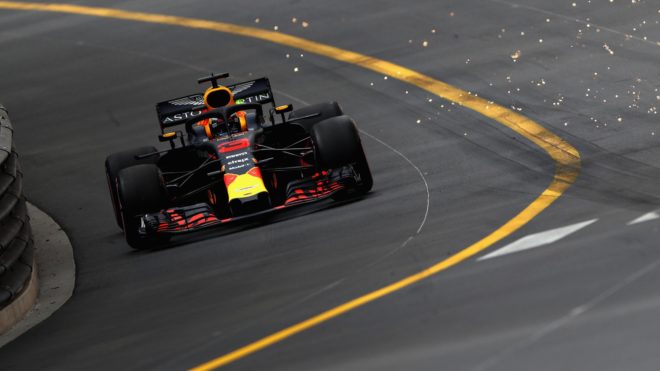
Free Practice 1: Daniel Ricciardo sets early pace, leads Red Bull one-two in Monaco

Red Bull dominate FP1 in Monaco on Thursday. Photo: Red Bull Racing Monaco, 24 May 2018: Can Red Bull secure their first pole of the season in Monaco? The early signs are certainly positive, with Daniel Ricciardo edging team-mate Max Verstappen in the opening practice session on Thursday, while Mercedes’ Lewis Hamilton was three tenths behind the pace-setter.
It was an impressive early showing from Red Bull in Monte Carlo, with their two drivers mastering this tricky street circuit on Pirelli’s new hypersoft tyres. Sebastian Vettel was the quickest Ferrari in fourth, just ahead of team mate Kimi Raikkonen, and it was another strong performance from Renault’s Carlos Sainz, who came home sixth.
The other Silver Arrow of Valtteri Bottas had to settle for seventh, with Force India’s Sergio Perez winning the battle for eighth ahead of Romain Grosjean in the Haas. Sergey Sirotkin – rock bottom of the drivers’ standings with no points – has had a difficult start to his maiden Formula 1 season, but will be boosted by his P10 for struggling Williams.
The teams didn’t waste any time to get going at the iconic Circuit de Monaco, with the drivers heading out on all three different tyre types, including for the first time at a race weekend, the pink-marked hypersoft compound.
It was on those tyres that Red Bull and Ferrari started the session, while Mercedes – winners of the last two races in Spain and Azerbaijan – opted for the ultrasofts, and it was Bottas who set the first timed lap of FP1.
There is no margin for error at this tight and twisty track, and Williams’ Sirotkin found that out the hard way. The Russian kissed the wall on the home straight and limped back to the pits with a flat tyre – and Grosjean later had a similar impact with a barrier, but escaped without any damage.
Red Bull were the team on top during the opening 40 minutes, before Mercedes showed their hand after bolting the hypersofts – which in testing have been around a second a lap quicker than the ultrasofts – on both cars.
And it was Hamilton who was first to give a glimpse of their potential pace on the softest tyres this weekend, the Briton just three-tenths slower than last year’s pole time of 1m 12.178s. So what about Ferrari? They were going about their business quietly at this stage.
It certainly wasn’t a quiet session for Verstappen. The Dutchman later regained top spot and then suffered a huge lock-up heading into Turn 1. He escaped down the run-off area and avoided any damage to his Red Bull, but is under investigation by the stewards after reversing back on to the circuit.
With the hypersofts getting their first run-out here, the times are expected to tumble all weekend and Ricciardo eventually went quickest with a superb 1m 12.126s – faster than Raikkonen’s pole here in 2017.
The rest of the session was without major incident. Renault, currently fourth in the constructors’ standings, were once again ahead of their middle-order rivals, with Sainz leading that charge. Kevin Magnussen, meanwhile, struggled with a connector issue on his Haas and finished bottom of the pile with just seven laps on the board.
Little can be taken from FP1, with teams adjusting their set-ups throughout the session, but the early signs are certainly positive for Red Bull. Their title rivals Mercedes and Ferrari both predicted Verstappen and Ricciardo would be quick here in Monaco, and they didn’t disappoint.
-
FIA Press Conference: Hamilton scotches talks about move to Ferrari next season
Monaco, May 23: Lewis Hamilton (Mercedes) and Sebastien Vettel (Ferrari) played it coy when asked about the two becoming team-mates at Ferrari next season considering that the British ace is still to renew his contract with Mercedes for 2019. Hamilton said he was not in a rush to sign the contract nor was there any thought to joining any other team.
On persistent questioning during the FIA Press Conference here today, Hamilton said: “There’s no rush to do it and I would do it in my own time. There’s no discussion with anybody else, there’s no consideration for anybody else, it’s just taking my time. I just don’t see any need to rush. I still have a contract in place, I’m enjoying racing, it’s nice to keep you guys guessing what’s happening.”
Excerpts from the Press Conference – Drivers attending: Charles Leclerc (Sauber), Sebastian Vettel (Ferrari), Lewis Hamilton (Mercedes) and Romain Grosjean (Haas).
Q: Charles, if we can start with you: you’re the home town hero and the first Monegasque to race here in Formula 1 since Olivier Beretta in 1994. How excited are you about the weekend ahead?
Charles LECLERC: I am very excited. I mean, I have been waiting for this moment since [I was a] child. I remember watching the grand prix when I was four years old, in the exit of the first corner. I was in my best friend’s apartment, watching down the Formula 1, dreaming one day of being part of it and this day has finally happened, so I definitely can’t wait to be driving tomorrow here.
Q: What can we expect from you this weekend? You’ve had points in consecutive races. Just how good is the car and what can you do?
CL: To be honest, I’m a little bit confused with my expectations at the moment, because we expected a very difficult weekend in Barcelona and actually we had a second Q2 in a row, with one point then in the race. So, Baku, we expected to be competitive and of course there has been quite a bit of crashes in the race and we managed to have a good position thanks to that also, but in Barcelona we did not expect that type of performance, so it was definitely good to see that and it was a nice surprise. Hopefully we are also wrong on expectations here. It seems that it might be a little bit of a difficult circuit for us here because we need high downforce and this is a little bit of our weakness at the moment but we’ll work on that and hopefully we can get a good result.
Q: Thank you. Romain, clearly you’ve had a rough start to 2018 and Spain was another example of that. Can you just give us some insight into where you’re at the moment, what you’re thinking, what you feel you need to do break this run of bad luck?
Romain GROSJEAN: I think you’re making a bit bigger a mountain out of a mole… thing, I can’t remember the saying. Yeah, the last two races didn’t go quite to plan. It happens that sometimes you go through tough times. What happened in Barcelona was just unfortunate that I lost the rear end avoiding a contact with my team-mate and that was it. The performance is there, the car is doing great and the team is doing an amazing job. Yeah, we don’t have any points on the board but I’m not too worried.
Q: Tell us a little bit more about the car. Do you feel it suits your driving style as well as you team-mate’s for example?
RG: I think it’s getting better and better. We’ve been qualifying, very often, in front of the midfield. It’s super tight, so a tenth or two of a second, which doesn’t make much different on the first few rows can lose you two or three positions. You need to get it perfect. I think it’s getting there; we’re working well, and I think it should be quite nice here and hopefully the next updates coming are going to be pretty competitive.
Q: Best of luck. Thank you Romain. Lewis, we heard from Charles how excited he is to be racing in Monaco. You’ve won here a couple of times, you’ve been on pole position, can you just start by giving us an insight into what it is like to race around these tight streets, how crazy it is, how unique this track is?
Lewis HAMILTON: Well firstly I feel like the people who might be watching need to understand why we all had our glasses on. It’s so bright. These lights are… when I look at you now, all I see are lights, I can’t actually see your face. That’s why I’ve got these on; it’s too bright. But, yeah, Monaco, it’s such a dream to drive here. Every single year… I’m very fortunate to live here, but the wait you have from one year to the next… it’s a shame that we only have one race here, because it’s that spectacular to drive. But it’s very intense. You have to be more diligent than your perhaps have to be anywhere else. It’s the most technical and mentally challenging circuit of the whole season. There’s also the heightened aspect of just wanting to shine at a track like this. Sometimes I’m running around or driving around this city in the off-season and it’s hard to believe the speeds that we do – up the hill and to Turn 1 and out of the tunnel… Just yesterday I was running through the tunnel and telling my friend who has never been before and saying ‘usually we’re doing 200mph out of this tunnel’, and he was like ‘that’s crazy’. It’s hard for people to get even close to the imagination of what it’s like, but it’s really something quite special.
Q: You’ve won the last two races, you’re on a roll, but what can we expect from you and Mercedes this weekend, because it wasn’t a good race for the team last year, so are you confident that you’ve ironed out the issues with this year’s car?
LH: I think we learned a lot from last year. I think we are confident with our preparation. I think it’s definitely been better than ever before. We came from the last race knowing that this is going to be one of the tougher races for us. If you look at the last race and the testing in February and then even in the tests the other day, the Red Bulls were particularly quick in the last sector – that’s where they’re always very, very strong – and so you can imagine that they will be incredibly quick here this weekend. Which is actually a surprise on previous years, because Ferrari were very strong here last year and for whatever reason Red Bull didn’t get it together, but maybe this weekend they will. I do anticipate it’s going to be a difficult weekend. Not one that is impossible but it’s a lot closer and we may not have the pace of the others but we will find out tomorrow the true pace and identity of what we arrive here with. But I’m excited for that challenge either way. If you look at last year there were overcuts and undercuts, so everything is still possible.
Q: Thank you. Sebastian, thanks for waiting. Can we just reflect on two weeks ago to start with. It was a slightly frustrating weekend for you in Spain. You’ve tested at Barcelona since the race. How much progress did you make with the car?
Sebastian VETTEL: I think it’s fair to summarise that Barcelona was not a strong race for us. I think Saturday was actually pretty good, qualifying was very close, but in the race we fell a little bit behind. It was good that we had the opportunity on Tuesday and Wednesday to get into the race situation again and understand a little bit better with more time and more laps and I think that’s what we did. There are a couple of ideas that we have and there are things that we believe may have cause a weak race or weak pace during the race. But for here it’s not that relevant as it’s a completely different track, but certainly going forward, time will tell whether we found a good direction.
Q: Well, let’s look at this weekend. What chance a repeat victory of last year and do you think the longer wheelbase of this year’s car will have any impact on the performance?
SV: I don’t know. We will see. I think cars with a longer wheelbase, they were still fine here last year. It’s not that much different. It’s not like all of a sudden you’re sitting on a bus. I think the car, we’ve improved it in general this year throughout the races we’ve had, the feel that I’ve had for the car, how responsive it was etc, which should help us for here, but I don’t think the wheelbase will play a big difference and if so I think our car is not longer than most of the other cars so it will be fine.
QUESTIONS FROM THE FLOOR
Q: To all drivers. Pirelli are supplying here for the first time the hypersoft tyres. What do you project for the weekend here – would be very interesting?
CL: Yeah, we’ve had the possibility to try these tyres quite a few times during testing. It’s a huge jump from the ultrasoft to hypersoft, a lot bigger than any of the other steps – but it’s also quite a solid tyre. I think we will test it during these free practices and then see what to do for the race.
SV: Well, I think we never had it this year, obviously, during races. Testing was cold – but I think the first glimpse we got last year during the Abu Dhabi test quite interesting. It was faster – so it’s always fun when it’s faster. I think it doesn’t last that long but the stress around Monaco is very low for the tyres, if you compare it to a normal race track. So should be fine and should be faster, so that’s why I think a lot of people went mostly for the hypersoft.
Q: Lewis, do you think we could see some records fall this weekend?
LH: I would imagine so, yeah. They’re resurfaced some areas of the track. It was already very, very grippy last year and I think the hypersoft is… I’ve only driven it, I think it was the end of last year maybe, in Abu Dhabi, just one quick run on it, so I don’t really know much about it, so I’m excited to get back out on the tyre because I know at that time it felt great after lap whatever-it-was. So, I think around here it’ll hopefully be a lot better than all of the other tyres that we’ve run.
RG: Yeah, I tested them in last week’s Barcelona testing and they were fast, and I was surprised at how consistent they could be on some occasions. Looking forward to trying them here – but definitely they’re the tyres that give the best feeling.
Q: Lewis, you talked a little bit about the difficulties you’re expecting here. And the change in process in Spain and how well the test was working. In terms of how transferrable that performance set was in Barcelona for here and at other races, how confident are you that you’ve made a fundamental gain, either in the setup of the way you’re understanding the car?
LH: I feel with the last race, the whole weekend, yeah I think we took a lot of information from there. The whole first five races I think, we’ve learnt a huge amount, we know what our targets are, we much more understand our issues and we’re working hard to address them – and I think we’re working in the right direction towards addressing them. I definitely feel more confident moving forward that we are progressing in the right direction. Have we rectified everything? We’ll find out. It just feels good, that there’s a lot of work been going on: a lot of stress; a lot of strain within everyone’s work. Everyone just trying to do their best and get us up front. Obviously our competition has been very, very strong through the first five races – but it is up and down from race to race. But I do think the first five races are always a really… it’s always very difficult because it’s just a learning curve. A very steep learning curve every year, even though we have that winter test. I can’t tell you what’s going to happen moving forwards but I’m confident that we’re going to do the best job that we can to maximise our results.
Q: A question for all four drivers, two parts. The organisers here have said they’re going to use grid girls this weekend. So, first of all I’d like to know where all four of you stand on the original decision to stop using grid girls and what you think about this race’s decision to go against that and use them this weekend?
RG: Well… yeah. It’s busy on the grid anyway, you won’t see much difference. When it was removed, I thought it was a good thing for women in the 21st Century because they were not used as just a board holder. Monaco, always special why not doing something different?
LH: I don’t know. I think women are the most beautiful thing in the world, so, I mean there’s races where we’ve had guys standing at the front of the car, and there’s been a mixture sometimes at races in the past. I think Monaco is a very elegant grand prix and I don’t know how women feel about it. I’ve not really ever spoken to women how they feel about the whole situation. So I can’t really comment. I don’t particularly feel any way about it. When we pull up to the grid and there’s beautiful women on the grid, that’s the Monaco Grand Prix, that’s a lovely thing – but I definitely don’t think that we should ever be supporting or pushing these women in general to feel uncomfortable. And if they are, then we shouldn’t do it, if they’re comfortable doing it, I mean I don’t really know, I don’t really have an answer for you otherwise.
SV: Well, I think the whole thing has been blown up, probably unnecessary because I don’t think any of the grid girls in the past were forced to do it. So, I think they enjoyed what they were doing. I agree with Lewis, I like women, I think they look beautiful, so if there was guys, I was just not interested, nothing against those guys but I just didn’t care as much but, bottom line, I think it’s too much of a fuss nowadays. I think all the women that took part as a grid girl in the past did it because they wanted to. I’m sure if you ask any grid girl on Sunday if they’re happy to stand there, their answer will be yes. I don’t think there’s anybody that forces them to do it. So, it speaks a little bit for our times that sometimes there’s a lot of noise for nothing.
CL: Pretty similar opinion to Seb – but I think it was quite positive to have some girls on the grid to be honest – even though I have a girlfriend so I should not say that maybe, I will get in trouble. But yeah, it’s also good to have some kids. Monaco is very small, so they took also my little cousin that will be on the grid with me. So that will be nice, and I’ve seen how happy he was to be chosen as one of the kids – and it’s great to see that. And it’s a great idea to have kids on the grid also.
Q: A question for Lewis. A bit related to that. It was obviously a great time of celebration in Britain last weekend. I wonder what you made of the royal wedding – and if the British royal family can become a bit more diverse, does it give you optimism that Formula One can become more diverse eventually?
LH: I don’t really connect the two, to be honest but I watched here at the weekend, just with a smile on my face the whole time. I think it was great to see such a positive change. It was great to see how happy they both were, and I think it was just a really proud day, I think for… for me, for my family, I think for the world. And it’s just always great to see positivity and change. The fact that you do have diversity in the royal family today, I think that’s a huge thing. People probably don’t even realise how important that is. Even to see at the church, you had a mixture with the ministers, in music, with the choir. It was just really, really beautiful to see. I just had the greatest weekend ever just sitting there watching and seeing talented people play music, speak and then see this power couple walk out. It was the greatest wedding that I’ve ever seen – and I’m not big on weddings at all. I avoid them at all costs – but this one, I wished I was in England to see it. Plus, England on a sunny day, it’s just so beautiful, with the castle and everything. So, I mean it was pretty much a fairytale. I think every kid – and adult today that’s particularly not married – dreams of having that kind of weekend.
Q: Seb and Lewis, Charles is up there with you. He comes into F1 this season with a huge amount of expectation and hype, based on his performance in junior formulae. You had exactly the same, the two of you, when you came into F1 first time around. What would your advice be to him about how to handle that pressure of expectation and what do you know and think of him as a driver?
SV: I think I was never that hyped when I came in. I didn’t win GP2 and I think the hype is absolutely justified. If there’s no hype around him, then I don’t understand who should be hyped because you walk through all the categories like that, then you belong here. But I think the advice to him is not to listen, just get on with it and just enjoy it. I think the cars that we’re driving are the fastest cars in the world and that’s what you should be looking for, not all the noise that sometimes happens around. I think it’s important that you’re here, you know why you want to be here. You look at what’s really important to you. The rest is not that much of your concern.
Q: Do you expect him to be your Ferrari teammate in the coming season?
SV: Well, I don’t know. I’m not signing who is sitting next to me but (you should) probably ask Maurizio. Yeah, I don’t see why not. Obviously he has more years than all of us here if you look at the passport. I think the races he’s had so far, he used his opportunities, he scored points with a car that doesn’t belong in the points so he’s doing everything he can at the moment.
CL: Thank you.
LH: Charles, are you from Monaco?
CL: Yes, I am.
LH: OK, so you grew up here. I’ve watched the series, I’ve been watching him coming through and what he’s done in the last couple of years has been great to see. I sit with the team bosses and engineers and we watch the lower categories and always looking out for that shining talent to come through and ultimately Formula One is supposed to be the pinnacle of the sport, which it is, but it’s supposed to have the best drivers from around the world and in all honesty, you couldn’t say that there’s the best drivers – the 100 per cent best drivers – from all the nations around the world so it’s just really great to see a really talented kid come through, that’s really just earned his way, like he really has the potential to do great things here and you can’t say that about every kid that’s come through in the past years and ultimately it’s very very difficult because it’s such an expensive sport. So you don’t always have the most talented that have the money but it’s great to see a real talented kid come through so I wish him all the best and the most important thing is to try and keep your feet on the ground, keep your family close and just enjoy the ride. Don’t take it too seriously. Every experience ahead is going to be a learning curve, good or bad, but that’s going to be a part of the making of who you are. I don’t really need to say much more.
CL: Thank you.
Q: Sebastian, Lewis hasn’t yet signed his new deal, though Mercedes say that he probably will. But would you welcome him at Ferrari at all next year?
SV: I don’t know. He hasn’t asked me!
LH: He has a veto so that wouldn’t happen.
SV: I don’t. I wouldn’t mind. Obviously, to be completely honest, I’m very happy with the relationship I have with Kimi.
LH: I think we have a better relationship, do you not think?
SV: I don’t know. Maybe if we get closer. I don’t know. Plus, we just spoke about Charles. I don’t know, you never know what happens. I’m pretty sure that Lewis’s priority lies with Mercedes. Everything else would be a big surprise but you never know, so we will see. Maybe, one day, I don’t know, we will both go somewhere else because we’re old or… I don’t know. Never say never. For me, at the moment, it doesn’t really matter, I’m very happy to be where I am for the time that everyone knows. I know and then we will see what happens.
Q: Lewis, we often hear about drivers who want to go up and race against you. Would you want to race Sebastian, be in his team?
LH: I’m down to race with whoever. Ultimately, I mean I’m racing against him in a pretty competitive car which is always exciting but I think for any driver you always want to go up against the best. I think you’ve seen in history that it can often be difficult when there are two incredibly strong alphas within a team but you’ve seen that it seems to kind of work with him and Kimi, but then if you really look at… you can honestly say that Kimi can’t be too happy because there are certain scenarios that don’t necessarily work out for him, so it’s just always difficult but I love racing against the best of drivers because it really pushes you to the limit. Racing against Fernando, racing against Jenson, and some of the top drivers that I raced with has just been… it brings the good and bad out of you, it pushes you to the limit but I feel that the set-up, for example, that I have right now within the team… Valtteri is driving exceptionally well, pushing me to the limit, and I’m still getting that but there’s a great harmony within the team and there’s a respect when one of the drivers does better than the other and it’s not necessarily always the same when it’s different characters, so it’s really dependent on the characters you’re with. But I don’t anticipate that we will probably be driving together in our time, unless we do, like, Le Mans together one day which we should probably just murder, wouldn’t we?
Q: Lewis, just about that contract: how come it isn’t signed yet? I think the team were quite keen to get it done. Could you tell us what the sticking point seems to be?
LH: There aren’t any sticking points. There just hasn’t been any rush. I told you at the beginning there’s no rush to do it and I would do it in my own time. There’s no discussion with anybody else, there’s no consideration for anybody else, it’s just taking my time. I just don’t see any need to rush. I still have a contract in place, I’m enjoying racing, it’s nice to keep you guys guessing what’s happening. There’s not really much more to say really. There’s not really much more to say. It’s a great process that you go through with a contract but I just tell my people there’s no rush. If it’s not ready this week, and it’s not ready the week after, it’s not ready… no stress. I’m not going to stress about it. Yuh.
-
As a team we have a duty… to improve the show, to improve F1: Mattia Binotto of Ferrari
Barcelona, 11 May 2018: The FIA Friday press conference of the Team Representatives saw attendance from Mattia Binotto (Ferrari), Andy Cowell (Mercedes), Rémi Taffin (Renault) and Toyoharu Tanabe (Honda). Transcript:
Q: Gentlemen, before we deal with the here and now, can we kick things off by throwing things forward to 2021 and the new engine regulations. There are various elements to this and Mattia, if I could start with you, the new power unit has to hit the track in about 30 months’ time. How tight is the timescale? Is it enough time?
Mattia Binotto: Is it enough time? It will depend much on how different will be the new power unit compared to the one of today. So, no changes to the regulations, plenty of time. As much as you change it, obviously the more time you need. At the moment, so far, for what we may understand, because we are still discussing – FIA, FOM – what will be the format. We had several meetings in the last days. We have some more in the next days, let’s see where it will go. But 30 months is plenty enough but it would be good to try to reach an agreement on what will be the format, in really the next two to three months.
Q: Andy, coming to you, there have been various presentations already, as Mattia has just referred to. Is everyone aligned as to what those regulations are going to be in ’21?
Andy Cowell: As Mattia says there have been several meetings, starting last summer. Discussions are never 100% aligned. There’s always difference of opinion, but you end up coming up with a compromise and setting off on a direction, hopefully with enough time to do a decent job before the first race.
Q: And have we found that direction now?
AC: I think those discussions are ongoing. None of us can read a published set of regulations, so the discussions, the debate, the compromises are a work in progress.
Q: Remi, can we just get Renault’s take on the new engine regulations and where you would like to see them go?
Rémi Taffin: I think we wish to go forwards. We are still interested in developing the engine. We think the engine is a big part of Formula 1. As my colleagues have said, we are all discussing this, we want to get this forward. We know we have some work to do. We know we will have some changes compared to today and we have to deal with them. But the most important thing for Renault is that we all work together with the FIA and F1, to get this right and yes, to make sure that the engines keep a good part in Formula 1.
Q: Tanabe-san, what’s Honda’s position on the new rules and specifically the MGU-H?
Toyoharu Tanabe: Yes, we will miss the MGU-H. I think we haven’t decided everything yet for 2021. But the direction from the FIA we respect, we respect the other manufacturers’ direction, but we think we will miss the MGU-H, such a high pinnacle of technology for the future and relevant to the production car as well.
Just to clarify: Honda would like the MGU-H to stay?
TT: Yes, we would like to keep that technology.
Q: Rémi, if I could back to you now and deal with the present. Can you just talk about the progress you’ve made with the power unit in Viry, where have you made the biggest gains this year?
RT: I think the gains that we have for a few months and a few years now is through the ICE, the internal combustion engine that we have lifted the efficiency with and that’s where we are focusing our efforts.
Q: OK. Renault, a while back, gave Red Bull Racing a deadline of May to fix a 2019 partnership. How are those talks going and might that deadline be extended?
RT: I think from my perspective, obviously I do not deal with contract, I leave it to my boss Cyril, and he has been speaking about that. But if we come back to the technical aspect of that, obviously there are some deadlines, which is simply based on the fact that we have to order parts. So, as a starting point, we know that by the end of this months we would have to start buying some parts to supply as many teams as we would have to for next year. So that is one of our technical deadlines. Then the rest, as I said, is all about having a contract or not with them, which is obviously on their side.
Q: Tanabe-san, coming back to you, we’ve just been talking about Red Bull Racing’s future engine partner, what can you tell us about the talks between Red Bull Racing and Honda?
TT: As my role, as Technical Director, I am not involved much with contract matters, but as Honda we have studied, discussed and then we had a preliminary conversation in Baku, but it is still under discussion.
Q: Do you have a deadline in mind when Honda needs to know if it’s supplying Red Bull Racing as well as Toro Rosso?
TT: We will follow the FIA regulation, but at the moment I cannot tell you exactly.
Q: Let’s talk about the performance of the power unit now. You obviously had a great weekend in Bahrain. Where is the power unit improved from 2017?
TT: Of course we work for the reliability, but not only reliability but performance as well – maybe the same as others. But we focused on the reliability from last year. We learned a lot from the previous years and we applied that type of knowledge or learning point to this year’s power unit.
Q: Thank you. Andy, returning to you, congratulations on that win in Baku last time out. If we’ve learned one thing about Formula 1 on 2018 it’s that it’s very tight at the top and the first question to you is whether we have seen evidence that the power advantage in recent seasons has been eroded?
AC: The last race was very pleasing, the three races before not so. With regard to the power advantage, I think at the moment, in qualifying, then the gentleman to the right of me has a small advantage – well done! – but in racing I suspect we’ve got a small advantage. I think Renault and Honda are very close behind. As we discussed a couple of years ago that if you have regulation stability you do see technical solutions converge and that’s what we’re enjoying at the moment and we’ve all got the pleasure of working hard in the factories and trying to catch each other up and I think it’s going to be a tight battle all the way through this year and next year, and the year after.
Q: You talk about convergence: this is year five of these regulations, so how close are we getting to the limit of what you can get out of these regulations?
AC: I think that comes down to your belief and understanding of whether there is a limit. I personally don’t believe there is a limit. I think you can always find gains. Every week I have the pleasure to sit in our performance and innovation meeting and listen to bright engineers come up with ways of getting a little bit more efficiency out of the various systems and then enjoying the competition in the factory to turn those ideas in proven experiments, and then prove that they are reliable enough to come racing and compete in this wonderful environment. So, for all four us, we will continue to develop and there is no such thing as a limit.
Q: Mattia, we are talking about limits, would you agree with Andy that there are no limits?
MB: I would agree with Andy, no doubt. When you put engineers together, there will be always innovations, creativity. And for an engineer there are never limits. I think we have seen in the last years, in the last season, how much we improved, year after year and I don’t think we have shown so far that we have reached the limit of the product.
Q: Can we ask you about those gains that Ferrari have made, particularly over the winter coming into this season. How do you quantify those gains: how much is chassis, how much is engine?
MB: I think we have improved in most of the areas and our spirit is really to try to improve first, what were the weaknesses of last year, try to focus, we knew that maybe on top speed we were not our best, in terms of overall efficiency we could have improved, especially on what were the fast circuits. So I think all our engineering focus was to improve the car in all the areas. I don’t think we can say there is a specific area that improved the most and I’m quite pleased to see that in all the areas we made progress.
Questions from the floor:
Q: Mattia, what is Ferrari’s position on these recent changes for ’19, especially the less complex front wing?
MB: OK, I think that as a team we have a duty and a task to improve the show, to improve the Formula 1. I think that certainly the regulations may be a good step in that respect. It is a big change, a drastic change to the rules, to the aero. I think each team will be focused on develop what are the new regulations, it’s quite a game changer, but overall I think from an egoistic point of view we could have stuck with what we had at the moment but I think that looking at the show and the good for the sport, it was the right choice.
Q: With the growing move to electrification in the Automotive industry, how relevant is the current battery technology in Formula One to production cars and, going forward to 2021, how much freedom would you like in terms of battery technology.
RT: I think we still like, as engineers, to develop batteries but I guess at the beginning we all have different interests in batteries, whether we wish to develop a chemistry ourselves or not, for sale, for example, so it’s really depending on the intent. As far as Renault is concerned, the Group is liking us to develop so I think we eventually wish to have some development in that area. And then, what we’ve got now is not a bad solution. We can do our work, we can make some progress, we can make some differentiation and at the end of the day we wish to keep that freedom. Whether we need to have that complete freedom as we have now, whether we have to proscribe some element of that, it’s another territory that obviously we are discussing these days.
MB: So, how much our battery technology are relevant for our cars, automotive, certainly they are. If we look at LaFerrari GT cars, the technology of the batteries is coming from F1 directly, so certainly it is relevant. Looking at 2021 again, I think as Ferrari it’s important we maintain freedom in developing the key technologies. So we are certainly against any standardisation or big proscriptions on key technologies. Certainly whatever is related to the power unit , which, for Ferrari, is a key element.
AC: I think all the batteries that we’ve got are high-performance road relevant in terms of their power density. I think we’re lagging in terms of the energy density. I think it would be good if the regulations encouraged us to develop higher energy densities – because that is something that’s particularly relevant to mobility. If you think about 2021, then there’s a lot of electric-only cars that are going to be on the market there – but we’re in this. We’re torn. You’re talking to a group of engineers who like to develop new technology, that like to be pushed to drive to the pinnacle of technology. The regulations for 2021 are heading in a downwards step with regards to technology, with the removal of the electrical energy that we get from the MGU-H. Sixty per cent of the electrical energy comes from the MGU-H, we will be going to just a KERS system and therefore the demands on the battery are perhaps a little bit less. I personally, as an engineer, would like to see more on the electrical hybrid side and more of a challenge on the energy density of the battery because I think that would draw more blue-chip companies into this industry. It’s one of the most amazing development platforms on this planet and we’d all like to look after the planet.
TT: I think our hardware itself, it’s not a direct move to the production car area. I think to keep developing the energy management itself and we can learn a lot. And then we can move that technology. Energy management also controls systems. We can improve and that helps our production car areas as well. We can cooperate with production car area. Then keep working on that area is a high technology challenge for us. I’d say it’s important for us as well.
Q: Question for Mattia, Andy and Remi. Honda will miss the MGU-H and would like to keep it. Do you share that view – and why do you think it will no longer be a part of the F1 engine from 2021?
AC: I share the view of Honda. I think the MGU-H has been blamed for the lack of noise, for high complexity. It’s been referred to as a miracle. There are four technology companies that have made it work and get 60 per cent of their electrical energy to then power the K. It contributes 5% of the thermal efficiency of the power unit and to make up the power difference we’re going to have to increase the fuel flow rate, which I think is a backwards step. It’s not progress, so, my view is the H should stay because the development has been done. Removing it removes a lot of energy, which is a lot of car performance. Yeah, it feels like a backwards step when the development work’s been done. We will all now start developing anti-lag systems. The MGU-H is the most marvellous anti-lag system on a turbocharged engine because it gives you speed control. That’s been removed so we’ll now have to come up with various devices and systems and that will probably involve burning some fuel in the exhaust which doesn’t feel like the most honourable thing to do, as an engineer. But, as I’ve said previously, it’s a balance between technology and entertainment. We’ve got to get that balance right.
Q: Mattia, your thoughts.
MB: I think that Andy has already illustrated, certainly the MGU-H is a fantastic, efficient component, for the reason he mentioned. But looking ahead, we know that we know we need to find a compromise. The compromise based on what are the main objectives of 2021: spectacle; noise; simplification; cost. When you are dealing with compromises, there may always be different opinions and I think somehow we may accept the MGU-H to be removed but certainly removing the MGU-H doesn’t mean that we fully need to standardise the power units and the engines. There are still areas in which we believe an engine is a key element, a key technology and important that we still maintain the challenge in these technologies and we try to maintain the engine, or the power unit, as a competitive differentiator between manufacturers – because that’s about the DNA of the sport, and F1.
Rémi?
RT: I think I will have to make the sum-up of what has been said but I think first all three of us have voted to keep the MGU-H, and that was an initial proposal that we have made but there was some alternatives that we’re not taking the way of, and again we’re trying to have good discussions to go forwards for keeping developing this power unit. It may be in a different way, try to keep some more fun for anyway. So, again, at the end of the day, we’re doing the job these days to make sure the power unit in ’21 is where we need to be. And then, yes, we did a lot of work on the MGU-H. We have these things working and it’s a very nice tool, or piece or part – but at the same time I would maybe bounce back on the last question we have, it is not something we will put on the shelf and just forget. As far as Renault is concerned, we have some other projects, we are working on Formula E where battery is also of an interest, so we also work on that front. MGU-H is not directly transferred to Formula E but it’s a very high-speed motor and it’s quite a unique technology and again, we’re not going to put that on the shelf, so it’s all going to be of interest.
Q: Andy mentioned earlier that it’s work in progress and there are discussions and everyone has a different opinion. Obviously you all share the opinion on the MGU-H, but can I please ask each one of you where he personally has problems with the proposal that is on the table yet with the engine regulation for 2021.
TT: I think we have a lot of things to make clear for the detail. So, we generally have a good summary but we don’t have any detail. So, that area we are trying to make clean and this is under discussion. I think many, many ideas.
AC: I’m not sure it’s appropriate to discuss all the details of the ongoing discussion. The MGU-H is a topic that’s already been in the media over the last three years, it’s been blamed for all the evils of Formula One power units, so there’s a lot of commentary out there and so discussing that feels appropriate. Going into others details, it’s probably best if we have a press conference in a month’s time when the regulations are… or whenever the regulations come out.
Q: Andy, I was going to ask you, when you want to see the regulations some out?
AC: I think so long as the regulations come out over the next few months and, as Mattia rightly pointed out, as long as it’s not a complete tear-up of what we currently have, then there’s sufficient time to do a professional job, so we don’t embarrass ourselves at the beginning of 2021.
Q: Mattia, any more thoughts?
MB: No, they summarised. The current discussions are just at the very start so very… let me say ‘green’, or not mature at the moment, with regulations. Very difficult to judge or to comment. As I said, I think as Ferrari, but I’m sure they are joining, it would be a shame to standardise or to limit much, especially compared to what we’ve got today, so reducing some freedom compared to today would be somehow a shame. I believe we should keep up the challenge.
Q: Rémi, anything you’d like to add?
RT: I think maybe the most important is not the proposals, which could be very different to what we see in the last three or four months, but it’s the objectives that we see at the beginning of our discussion. I think as far as the objectives are concerned, we will tackle all of them and we will have, at the end, we will have a proposal that is able to do that – which I guess is the most important for all the parties. FIA, F1, us. That’s what we are working for. It’s also true that we have to make sure, when we work on that proposal, we work out the right change in the right time frame, so that we can do a proper job and be ready for 2021.
Q: A question to everyone. Do you think taking out the MGU-H will improve the balance across all four power units in terms of performance and reliability or should we look at completely different solutions?
RT: No (I don’t think it will even out the performance). As we say, we’ve done the job, we’ve got the MGU-H, which is working where we wish to be. Obviously, it’s a big part of the performance of our power unit but as Andy mentioned it’s part of its efficiency, we’ve worked that out and as we say we still jhave to make sure that every single drop of fuel is burned as efficiently as possible, then it’s the work on the ICE, it’s work on the turbo and obviously if we have to get rid of the ICE and turbo and that’s what we will make the efficiency out of. So, it’s not going to let’s say bring any levelling of any performance or reliability – we’re there.
Q: Mattia, anything to add?
MB: No, Andy.
AC: I guess one of the things we all wish is that there were 10 of us sat here, that there were 10 manufacturers in the sport – 10 teams, 10 power unit manufacturers. And there is a desire from us and from the FIA and Formula 1 and so removing the H does that help a new entrant come in – quite possibly. We’ve offered to help with technology transfer to help a new entrant. The best way to make it easier for a new entrant is to take some of the systems away, the ones that are perceived to be complex.
Q: Tanabe-san?
TT: We are working on the future, so it is still under discussion.
Q: Without the H do you think it would help Honda.
TT: No.
Q: This year we have the rule that you can only use three engines, MGU-K, H and two batteries and I guess at the beginning of the season, every one of you was striving to do the whole season with these three. Now, knowing the balance of power, somebody has to catch up, somebody wants to get an advantage again. Is it worth thinking, now, to introduce maybe a fourth engine in order to have more scope of development, to have another development step in order to get ahead of somebody else or catch up?
MB: I think that when you’re setting your development programmes, you are not looking at the others but to yourself. As I was saying before, I think that we are looking to our (inaudible) and trying to improve, so we made a programme looking at ourselves and not to the others. We knew that it was three engines per the season, our pack is three engines per season, I don’t think that will change, whatever is the balance, because the best way somehow to achieve or optimise your performance is trying to optimise your own performance and not relative to the others. Again, at this stage of the season, we are in Spain, if you look, no one has introduced, at least, to the second power unit, so I think we are all trying to go longer on the life of the power units and to manage the three engines per season.
RT: I think we knew we had to go to three ICEs and energy store a few months ago, a lot more than that, and as far as I am concerned, we have taken this on board and we have done everything we could to make sure that we stick to that rule because obviously the quicker way, actually, when you are 18 months ahead of going into a season, is to make sure that you keep to the new rules and try to exploit them as much as you could so in terms of reliability, you would try and stick to that. Obviously the closer you get to the points, to go racing with this power unit, you have to have a look at what you’ve got and try to optimise, so maybe the optimisation is a bit different but as far as we are concerned, we are going to the season and we will try and go as quick as possible. If it needs to be three ICEs, then we are ready to do the season on three ICEs. If for some reason, there is an opportunity to get more performance and optimisation we have to get the fourth ICE, then so be it, but I wouldn’t say it’s something that you just throw on the table and follow other plans. The plan is to try and get the rules in and be the best with that rule.
TT: We had a poor start in Melbourne and unfortunately we lost some units already but we stick to the regulations and then also we are developing the performance and the reliability and then when we are comfortable to apply those development items we will update but basically we stick to the Formula One regulations.
Q: What can you tell us about those performance upgrades; when can we expect to see them?
TT: I don’t mention specific timing now.
AC: I think, as Mattia said, you run your own race, you look at your own situation and you move on and now again you have curved balls come towards you. Some of them are miserable curved balls; if you have a quality issue and a failure. Some of them are happy curved balls: if you discover 10 kilowatts in performance development, you might suddenly to decide to introduce an extra engine towards the end of the year, but I think we all support the rules. The direction has been in place over the last ten years where progressively we’ve reduced the amount of hardware we use in racing because it’s cheaper for the customers, and it actually helps reduce the cost of performance development in the factory, because if you have a power unit that will do 5000 kilometers before it needs rebuilding compared to one that does 2000, you can get a lot more performance development done, so you build less. So I think it’s healthy for the factory, healthy for the industry and maybe we should get together in Abu Dhabi and see where we’ve all ended up.
Q: Mattia, can you explain the concept behind the new rear view mirrors we’ve seen dropping down from the halo of the Ferrari and what sort of gains you are trying to achieve there?
MB: When developing aerodynamics you are looking at all the opportunities you’ve got which are allowed by the regulations. These mirrors are as well somehow positioned in a better area for the drivers, looking not only behind but ahead as well, front tyres or whatever, so it’s normal development. I think you may judge why a mirror as you’ve done for a wing or a bargeboard or a turning vane, so it’s simple development, coming from the creativity of the engineers.
Q: There is much speculation around oil burning and the federation confirmed to have improved its controls on this side. Is that technology really useful in Formula One and how much theoretically can it influence the performance, especially in qualifying?
RT: The short answer from us is that we never experienced this oil burning thing, so I would not give you any effect from that but as a simple thing, we are a fuel flow limited formula so obviously the more combustible you can find and put into the ICE, the more power you will get through, so it’s as simple as that.
MB: First of all, the regulations are discussing about oil consumption and not oil burning and I think we should distinguish what the FIA has done for this season is to reduce the overall oil consumption, the average in the race which has somehow been reduced to 0.6 litres per hundred kilometres. I think that all the manufacturers now simply stick to it. The FIA are certainly controlling it at each session, they’ve got all the data, telemetry and I’m pretty sure that all the manufacturers are simply sticking to the regulations. How much does it affect the performance? It may have a bit of an influence but if you look at the performance of the power units today compared to last year I think they are much equivalent so it’s not overall much influence.
AC: I think in the regulations prior to this year there were some loopholes. I think the FIA have closed down the size of that hole and you know we all work with the FIA to flag issues and then work with them to come up regulations that make sure that the prime focus is on the honourable quest for making the thermal efficiency of the engine better and the efficiency of the hybrid systems better.
TT: We follow FIA regulations, 600cc per hundred kilometres, then we maintain that number and then I don’t know how much, I mean, the gain, with that system. Just to follow the Formula One regulations.
Q: Andy, just picking up on something you mentioned earlier about offering to help with tech transfer for possible new engine manufacturers; could you just elaborate a little on whether that’s a new position from Mercedes in terms of being willing to help a possible competitor, and to what extent would you go in terms of assisting them technically?
AC: It’s not a recent thing, it’s something that we’ve always supported. We’ve always been keen to provide our fair share of customer teams and I guess a few years ago, more than our fair share and we’ve always supplied exactly the same performance level there so the topic of a newcomer then… we’re keen to help, so long as the regulations permit us to help, so that’s why that’s been discussed with the FIA and Formula One. And how far would we go? We’d go as far as was required to help the newcomer and I guess that support would then taper out. We really would like more manufacturers to be in to make the sport healthier.
Q: Can I just ask that question to the other manufacturers with customer teams? Mattia, would Ferrari help a newcomer, a new manufacturer to Formula One?
MB: I think it would be good for the sport, new manufacturers. I think we would help them certainly, through the regulations, as we said, in order to reduce some complexity or not to frighten newcomers as to what is the complexity of our technology at the moment. So we would support it, certainly through regulations. I think that’s the best we can do.
Q: And Remy, would Renault help a new manufacturer coming into Formula One?
RT: I think we would have to define the frame of that but obviously we are discussing that. We will be looking at this and we will see where we get but we really appreciate to have top competition. We at Renault are already helping teams because we have customer teams so we supply power units. Whether it comes to a part or a fraction of that power unit is a different matter and it’s being discussed.
source: f1.com
-
Ferrari-Mercedes renew battle in Barcelona; Red Bull in frame as one of favourites
Sebastien Vettel (Ferrari) and Lewis Hamilton (Mercedes) all set to renew their rivalry. Photo: formula1.com Barcelona, 10 May 2018: Four rounds ticked off the Formula 1 calendar, and this season has certainly kept us on the edge of our seats. We’ve had two triumphs for Ferrari, and one apiece for Red Bull and Mercedes. So, who has the momentum as we head to Europe for the Spanish Grand Prix?
It’s very hard to say indeed. Last time out, Baku provided us with a chaotic and thrilling race with Ferrari looking on course for a third win of the campaign before the Red Bull collision set off a chain of events that ultimately conspired to hand Mercedes their first victory of 2018.
The Silver Arrows still trail their rivals in red by four points in the constructors’ standings, but Lewis Hamilton’s latest triumph – his first of the season – gave him the lead ahead of Sebastian Vettel in the drivers’ championship after four races this season, the Briton having waited until after round 13 to move ahead last year.
Mercedes have locked out the front row in Barcelona in four of the past five years, but their qualifying prowess has already been questioned this year – Azerbaijan was the third race in a row they have missed out on P1.
But as we’ve seen already this season, it won’t just be about Mercedes and Ferrari this weekend. In fact, perhaps most of the attention will be on Red Bull, following the clash between Daniel Ricciardo and Max Verstappen in Azerbaijan.
They have now suffered two double DNFs in the past three races, having previously not suffered one at all since the 2010 Korean GP – and after being read the riot act, their drivers will be desperate to avoid more contact in Spain.
Barcelona is a track all the teams know extremely well – but who will come out on top?
The form book
Looking at the stats, Mercedes have every reason to be confident on their return to Barcelona. This track has arguably been a demonstration of their dominance in the turbo hybrid era.
In 2014, they locked out the front row with no other car within one second of pole. In 2015, this gap dropped to 0.777s, then 0.680s in 2016, before Vettel narrowed it to 0.051s last year and became the first non-Mercedes to start on the front row here since 2012.
The qualifying stats suggest the winner will need to come up with the goods on the Saturday. Twenty-four of the 27 Grands Prix in Catalunya have been won from the front row (89 per cent), the highest ratio of any circuit on the calendar with at least 10 previous races, such is the difficulty of overtaking at the Spanish venue.
Over the last decade, though, we have seen plenty of different drivers triumph, including shock victories for Pastor Maldonado in 2012 and Max Verstappen – on his Red Bull debut – in 2016. Hamilton’s victory last year ended a run of 10 different winners in the same number years in Spain, but could we see another new winner this year? Neither Ricciardo nor Bottas has triumphed here, but both have been in terrific form.
This is a race where, traditionally, the teams bring significant upgrades to their cars, so whilst no one is expecting the established top three to be toppled, in the supremely tight midfield there could be movement. McLaren, in the midst of a tight battle for P4 in the constructors’ championship with Renault, are one of the teams bringing significant revisions.
Both teams have Spanish drivers, but it’s Renault’s Carlos Sainz who has the better recent record at Barcelona, finishing the last three races in ninth, sixth and seventh. Alonso, meanwhile, hasn’t scored points at home since 2014 when he was still driving for Ferrari.
Elsewhere, several teams will be looking to carry momentum into Spain. Force India’s surprise podium in Baku, with Sergio Perez landing P3, kick-started their season, while Toro Rosso were boosted by Brendon Hartley’s first points-finish last time out.
Sauber’s Charles Leclerc also scored points for the first time, while Williams got their 2018 campaign underway with Lance Stroll scoring four points for P8.
Source: Formula1.com
-
Spanish Grand Prix: A statistical perspective
Barcelona, 10 May 2018: This weekend’s race will mark the 28th edition of the Spanish Grand Prix at the Circuit de Barcelona-Catalunya. Michael Schumacher tops the all-time winners list, with an impressive six triumphs here. When the drivers take to the grid on Sunday, there will be five previous victors among them – Kimi Raikkonen, Fernando Alonso, Sebastian Vettel, Lewis Hamilton and Max Verstappen.
The Stats That Matter
- Hamilton is looking to join a small list of F1 legends to win at this circuit for a third time. Should he triumph on Sunday, he’ll be on the same number of wins as Mika Hakkinen and three behind Michael Schumacher.
- The Briton, who won from pole here in 2014 and 2017, certainly enjoys coming to Spain. He hasn’t been off the front row here since his final year for McLaren in 2012, when he took top spot in qualifying only to be excluded for having insufficient fuel.
- Despite leading the drivers’ standings, the four-time World champion has been suffering somewhat of a qualifying drought recently. He took pole in Australia, but has been outqualified by team-mate Bottas in four of the last six races.
- Vettel has surprisingly never been on pole in Catalunya. But the Ferrari man has been in superb qualifying form this season, topping the timesheet at the last three races.
- Baku ended Raikkonen’s longest run of front-row starts (3) since Spain-Monaco-Europe in 2005, but he still finished on the podium for the sixth time in the last eight races.
- The Finn has set the theoretical best lap of qualifying at the last two races (adding up the three best sectors from any lap), without having taken pole at either of them. Consistency in Barcelona could see the Ferrari man take P1.
- Two years ago, Max Verstappen’s triumph saw him become F1’s youngest-ever winner at 18 years 227 days, become the first Dutchman to win in F1 and the first man to win on a mid-season debut for a team since Juan-Manuel Fangio for Mercedes in 1954.
- Force India will be hoping to spring another surprise. Perez finished fourth in Barcelona last year, his and team’s best-ever finish on this track. The Mexican is attempting to score back-to-back podium finishes for the first time in his and his team’s history this weekend.
- Nico Hulkenberg has not been eliminated in Q1 since the 2015 Spanish GP, and this is the only circuit at which the German has never qualified higher than 10th in his F1 career (seven previous visits).
- It’s safe to say Pierre Gasly has endured an action-packed start to his first full season in F1. And there’s no reason he cannot replicate his fourth-placed finish in Bahrain this weekend. He has scored more podium finishes in Catalunya than on any other circuit in his GP2 career, with three podiums in four starts in 2015-16.
- Not including retirements, Nico Rosberg, who started the 2013 race in P1, is the only pole-sitter to finish outside the top-5 in a Spanish Grand Prix – regardless of venue – in the history of Formula 1.
The circuit
This Circuit de Barcelona-Catalunya is familiar territory for Formula 1 teams. Not only have they raced there every year since 1991, they also take part in extensive testing at the track.
But this does not mean they’re in for an easy ride. In fact, the venue’s mix of high and low-speed corners plus its new track surface will once again provide the drivers with a physical and mental challenge.
Teams often struggle to find and execute an optimum set-up here, when you consider tyre wear is particularly high and the varying winds that cut across the circuit.
Turn 1 provides spectators with one of the best places to watch given it is one of the track’s few overtaking opportunities. The drivers, however, tend to find the latter stages of the track the more challenging. In particular, the final two turns require a fast exit in order to maximise speed down the start-finish straight into Turn 1.
Source: Formula1.com
-
The smiling assassin Shanghais the leader in China to set up thrilling scenario!
By Harish Samtani
Shanghai, April 15: Daniel Ricciardo, the Australian driver for Red Bull, just tossed a spanner in the works of Ferrari and Mercedes with a superlative performance in the third chapter of the 2018 Formula 1 calendar.
His team did very well to pull him back from the precipice of the cliff and just a gasp away from qualifying last. Red Bull mechanics should pat themselves by shoehorning an engine in last minute and send him on his way. And also for alertness on their race engineers who brought him and Max Verstappen in and put them on soft tyres right away when the safety car interrupted the proceedings while the rest mostly were on a slower medium compound that was meant to last the distance.Ricciardo returned the favour in style by bringing home the trophy. A catastrophe converted to a trophy in just under 24 hours may make a bad pun, but you get my drift.
The racing itself must have brought tears of joy to any F1 fan regardless of their heroes. A safety car on lap 30 created by the coming together of Gasly and Hartley led to the exciting situation that followed, but who cares as to how. Just bring it on!
Daniel Ricciardo exults after winning the trophy. Photo: FIA Meanwhile, if one were to pretend that all this did not happen, Ferrari had only themselves to blame for throwing away a win by bringing in Vettel too late into the box for his one tyre change. This only goes to show that human beings have their silly moments regularly!
While Hamilton is not having the best days in his racing life momentarily, he also seems to have become a little mellow. Good for him but not so for his F1 career! His teammate Bottas, on the contrary, may not be the most-spectacular driver on the grid but he may be doing something right, just by staying out of trouble. It’s early days yet and picking up valuable points in these stages is going to serve him at the fag end of the championship.
With three teams now in the fray, every point is worth its weight in gold. DNFs will play an important role in the F1 version of snakes and ladders. With the scramble up, the middle and down the grid, stress will tell and the ultimate winner will be not only being a result of a champion driver but a calm professional team to boot. This year has the potential of turning into one of the finest battles in recent times. Is this the perfect time of entry for Liberty, the new owners of F1? Probably yes.
The quality competition was expected of course but not with such aggression by a few players who are giving the stewards a massive headache and tough decisions to make. When Verstappen collided with Vettel in the 43rd lap, he, in my opinion, got away cheap by getting just a 10-sec penalty.
Anyway excitement, however, contrived by such incidents serve a larger purpose and The Show will, and must go on!
-
China GP: With chasing pack closing in on the front-runners, frenetic action on the cards!
Circuit Map – Courtesy China Grand Prix By Harish Samtani
Shanghai, April 13: The land of mystique spoke with me on arrival at the airport in Shanghai. The customs department was scrutinizing incoming passengers and
I had to restrain myself from asking the stern looking officer as to what on earth was he looking for! Everything that I had with me, including my luggage and my undies, were made in China! Maybe, they had a bizarre reverse smuggling regulation in force!All that flippancy transformed quickly to respect once I reached the F1 circuit. China had exceeded itself in building a state-of-the-art circuit that has the approval of all the teams. From the perfect surface of the track itself to the facilities on offer were bang on.
Add to this a picturesque location – the team paddocks are located idyllically on the banks of a meandering river and the Media Centre that has the best view ever of the circuit’s many corners and looking out on to the start/finish line. Top class. Period!
One tends to overlook the shortcoming of lack of the English language and the overwhelming presence of the Special Forces on duty. There was a sign posted on the glass window stating that it was dangerous to take pictures from there and strictly not permitted! In short, you shoot pictures and we shoot you. Fair.
The 5.45 Km circuit allows for a maximum straight line speed of about 320 KPH and seems to be favored by most drivers. Tyre wear isn’t all that much and hence one can expect – I am guessing – that most teams will opt for the ultra super soft option of tyre and then stop just once for a change after about 15 laps. Looks like, it’s going to be fast and furious all the way to the checkered flag.
The other rhyming word is curious, as to the tremendous build up of tension in the midfield. The time difference is tantalizingly close from 6th downward to the 14th position. With fractions of a second separating them, finally boredom may have to take a back seat, thankfully. That is, if the cars get thru’ the first two laps without taking each other out, like they stupidly did in Bahrain.
Photo: McLaren F1 team Alonso’s team McLaren had brought grief upon themselves in Bahrain by opting to focus more on cornering speed via better downforce and which as a downside affected their straight line speed by about 7 Kph. Their Bahrain Sheikh sponsor didn’t quite enjoy that event from his royal box obviously! So, one can hopefully see this legend back and thrilling his legion of faithful followers.
Now, if one was to throw in Max Verstappen (good news that he and a forgiving and forgetting (?) Hammy have kissed and made up) and Ricciardo into the mix, it’s going to be frenetic action surely. This will hold good through the entire season, of this I am sure. Practice timings only flatter to deceive and hence I won’t dwell on that for now for the Chinese chapter.
Photo: Redbull Racing The leaderboard will have its independent numbers and stories since the big boys such as Ferrari, Mercedes and Red Bull are in a different league and only major mishaps can derail their charge to the top. But they are a bit confused and worried about the emergence of team Haas and Toro Rosso as challengers.
Gasly (Toro Rosso, 4th in Bahrain) and Magnussen (Haas, 5th in Bahrain) have been quite proficient behind their respective wheels. Vicious rumors are doing the rounds about probable reasons for their superlative performance, but I think that’s rather unfair and uncalled for. Time will tell and time can be a bitch when push comes to shove.
-
Stunning win for Vettel; Hamilton overcomes technical glitches to take 2nd: Rolex Aussie GP
Melbourne: Sebastian Vettel took a sensational Rolex
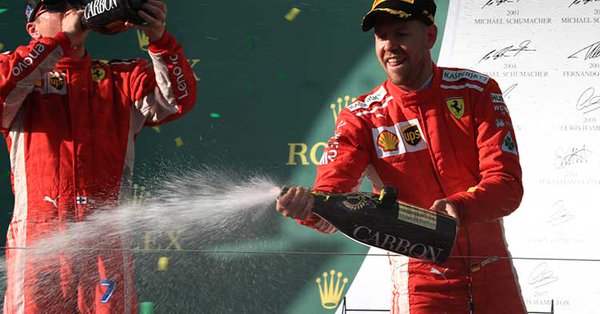
Vettel celebrates Aussie GP win on Sunday. Photo: Ferrari Australian Grand Prix victory, as the Formula One 2018 World Championship began at the traditional street circuit of Albert Park. Taking advantage of a mid-race safety car he beat arch-rival Lewis Hamilton, who suffered soft-ware glitches. The defending champion was forced to settle for second place ahead of the second Ferrari of Kimi “Räikkönen. Local hero Daniel Ricciardo finished fourth.
Sahara Force India duo of Sergio Perez and Esteban Ocon failed to finish in the points, thus ending a successful run of double points finish at the Rolex Australian GP.
“There could have been no better start for Ferrari in this Championship. Listening to Italy’s national anthem echo around Melbourne was an emotional moment for us all, and for every fan of the Scuderia. It’s the best possible reward for the team, which built a competitive car and used a perfect strategy to take advantage of the way the race evolved. Congratulations to Sebastian and Kimi, both drove a great race. Of course, there’s still a long way to go in the series, with 20 more Grands Prix. So it would be wrong to celebrate too much. We know that we still have a lot of work ahead of us, but the first step has been taken in the right direction,” said Ferrari Chairman Sergio Marchionne.
Hamilton led away comfortably at the start, dismissing a brief challenger from Raikkonen as they made their way through the first corners. Vettel held third place but behind Haas’ Kevin Magnussen got the jump on Verstappen who dropped to fifth ahead of Grosjean, Hulkenberg and Ricciardo.
At the back of the field, Toro Rosso’s Brendon Hartley had a major lock-up into Turn 1 and pitted at the end of lap one. The New Zealander took on soft tyres in a bid to reach the end of the race on the yellow-banded set.
Ricciardo was soon past Hulkenberg to take P7, but further ahead team-mate Verstappen was struggling to put pressure on Magnussen. The result was a rapidly degrading set of tyres and on lap 10 the Dutchman lost control into Turn 1 and spun. He dropped to eight behind Hulkenberg.
At the front Hamilton was attempting to build a gap, but both Raikkonen and Vettel were tenaciously hanging on and by the end of lap 15 Hamilton only had three seconds in hand over the Ferraris.
On lap 22 Magnussen made his first stop of the race, but almost immediately afterward he pulled over at the side of the track. The Dane reported an engine issue but Race Control later stated that the team had possibly released Magnussen unsafely.
That boosted team-mate Grosjean to fourth but under pressure from Ricciardo and on fading ultrasofts the Frenchman also pitted. Again though, as soon as he rejoined the circuit, he immediately pulled over and stopped in a mirror image of the Magnussen incident, this time with the front left wheel of Grosjean’s car not being properly attached.
With Grosjean’s car at the trackside on lap 24, the Virtual Safety Car was deployed. Ferrari seized the opportunity and pitted Vettel for soft tyres. Hamilton, though, lost a huge amount of time under the VSC and when Vettel emerged from the pit lane he swept into the lead.
The VSC was replaced by the real thing as Grosjean’s car was cleared and when racing resumed Vettel held his lead over Hamilton, with Raikkonen third and Ricciardo fourth. McLaren’s Fernando Alonso had vaulted up to fifth place under the SC and was being shadowed by Verstappen who had also recovered from his early woes.
The second half of the race became a cat and mouse battle between the Ferrari and Mercedes driver, with Hamilton regularly getting to within DRS range of the leader only for Vettel to drag the gap back out to beyond a second.
Six seconds further back, Raikkonen kept Ricciardo at bay in the same manner, with the Australian getting to within DRS range and the Finn pulling away as he carefully managed his defence of the final podium position.
Behind them, in the battle for fifth place, a little under two seconds covered three Renault-powered drivers in the closing stage, with Fernando Alonso leading Verstappen and Hulkenberg.
With 10 laps remaining Hamilton got on the radio to his team saying that he was going to attack for the lead. The attempt came to nothing, however, as the Briton suffered a heavy lock-up at Turn 9, losing almost two seconds to Vettel.
He clawed half that back over the next two laps and with seven laps remaining was 1.5s behind Vettel. A lap later and the deficit was just one second.
But there Hamilton’s charge ended. On the next tour, he was 1.3 slower than Vettel and then drifted to 4.4s off the Ferrari, and having been warned about high engine temperatures, Hamilton voted to save the engine on his car and settled for a safe second place.
A handful of laps later Vettel crossed the line to take his 48th career win ahead of the Briton. Raikkonen clung on to third place ahead of Ricciardo, while Alonso gave McLaren a positive start to life with Renault power by keeping Verstappen at bay to take fifth place. With the Dutchman sixth, Hulkenberg finished seventh ahead of Mercedes’ Valtteri Bottas, McLaren’s Stoffel Vandoorne. The final points position went to Renault’s Carlos Sainz, who battled to the finish despite suffering from nausea caused by the fluid in his drinks bottle during the race.
2018 Australian Grand Prix – Race
1 Sebastian Vettel Ferrari 1h29:33.283
2 Lewis Hamilton Mercedes 5.036
3 Kimi Raikkonen Ferrari 6.309
4 Daniel Ricciardo Red Bull 7.069
5 Fernando Alonso McLaren 27.886
6 Max Verstappen Red Bull 28.945
7 Nico Hulkenberg Renault 32.671
8 Valtteri Bottas Mercedes 34.339
9 Stoffel Vandoorne McLaren 34.921
10 Carlos Sainz Jr. Renault 45.722
11 Sergio Perez Force India 46.817
12 Esteban Ocon Force India 1’00.278
13 Charles Leclerc Sauber 1’15.759
14 Lance Stroll Williams 1’18.288
15 Brendon Hartley Toro Rosso 1 lap
16 Romain Grosjean Haas 34 laps
17 Kevin Magnussen Haas 36 laps
18 Pierre Gasly Toro Rosso 45 laps
19 Marcus Ericsson Sauber 53 laps
20 Sergey Sirotkin Williams 54 laps.Source: FIA
-
Vettel beats Bottas at the start, wins 47th career Grand Prix; Hamilton recovers to 4th
Sebastian Vettel took his 47th career grand prix win in a tight Brazilian Grand Prix that saw him finish just 2.7s ahead of Mercedes’ Valtteri Bottas. Ferrari team-mate Kimi Räikkönen took the final podium position after fending off Lewis Hamilton in the closing laps, the Briton having charged through the field after a pitlane start.
At the start, Vettel snatched the lead ahead of Bottas, with the German sneaking through on the inside past the Finn. Further back Haas’s Kevin Magnussen collided with McLaren’s Stoffel Vandoorne, who was in turn pitched into the side of Daniel Ricciardo’s Red Bull. The Dane and the Belgian were forced out of the race but the Australian was able to continue.
There was more drama to come. A few corners later, Haas’ Romain Grosjean tangled with Esteban Ocon, with the result that the Force India driver was forced to retire.
That brought out the safety, which remained on course until the end of lap five. When the action resumed Vettel held his lead ahead of Bottas with Kimi Räikkönen third in the second Ferrari and Red Bull’s Max Verstappen fourth.
Lewis Hamilton, though, was on a march and after starting from the pit lane due to repairs needed after qualifying crash, the Briton was already up to ninth place on lap 10. Ricciardo too was advancing and by the same tour he had made his way from 17th place to 14th, behind Lance Stroll. He was quickly dismissed, along with Sauber’s Marcus Ericson and by lap 12 the Australian was 12th.
Hamilton too was continuing to stride forward and on lap 14 he claimed the scalp of Force India’s Sergio Perez to take seventh place. That put him 15.2s behind race leader Vettel, who was two seconds clear of Bottas and a further two ahead of Räikkönen.
By lap 21 Hamilton had muscled his to way to fifth place, 10 seconds behind Verstappen and was continuing to gain ground as the Dutchman began to complain of rear tyres wear on his starting set of supersofts. At the front, Vettel was losing ground to Bottas, with the Finn now 1.7s seconds behind the German.
Bottas was the first of frontrunners to Pit on lap 27 for soft tyres and he was followed a lap later by Vettel who responded to the undercut attempt. Verstappen and Raikkonen too made their stop for tyres and on lap 31 Hamilton, who had yet to stop, was promoted to the race lead.
Three seconds behind him was Vettel, with the German now enjoying a 2.7s advantage over Bottas. Räikkönen held fourth ahead of the Red Bulls of Verstappen and Ricciardo, who had not yet pitted, Williams’ Felipe Massa and McLaren’s Fernando Alonso.
Hamilton and Ricciardo finally pitted to change their starting supersofts on lap 44, with both taking on supesoft tyres. Vettel was boosted back into the lead, 2.5s ahead of Bottas, with Räikkönen a further two seconds behind. Verstappen was now fourth, 4.1 behind Räikkönen and 7.3s ahead of Hamilton. Massa now found himself sixth ahead of Ricciardo and Alonso.
The question now was how far Hamilton would be able to advance and his race engineer offered a clue by telling the four-time champion that he was battling for a podium place. That meant he would need to pass Verstappen and find the 10s necessary to get him onto third-placed Räikkönen’s gearbox.
He swiftly began to close on Verstappen and by lap 55 he was just 3.0s in arrears to the Dutchman who was complaining that his tyres felt “like rocks”. By lap 59 the gap had been erased almost entirely and though the Red Bull driver defend well in the Senna S at the start of the lap, he couldn’t resist Hamilton’s pace and the Mercedes man swept past on the straight before Turn 4 to claim fourth place. He now targeted Räikkönen who was 4.8s ahead and with five laps remaining he closed to within DRS range of the Ferrari.
Räikkönen though was alive to the threat and he expertly kept Hamilton at bay over the closing laps. Ahead Vettel took his 47th career victory in relative comfort with Bottas second. Räikkönen took his 91st career podium finish ahead of the superb Hamilton, while Verstappen, in fourth, led home team-mate Daniel Ricciardo.
Felipe Massa ended his final Brazilian Grand Prix with an excellent run to seventh place, the hometown hero finishing ahead of Alonso and Perez. The final point on offer went to Renault’s Nico Hulkenberg.
2017 Brazilian Grand Prix – Race
1 Sebastian Vettel Ferrari 1’31:26.260
2 Valtteri Bottas Mercedes 2.762
3 Kimi Raikkonen Ferrari 4.600
4 Lewis Hamilton Mercedes 5.468
5 Max Verstappen Red Bull 32.940
6 Daniel Ricciardo Red Bull 48.691
7 Felipe Massa Williams 68.882
8 Fernando Alonso McLaren 69.363
9 Sergio Perez Force India 69.500
10 Nico Hulkenberg Renault 1 lap
11 Carlos Sainz Renault 1 lap
12 Pierre Gasly Toro Rosso 1 lap
13 Marcus Ericsson Sauber 1 lap
14 Pascal Wehrlein Sauber 1 lap
15 Romain Grosjean Haas 2 laps
16 Lance Stroll Williams 2 laps
Brendon Hartley Toro Rosso
Esteban Ocon Force India
Kevin Magnussen Haas
Stoffel Vandoorne McLaren.eom/FIA press release
-
Vettel tops FP2; Grosjean crash ends session early: Malaysian GP
Sebastian Vettel led a Ferrari one-two in second practice for the Malaysian Grand Prix, six tenths clear of team-mate Kimi Räikkönen, as the session was ended early by a heavy crash involving Haas’ Romain Grosjean.
Vettel’s performance run on the Pirelli supersoft compound tyres netted a best time of 1:31.261. Team-mate Kimi Räikkönen was second, 0.604 seconds adrift, while Daniel Ricciardo was third for Red Bull Racing, just over two tenths further back.
It was a trickier session for championship leader Lewis Hamilton and his Mercedes team-mate Valtteri Bottas. Both has off-track excursions that led to Hamilton ending the day in sixth place with Bottas just over a tenth of a second further back in seventh place.
There was a more destructive excursion late in the session, with Romain Grosjean crashing heavily.
A dislodged drain cover between Turns 12 and 13 sliced through the Frenchman’s right rear tyre and he careered off track and into the barriers. The Haas driver emerged unscathed from the crash. The session was immediately red-flagged, while an FIA inspection took place and it was decided that no further running would take place.
During the session, Max Verstappen was the first driver to run a qualiuging simulation, using the supersoft Pirellis to rise to P2 behind soft-tyre pacesetter Vettel.
Ricciardo then went quickest on the super-softs with a time of 1:32.099s, but his time as the top was short-lived as Raikkonen and the Vettel went quicker still.
With Ricciardo third, Verstappen was left to take fourth spot, with the Dutchman finishing just one hundredth of a second behind his Red Bull team-mate.
McLaren’s Fernando Alonso was the day’s surprise package, with the Spaniard claiming fifth spot ahead of the two Mercedes, with a best time of 1:32,564, 1.3 seconds off Vettel’s pace.
Force India’s Sergio Perez finished in eighth place behind the Mercedes, with Renault’s Nico Hulkenberg ninth ahead of the second Force India of Esteban Ocon.
2017 Malaysian Grand Prix – Free Practice 1
1 Sebastian Vettel Ferrari 23 1:31.261
2 Kimi Raikkonen Ferrari 19 1:31.865 0.604
3 Daniel Ricciardo Red Bull 19 1:32.099 0.838
4 Max Verstappen Red Bull 11 1:32.109 0.848
5 Fernando Alonso McLaren 14 1:32.564 1.303
6 Lewis Hamilton Mercedes 15 1:32.677 1.416
7 Valtteri Bottas Mercedes 21 1:32.720 1.459
8 Sergio Perez Force India 20 1:32.862 1.601
9 Nico Hulkenberg Renault 24 1:33.060 1.799
10 Esteban Ocon Force India 24 1:33.096 1.835
11 Jolyon Palmer Renault 26 1:33.381 2.120
12 Felipe Massa Williams 20 1:33.394 2.133
13 Stoffel Vandoorne McLaren 15 1:33.673 2.412
14 Lance Stroll Williams 16 1:33.818 2.557
15 Pierre Gasly Toro Rosso 22 1:34.043 2.782
16 Carlos Sainz Jr. Toro Rosso 19 1:34.104 2.843
17 Romain Grosjean Haas 18 1:34.118 2.857
18 Kevin Magnussen Haas 17 1:34.343 3.082
19 Pascal Wehrlein Sauber 29 1:35.246 3.985
20 Marcus Ericsson Sauber 27 1:35.697 4.436eom/FIA press release
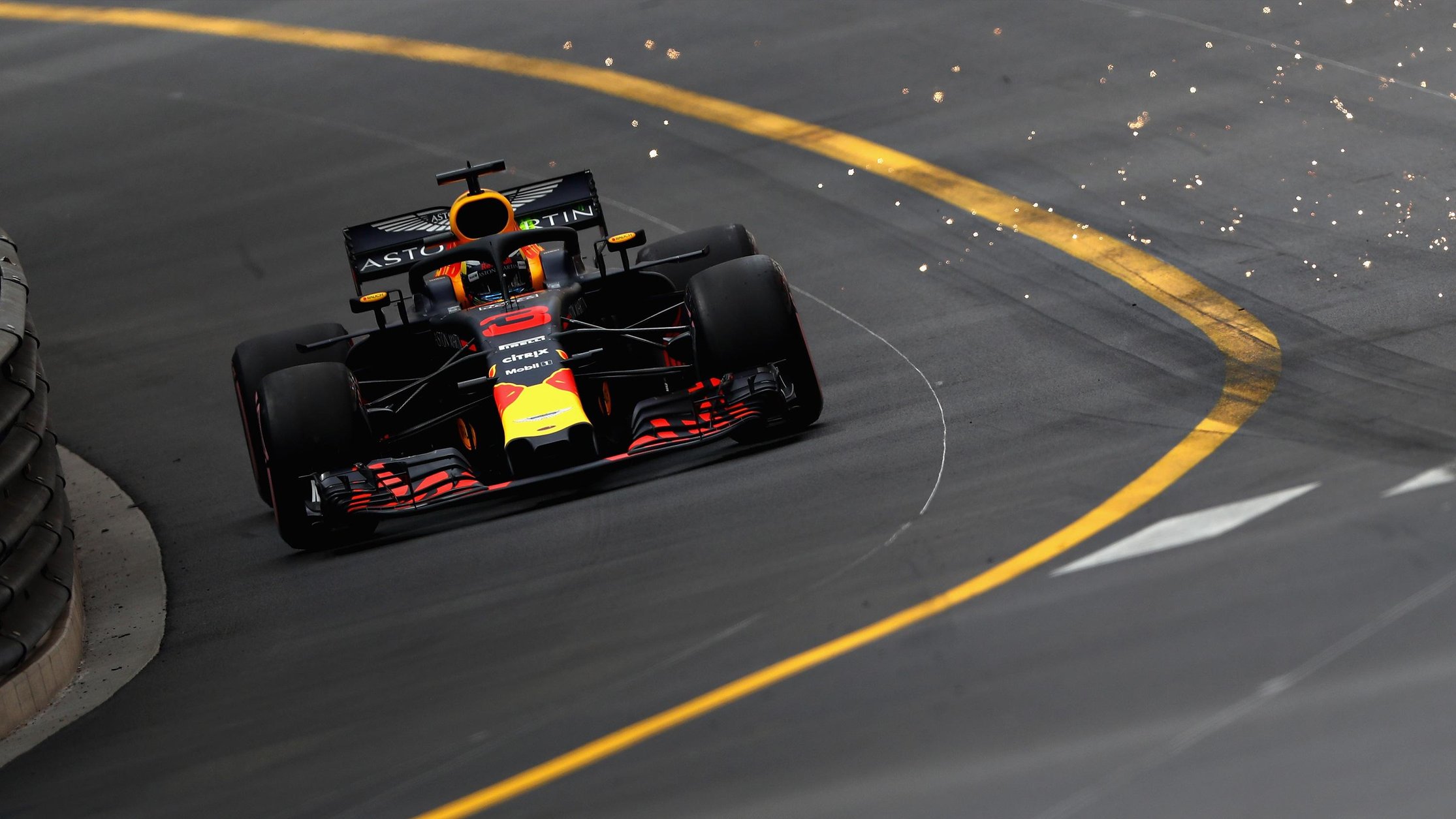
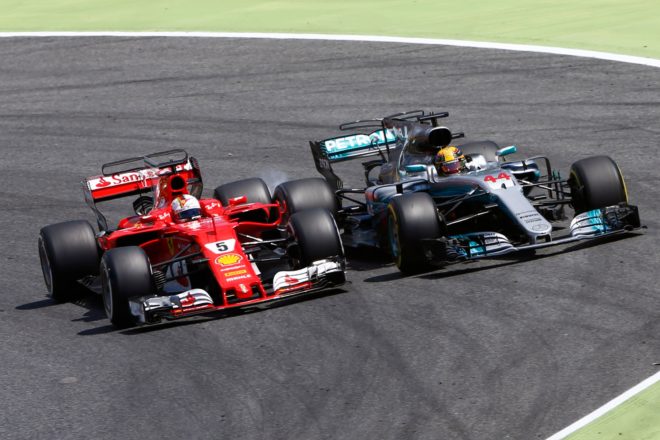
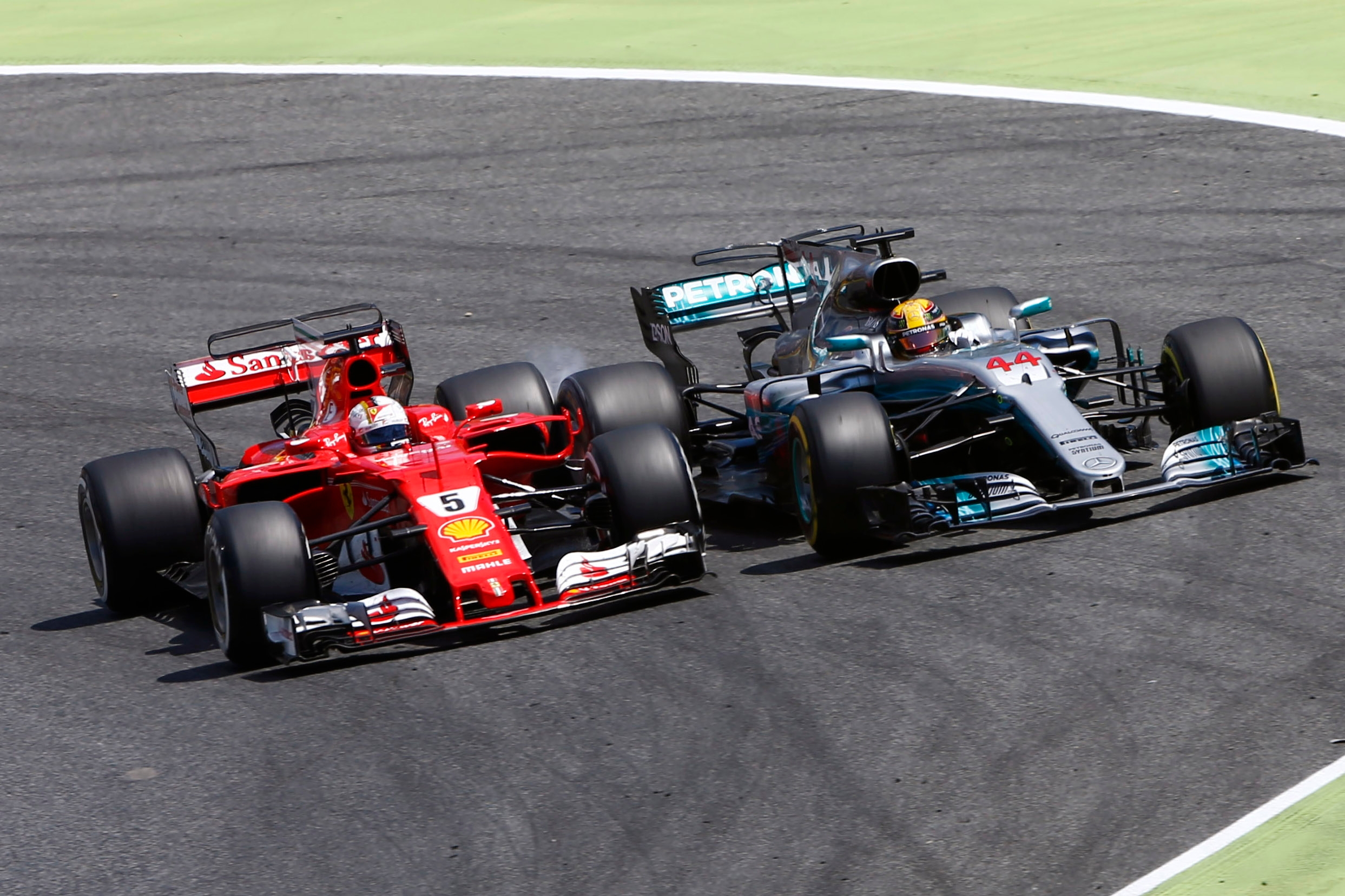
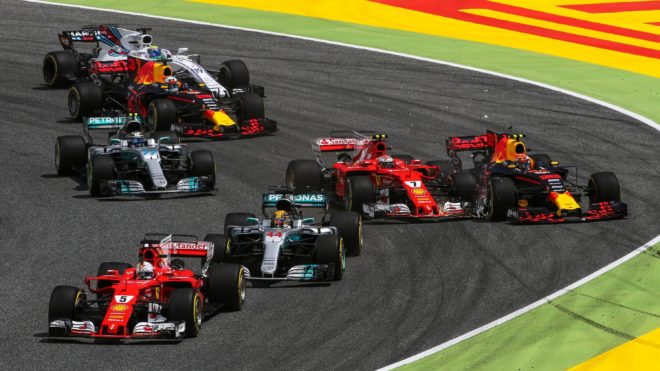
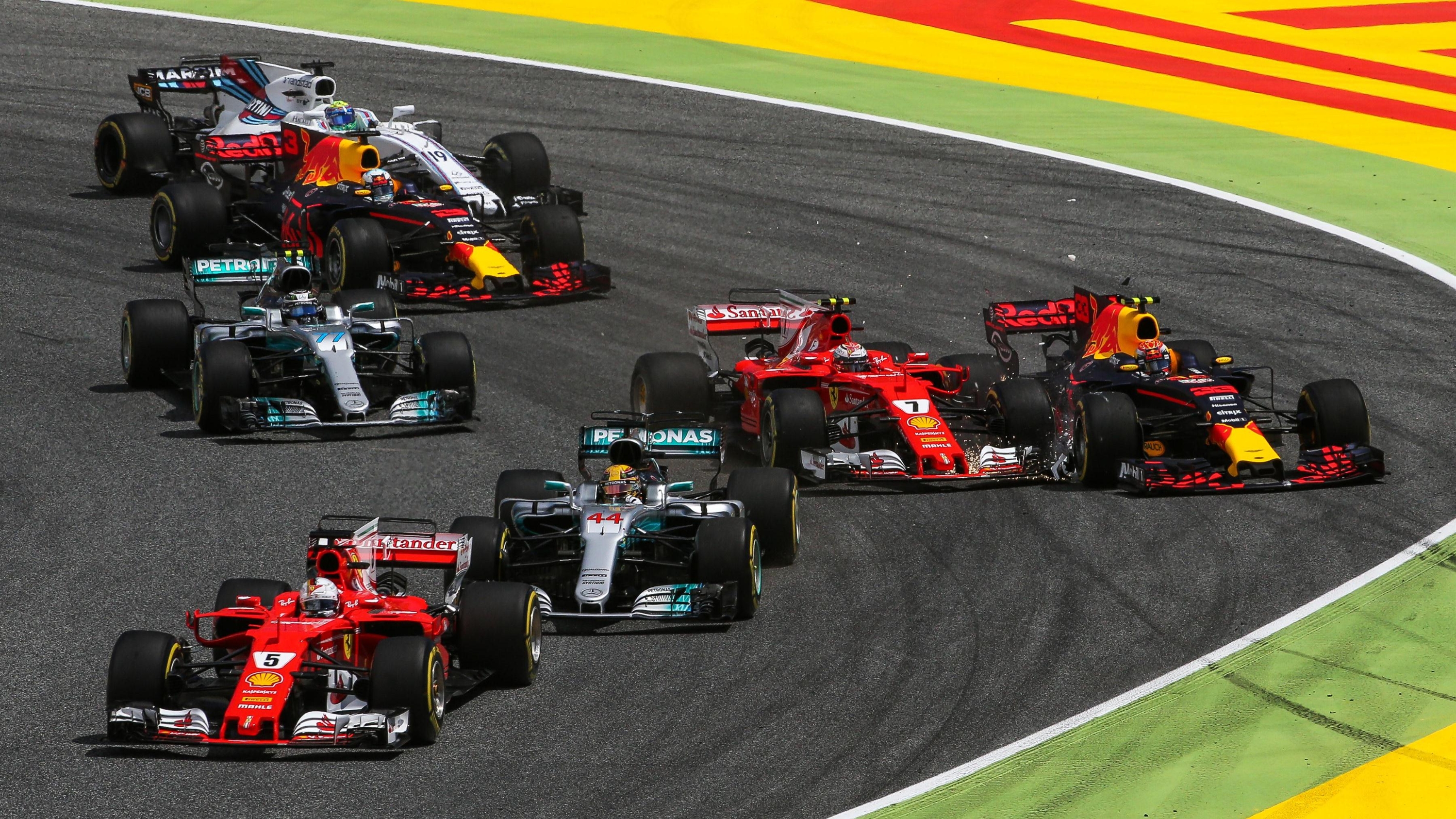
 His team did very well to pull him back from the precipice of the cliff and just a gasp away from qualifying last. Red Bull mechanics should pat themselves by shoehorning an engine in last minute and send him on his way. And also for alertness on their race engineers who brought him and Max Verstappen in and put them on soft tyres right away when the safety car interrupted the proceedings while the rest mostly were on a slower medium compound that was meant to last the distance.