Your basket is currently empty!
Category: India In F1
-
Giving up was never an option: Monisha Kaltenborn
Hinwil, 16 Oct 2013: The first half of the 2013 season was anything but satisfying for the Sauber F1 Team. Seven World Championship points after ten races was a modest harvest. Nevertheless, since the Italian Grand Prix the team has shown a significant improvement: the Swiss outfit scored no less than 38 points in the last four races. This puts the Sauber F1 Team into a solid seventh place in the constructors’ championship. Team Principal Monisha Kaltenborn explains how the team was able to turn the tide. The Indian-born Austrian, became the first woman Team Principal in F1 in Jan, 2010.

File photo of Monisha Kaltenborn at the first Indian GP in 2011. Photo by Sauber F1 team. The Sauber F1 Team had a fantastic season in 2012. However, at the beginning of 2013 it was quite a different story. What happened?
Monisha Kaltenborn, Team Principal: “After the concept of the side exhaust system was very successful last year, our engineers decided to go with a different concept for the C32, that in theory had even more potential. In practice, however, it looked different. We realised that in Melbourne where we brought an update to the car that didn’t work as we expected it to. It then took some time for our engineers to understand the problem.”
What was the problem?
MK: “The aero balance of the car was not stable, especially during braking and turning in. Apart from the measurable implications, the side effect was that the drivers had less confidence in the C32. In addition, we didn’t have the resources to quickly modify the car. Instead, this process happened step by step. The largest update we brought was in Hungary, where we implemented a modified exhaust concept. We already saw a significant improvement back then, but, of course, it took some time until we were able to get the most out of that. In addition, our understanding of the car improved, which translated to a better set-up. Furthermore, we were able to maintain the high level of quality producing the parts back at the factory. The whole team, in the factory and at the track, did an outstanding job.”
Did the ‘new’ tyres, that came into effect in Hungary, also suit your car?
MK: “It’s not easy to pinpoint that as we brought our largest update at the exact same time. However, I believe in general the tyres helped, which was the opposite last year.”
Early in the season some people said the team should stop the development of the current car and fully concentrate on the 2014 car.
MK: “Giving up was never an option, because we wanted to make progress with the current car, in order to improve in the constructors’ championship. In addition the insight we are getting now will help with the development of the new car.”
Let’s be honest: Did you think it was possible to improve like that in the current season?
MK: “It would have been presumptuous to expect such a big improvement. Nevertheless we said very early on that we would be able to improve during the second half of the season. We were certain of this, based on the knowledge we gained. In addition everything came together during the last few races, including some competitors not being able to use their opportunities in the best possible way. But we didn’t expect to be able to score double digit points in three out of four races.”
The Sauber F1 Team now has 45 points, Toro Rosso 31 and Force India 62. Are you looking ahead or behind?
MK: “In general we are always looking ahead. If we continue to be as focused without making any mistakes, then there is still a lot to gain. We know however, that it won’t be easy to claim sixth place. And, of course, we will check the rear mirror in order to avoid a nasty surprise.”
How satisfied are you with the drivers?
MK: “Both drivers have shown a very good performance. Nico delivers what we expected from him. He is fast, consistent and very efficient. He has gained a lot of points through his fighting spirit, but he also knows how to seize and use chances if they present themselves to him during a race. Esteban had a tough start. In addition, the car was not as good at the beginning of the season as it is today, which didn’t help. Nevertheless he worked hard and improved continuously. It was only a question of time for everything to slot into place, as we could see last weekend. Looking at his times, he was often very close to Nico, but, because the competition in the middle field is so tight, sometimes it was a couple of positions away, which, at a first glance, doesn’t look good. However, he also did an outstanding job when, for example, giving feedback regarding the set-up of the car, which took the team forward.”ends
-
At Sahara Force India, we focus on fitness and well-being of F1 team: Andy
4 Oct 2013 – FIA press conference transcripts
TEAM REPRESENTATIVES – Graham WATSON (Caterham), Andy STEVENSON (Force India), Beat Zehnder (Sauber), Ron Meadows (Mercedes), Massimo Rivola (Ferrari), Dickie Stanford (Williams)
PRESS CONFERENCE
Greetings gentlemen, and it’s nice to have you at your first FIA press conference. A question for a number of you, first of all: the team manager role, what does it mean, what does it consist of? Perhaps we could start with you Graham?
Graham WATSON: The team manager is basically the orchestrator of the weekend for the logistics side of the team. Obviously directly working with the engineering group to get the desired result by the end of the weekend. It’s a fairly full on position, sometimes can be a bit slow, but generally flat chat.
Andy, anything more to add to that?

A Sahara Force India file photo of Andy Stevenson Andy STEVENSON: Yeah, it’s a very similar role, I think, in all the teams. I always look at myself, as well, as a person that gets landed with the jobs nobody else wants to do. When things go wrong I’m at fault and when everything goes right, the team’s done a good job.
Beat, I think you’re a stickler for the rules as well. You have to know the rule book I think.
Beat ZEHNDER: Yeah of course, this is part of our job, but besides what Andy and Graham said, we’re trouble shooters as well. So if everything goes wrong on a weekend we’re the first person to contact and we’re the ones to solve any problems.
Now, here, Ron, of course you don’t have the benefit of the motor homes, the benefit of your trucks. Tell us about how different this sort of race is, these ‘flyaways’ are, logistically speaking.
Ron MEADOWS: The actual flyaways, the more recent ones are some of the best races we go to for facilities. We have magnificent garages, big hospitality areas. It’s really easy compared to a Monaco where you’re all compressed and the motor home is half a mile down the road. These races are really quite easy to service.
Massimo, for you?
Massimo RIVOLA: I think the same. It’s a different scenario, moving trucks and hospitality in particular Europe is pretty demanding, so I would say that I like Ron’s idea that flyaways are actually easier to manage.
And for you Dickie?
Dickie STANFORD: Similar thing for me. The flyaway races, everything’s here, so you just literally move in. You’re not moving the trucks or anything around Europe. It’s quite straightforward to come to a flyaway race.
But actually moving the equipment and stuff such as fuel and that sort of thing?
DS: Well, we move the fuel around Europe, so it’s very similar coming to a flyaway race.
Graham, coming back to you. The management of the crews. How do you manage to look after the mechanics and keep them in top-flight trim all he way through?
GW: Yeah, it’s a very long season, so it’s important that we look after our people. Clearly we are a resource-limited team so we have to be quite clever and wise about how we do that. We try to rotate a few of the guys in and out where possible, Yeah, just keep your health in mind and then over the course of the year, with the help of my support team, just manage the guys as best we can.
Andy?
AS: As the calendars do get longer, with the extra flyaways, the strain on the crew is quite intense. We certainly focus at Sahara Force India focus on fitness and wellbeing. We work very heard on the diets of the guys when we’re away travelling and their general fitness. And we’ve seen this year it has paid off. We’ve had a lot less injuries this year and the crew are just generally in better shape. So they’re able to cope with the job. Also along that we make sure they’re comfortable. We try to arrange all their travel schedules and hotels and everything to the best of our ability so that they are comfortable and happy in their work.
Beat?
BZ: This is one of the most important things – that people are feeling well. The good thing in a Formula Team is that all these guys are kind of self-motivating, so you don’t have to do an extra bit for that. But, as Andy said, the most important is that they have decent flights and hotels and wellbeing. People tend to get ill towards the end of the season, especially the last two or three races, because travelling through so many time and climate zones is demanding on the body and physics.
Final question from me, to the front row. We’re going to see in-season testing next year. How are you going to manage that? What do you envisage having to do for that?
RM: We had a team meeting yesterday, with all the teams involved, and we came up with a schedule and I don’t think it’s going to be too difficult. We used to have eight filming days, which was an awful lot of arranging for 100kms, where now at least we’re going to be in the same venue where we raced and we’ll just leave one crew behind and we’ll rotate it, so I don’t think it will be too bad.
How much equipment do you think you’re going to have Massimo?
MR: Well, Ferrari is normally one of ones with the most – more than 40,000 I would say. I agree with Ron. You know that Ferrari is the teams that pushed the most to get in-season testing back and to be honest I think that at the end it will be not so much more expensive than what we had in the past, with aero days and filming days, so everything will be much more organised for sure. So for us the job it will be, I would say, easier.
Dickie?
DS: You’ll use you race equipment and just bring down to the test as little as possible, just trying to keep the cost down.
And personnel?
DS: Personnel? Probably like Ron we’ll rotate the crews.
QUESTIONS FROM THE FLOOR
Q: (Alex Popov – RTR) It’s about the first Russian Grand Prix next year. We have a new date of 5 October. Beat has just been in Sochi just one week. But the question is for all of you. What’s your impression, what are your thoughts about this first Russian Grand Prix. Which difficulties do you expect from this?
BS: I can comment on the facilities on the Olympic Park and it’s very, very nice there. The track looks nice and all the new buildings that are set up… it’s fantastic.
You were there last week?
BS: I’ve been there last weekend, yes, for a demo event. It’s a little bit windy.
Andy, what sort of thing will you do? Will you do a reconnaissance? Have you been there already?
AS: We haven’t been there yet but I’m sure we will do a reconnaissance before it’s time for us to get there but we – and certainly I – always look forward to new events: the new challenges, the new tracks, to find out our way around. There are a lot of circuits that we go to year in, year out. I don’t want to say that’s boring but it’s much of the same each year so I’m always excited when we have a new venue.
Graham, what sort of problems to you envisage, what special demands may come from racing in Russia?
GW: Well, hopefully there’s no problems. Generally FOM are pretty good at paving the way for us to get our equipment in and out of the country. There’s always small issues with the new races that come up when you arrive but generally – hopefully – it’ll go alright.
Ron, are you planning a reconnaissance trip?
RM: We’ll certainly do a recce, though I’m not sure what date that will be but we’re really excited to go to Russia – we’ve never been as a team, it’s a very interesting country and recently had a driver in Formula One and hopefully soon will have some more.
Massimo?
MR: Yeah, the same. And in addition, we have a sponsor in Russia so we’re very keen to do that. To be honest, any time there is a new race venue we always keen to exploit the new chances that come up and collect more sponsorship. It’s good to go to new places.
Dickie?
DS: We’ll be doing a recce at some stage early in the year. I’ve been to Moscow to do an event there and thoroughly enjoyed that. I’m sure the teams will enjoy the new race.
Q: (Kate Walker – GP Week) Question for all of you. You touched on the logistics of adding in-season testing but we’re looking at a possibly 22-race calendar next year. Adding the in-season testing to the far-away pre-season tests plus the longer calendar, what kind of headache is that going to be for you logistically but also financially?
RM: Logistically it’s obviously going to be more of a challenge than this year but the biggest issue at the moment looks like being the triple-header. So we need to speak to FOM but in FOM we have a fantastic partner who arranges all the logistics. They do a fantastic job so if they think it’s achievable it must be achievable because they’ve never failed us yet. And as far as the financial aspect, it’s give and take really. It opens up more doors. We probably will spend a bit more on logistics but we’re going to get to see people in Russia, go back to Austria, we’re going to go to Mexico and it opens up a lot more doors for sponsors, drivers, team members.
Massimo, is that the major concern for you? The triple-header?
MR: To be honest I’m still hoping we come back to the 20 races as per the current sporting regulation. We will see. At the moment the calendar is not the best calendar possible in terms of logistics. So, even the first race in Australia, alone, is not ideal. From the logistics side I would prefer to stop and do a race in a back-to-back coming back from Australia. For sure there are some good commercial reasons behind this that I am not aware of but we will see. When the calendar is 100 per cent fixed we will manage it.
Dickie?
DS: Yeah, the triple-header is looking a bit interesting! But I’m sure we’ll find a way around it. We always do.
Beat?
BZ: For us the biggest headache is definitely personnel because we as a small team, we have to cover all races, tests and even demo events with the same number of people, the same crew. The more events you have, obviously the more difficult it gets. Then the triple-header… I think we would have to start packing up on Saturday in Monaco to make it to Jersey.
Andy?
AS: The schedule looks very interesting and certainly challenging. As I said earlier, we like new venues and enjoy the challenge. For our team certainly the thing that we are going to find very difficult is the in-season testing. The four in-season tests are going to stretch us and that’s something we’re not looking forward to.
Graham?
GW: I agree with Andy. It’s the in-season testing that’s probably going to push us to the edge. We had the meeting yesterday with the other teams and discussed the venues we were potentially going to go to. We started putting that down on a calendar and it started to look quite a daunting task. Obviously again we’ll have to manage the personnel as best we can to achieve that. I think like all regulation or rule changes that happen in Formula One, we all start off thinking ‘how are we going to do that?’ and year in, year out we seem to achieve it: get to the end of the year, look back, think ‘OK’ and move on to the next year.
Q: (Alan Baldwin – Reuters) I want to ask about the triple-header but more for specific detail. Monaco is a race where cars get smashed about quite a bit and you have to get them, in theory, to New Jersey within a matter of days. Could you give more details about the complications of that and also how you plan for a triple-header when one of the races may not happen?
AS: We haven’t focussed on it too much just yet. It was only announced last week to the teams, or to the public in general, and we’ll wait until the calendar has been ratified before we put any resource into understanding exactly how we will deal with it. As always in Formula One, if a challenge is put before us, we will make it work. So, we’ll wait until is has been ratified.
Beat?
BZ: Technically, it will be very difficult to have a back-to-back from Monaco to Jersey, because normally the freight will leave for Canada, let’s say, on the Saturday before the race. And so that’s why, if you’re only able to send your freight on a Monday or a Tuesday, it compromises your weekend quite a bit.
Graham, how does it affect a smaller team, something like that?
GW: It’s probably not dissimilar to everybody else. They’ve still got to pack their pallets and pack their cars up and move their personnel around the world. So, it’s probably slightly more challenging but we’re all in the same boat. I think we all carry pretty similar freight weight and sea-freight and so forth. But it is difficult when the calendar’s not 100 per cent fixed and you’re trying to pre-empt what’s going to happen – but the Monaco to New York does look particularly challenging…
MR: I can say that even for a top team it’s something almost impossible, to be honest, to be done. But as I said, we will see the real calendar and then we figure it out.
It could be said it’s even more difficult for a top team as you have more equipment.
MR: At the end, as I said, we have more freight. It’s not that a top team has such a big advantage having such a back-to-back. It’s going to be almost impossible to do it.
Q: (Frederic Ferret – L’Equipe) Dickie, you knew of the good old days when Williams were winning; how different is the mood in the team nowadays and as an old pillar of the team, how can you help and motivate all the team to bring Williams back to the top?
DS: That’s a difficult one! Yes, I’ve seen the winning days and the current days. To motivate people – as the guys were saying earlier on – you look after them, you try and do your best for them. You’re still trying as hard as anybody up and down the pit lane so you just have to try and keep the guys motivated by any means possible. They’re all there, they want to win. I think everybody in the pit lane is there for that reason.
Q: (Dieter Rencken – RacingLines) Gentlemen, under the old Concorde Agreement you were obviously members of the Sporting Working Group which has now been replaced by the Sporting Working Committee, which is more a discussion forum rather than one that can actually take decisions for forwarding up to the Formula One Commission. Does this change or in any way jeopardise or prejudice the decision-taking process from the sporting regulation point of view?
MR: I think that so far, as a group, we won’t change our approach, so if we have a guideline from our team principal or the strategy group it doesn’t matter, we will have the guideline. With the guideline we have we will try to sort out the best rule wording or the best rule to apply in certain conditions. I don’t think it really changes (anything) too much but at the end, it’s just the fact that you have to be co-ordinated even better with your team principal so it’s part of the normal job, I would say.
RM: So far we haven’t seen any difference since we haven’t had the Sporting Working Group since the Concorde Agreement was signed between the FIA and FOM. So maybe ask the same question in two or three months time and see if anything’s changed but so far, this year, we’ve been operating as previous years.
Q: How often do you actually meet?
MR: Six (times) per year, roughly.
Q: (Stuart Codling – F1 Racing) Gentlemen, I’m led to believe that it was the sporting directors who ultimately vetoed the putative Pirelli test in America. I was wondering if you could clarify what the difference is between Ferrari testing a 2011 car in Barcelona three weeks before the Spanish Grand Prix and McLaren testing a 2011 car in Austin, three weeks before the US GP? Maybe Andy you could take this as we understand that Force India rounded up the posse?
AS: I would like to take it on, yeah. We had absolutely nothing to do with it. I believe it was an FIA decision. The first I knew that it wasn’t going to happen was when McLaren told us that the FIA had notified them that they weren’t happy with the test.
RM: We read about this morning in Autosport. There was no discussion yesterday at our meeting.
BZ: I think the difference was that we didn’t know about the Ferrari test. At the time.
Q: (Dieter Rencken – RacingLines) The two responses that I had about my question came from teams whose principals are actually on the Strategy Working Group whereas the others are now excluded entirely from that input because their team principals are not on the Strategy Group. So how do you people in the back row, for example, feel about it?
GW: I can only vouch for what I’ve seen so far which is that we still have our meetings that we’ve been having for the last few years in the same format. We proposed a question to Charlie (Whiting) individually about where we stand going forward and he’s very adamant that our meeting will continue in the same vein, helping to structure the sporting regulations going forward into 2014/2015. Most of the rules that are in for next year have been decided through the same group. Obviously, as Ron said, we’ll give it three months and see what happens but at the moment, it’s continuing as it was. Yeah, clearly we don’t have the voice at the strategy table but we’ll hopefully get people to use common sense in the right direction.
BZ: Well of course we’re still meeting on a regular basis and we have a voice and sometimes we have to maybe raise our voices and to speak up, not that one side of the paddock is going to sleep. We, as a group, have to work out proposals which will be accepted or not by the Strategy Group.
AS: I think for me it has changed quite a bit and certainly from our point of view, since the Monaco agreement was signed, things have been very different this year and I think carrying on into next year it’s going to be the same. I don’t think the process is as good as it used to be and certainly for the smaller teams, we don’t have as much say as we used to.
BZ: But the problem there obviously is that in the absence of a Concorde Agreement we have a simple majority vote at the moment and so it’s not what it used to be with the 70 percent majority or unanimity.
Q: (Chris Lyons – AP) Ron, you said there was a meeting yesterday regarding in-season testing. Are there any changes you can update us on? What details can you give us on that?
RM: We did schedule some dates for next season for in-season testing but we need to speak to Charlie Whiting first to get clarification that he’s happy so I think we’ll let Charlie announce them.
Q: (Kate Walker – GP Week) I wanted to get back to the sexy subject of logistics and finance and in-season testing because I’ve been told that it’s going to cost about an extra ten million a year on the team’s budget but also you’ve got the problem of rebuilding a car post-race, doing the test and then rebuilding it to send it off to the next race. To what extent is that actually going to be possible, especially for those teams with smaller budgets who are finding it a bit hard at the moment?
DS: Actually rebuilding the car after a race or test actually doesn’t make any difference. We tend to do that now between the double-header races so it’s not going to make that much difference. On a flyaway, after the race, you strip the car down, you rebuild it on Sunday night before you pack it up to go to the next race. In Europe, you’ll strip it down, rebuild it completely and then send it to the next race. On costings of the extra races, we don’t know yet. We haven’t costed anything out. The calendar’s only been out for a week and so we haven’t got that far.
MR: Well, I wouldn’t employ the guy that told you ten millions more for a few tests. To be honest, I don’t think it’s going to be like that. To be honest, I think it’s going to be more efficient, in general, for testing, but obviously if you have more flyaway races, that would cost (more) because of the freight costs but that’s not a huge difference.
RM: It’s obviously going to cost more than this year because we didn’t have any in-season testing, we just had filming days but I think you’re going to have a bigger bang for your buck, you’re not going to be driving to some airfield in north Yorkshire, hoping it’s not raining. You’re going to be going to Barcelona and doing 500 kilometers of useful testing.
AS: We think there is going to be quite a large cost implication, especially in the way that we run our team and with the resources we have available to us now, it won’t be possible for us to attend the four tests as planned. We have brought to the table other options, cheaper options that wouldn’t give us an advantage but they couldn’t be agreed so we’re either left with the choice of attending the test or not attending the test. We’ve put calculations together that we would estimate around eight million for us to attend the four tests.
BZ: I think the difference is the different points of view. Obviously the eight in-season test days are replacing four straightline tests or aero tests, three young drivers and six out of the eight PR days but we, as a small team, we’ve hardly done any straightline tests – we have a fantastic 1:1 wind tunnel which is as good as a straightline test. We’ve done the three days young driver test and every year we’ve done one PR day to get rights-free footage. Obviously if you do eight PR days and possibly straightline tests it’s going to be more expensive and for us it’s definitely – I wouldn’t say a killer but it’s going to be much more expensive than we were used to over the last three years.
Q: (Alan Baldwin – Reuters) Just for a matter of interest, on the calendar – and I suspect I probably know the answer already – but does Mr Ecclestone consult you guys on the calendar for your input on logistics or does it just come out of the blue as a fait accompli and you have to deal with it?
DS: No, he doesn’t consult us. Whether he consults team principals I don’t know, we wait until we see the calendar before we know what’s going on.
MR: No, we are not involved in that.
Q: (Ted Kravitz – Sky Sports) Just back to the pre-season testing for next year, the second and third tests will be in Bahrain. What concerns, if any, do you have on both the working conditions – a lot of guys having to work all day in very hot conditions – and on general safety and security?
BZ: We’re here to organise events and to organise them as well as possible but whether we should go there or not is political and I am not here to do politics.
MR: I think we should get a little bit of mileage on our new engine so Bahrain is a venue where you normally have good weather so that was the priority. The priority was to go to the Middle East; to chose Abu Dhabi or Bahrain was not a matter for us.
AS: Again, the same as Beat. I don’t think we’re here to comment on the politics, but as far as the test venue and for pre-season testing with the new power units, I really couldn’t think of a better place to go. The temperatures aren’t going to be that hot, we’re probably going to expect 22/23 degrees at that time of the year, and it’s actually a very good way of bringing the crews up to the speed, ready for a hard season so I think that the dates that are scheduled are pretty good.
Ends
-
We managed the tyres better than many teams in Singapore:Paul
DRIVERS – Paul DI RESTA (Force India), Jules BIANCHI (Marussia), Esteban GUTIERREZ (Sauber), Romain GROSJEAN (Lotus), Lewis HAMILTON (Mercedes), Felipe MASSA (Ferrari)
PRESS CONFERENCE
Paul Di Resta, you’ve had a bit of a drought over the past five races or so. Do you put that down to bad luck?
Paul DI RESTA: I suppose you can, but at the same time we’ve had some unfortunate issues. But I think the important thing is to keep pushing on. Singapore was obviously looking like it was going to be a great result from a difficult qualifying session, the speed was in the car, but it wasn’t to be. Hopefully this weekend we can get it together and get points back on the table, which is always the goal within the team.
The team has suggested that you’ve been affected by the change of tyres since the British Grand Prix, would you agree with that?
PDR: I definitely think the tyre hasn’t helped but I think at this stage, and this far in with the new tyres, can you blame that? We’ve not optimised it like we did the last set, but I think everybody within the team has a great handle on tyres and it’s just about unleashing the potential of them. We’ve maybe not got it over the whole weekend but the way we managed the tyres in the race in Singapore was obviously better than most people were able to. We just need to try to get the qualifying performance and I think if we can do that then it gets us back on track and we start having a good weekend again.
I hope so, thank you. Jules, obviously you’ve signed, we’ve had the news of that this morning that you’ve signed again for Marussia, although there were several other seats available, but you’ve resigned for Marussia. Your feelings about that?
Jules BIANCHI: Obviously it’s a great feeling for me. It was a really late call this year and I’ve already signed for next year so it’s amazing for me. I’m really happy to stay with Marussia because I feel really confident with them, I feel like at home. So I hope it will be a great season next year and I really want to thank them for that.
How do you feel about the potential for next year, particularly with the Ferrari engines. And also your own potential, how are you going to develop?
JB: For sure, I will feel a lot more confident because I will have a lot more experience in Formula One, I will have all the winter testing. We will have new rules, with new engines, with Ferrari. For sure that will be a great thing for the car and for the team. I don’t know what to expect but for sure we will have an improvement.
Esteban, you had your best qualifying in Singapore. Was that the circuit, just everything coming together? How important was that for you?
Esteban GUTIERREZ: It was very important, because it was getting very critical not being able to qualify properly. Obviously when you start P9 or P10, there’s a huge difference between starting P10 and P16 or P17. It also changes a lot your perspective because you’re fighting with better drivers at the front as well. It was, I think, a great experience, a good step and a very solid one and I’m looking to keep this in a consistent way until the end of the year.
And obviously we’ve got a Mexican Grand Prix on the calendar for next year. Tell us how important it is for your country to have that grand prix, for motor sport in your country. But also, about the circuit itself, because I think you’ve been there. Is it ready for a grand prix?
EG: It has to be adapted. They have to do some work. Now there is a closer chance it will happened but it’s not yet assured, so they’re working very hard and I’m sure that the promoters are trying to find a way to make it happen. Obviously for us it would be a very special one.
Q: Felipe, it is four weeks since the announcement regarding your future with Ferrari. Can you tell us more about your future in Formula One?
Felipe MASSA: Well, not yet. So it’s to concentrate to the last race. We talk with a few teams, y’know, and I don’t think it’s the right time to speak about that. I think it’s the right time when you know where you are going. For the moment we are aware, I think, of some good opportunities. It’s better to wait and say at the right time.
Q: You’re getting on quite well with the current car it seems. You’ve out-qualified your team-mate five times this year, last time in Singapore. How do you feel about the current Ferrari?
FM: I feel OK, I feel good. I mean I feel comfortable inside the car and managed to put some points in the last races. Important for me, for the team. Just concentrate to carry on like that these last races and try to get some more podiums, some more better results even from what I had until now. I think qualifying is going well as well, so let’s try to do everything we can to get some good results now in these last six races and finish well with Ferrari after our long and nice time together.
Lewis, last year you had an incident-packed race here but at the same time you’ve had a couple of second places as well at this circuit, included that wet race in 2010. What are your memories of this circuit and what are your feelings about this race?
Lewis HAMILTON: I don’t really remember any of my races here! I remember qualifying at the front on one race but otherwise we’ve had some half-decent races but I haven’t won, so there’s nothing really good enough to remember, I’d say.
Q: I particularly remember in the wet, when you were going around and around and around behind the safety car and you saying “C’mon, let’s go racing.”
LH: Ah yeah, I remember that. But that’s normal, that sort of thing.
Q: Since Silverstone you’ve had a good run of points as opposed to your team-mate who hasn’t had quite the same run of points. What do you put that down to? A difference in driving style between the two of you?
LH: Well, the last couple of races haven’t been so good for me. But before that, yeah, again I’ve just grown with my understanding of the car. Growing an understanding of how to really extract the most from it. Working better each time as we’re growing as a team in terms of how we communicate and everything. So I hope this weekend is even better in that sense. We’re constantly making changes, even after the last race weekend, there were some things we can improve on, particularly on communication. So we’re hopefully going to see a better weekend this weekend.
Q: Is there one type of circuit that’s better than another?
LH: No, no. I’m actually really surprised this year that the car is good everywhere. It’s been a real blessing and I anticipate it should be strong again here this weekend. Whether or not we can keep up with the Red Bulls, we’ll see – but my target really is to get these guys, the guys in the red.
Q: Romain, Eric Boullier in his preview of this race gave you a big vote of confidence saying that you had really come together, that you performing extremely well. How do you feel about your performances recently?
Romain GROSJEAN: Pretty good to be honest! I knew we were on a good run since the Bahrain Grand Prix except Monaco where I had a bad weekend and Canada where we struggled a little bit – but things were going together and I think it shows up in Germany that the final things came together and it was better and better. Singapore was a good race as well. We came back with a more normal package, the car was back at the front, which is enjoyable and hopefully it’s going to be the case for the last six races of the season.
Q: Was Singapore a track that you liked or do you just have the confidence now? Has there been a breakthrough in some way?
RG: Well, I think it was not a track that I liked or disliked. It doesn’t change much on the lap-time or the driving style. I tried to get on with everything I can and the car is getting better and better. I think we had a very slow start to the season. Since then we worked hard and it’s like we lost all the testing and the first three races. So, started on the back foot but bring things together and Singapore was back to the normal wing level after let’s say after Spa and Monza where we struggled a little bit more and should be good for the rest of the season hopefully. And, y’know, just keep doing the same thing as we’re doing.
QUESTIONS FROM THE FLOOR.
Q: (Abhishek Takle – Midday) Felipe, following on from the earlier question about your future, how optimistic are you in terms of your chances of getting a competitive drive next year and should you not get a competitive drive next year, would you still want to continue in Formula One?
FM: Well, I think I’m quite optimistic that I’m going to find a good direction, a good solution. As I said, I will not change my mind. I want to have a car that can give me some good possibilities to fight, not a car in which I would not have a chance to fight. So if I have that, I’m not interested, as I said.
Q: (Frederic Ferret – L’Equipe) To all of you: first of all, how do you rate this track as a driver, and secondly, what do you think of next year’s calendar with 22 Grands Prix?
RG: It’s too far from Seoul.
FM: I think it’s a very nice track, I like to drive here. Regarding the calendar, I think it’s a lot to think about because it’s not really comfortable, not just for us as drivers but for the teams, so I think if there were a little bit better thinking behind it they can do a much better calendar for next year.
LH: I really love the track, they did a good job. It’s nice to drive. You don’t get as many people coming to watch as we would like but as Romain said, it’s quite far from the main city. Just arriving today, seeing how beautiful the weather is, the scenery around it, it’s really quite a peaceful place. In terms of calendar, I love racing so I would do many more if I had to but as Felipe said, it’s difficult on the team. The year’s getting so long. I think we’re already testing in January so there’s not a lot of down time for the guys back at the factory or us people who are travelling.
FM: I think the problem is that there are races where you go to Japan and then you’re not going to another race straightaway, so you’re going back to Europe and then you’re coming back here. You can do many races – not a problem – but you need to do it in a better way.
Q: Esteban, your first impressions?
EG: Well, it’s going to be an interesting track to get to know, it’s my first time driving this track and I’ve already had a look at some media footage and it looks quite an interesting track.
JB: Well, I did FP1 last year with Force India. It was a good track, I liked it so now we have to wait and see how it is in racing.
PdiR: Again, like everyone, I think it’s a good track to drive, it’s got a nice flow in the last sector. Equally, it’s got some good opportunities if you’re attacking or defending in the first sector. For the calendar, I think it’s obviously a great thing to go to new countries and new tracks and let other people experience the sights of Formula One, so very positive and I think like Lewis, driving’s important and however many races that will be, I want to be the one who’s taking part.
Q: (Trent Price- Richland F1) Felipe, Fernando’s been relatively vocal about saying that it was the tyre construction that affected Ferrari mid-year and Nicolas Tombazis says no, it was more of a development curve that we took in the wrong direction. You’ve done a lot of Friday work on the car; where do you see where the issues are?
FM: For sure, if you don’t have the car to win the championship you didn’t do the perfect job, it’s clear. We’ve had so many little things that either didn’t work as you expected to fight for the championship, but I don’t think you need to put names on the table. I think you need to speak about the whole group of work. I think that’s the most important thing.
Q: (Livio Oricchio – O Estado de Sao Paulo) To all of you: since the Spa race, Sebastian Vettel set three poles and won three races, even on a circuit where he couldn’t be so fast, Monza, for example. What’s your point of view about that; how can he get such a big advantage from one moment to another one?
FM: Well, I think if you look at the last race, how his pace was, qualifying and in the race. If you appreciate that few teams will have new pieces on the car from now until the last race; similar to what he did in the last race, he’s going to have some more victories, I think. For sure, his pace was better than everybody in the last races. It depends on the track, especially in Singapore. We’re going to tracks where you need more downforce and they always show great performance as well. We will see. I hope it won’t be like that but the chance is pretty much in their favour, that he can have more victories.
LH: I agree, there’s not really much more to say.
RG: Well, they look quite impressive. They did a good job to bring them something that brings them a decent lap time gain so no, P2 is almost like a victory.
PdiR: I think all you can say is that the combination has not only worked this year but it’s worked over the last four years. The difference that they’ve made from the beginning of the year to now is obviously working out in their direction and nobody is challenging them.
Q: (Abhishek Takle – Midday) Felipe, Pat Fry said in the run-up to this race that you’re going to be using the Friday practice sessions to test 2014 parts, so how involved are you going to be with that programme of testing those parts?
FM: I hope I can test everything they give to me for next year, to have some experience, to understand a little bit. I don’t know. To be honest, this year there’s not a lot to be done for next year so the car will be completely different next year. So many things will be different so I think it’s not so easy to try things on Friday for next year because everything will start from zero next year. But if we have some new pieces, I hope I can have them.
Q: (Simon Cass – Daily Mail) Paul, is your contract situation sorted out with Force India for next year, do you have a contract, because Vijay (Mallya) says he’s going to leave the decision late as he usually does? I was just wondering where we were with that.
PdiR: The team’s policy is not to discuss contracts at the moment, so I think you need to go to the press office and speak to them. I’ll concentrate on this weekend and the driving part of it.
Q: (Dan Knutson – Auto Action and National Speedsport News) Lewis, is it possible to do a perfect lap and then, if you do that, how do you improve on it? Not just here, anywhere.
LH: I don’t think there’s a perfect lap. I think you can always improve, even if you do pull off a great lap, there’s always some areas where you feel you could potentially gain, but then perhaps you lose in other areas. So getting a perfect lap like in the simulations we have are generally perfect laps. I think that’s something we’re all trying to do every single time we go out and the closer you get, the more exciting it gets.
Q: (Ben Edwards – BBC) Lewis, quick question: just looking back at the Singapore race. When the team analysed the performance of both you and Nico and Sebastian, you were so close to him in qualifying in terms of team pace, then he had that two seconds a lap advantage when he was sprinting, but do you think that was a bit of a false picture because he was very much pushing to open up that gap and maybe you guys were obviously in a different position in that race. Do you think that the gap we saw open up was a slightly false picture?
LH: I don’t, personally, think so. No. I think that’s the true pace of their car. Perhaps they have a lot more in the bag than we get to see, so it’s just cruising, generally. I think in the race on the restart everyone’s pushing flat out so there should be no reason why they should be able to pull away that much quicker. If you look at their on-boards, he’s on the power, full throttle at least twenty meters before everyone else which is a huge advantage.
Q: What sort of reaction does that make you have and the team have; what can you do about that?
LH: There’s nothing we can really do, we’re always asking for rear downforce, always want to be able to get on the power sooner. But the last time I was able to put the pedal down that quick was what, 2007, 2008? 2007 when we had traction control, so it’s a lot different.
Ends
A file photo of Paul di Resta by Sahara Force India F1 team. -
Vijay Mallya still hopeful of catching up with McLaren
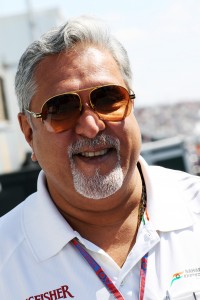
Vijay’s VisionDr Vijay Mallya sums up Singapore and outlines the team’s objectives for the rest of the season.Dr Mallya, give us your verdict on the team’s performance in Singapore…I think the race and strategy went very well for us. Without Paul’s incident we were looking at a potential sixth place finish because he was running ahead of Massa in any case. It shows the vast difference between what happens in qualifying and what happens in the race. We always knew after free practice that we had a bit of race pace and it came through on Sunday.With six races to go, what’s the key objective in the final few races?The objective has not changed. McLaren have a points lead over us, but they are not totally out of reach. As I’ve said before, turning on the tyres is paramount and we are working hard to achieve this. There are a lot of points on offer and we need to try and regain the performance level we showed in the first part of the season.What are your expectations for Korea?It’s never been our strongest track, although we did score some points there last year. It’s quite low-grip and the cooler temperatures make it a very different challenge. We will go there ready to learn as much as possible, try and improve our qualifying pace and come up with a smart strategy for Sunday.Paul on KoreaPaul Di Resta reflects on Singapore and hopes to bounce back in KoreaPaul, a week on from Singapore, how are you feeling?The disappointment still feels quite fresh. When you have a race like that you just want to get back in the car as soon as possible. After the race I went back to Europe for some training and to get myself ready for the final push of the season. October will be the busiest month of the year so it was good to have some quality time at home before we spend the next couple of months travelling.Is the Korean track one that you enjoy?It’s an unusual track, but definitely a place that I enjoy driving. The three sectors are all very different with long straights linked by hairpins, some high-speed corners and a slower technical part of the lap. The tyre choices are the same as in Singapore so it will be interesting to see how they perform. We’ve always gone well on the supersofts, but struggled more on the medium compound so hopefully we can switch it on this weekend.Adrian on KoreaAdrian Sutil gets set for the Korean Grand PrixAdrian, a point in Singapore must have felt rewarding after a challenging weekend…It was a lot of work for one point, that’s for sure! In the race I started on the mediums to do something different with the strategy and that worked out quite well. In the closing laps I was right on the back of the train of cars fighting for points. My tyres were so worn that it was hard to push, so getting a point was a good feeling after a long race.Tell us about your thoughts on Korea?I quite like the track and I’m looking forward to it. I haven’t been so successful there yet, but I want to make up for that this year. The circuit has a nice layout and a nice flow in the second part of the lap with some high-speed corners. Let’s see how the supersoft performs because the corners are very hard on the tyres. That could open up some interesting strategies.endsFile photo of Vijay Mallya by Sahara Force India F1 team. -
“Absurd” FIA rules may stop contested election, warns David Ward
Bangalore, 2 Oct 2013: David Ward has arrived as a whiff of fresh air on the suffocating FIA scene. Thanks to the lack of transparency, Formula One and FIA, the international Fedearation which controls Motorsports and F1 around the world, are closed to public scrutiny as far as financial arrangements are concerned.
The arrival of Jean Todt as President was hoped would benefit the sport and bring more monies to FIA, and consequently to the member ASNs around the world to develop and promote grassroots motorsports. But despite making efforts Jean Todt was not very successful, many experts feel. He made a lot of improvements, especially on road safety side but no one is sure how much the new Concorde Agreement will benefit the FIA.
Under these circumstance, the arrival of David Ward, as a presidential candidate to contest Jean Todt (trying for a second term) came as good news. But the absurd FIA rules may prevent his entry, even before the election process begins.
A press release from Ward:
David Ward, a candidate in the FIA 2013 Presidential election, has written to FIA Clubs warning that the FIA’s election rules could prevent any candidate from being eligible to challenge the incumbent Jean Todt. The letter reveals that in the North American region 11 out of 12 clubs (ACNs and ASNs) have already signed a support agreement for Jean Todt at an FIA meeting in Montevideo more than six months before the election began. This leaves just one club available to nominate a Vice President Sport to another candidate’s list – which is a requirement to be eligible in the Presidential election.In the letter to the club Presidents, David Ward writes:
“The absurd situation in which just one club in North America may determine whether or not there can be a challenger to Jean Todt risks turning the FIA election into a farce. It shows clearly the detrimental effect that the Montevideo support agreement is having on the 2013 election. If any of the signatories decide to provide a Vice President to a rival candidate they have no alternative but to face the embarrassment of breaking a commitment of support for Jean Todt that they made in his presence at the Montevideo meeting – an agreement which was then subject to a photo-call and a press announcement. This is why I am asking for the support letters to be recognised as a clear breach of the FIA’s rules and revoked in my complaint to the Ethics Committee”.
Download a copy of David Ward’s letter to the FIA clubs
For further information, please visit www.wardandteam2013.com
ends
File photo of David Ward by Ward and Team 2013. -
4 new races in 22-race F1 calendar announced for 2014
Dubrovnik (Croatia), 27 Sept 2013: India was officially dropped from the 2014 calendar of the Formula One World Championship and four new races in Austria, New Jersey, Russia and Mexico added at a meeting of the FIA World Motor Sport Council (WMSC) which took place here on Friday.
Except Austria, the other three to the 22-race calendar have a provisional status and will host the race only after the circuits are homologated.
According to the FIA website, the FIA President, Jean Todt, opened the
meeting by thanking Matko Bolanca, President of the Croatian Car & Karting Federation (CCKF), and Zrinko Gregurek, Secretary General of the CCKF and WMSC member, for their hospitality and for hosting the FIA family.The following decisions were taken by the World Motor Sport Council:
FIA FORMULA ONE WORLD CHAMPIONSHIP
As confirmed earlier today by the FIA and the Formula 1 Group, the framework for the implementation of the 2013 Concorde Agreement has now come into force. This agreement provides the FIA with significantly improved financial means to pursue its regulatory missions and to reflect the enhanced role undertaken by the FIA in motor sport. The parties have agreed a strong and stable sporting governance framework which includes the Formula 1 Group, the FIA and the participating teams. The agreement lays down solid foundations for the further development of the FIA Formula One World Championship.
The members of the WMSC congratulated the FIA President for the successful and favourable conclusion to the negotiations. The members also accepted his proposal to create a new task force, after the FIA Presidential Election, charged with proposing the allocation of the additional financial resources for the FIA and its membership.
One of the noteworthy aspects of the new 2013 Concorde Agreement is the new tender procedure for appointing single suppliers in the tyre and fuel categories, for the FIA F1 World Championship.
In this new process, the FIA will be confirmed as the body in charge of conducting the tender process. The Commercial Rights Holder will be entitled to run the commercial negotiations with potential suppliers, with a view to the selected single supplier being officially appointed by the WMSC.
In order to cover the transition period and considering the contracts already settled by FOM and the Teams with Pirelli, the WMSC today confirmed that Pirelli may continue to supply tyres to competitors in the FIA F1 World Championship, subject to the requisite technical and safety standards of the FIA being met.
The 2014 FIA Formula One World Championship calendar is confirmed as follows:
16 March Grand Prix of Australia 30 March Grand Prix of Malaysia 06 April Grand Prix of Bahrain 20 April Grand Prix of China 27 April Grand Prix of Korea (provisional) 11 May Grand Prix of Spain 25 May Grand Prix of Monaco 01 June Grand Prix of America, New Jersey (provisional*) 08 June Grand Prix of Canada 22 June Grand Prix of Austria 06 July Grand Prix of Great Britain 20 July Grand Prix of Germany (Hockenheim) 27 July Grand Prix of Hungary 24 August Grand Prix of Belgium 07 September Grand Prix of Italy 21 September Grand Prix of Singapore 05 October Grand Prix of Russia (Sochi) 12 October Grand Prix of Japan 26 October Grand Prix of Abu Dhabi 09 November Grand Prix of USA (Austin) 16 November Grand Prix of Mexico (provisional*) 30 November Grand Prix of Brazil * Subject to the circuit approval
FIA WORLD RALLY CHAMPIONSHIP AND RALLYING
The 2014 FIA World Rally Championship calendar is confirmed as follows:
19 January Rallye Monte Carlo 09 February Rally Sweden 09 March Rally Mexico 06 April Rally de Portugal 11 May Rally Argentina 01 June Rally d’Italia 29 June Rally Poland (multi-country event) 03 August Rally Finland 24 August Rallye Deutschland 14 September Rally Australia 05 October Rallye de France 26 October Rally de España 16 November Rally of Great Britain Note: The finish date given is the Sunday of the rally weekend. Itineraries are however subject to final confirmation by event organisers.
It is clarified that the hand-cutting of tyres is forbidden in the events of the FIA European Rally Cup, as well as the FIA European Rally Championship.
The 2014 FIA European Rally Championship calendar will be proposed to the WMSC at a later date.
FIA WORLD CUP FOR CROSS COUNTRY RALLIES
The 2014 FIA World Cup for Cross Country Rallies calendar is confirmed as follows:
16 February Baja Russia – Northern Forest 16 March Baja Italia 10 April Abu Dhabi Desert Challenge 25 April Sealine Cross Country Rally 25 May Pharaons Rally 20 July Baja España Aragon 17 August Hungarian Baja 31 August Baja Poland 27 September Rallye OiLibya du Maroc* 01 November 27th Baja Portalegre 500 * Subject to the 2013 observation report
FIA WORLD ENDURANCE CHAMPIONSHIP
In order to increase competitiveness, from 2014 the title of FIA World Endurance Manufacturers’ Champion will be awarded to the manufacturer scoring the greatest number of points with two cars (three cars if under Article 16.A) in the general classification.
The 2014 Sporting Regulations will be adjusted in order to take into consideration the new LMP1 Technical Regulations which will be implemented next season, taking into consideration the new distinction between the light category cars for privateers only (LMP-L) and the Hybrid category cars for both manufacturers and privateers (LMP-H), and the allocation of energy.
FIA FORMULA 4
An updated framework for the 2014 Sporting Regulations was agreed, with an emphasis on safety and ensuring that races are held on circuits holding a valid licence of Grade 4, minimum.
The Technical Regulations – designed to appeal to the widest range of stakeholders – were approved, in addition to the introduction of Homologation Regulations to limit costs related to engines, chassis and major consumption parts.
FIA FORMULA E CHAMPIONSHIP
The 2014/2015 FIA Formula E Championship calendar is confirmed as follows:
20 September 2014 Beijing, China* 18 October 2014 Putrajaya, Malaysia 8 November 2014 Hong Kong 13 December 2014 Punta del Este, Uruguay 10 January 2015 Buenos Aires, Argentina 14 February 2015 Los Angeles, USA 18 April 2015 Miami, USA 9 May 2015 Monte Carlo, Monaco* 30 May 2015 Berlin, Germany 27 June 2015 London, UK All events remain subject to FIA Track Homologation
* Subject to ASN approvalHISTORIC MOTOR SPORT
In order to increase the attraction of FIA European Historic Sporting Rally Championship events, from 2014 a further class for Group A cars in Category 4 has been added to distinguish between cars under and over 2 litres.
To broaden the range of eligible cars in the FIA Historic Hill Climb Championship, two specific classes within Category 4 will be introduced from 2014. Dedicated to ‘Sport Nazionale’ cars, D6 will be specific to cars under 2500cc and D7 for those under 3000cc. Similarly, single-seater and two-seater racing cars from the 1983-1990 period will become eligible for Category 5, divided into two classes for under 1600cc (E4) and under 2000 cc (E5).
FIA WORLD RALLYCROSS CHAMPIONSHIP
Following the proposal by the Promoter of the FIA European Rallycross Championship, the WMSC has approved the creation of a new FIA World Rallycross Championship from 2014, on the condition the calendar is based on a total of 11 or 12 events, with nine or 10 European events plus one event in Asia or Africa and one event on the American continent.
The formats of the FIA European Rallycross Championships for the support categories, TouringCar and Super1600, are maintained, with the calendar comprising the European events in the World Championship. The format of the European Championship for the flagship category, SuperCar, will be adapted and concentrated over five of the 10 European events in the World Championship. This will also have a specific classification for non-permanent drivers not entered in the entirety of the World Championship.
FIA INTERNATIONAL HILL-CLIMB CUP
As a result of a review of the development and restructuring of the FIA’s activities in hill climb, from 2014 the FIA International Hill Climb Challenge and the FIA European Hill Climb Cup will be merged into one competition known as the FIA International Hill Climb Cup (IHCC). As a consequence, the regulations concerning the Groups of vehicles will be amended along with the associated awards.
GT
The principles of the convergence between the current GTE cars (Le Mans) and the FIA GT3 have been commonly defined by the FIA and ACO and agreed by all the GT manufacturers. The aim is to present the new GT Technical Regulations, based on new categories (GT+ and GT), at the WMSC in June 2014 for implementation in 2016.
DRIVERS’ COMMISSION
In order to ensure the voice of drivers is heard during the FIA decision process, the WMSC agreed that a driver representative be designated in the various FIA Commissions and Working Groups. In addition, and in co-operation with the FIA Circuits Department, the Commission has designated a member to work with various bodies in relation to circuit safety, in particular.
President of the Drivers’ Commission, Emerson Fittipaldi, also advised the WMSC that the Minister of the Cities of Brazil, along with an Embassy delegation, participated in their meeting and presented the various initiatives implemented in this region to reinforce road safety while involving motor sport.
WOMEN IN MOTOR SPORT
The Commission continues to focus its activities on promoting the role of women in all areas of motor sport and, in addition to the work it is undertaking with the FIA Action for Road Safety campaign, is broadening its remit to encourage more women to become engineers, volunteers and officials.
IOC RECOGNITION
The FIA President confirmed to the members of the WMSC that the Executive Board of the International Olympic Committee (IOC) has granted full recognition to the FIA in accordance with the Rules of the Olympic Charter.
INTERNATIONAL SPORTING CODE
Following a proposal from a dedicated review commission, and after consultation with the ASNs, the WMSC unanimously approved a complete revision of the International Sporting Code. This version will come into effect on 1 January 2014.
MOTOR SPORT TASK FORCE
The Motor Sport Task Force will nominate its members after the FIA Presidential Election.
ASN DEVELOPMENT TASK FORCE
The FIA President underlined the importance of the work of the ASN Development Task Force, reinforcing the need to help ASNs grow the sport at grass roots level round the world.
ends
-
Vettel powers to a third Singapore victory in a row; Kimi third
Singapore, 22 Sept 2013: Sebastian Vettel powered to a comprehensive third Singapore Grand Prix victory in a row, finishing over 47 seconds ahead of second-place
Vettel kisses the trophy after the Singapore win. An FIA photo d Fernando Alonso and Kimi Raikkonen.
Vettel’s seventh win of the season was secured soon after the start. He made a good start from pole position, but front-row rival Nico Rosberg got away better and passed the Red Bull driver on the approach to the first corner, an FIA release said.
The Mercedes man carried too much speed in, however, and was forced to run wide on the exit.
The error allowed Vettel to retake the lead and from there the German simply drove away from the field. By lap 22, just after the drivers’ first stop for tyres, the championship leader had carved out a 9.5 second lead over Rosberg, with Alonso third and Mark Webber fourth.
Then, two laps later, Toro Rosso’s Daniel Ricciardo hit the wall at turn 18 and the safety car was deployed, maintaining a perfect record of safety car interventions at the circuit since the inaugural race in 2008.
At the front of the field, Vettel, Rosberg and Webber elected to stay out, as did Lewis Hamilton. A host of others dived for pit lane, however, including Alonso, Romain Grosjean and Raikkonen. It would prove a pivotal moment in the battle for the lower podium positions, if not the lead.
When the safety car left the track, Vettel found even greater pace than in his first stint and within a couple of laps he was 3.2 seconds clear of Rosberg. The Red Bull driver’s race engineer Guillaume Rocquelin got on the radio and gave Vettel permission to “use his tyres” to build a gap. The German needed no encouragement and in a stunning period of racing he was often lapping more than two seconds quicker than the Mercedes. Just five laps after the safety car had exited, Vettel was over 14 seconds up on Rosberg.
As far as victory was concerned that was it. There was plenty of drama behind Vettel in the second half of the race, but it was all very far distant from the German and he cruised to a win that now leaves him 60 points clear of Alonso at the top of the Drivers’ Championship standings.
“I didn’t get going initially and then had to keep the inside clear to [Nico] but fortunately he went in a little bit too deep and I could get him back, which was crucial because then we had some very good pace,” said Vettel of his 33rd career win. “With the safety car obviously it was difficult but then we seemed to come back. As soon as the safety car came in we had a very, very strong pace in the car. The car was incredible. I said to the team that this doesn’t just happen like that, by accident or by luck. There’s hard work behind it, which I appreciate, and it’s just a pleasure to drive it around this crazy track.”
Behind the winner, the order was changing. First Grosjean retired, a pneumatic problem forcing him out of the race. Then Rosberg and Webber made their second detours to pit lane. The Mercedes driver had a slow stop, and Webber stole in front.
It was only eighth place for Webber however, as ahead those who had chosen to pit during the safety car period rose up the order.
It was then that Alonso climbed to second. The Spaniard had already put in a stellar drive, rising from seventh on the grid to third as the field exited turn one and then cementing himself into podium contention. In deciding to race to the end on the tyres taken on during the safety car period, he was taking a risk but, typically, in his case the gamble paid off.
“It was a risky move but as I said, we are in a position in the championship where we have nothing to lose,” said the Spaniard. “To finish second in the race or to finish fifth: it doesn’t matter too much to be honest, so we push, we take care of the tyres. The car was performing really well in the race. And the fans pushed us a little bit to gain some extra tenths today.”
It worked, too, for Raikkonen. The Finn was able to keep his tyres alive and even passed Jenson Button for third late on, making a bold move stick around the outside at turn 14.
“I could see that his tyres were going off, so I just gave some pressure and then I have to get past him because obviously some people changed to new tyres and they were catching us quickly,” said Raikkonen. “I managed to pass him and pull away and luckily nobody managed to catch me in the end. So not too bad.”
It was a different story further back. The McLarens of Button and Sergio Perez and the Saubers of Nico Hulkenberg and Esteban Gutierrez also tried to make the stratagem work, but closer to the chasing pack of Webber, Rosberg and Hamilton, they could not find adequate pace and the trio, on new tyres, soon closed in and got by.
Webber climbed to fourth and began to bear down on Raikkonen. In the closing laps, however, he was told to short shift and then a lap from home he reported that he had no power. With flames pouring from the back of his Red Bull he pulled over.
That meant Rosberg finished fourth, with Hamilton fifth in the second Mercedes. Felipe Massa finished sixth for Ferrari, with the McLarens of Button and Perez in seventh and eighth respectively. Ninth went to Hulkenberg and the final point of the day was taken by Adrian Sutil.
2013 Singapore Grand Prix – Race result
1. Sebastian Vettel Red Bull Racing 61 Winner 25
2. Fernando Alonso Ferrari 61 +32.6 secs 18
3. Kimi Räikkönen Lotus 61 +43.9 secs 15
4. Nico Rosberg Mercedes 61 +51.1 secs 12
5. Lewis Hamilton Mercedes 61 +53.1 secs 10
6. Felipe Massa Ferrari 61 +63.8 secs 8
7. Jenson Button McLaren 61 +83.3 secs 6
8. Sergio Perez McLaren 61 +83.8 secs 4
9. Nico Hulkenberg Sauber 61 +84.2 secs 2
10. Adrian Sutil Force India 61 +84.6 secs 1
11. Pastor Maldonado Williams 61 +88.4 secs
12. Esteban Gutierrez Sauber 61 +97.8 secs
13. Valtteri Bottas Williams 61 105.161+ secs
14. Jean-Eric Vergne Toro Rosso 61 + 113.512 secs
15. Mark Webber Red Bull Racing 60 +1 Lap
16. Giedo van der Garde Caterham 60 +1 Lap
17. Max Chilton Marussia 60 +1 Lap
18. Jules Bianchi Marussia 60 +1 Lap
19. Charles Pic Caterham 60 +1 Lap
20. Paul di Resta Force India 54 Accident
Ret Romain Grosjean Lotus 37 Pneumatics
Ret Daniel Ricciardo Toro Rosso 23 Accident -
A different strategy worked as we did not have the pace: Alonso
DRIVERS
1 – Sebastian VETTEL (Red Bull Ra
Alonso (left), Vettel (2nd from right) and Raikkonen (right) on the podium after the Singapore GP on Sunday. An FIA photo cing)
2 – Fernando ALONSO (Ferrari)
3 – Kimi RÄIKKÖNEN (Lotus)Podium Interview (conducted by Martin Brundle)
Q: Sebastian, it looked pretty easy from where we were sitting. How did it look from your carbon fibre seat?
Sebastian VETTEL: Obviously the start was quite hairy. Quite difficult with Nico having a good start, better than me. I didn’t get going initially and then had to keep the inside clear to him but fortunately he went in a little bit too deep and I could get him back which was crucial because then we had some very good pace, controlled the first stint, with the safety car obviously it was difficult but then we seemed to come back. As soon as the safety car came in we had a very, very strong pace in the car. The car was incredible. I said to the team, you know this doesn’t just happen like that, by accident or by luck. There’s hard work behind, which I appreciate and it’s just a pleasure to drive it around this crazy track.
Q: You could just take off at will, whenever you wanted to. It seemed to be the only man who could beat you today had the slowest car on the track, the safety car. It was the only thing that was going to stop you.
SV: Yeah, well I mean this is a long race, it seemed to go on forever, so there’s a lot of things that can go wrong, the walls sometimes get really, really close, sometimes closer than you think. So you can’t really afford to lean back. Obviously towards the end I was controlling the gap. It was helping that I was on fresh Options compared to these guys who were on very old Primes at the time, so we could control the gap to see the chequered flag.
Q: And physical? You’re looking pretty sweaty up here. Was it a tough race?
SV: I think we’re all sweating, not just the champagne men are wet, I think we all sweat a lot. As I said, it’s hard work out there. It’s quite hot but we like it. It’s one of the toughest challenges all year and it’s a very good feeling when you cross the line as a winner.
Q: Fernando, you’re there. As always, you’re right there. You made a lot of fans very happy again. Tell us about your start, it was electric.
Fernando ALONSO: Yeah, it was a fantastic start. We knew that we didn’t have the pace today so we have to invent something. The first possibility was the start, then different strategy compared to the others. We did both things: a very good start and a different strategy. I think it paid off at the end. A fantastic podium, a second place that tastes like a victory for us.
Q: You pitted on lap 25 and put on the tyres that you ran to the end of the grand prix. When was that decision made? And how do you keep your tyres in when we saw the McLarens and many other drivers struggling with hopeless grip by the end?
FA: Yeah, it was a risky move but as I said, we are in a position in the championship where we have nothing to lose. To finish second in the race or to finish fifth: it doesn’t matter too much to be honest so we push, we take care of the tyres, the car was performing really well in the race. And the fans pushed us a little bit to gain some extra tenths today.
Q: This man [Vettel] had some speed you just couldn’t live with though.
FA: Yeah, they were too fast all weekend and we have to congratulate them for a fantastic weekend and next time we will try to do better.
Q: Kimi, you had a back problem in qualifying. Has that affected you during the race?
Kimi Räikkönen: Luckily not too much but now afterwards it’s not 100 per cent but it doesn’t matter: we have two weeks’ time to rest and get it right. I think we did the best that we could and finished third, so I don’t think we could have achieved much more today.
Q: You had to be patient through that race. You really had to believe that you could still be there at the end and take the places when they were there and not make mistakes.
KR: Yeah, I think I had pretty OK speed and then I could overtake a few people and then in the end I was following Jenson and I could see that his tyres were going off so I just gave some pressure and then I have to get past him because obviously some people changed to new tyres and they were catching us quickly. I managed to pass him and pull away and luckily nobody managed to catch me in the end. So not too bad.
Q: You say very calmly “I managed to pass him” but it was around the outside at Turn 14. It was at tricky one.
KR: Yeah, maybe it looks more tricky. Obviously you have more grip when you brake on the line and you know more or less where you have to brake. Much easier than inside. So, not an easy one but we managed to get past and that’s the main thing.
Q: Sebastian, it’s looking pretty good isn’t it? But it’s always this man [Alonso] who seems to be chasing you, up here on the podium with you.
SV: Yeah, it’s incredible but to be honest with you I’m not really looking at the championship too much. Obviously we’re in a very good position, very strong position but I’m enjoying the moment. Days like today, like yesterday when you can feel the tension. I’m enjoying the moment. I love racing and the car’s fantastic and it doesn’t happen, as I said, by accident. Whilst there’s a lot of people hanging their balls in the pool very early on Fridays, we’re still here working very hard and pushing very hard so that we have a strong race. Days like this it’s just a pleasure to be in the car. The guys are completely committed, fully behind us, so it’s great.
PRESS CONFERENCE
Q: Sebastian, as always, Singapore, a safety car features somewhere, it cut your lead early on, it obviously presented an opportunity in terms of strategy for others around you – but you used the word ‘control’ in your message to the team on the slow-down lap and I guess that’s really what today was really all about. An incredible demonstration – the whole weekend – of control.
SV: Yeah, well, I mean it doesn’t happen just like that. It was surely not easy to get everything right all weekend. Extremely happy though. I think the whole team can be extremely proud. I know how much work is going in. Here obviously we have a funny rhythm. When it’s nine o’clock the curfew kicks in. That’s when our mechanics leave the track on Saturday morning. They are flat out checking everything on the car they can. Same with the engineers, late hours in the office here but also in the factory. So there’s a lot of team effort going in. If we have results like today where we have the luxury to control the race at some stage, then it’s because of those late hours, because of the commitment that goes in from everybody. It’s just a privilege to be part of the team and be part of that. To enjoy the moment completely. It’s one of my favourite races here. I’ve won here three times in a row – which is incredible – so I’m just extremely happy with that and extremely happy to be with the team at this stage.
Q: Obviously the decisive moment of the race was the start. Rosberg initially got ahead of you but then you managed to come back around the back of him and get him into Turn Three. Can you give us that from your point of view in a little detail?
SV: The lights went off, I thought I reacted pretty well but was a bit lazy to get off the line. I thought that Nico might still be there. He was and we were side-by-side, kind of, so I had to give him room. But fortunately he was braking quite deep into Turn One and I was able to come back on the inside to get the position. Fortunately the next corner was a left-hander so I got in front and from there we had a very, very strong pace. Safety car didn’t help but also I think didn’t hurt us. In the very end obviously we had a new set of Supersoft, compared to those guys, they were obviously on very old Primes so by then we could control the race. Don’t forget there is 1.5s difference between the tyres.
Q: Fernando, another Alonso special. Seventh on the grid, second at the finish. Obviously your brilliant start contributed to that but also the strategy and a brave call to pit under the safety car and go to the finish on a set of mediums. What is that? 36 laps? How did that feel in the cockpit?
FA: It was not easy, obviously, to finish the race with those tyres but we commit to that strategy when we pit under the safety car and we were controlling the pace all through the last stint thanks to the gap that we managed to build. Yes, the start again was very good and I was lucky to choose the right line. On Turn One there is always people going on the left, people going on the right in every circuit. We’ve managed so far to choose the right one. And then we were third which was already a good result for us. But when we didn’t stop Rosberg pitting in the safety car, we decided to pit and to try something different. We were too slow this weekend. We were not in a level that we should be. We try a little bit different things and it pay off at the end with a fantastic second place. For us it tastes like a victory today.
Q: You say you were too slow. You bought updates this weekend hoping it would get you closer to the pace of the Red Bull. That hasn’t come through. You’re now 60 points behind with six races to go. Does it feel like kind of a water torture? Do you have a trick? Do you have any thoughts on how you can turn this around?
FA: Well obviously we have to be realistic. A few races to go already, the gap is still increasing every weekend and now it’s sixty points. So, as I said, we need to be honest with ourselves and knowing that we need a lot of luck. We don’t need luck in Korea; we need luck in Korea, in Japan, in India, in Abu Dhabi… we need luck every weekend if we are one second off the pace. We need a lot of luck. On the other hand, we are a very uncomfortable opponent, I think, because if we get that luck, we will be there.
Q: Kimi, when you put those tyres on, did you know you were going to try to go on the finish on them – and what in your mind did you think was possible at stage?
KR: We had a plan and we know that what moment, if the safety car comes, we try to go until the end, so I knew what will happen and luckily some other teams couldn’t do it and had to pit. I was kind of stuck behind Jenson for most of the race but then I tried to give him some pressure and keep him pushing so I noticed that he started running out of his tyres and I could start to get in closer and closer. In the end I decided to try to pass him and managed to get past – because there were people who stopped for the fresh tyres who were catching very quickly but luckily once I got past I could push a bit more and keep the gap big enough to end it in third place. After the weekend where we had some problems with myself and not the ideal setup with all those things and where we were yesterday, finishing third, I don’t think we could have asked much more.
Q: Can you describe the back problem you’ve been suffering from and how do you feel right now?
KR: I didn’t feel it too much during the race but obviously afterwards it’s not ideal and yesterday it was pretty bad. I almost didn’t drive, so between that and finishing third I think we have to be happy – and hopefully we can sort those problems for the next race. It’s not the first time. For a long time there have been some issues with my back. I know that I have some work to do at the end of the year so we have to see what we do.
QUESTIONS FROM THE FLOOR
Q: Abhishek Takle – Mid-Day) Fernando, another strong drive, another strong second place but Seb just keeps extending his lead. Is there some sense of inevitability or perhaps acceptance on your part that you have to wait yet another year for that first world title with Ferrari?
FA: Well, as I said, there’s nothing we can do. Obviously we try our maximum, we’re trying to improve the car for every race and we are doing it but obviously not enough compared to our opponents. They are doing a better job than us, they are fantastic every weekend. They are winning and they deserve those wins. This is a sport, someone always has to win and the best one wins and we are not the best ones at the moment but we will keep working.
Q: (Heikki Kulta –Turun Sanomat) Kimi, was this the most painful race weekend you have ever had?
KR: Yes, I had some pain yesterday but for sure there have maybe been some more painful ones where something goes wrong, it doesn’t always have to be physical pain, there can be something… you don’t finish the race which is more painful in a way. Other things sometimes happen like this weekend and you have to live with it.
Q: (Jacob Polychronis – F1Plus.com) Sebastian, very sadly the boos returned this year. This was perhaps expected at Monza because it was Ferrari’s home race and the fans are very passionate, but this is like the tourist Grand Prix, people are from all over the world, it’s no home Grand Prix.
SV: It’s called travelling, they are on a tour, they come to every race. Fortunately we keep winning so they’ve got a reason to boo.
Q: (Jacob Polychronis – F1Plus.com) Sadly perhaps they are going to stay on tour. Is this something that is very sad for you, are you concerned, is it mentally exhausting even?
SV: It’s not nice but I think you should look around the grandstands. Most of the fans are dressed in red, Ferrari has a very strong fan base for a reason: they have a lot of tradition in Formula One, they’ve been around longer and won, and they’ve been more successful than any other team. There’s more and more blue people – more and more people dressed in blue so we are doing a good job on that front but obviously they are quite emotional when they are not winning and if somebody else is winning, they don’t really like it and as it seems, as I said, they are on a tour and they come back to… they are wealthy enough to go to a lot of races, Monza or take the flight to come here to Singapore. As long as they keep booing, we are doing a very good job so that’s the way I see it. It’s not people from Singapore or from one country only. It’s normal in sports if some people support one driver then they don’t like another driver to win. Equally there were a lot of German flags around the track, there are a lot of Germans here in Singapore, it’s a very international city. The parade lap was quite nice and also the lap after the chequered flag there were a lot of people cheering. Obviously I didn’t give them the most exciting race but on days like this, I really don’t mind.
Q: (Livio Oricchio – O Estado de Sao Paulo) Fernando, you did 36 laps with the same set of tyres; did you have any reference that the tyre could support the race conditions or were you just playing the game?
FA: We didn’t know exactly how long the tyres would survive. We were maybe not expecting that long but… We are sixty points behind in the championship, if it works OK, if it doesn’t work maybe we don’t finish second, we finish fourth or fifth. It’s nothing really… what we can do. There was a small chance that if Rosberg, Webber and Hamilton were not that slow after the safety car, maybe Sebastian didn’t get the 28 seconds necessary to exit in front of me but Nico, I think, had a problem with the front wing, Webber was without tyres and Hamilton pitted very late, the last. So when I had a free track and Seb pitted and exited in front of me already so we had a small chance to maybe lead the race but obviously very difficult to keep Sebastian… probably in the last part of the race with new tyres and we with a very slow pace. But we tried, nothing to lose and I think that will be the strategy in the last part of the championship. We are not as fast as they are in qualifying or in the race so we will try something different.
Q: (Carlos Miguel – La Gaceta) Fernando, a lot of people are talking about how this championship is finished. What’s your mentality, no surrender? Do you think there are some tracks where you can try to win? What is the situation?
FA: Well, as I said before, it’s very difficult. Nothing changed too much over the last two or three Grands Prix. We need to be very lucky but not only in one weekend, we need to be lucky for the last six races if we want to win the championship. We have a points deficit which is a big gap and we have a performance deficit which is a big gap so we need to be very lucky. We saw today, again: Webber stopped on the last lap. If this happened to Sebastian one weekend, we have to be there, in second place. If we cannot win the race, we need to be right behind and try to take any opportunity but being realistic, we know that we need to be very very lucky.
Q: (Lim Say Heng – The New Paper/People Singapore) Sebastian, you said before that the race in Singapore is probably the toughest in the calendar. Now that you have won here, would you say that the toughest part of this year’s title race is now over?
SV: Well, the toughest race in terms of physical challenge, I think – at least, that’s the way I feel. A couple of years ago, Fernando asked for the race to be a bit shorter. It’s quite long, to be honest. Obviously it depends where you are in the race but I think from a physical point of view this is the most challenging, not because there are so many high speed corners but it’s a long lap, there are a lot of corners, no room for mistakes, very bumpy, it’s very humid, artificial lights – all this makes it a very tough combination. It’s then even sweeter to be successful here.
FA: I think it’s long, obviously the only race where we have two hours, every single year. We’re running 1m 55s and it’s 61 laps so it’s very easy to do the calculation that it will be two hours all the time. In Monaco, that is also a slower, street circuit, it’s not 300, it’s two hundred and something, it’s more or less a reasonable time. So it’s something that we may think for a year but they don’t, they don’t consider it’s OK. It’s five years that we race for two hours, last year was 59 laps, it was not 61 because we reached the two hours before the 61st lap and we need to check with the federation, but happy with any decision.
Q: (Paolo Ianieri – La Gazzetta dello Sport) Fernando, whose call was it to try to stay out? Was it your call or was it from the team to try to stay out and to change the strategy?
FA: It was the team. I asked how may laps to go and they told me 36 and they said we will pit and then we will decide. At that moment, we lost only two positions with Webber and Hamilton so if we pit we will have new tyres for the restart and then looking at the safety car it was quite long etc, they were telling me ‘our aim is to go to the end’ so from the restart, taking care of the tyres for 32 laps.
Q: (Frederic Ferret – L’Equipe) To all three of you: today we saw the Red Bull was good, the Lotus was good and there were two failures. Do you have an explanation as to why the failure often happens to the other car, not the leading driver?
KR: I have no idea what happened to Romain.
Q: He had a problem with the air system.
SV: The air system. And Mark?
Q: Gearbox, that’s what he told me.
KR: It sometimes happens. I’ve had some issues. It can happen to anybody and then it’s up to us, up to the team to try to make sure we don’t have any issues but although they do everything to 100 percent you can have a failure, even the cheapest part of the car can fail or the most expensive part. It’s just one of those things that happens, even though we do the best we can to make sure there are no failures.
SV: Yeah, I don’t think there’s a reason. We both had issues with the gearbox – if Mark had a gearbox issue – in Monza. When we came here, I think we understood it to some extent but not entirely. I had more issues on Friday with the gearbox than Mark had. Maybe he was in traffic the whole race. It’s quite hot, temperatures were maybe a bit higher but on the other hand his gearbox suffered already a little bit more in Monza because I think a radiator had an issue. So maybe it’s a consequence of that but I don’t think there’s a reason for that, between cars. We both get the same stuff from the same shelf.
Q: (Anthony Rowlinson – F1 Racing) Fernando, do you feel confident that Ferrari will be able to close the performance gap to Red Bull next season?
FA: Well, I think we start from zero next year, completely from zero. Big change in regulations so it’s our best opportunity to close the gap. This year was a continuation in a way. I think we started in a good way, we were competitive in Australia, maybe not in qualifying but in the race we were taking care of the tyres very very well, together with Lotus. We won in China, we won in Spain and then we seemed to lose a little bit of performance, especially when the 2012 Pirelli tyres came back so that was probably our point in the championship; when they changed the tyres, we said bye bye. For next year I think we start from zero. Really we will put all our effort and hopes into 2014, because starting from zero is our best opportunity to close the gap with all the top teams.
Q: (Andrea Cremonesi – La Gazzetta dello Sport) Fernando, we heard during the race a radio message from (Andrea) Stella (Fernando’s race engineer) when he said ‘take care of the tyres, we have to put on the car the supersofts, take care of Paul di Resta, he’s behind you.’ It was a tricky joke for everybody else, to push Mercedes to stop again?
FA: I think it was maybe not clear on TV because, at least, what they told me, was take care of Paul di Resta behind because he’s on supersoft, new supersoft and I was on medium, so there was a performance advantage, as Seb said before, of around one second in the first couple of laps, so I knew that maybe Paul was trying to attack me in those first laps with fresh supersoft. So that was the message: be careful with di Resta.
Q: (Trent Price – Richland F1) Sebastian, late in the race, Rocky (Guillaume Rocquelin, his race engineer) radioed in that he thought there was a brake vibration on the car. Was this something you could feel, was it affecting you under braking?
SV: Yeah, definitely, I could definitely feel it. It was building up towards the end of the race. Fortunately we were in the lead and we had a new set of supersofts which we saved yesterday, so I could afford to take it a bit easy. Surely, if we had been under a lot of pressure then… we’ve had those kind of issues before but it’s not the most comfortable… you use the brakes quite a lot to stop around here. Then we could control it but had we raced harder until the end I think it would have been tough.
Q: (Heikki Kulta – Turun Sanomat) Kimi, do you think that you will be fully recovered for Korea and what do you target there?
KR: For sure, we will have to see. I think it should be OK and we try to do a better overall weekend there.
Ends
-
Tyre changes caused Force India’s dip in fortunes: Bob Fearnley
TEAM REPRESENTATIVES – Franz TOST (Toro Rosso), Bob FEARNLEY (Sahara
Bob Fearnley. Photo by Sahara Force India Force India), Tony FERNANDES (Caterham), Claire WILLIAMS (Williams), Eric BOULLIER (Lotus)
PRESS CONFERENCE
Let’s start with today’s two practice sessions. Bob, if I could turn to you first. Progress made or was it a bit of a struggle for the team?
Bob FEARNLEY: It was a little bit of a struggle but I think we saw a little bit of progress in FP2, so optimistic.
Same optimism for you Franz?
Franz TOST: Yes, if we find seven to eight tenths then I’m optimistic for tomorrow.
Any chance?
FT: I hope so. The engineers have some time now. It’s a wonderful night and I’m convinced that they can study all the data and they will find a solution for tomorrow’s set-up.
For yourself, Eric, one of your drivers spent more time on the track than the other. Romain Grosjean had problems.
Eric BOULLIER: Yeah, it’s a concern in these early days but it should be fixed for tomorrow. Some issues yes on Romain Grosjean’s steering, power steering and hydraulics but still fast, and obviously happy with the second session when we could see on the high fuel pace Kimi was matching the so fast Red Bull cars, so we’ll see tomorrow,
At Williams, Valtteri Bottas, driving here for the first time, was slightly faster than his team-mate Pastor Maldonado.
Claire WILLIAMS: He was but I think we’re still where we are and I don’t think that was a surprise. We had a few changes to the car this weekend that we have evaluated so we have a lot of data to go through and we’ll see where we are tomorrow.
And Tony and Caterham?
Tony FERNANDES: As Claire said: we are where we are. Young drivers who get used to the track every practice session and we improve every session, so we’re expecting a bit more out of FP3 but we are where we are.
Eric, if I could turn to you next. Not for the first time in Formula One history we’ve seen drivers and engineers leave Enstone recently to head off to Ferrari. How concerned are you about the impact the departures of Kimi Raikkonen, James Allison and Dirk de Beer will have on Lotus regarding your future competitiveness.
EB: Not so high as you could maybe surprisingly imagine. It’s true that it’s a new chapter for Enstone, we lose valuable people and obviously a very charismatic driver. But as you said it happened twice already in the Enstone and every time the team has been world champion right after. So actually I’m quite motivated saying let’s start a new chapter and do as well or as good as happened before.
Claire, you’ve strengthened your staff at Williams. Pat Symonds, just over a month ago, started as Chief Technical Officer. Have you started to notice differences yet? What areas has Pat identified that you need to make improvements in. And also, will you be looking to bring others in in the future?
CW: I think Pat started just before Spa, so he hasn’t been with the team for a huge amount of time, but already we’re seeing the impact he’s having. He’s a guy that’s worked in Formula One for a huge amount of time and he has a huge amount of experience. He’s won numerous world championships and of course that’s going to bring with it a level of experience we really need at Williams. So he’s definitely looking… or spending a lot of time at Grove. He’s not here with us this weekend, he’s got critical meetings to attend to back at the factory, making sure we are where we want to be next season. But we all know that he’s not the magic bullet but he’s doing a great job for us so far and we will take his advice and see what we need to do once he’s had time to evaluate the business as a whole.
Franz, at the end of the season you and Toro Rosso say goodbye to Daniel Ricciardo, his replacement expected to be another Red Bull young development driver. As team principal, what are you looking for from whoever gets that seat. What qualities do you think a young driver to bring to be an asset to Toro Rosso.
FT: The best one is always when he finds the right-hand pedal and pushes it – that’s quite good. Generally speaking he has to be skilled; he has to have talent. For example, currently the Red Bull drivers, all the drivers from the Red Bull driver pool, have won a championship when they were racing in a lower class. Vettel, for example, in BMW junior. Daniel Ricciardo as well as [Daniil] Kvyat and [Carlos] Sainz won in the Renault 2.0 litre championship. Jean-Eric Vergne won the English championship as far as I know, with the highest number of victories. That means this is a good basis where they showed their talent. This is the first point. The second point: they must be patient. That means if a driver is coming to Toro Rosso he has to live Formula One 365 days a year. There should be nothing around that disturbs him and he has to be 100% concentrated on this job. The next important point is discipline. Discipline does not only mean he arrives in time for the meetings, discipline means also that he, for example, in qualifying does not overdrive the car; that he respects the schedule for his physical training; that he respects all the important facts of nutrition and that he respects what the engineers tell him. The next important point is innovation. He should think first how he can beat, at first his team-mate and for second all the other competitors. That he must think in advance; that he must be well prepared. All these factors together decide together whether a driver becomes successful and wins races and championships or not, and we are looking for this.
On a similar note to Franz, if I could turn to you Tony, is that the same at Caterham? Are they the qualities you’re looking at or do you have to look more at the budget that a driver can bring as well given the situation that the Caterham team is in?
TF: I think this year was the first year that we took the budget into consideration. We were trying to save as much for 2014. This is the state of Formula One right now where unfortunately sometimes the budget plays a large part in your decision making. We’ve got two fairy inexperienced drivers driving for us in the hope that we can put more resource into the 2014 car.
Q: Bob, we were talking to Adrian Sutil here yesterday. It was his opinion the recent dip in Force India’s form was related to the change in the construction of the tyres that we saw halfway through the season. Is that a view you share? And if so, what as a team can you do to combat the downturn in results before the end of the season?
BF: I think Adrian’s absolutely right: it’s not coincidental that the dip in form obviously ties in with the change in tyres. It’s very difficult because we’re past the time in the season where we’ve already committed through to the 2014 car. We ideally would need to put the 2013 car back into the system. I think what we’ve got to do – and it might not be very exciting – but I think we’ve got to just eke the best of the performance we can out of it, we’ve got a great team of engineers and I feel sure that they will overcome the problem but we’ve got to do it on the track and we’ve only got Fridays to do that. So it’s challenging and it’s going to be a little bit tough and it’s disappointing after what was an incredible start to the season – but we are where we are and we can’t change things.
Q: Question to you all next regarding costs in Formula One. We heard from Christian Horner in the FIA press conference in Monza, his thoughts that although teams have been working to reduce costs, 2014 looks like being a very, very expensive year with the regulation changes. In his words, “collectively,” he said, “the mistake the teams made was not saying ‘no’ to the new engines.” I just wonder, do you share his view? Have costs escalated beyond what’s ideally realistic for your teams to deal with the larger outfits on the grid? Start with you Tony.
TF: I’ve been consistent since day one I’ve been in Formula One that costs are too high and every… when I came into Formula One, people talked to me about costs coming down but I don’t think there’s been a single year it’s come down. I think next year will be probably the highest year – so I think there’s something fundamentally wrong. I don’t think it’s just the engine, by the way, I think the teams lost out an opportunity to get costs under control. I think self-interest overrode the sport and we are as much to blame for this problem as an engine.
Franz, is that a fair assessment?
FT: Yes, as I said, next year’s power unit package costs are double the price of this years and we are always talking of reducing the costs. Regarding now that power unit, on the one hand we must say Formula One is the peak of motorsport and we should come with new innovations. I think the new package from another point of view is quite economical and is quite interesting – but it costs us a huge amount of money. But the teams are stupid enough to decide to do tests during the season. This is totally a waste of money because we have eight test days and as soon as the car goes out on the track it costs money. But the teams want to do it. On the one hand they’re complaining they don’t have money, on the other hand, they throw it through the window. It’s a little bit difficult to understand for me but we were voted down because we were against the tests. And who wants the tests? The rich teams. As usual.
I’d be interested in your thoughts now Eric.
EB: It’s true that Formula One is costing too much money and regarding the next year engine, I do agree with Franz, F1 needs technology, this is the pinnacle of motorsport. I think just rather than blaming engine or not, it’s more about the process, about how this technology has been developed and sold to the team, which should have been controlled more. F1 needs technology, we need car manufacturers, we need obviously sponsors but we cannot afford to spend more and more every year. I was not there personally but last decade car manufacturers were in this place and the lowest budget in F1 was around $250m and the highest about $400m. Today it’s not the case any more and the smallest budget is around $60m and the highest is around $250m. But still, it’s… you multiply by four. If you want to be competitive you need to spend unfortunately some money, because you cannot afford if not, and you cannot be competitive then… This is a circle: you are not attractive, you do not bring in any new sponsors… so where is the balance? I think it’s a complicated debate. Obviously all the teams should stick together first, which is obviously something very difficult to do, and also sit down with Bernie and the FIA and make sure the regulations are stable at least for the next few years. I think in the new strategy committee we have a chance to voice what we would like to do. That’s going to be the first step, to make sure we go to a sustainable Formula One.
Claire, to you next.
CW: I don’t think I really have much more to add. Everyone’s covered the arguments. Williams, you know, we’re an independent team and we rely on sponsorships to go racing so the escalation in costs for next year across various different elements of what is involved in going racing, aren’t great for us and we have to just push and push to try to get the budget in for next year. But we have high ambitions as to where we want to position the team and to get the team back up the grid – but to do that is going to take more money. So to have more costs piled on top of each other, it’s going to be a challenge for us.
Bob, where do Force India stand on the current debate?
BF: I think the teams have demonstrated that they are not capable of being able to agree a cost control, so I think the answer is to take it outside of the team’s control. I think it’s up to the FIA to decide a formula, bring that in and implement it.
QUESTIONS FROM THE FLOOR
Q: (Chris Lyons – AP) Eric, Kimi said yesterday that one of the reasons he left was that he wasn’t being paid his salary. Can you clarify the details of that and does the fact that this has come out damage the brand of the team?
EB: I don’t think it’s damaging the brand of the team to be honest. The truth is that yes, we owe him money so that’s true. He’s going to be paid, that’s true too and if you want to have a little bit more of the story, last year in the same period it was the same story: we were owing him some money but at the end of the year he was fully paid. It’s just the way we manage our cash flow. Unfortunately we are not as rich as some other teams on the grid. You can also understand that a team capable of winning this year and fighting for some podiums may not be as sustainable as it should be. We have obviously favoured our people working in Enstone which is understandable I think, obviously the car development because this is the essence of Formula One if you want to keep competing. So there is nothing else behind this story.
Q: (Joe Saward – Grand Prix Special) Just to lighten it up a bit, in two or words or in the case of Franz, three, can you say who’s going to be driving for you next year or who do you think will be driving for you next year? Tony?
TF: No idea.
CW: I have two: no comment.
EB: No.
FT: We will see. The season’s not finished yet. There are some races to go and then Red Bull will sit together and then we will decide.
BF: It’s Vijay’s decision.
Q: If I could re-phrase the question, do you all have in your own mind an idea of who you would like to be driving for you, or is your mind still wide open as to what your final pairing would be?
TF: I would have one pretty clear and one open.
CW: Yes, in one word.
EB: Yes.
FT: Of course the Red Bull drivers – da Costa, Sainz and Kvyat – and then we will see where we end up.
BF: No, ours is a process, we can’t make those decisions at this point. It’s something we do after the Indian Grand Prix.
Q: (Mat Coch – pitpass.com) Eric, with Kimi leaving and the state of the team at the moment, are you after a driver to come in on a salary or are you looking for someone to bring funding?
EB: We keep the same strategy that we’ve had for many months. Geni helped us to bring the team to where it is today. We now want to have more finance, more sponsors because we need to step up and guarantee some stability over a few years. That’s part of the strategy, this is what we are still working on and we need to deliver on that point. We see the timing was not the right one for Kimi but we still have to deliver this. That would then allow us to chose drivers on merit which is obviously the first choice.
Q: (Kate Walker – GP Week) Claire, you mentioned earlier about the difficulties of ensuring that you have enough budget, the way that it’s an annual process. We’ve been reading in the papers recently about troubles with the Venezuelan economy. I was wondering if that was going to have an impact on your operating budget next year.
CW: We have a long term relationship with our friends in Venezuela so no, I don’t really have a concern about that at the moment.
Q: (Dieter Rencken – The Citizen) Lady and gentlemen, you’re constantly going on about cost-cutting in Formula One, how costs must be reduced but as any housewife knows, there are two ways of keeping the household going: one is to reduce costs and the other one is to maximise income. Claire, you said earlier on that your source of income is sponsorship but I would have thought that the commercial rights holder also pays you something, and the commercial rights holder is obviously recording record profits. Is it not easier for the teams to club together to go and get more money out of the commercial rights holder than it is to constantly bang on about reducing costs and not reach agreement?
TF: I think the team didn’t get together. The teams had a wonderful opportunity to try and create a fair, equitable split so that the sport is sustainable. I’m obviously in another sport where I think the difference between the top and the bottom is not as great as between the top and the bottom in Formula One. If you look at the Premier League, the winner of the Premier League share of prize versus the team at the bottom is not as spread out. I think teams had an opportunity but I go back to my very first point: that teams looked at things on an individual basis as opposed to working together in FOTA and trying to find a win-win situation for everyone and create a very healthy environment in a sustainable sport. We screwed it up, it’s as simple as that.
BF: I tend to agree with Tony. I think we’ve had wonderful opportunities and we’ve collectively failed to be able to bring the deals together. There’s a certain amount of greed comes in from the top teams as well and I think they have to take some of the responsibility for that but it is Formula One, it’s not something that’s new, there’s never been any equality in Formula One so you have to go out there and make sure it happens for yourself.
FT: Each team has got the Concorde Agreement, at least from a financial side and if teams do not accept it, they don’t need to sign it. It’s as easy as that. And if they sign it, they have to accept it. There’s nothing to complain of from this side. I think first of all the teams should try to come down with the costs. It’s easy to say yes, we should get more money but give the engineers one million and they ask for two. Give them four million and they ask for eight million. It’s something about the discipline within the teams and as I mentioned before, we decide by ourselves to spend the money for nothing as I explain with the testing. If the teams get more money, they go testing even more and in my opinion that’s wrong.
CW: I think everyone’s said it all really. In my experience, this is the way Formula One has always been so unless you have a seismic change in the future, then I imagine it will remain this way but as people have said, the teams may have had an opportunity but unfortunately they didn’t take it.
EB: Well, I think it’s been debated and it’s true that I share the view of the other team principals that we may have missed an opportunity to just sit down with the commercial rights holder and re-negotiate something which could have been more in favour of the teams but we failed. I think on top of this it’s not one more or less costs, I think it should be both of them to be honest, because, as Franz said, the more money you get, the more money we will spend if you don’t have any safeguards around you. Your engineers will always try to find out the best way to be competitive and this is why we are paying them to be like this, but at the same time, the more open the regulations are, the more we will spend money and waste money. So it’s true that we need both.
Q: (Joe Saward – Grand Prix Special) On the question of testing, can anyone of you think of a good argument this time next year when Bernie says ‘look, you’ve gone to four tests, you haven’t earned any money, why don’t we have four more races in 2015?’
EB: Four is not enough. Ten more is better.
Q: Could you race more, is that possible?
FT: This is what I always request. I prefer to have more races where we gain money instead of spending money for nothing, therefore I would prefer to maybe have two races more or three or four races more – I don’t care – instead of going testing for eight days where we go out to do some laps for nothing in the end, because reliability – as we can see – is no longer an issue. Ten, 15, 20 years ago we could say OK, we need to do some tests so that the cars become more reliable. That’s no longer the case. What we are doing now is to create a new test team, because the theory that the race team will do the tests on Tuesday and Wednesday is absolutely wrong because they have to go home to prepare the cars for the next race. That means that on Sunday, the test team will fly in, then we do the test on Tuesday, Wednesday, then they go back. It’s not only testing, it means bringing new parts, because the development will be increase and these are the costs.
CW: I think there are so many considerations. Like Franz said, the major one for bringing testing in is that you’ve got to create a new support team. A few years ago, Williams disbanded – whatever the word would be – our designated test team so now we’re looking at additional costs to create a new test team because you can’t have your race mechanics and engineers working that amount of time but then there are other considerations. Could you use those days for a young driver development programme, for example, that could bring in revenue for the teams? So it’s definitely conversations that we’re having internally at the moment to see which would be better whereas I don’t know whether… you bring in four more races a year or… Eric wanting ten more races. You’re going to have to bring in more personnel to support that as well, so I think again, it’s all about costs isn’t it?
EB: Just to comment on this, when I said ten more races, I know we face the same problem that today we have a team sized for twenty races, so if we go one or two more races, I think we would struggle if we could do it, but if you had ten more we would have to have a second team. This is why I said ten actually, because four races would be difficult but it’s better to race than test.
BF: I think Eric’s got a very good point there in terms of the amount of races, but the advantage you have of testing as opposed to having two or three races imposed on you is if you could make the choice of whether you wanted to go testing. You don’t have to do that, you do have to do races.
Q: (Luke Smith – NBC Sports) Eric, since Ferrari’s announcement, the two names that have been linked to the seat (at Lotus) have been Nico Hulkenberg and Felipe Massa. Where does this leave Romain Grosjean in this situation; is his future with the team secure or could you completely change your line-up for next season?
EB: His future is secure so far because he has a contract with us. Last year was a bit difficult for him; this year he’s doing a great job. In the last four races, we have nothing to complain about. He was one hundred per cent up to speed, especially compared to his famous teammate. We just see now and monitor what he is doing and if everything is going as planned, he will have a great future with us.
Q: (Fredrik Af Petersens – Honorary) One question: I might have missed something but you are all talking about a missed opportunity regarding next year. Why did you miss it?
EB: We couldn’t sit down together and clearly we missed the opportunity by not taking the chance to conclude the process.
Q: (Fredrik Af Petersens – Honorary) Aren’t you grown-up enough to do that?
CW: We’re all too competitive.
FT: We do not only compete on the race track, also behind the scenes, around the green table.
Q: (Fredrik Af Petersens – Honorary) Just a comment, and I agree with Franz when it comes to testing, but your father, Claire, once said, a few years ago when there was a lot of testing, that ‘the first race of the year, my car is about half a second slower than the quickest one. Then we go testing. At the end of the year, my car is quicker but still half a second slower than the quickest one.’ So why go testing and, as Franz says, spend a lot of money?
CW: That’s true. Yeah. I do think that there is an argument that over the course of a year, if you start the season… to use an example, where we were at the start of this year, if we had had the opportunity to do some test days after the first few races, after Bahrain or Barcelona, it may have helped us, we don’t know, so I think there’s an argument for both sides.
Q: To pick up on Freddie’s original question, Tony is there a feeling among the teams that are represented today that you haven’t got the voice that is heard, that missed opportunity that you’re talking about. I assume that your opinion was given at various meetings. Was your voice not heard? Was that the problem?
TF: No, I don’t think so. I think there were numerous meetings, loads and loads of meetings, loads and loads of proposals but at the end of the day, some teams decided to split and when that happens, it’s a divide and rule situation and the whole thing falls apart. I don’t think it was anything else but that. There was lots of unity at the beginning but one by one, people decided to do their own thing.
Q: (Dieter Rencken – The Citizen) I would like to continue this particular debate about cost-cutting and maximising income. The general consensus of opinion seems to be that the teams screwed up in not maximising the income they could get from the commercial rights holder. The general consensus of opinion also appears to be that the FIA should control cost cuts. Am I correct in assuming then, that you people are asking the FIA to control something because you people screwed up?
BF: I think that was my comment, actually Dieter. I don’t think anybody else made that. My view is that the teams can’t agree what day it is, never mind be able to agree cost-cutting measures…
Q: (Dieter Rencken – The Citizen) Tony used the words ‘screwed up…’
TF: Yeah, I do. I don’t honestly think that if someone mentioned grown-ups etc around here, if we all sat together and agreed something, we wouldn’t need anyone to police it. The reality is we can’t. In my short period in Formula One it’s very clear, so I think someone here suggested the FIA controls that but the reality is that if 12 people in a room can’t agree something, then that sounds fairly ridiculous, but going back to Claire’s point, the competitive element of it leads us to this position and historically that’s always been the case I suppose.
CW: I don’t necessarily actually have anything more to add to it.
FT: For me, the FIA should not be involved in financial topics, but the FIA can come up with a regulation which helps the teams to cut the costs but then it’s obviously up to the teams to spend the money.
EB: Nothing else to add, to be honest.
Ends
-
I expect better performance in Singapore: Adrian Sutil
DRIVERS – Adrian SUTIL (Force India), Nico HULKENBERG (Sauber), Valtteri BOTTAS (Williams), Sergio PEREZ (McLaren), Kimi RAIKKONEN (Lotus), Nico ROSBERG (Mercedes)
PRESS CONFERENCE
I’ll start with Kimi if I may. Congratulations on the move for next season. First time we’ve seen you since the announcement. If we’d have said to you at the start of the season that you’d be a confirmed Ferrari driver by September, what would have said then: no chance, no way or is it something you always thought might be possible?
Kimi RAIKKONEN: I just have to say things change in Formula One a lot. I never had a bad feeling with them really. But I mean I still have a lot friends and good memories from there. I knew that my contract will end at the end of this year so obviously I had to make some kind of decision what to do for next year and now it’s been done.
Was there anything that Lotus could have done to keep you with the team or was the attraction of a return to Ferrari just to strong for you?
KR: Yeah, there was a lot of things and for sure they know what it is. It’s hard to say which way it would have gone if that would have had happened but the deal’s done now and I’m very happy with the new deal.
What would you say is the biggest challenge for you then next season at Ferrari?
KR: I know the team and I know the people. Obviously there are some new people and some more have left since I was there but most are the same. I don’t think this will be too difficult to go there and do well. The car’s will be obviously different so I think that will be the most difficult thing, to get the cars right and get them running reliable and whoever makes the best car will probably make the best out of it.
Thank you Kimi. Let’s turn to Nico Hulkenberg, sitting behind you. There’s at least one seat going at Lotus and if you look at some of the headlines on the Internet you’re the man for the man for that team for next season. With due respect to your current team, is signing for Lotus a priority for you?
Nico HULKENBERG: It’s not a priority. The priority is to find a good deal and a good car, a competitive car, and a good package. Nothing is finalised. Nothing has been decided at this point. Trying to sort out all the options and then to come up with a good decision for the future.
Your name was of course linked to Ferrari. Did you think you got very close to a move there?
NH: I don’t know. I guess so. There was a chance there. There’s no point now to think about that too much. That’s history now. I have to look forward and move on.
You come here fresh with your performance at Monza in your mind. How much of a relief was that result for you given some of the difficulties on track this year?
NH: It was a fantastic weekend for us, a great effort by the team. I’m really happy for everybody there, for the hard work and that finally we could reward them a little bit, and for sure that’s given us a boost and some momentum for the final seven races. Monza, after a very challenging and disappointing year, has been very happy and good for us.
Sergio, I’m sure you’re really excited to be here in Singapore this weekend but I’m sure your thoughts aren’t very far away from your fellow countryman affected the tropical storm in Mexico?
Sergio PEREZ: Definitely. We’re not having a great time right now. A lot of people have lost their houses; other people have died. Things are getting a bit more complicated. That’s a bit sad for my country. I will dedicate my race weekend for all my country, all the people that is suffering, losing their houses, their families, so hopefully things can get better.
From a personal perspective, this time last year we were discussing your future and linking you to a move to McLaren, which eventually came off. Twelve months on people are talking about your future again. Have you signed a contract with McLaren yet?
SP: Yeah, it’s pretty much everything done, I think, But the right thing to do is to ask Martin about that but everything is done.
Have there been stumbling blocks along the way or have you been in unanimous agreement with McLaren?
SP: Yeah, we’ve been having some discussions about the contract. The contract is done but we are just finalising the final dots. Obviously I cannot give much details about them but everything is pretty much done.
Q: Valtteri, driving the Marina Bay circuit for the first time – what challenges lie ahead for you do you think this weekend?
Valtteri BOTTAS: I think it’s going to be a difficult race weekend, like Monaco was first time for me. And then this track, it’s a night race obviously but the lighting is very good and bright so that shouldn’t make a big difference but y’know, it’s a difficult circuit, a lot of corners, so there’s lots to learn on Friday.
Q: Realistically, what are your goals for this weekend?
VB: Still our goal is points. This track is a lot different from Monza. We were not really strong there but this is different and it means we can be stronger here. The team was very strong here last year actually, so really hope this track suits our car. We have some little updates and if they work I really think it is possible to fight for the points in the race.
Q: We’re talking about drivers’ futures. For yourself for next season is it safe to assume you’ll be staying with Williams?
VB: I think we still have to see. It’s always best to ask the team, they know the best what they are going to do but at the moment I’m very confident with Williams and comfortable and really would like to continue.
Q: We’ll stay on that theme. Adrian, your chances of staying with Force India for next season?
Adrian SUTIL: Yeah, I would be happy to do another year. I’m just back into Formula One, more than half a year only. It would be OK but I haven’t really lost too many thoughts about it yet. It’s quiet at the moment.
Q: You and the team haven’t sat down and started to look ahead just yet then?
AS: No, not yet.
Q: And this season, the form of the team, it was an upward curve and then the tyres changed. We had the construction from last year and the compounds from this year and the team’s form seemed to take a bit of a dip. Is it all tyre related?
AS: Yes, I think so. Since the new tyres came in it was clearly a step down for us. We used to be able to do one less stop in the race which was a big advantage compared to others and also the general balance of the car was much better and we lost it a little bit now, last few races. Spa was still OK but Monza was a big disappointment. Coming here of course we try to improve our performance again. I don’t think we get everything out of our package and we don’t develop the car any more – that’s clear – but it’s not different to other teams. So, we have to get back again where we used to be and I think even with this car what we have, we can show more in Singapore – here I expect a better performance.
Q: Is that very similar to yourself Nico Rosberg, that after the disappointment for the team in Spa and in Monza, Singapore, totally different track, Mercedes should improve? Or are you fearful of another disappointing weekend?
Nico ROSBERG: Spa wasn’t really a big disappointment. Of course it wasn’t a win – and we’re aiming quite high recently – but still it was a great points haul for the team with third and fourth. Monza, yes, didn’t go to plan. I think we had a very, very quick car so a lot more would have been possible. Unfortunately my weekend didn’t go perfectly. But that’s why I’m really looking forward to this race here. It’s back to high downforce package where Lewis won last with this package in Hungary, so I’m confident we can be very quick again this weekend.
Q: A track you quite enjoy as well, I’d have thought.
NR: Yeah, for sure. I’ve had great results here in the past and really enjoyed the track and that’s why I’m looking forward to it.
Q: Have you enjoyed this season? There have been two tremendous highs but some frustrating moments as well.
NR: In general I’ve really enjoyed it, yes, because it’s the first time in my career that I’ve really had a car that on numerous occasions I can win races with. That’s a great feeling. To come to a race track knowing I can put it on pole, I can win the race, it’s really nice.
QUESTIONS FROM THE FLOOR
Q: (Paolo Ianieri – La Gazzetta dello Sport) Kimi, you said last year that when you left Ferrari you felt liberated. So what made you decide to go back and lose your – in brackets – freedom?
KR: I always had freedom there also. There are a lot of stories from my past, from different teams but it’s all from you guys and I don’t think that you guys work in the team so you don’t really know what’s happening and you write a lot of stuff which can sometimes be true and sometimes not. I had a good time, like I said, and I’m sure we will have a good time together again.
Q: (Jacob Polychronis – F1Plus.com) Kimi, some other drivers have been quite quick to already suggest that your partnership with Fernando Alonso may not work out, namely Jenson and Sebastian. Do you care to weigh in on the issue?
KR: I don’t see the reason why it wouldn’t work. We are all old enough to know what we are doing and for sure the team is working for the right things to make sure. If there is something, I’m sure we can talk it through. It’s not like we are 20-year old guys any more. I might be wrong, but time will tell, but I’m pretty sure everything will be good. For sure there will be hard fights on the race circuits but sometimes things go wrong… like I said, I’m pretty sure it will all be OK.
Q: (Andrea Cremonesi – La Gazzetta dello Sport) Kimi, Mr Montezemolo said in an interview in our newspaper that he expected victories and poles from you, but also that you can help Alonso to develop the car. Are you ready to spend more time in Maranello, like Fernando, to stay there even more than in the past?
KR: It’s a pretty similar answer to before. There are a lot of stories but I think we’ve done pretty well in this team when we started and I don’t see any reason why we shouldn’t be able to produce a very good car for next year and keep improving it. Obviously there are new rules so it will be more challenging for all the teams but I have no worries about those things.
Q: (Luc Domenjoz – Le Matin) Kimi, it seems that Lotus owes you a lot of money, so the question is simple: why, if the team doesn’t fulfil its part of the contract, why do you respect yours and why don’t you simply stay at home?
KR: I like to race and then obviously that’s the only reason why I’m here; it doesn’t matter which team it is and obviously the reasons why they ask from the team but the reasons why I left from the team is purely on the money side, that they haven’t got my salary so it’s an unfortunate thing but like I said, I want to try and help the team as much as I can and I like to race.
Q: (Fulvio Solms – Corriere dello Sport) Kimi, referring to your next teammate, what do you think will be possible to learn from him next year and can he learn from you?
KR: For sure, you always learn from different teammates; everyone does different things. Maybe they do something better than you but often there are a lot of things that only suit one guy and it doesn’t work if you try to do the same thing for yourself, it’s not going to work. I know the team, I know the people. Like I said, I have no worries to go there and have something that wouldn’t work. I don’t really worry about it, I’ve never worked with Alonso. I obviously know him from racing but I’m sure it will be fine.
Q: (Chetan Narula – Planet F1) Adrian, how important is it for Force India to beat McLaren, considering there is just a five point gap and quite a few races to go, also considering that extra points means extra money in the Constructors’ standing, especially for a middle team going into 2014, which is a highly… the rule changes and everything for a middle team to go forward and to develop, so how important is it to beat McLaren?
AS: It would be a great success, of course. We are a few points behind now and it’s a very high target to complete but we showed, with a good car, it’s possible also to fight against McLaren and well, what can we do, we are professionals so we want to finally actually win races which is why we’re all here. That’s why we never give up so at the end of the season, who knows what’s going to happen? We only know that it’s a big challenge to beat McLaren but it’s not impossible and that’s why we’re pushing on. It would mean fifth position for us at the end of the year, that’s two better than last year and that means much better financial backing, of course, for the next year. So you can think about it by yourself, that definitely means a better chance for us next year to compete even better.
Q: On the flip side to that, Sergio, how important is it for you and everyone at McLaren to finish ahead of Force India this year? Is it a fight and a battle that you’re taking a lot of notice of?
SP: Yes, of course. It’s not a secret that we haven’t had the year that we were hoping for so we definitely have to try and finish as high as possible in the next seven races that we have ahead of us and maximise the full potential. Last weekend in Monza, we should have got more points than we did so I think we definitely have to make sure that we bring home all the points that we can. If at the end we beat Force India, it’s good for us.
Q: (Dan Knutson – Auto Action and National Speedsport News) Nico Rosberg, at the start of the season the momentum was on your side; then it switched to Lewis. For the latter part of the season, how do you get it back onto your side? Is it just a matter of letting things unfold?
NR: I’ve just had a few races now when it’s just not gone perfectly, a string of races and that gives a little bit of a dip but I’m really confident I can turn it around and get some good races again from now on.
Q: (Abhishek Tackle – Mid-Day) Nico Hulkenberg, last year you were linked to a Ferrari drive; this year there was actually a contract on the table before the deal with Kimi was agreed. Is there any sort of resentment that you feel towards Ferrari, especially the way that you found out that you hadn’t got the drive, I think it was an SMS or something?
NH: No, not at all to be honest. I think the relationship is as good and as positive as before. I think there has maybe been some understanding and that story has been blown up by the media. I read that too but no, I don’t feel that.
Q: Were you not contacted by text message then?
NH: No.
Q: (Luke Smith – NBC Sports) Valtteri, at Singapore, traditionally, there is a high rate of attrition, lots of retirements, there’s been a safety car in every race here; is this your best chance to score points this season do you think?
VB: I think so, this should be the place to get the points. Like you said, a lot of things can happen in the race and safety cars etc. Like I said before, if some of the little updates work and we can get a little more speed and be a bit closer to the top ten in pure pace, then it’s always possible to get points and we need to keep pushing for that.
Q: (Andrea Cremonesi – La Gazzetta dello Sport) Kimi, in your choice of Ferrari, is there also a technical reason? I’m thinking about the turbo era; do you think that Ferrari building both engine and chassis could be a better chance of being a competitive car than Red Bull or Lotus next year?
KR: Obviously I hope so. They built very good cars and engines in the past, they’ve won a lot of championships as a team and then you have to look on the other side at teams like Red Bull or Lotus with Renault who have done very well. It’s very hard to say which way it’s going to go with the new rules and who’s going to have the best package. There are a lot of stories about certain engines that will be much stronger than others but there are so many different things that you have to look at and go through and make sure that it works that I have no idea which team will be strongest and which team will come out on top. We have to wait and see, really, for the first few tests.
Q: (Chetan Narula – PlanetF1) Nico Rosberg, it’s a continuation of the last question for you: for 2014, teams are looking to get the two strongest drivers to get them more points, considering it’s going to be an unpredictable season. Lewis and your partnership was considered to be a very strong one, especially when Red Bull went for Daniel Ricciardo instead of Kimi. But with Kimi pairing with Alonso now, what are your thoughts on that?
NR: I can just say that for us it’s working well. We push each other and also through a weekend, pushing each other, stepping up our game, learning from each other so it’s working really well and we get on well together. But that’s just for us. For other people, I don’t know, we need to wait and see.
Q: Is it vital to get on with your teammate? Do you have to or can you still compete well on the track if you don’t get on with your teammate?
NR: Well, get on, no, you don’t need to get on but you need to show a certain respect, I think, otherwise it can go a bit wrong.
Ends