Your basket is currently empty!
Author: INDIAinF1 Desk
-
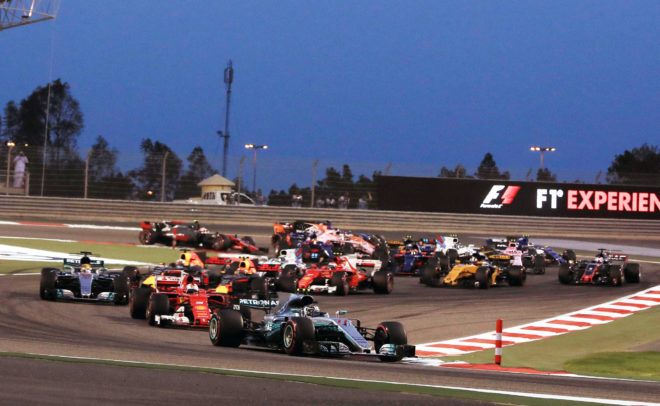
Ferrari eyeing success at Sakhir as Formula 1 heads to Bahrain

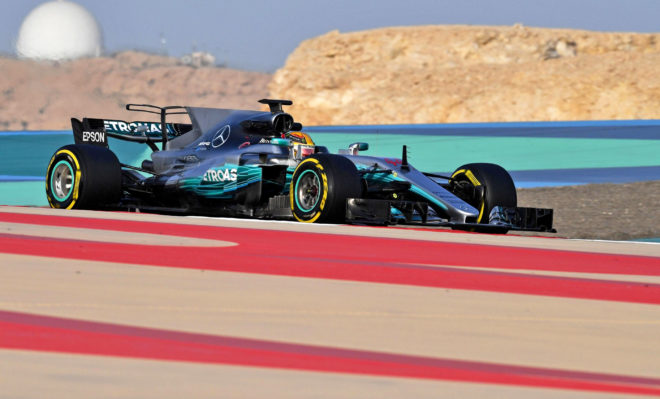
Photo: formula1.com Bahrain, April 6: It’s advantage Ferrari after round one in Australia. Now, Sebastian Vettel and his team hope to keep the pressure on as F1 warms up with a trip to the Bahraini desert this weekend, but at a track that’s been very kind to them in recent years, reigning World champions Mercedes will have other ideas.
Ferrari inflicted defeat on Mercedes for the second year in a row in Melbourne. Only this time, rather than the Prancing Horse outracing them, the Silver Arrows were the masters of their own downfall.
Having found the software bug that led to their strategic miscalculation, Mercedes will not let that happen again. But Lewis Hamilton – the man who lost victory in Australia – expects Ferrari to be “rapid” in the heat of Bahrain, suggesting round two of a record-breaking 21-race season will be even closer in pure pace terms.
And a two-team fight could become a three-team fight if Red Bull can show the same speed over a full race that Daniel Ricciardo displayed as he set the fastest lap in Melbourne. Bring it on…
The form book
Until last season, Mercedes had been in control at Sakhir during the V6 era, winning in 2014, 2015 and 2016. However, Vettel stopped the rot in 2017, gifting Ferrari their fifth victory at the circuit.
Hamilton, Vettel and Valtteri Bottas all led at different stages of last year’s race, and based on what we saw in Melbourne, we could witness similar again this year.
The potential jokers in the pack are Red Bull. Team Principal Christian Horner insists his team can mix it with Mercedes and Ferrari after showing strong pace in clear air in Australia, and the team have twice triumphed in Bahrain, in 2012 and 2013.
Behind ‘the big three’, Haas lived up to their billing as the likely surprise package in Melbourne and were on course to finish fourth and fifth before cross-threaded wheel nuts conspired against them.
Team Principal Guenther Steiner has vowed to ramp up pit stop practice ahead of this weekend to avoid a repeat. Having scored a fifth and an eighth in two visits to Bahrain, Haas have every chance of being at the front of the midfield again if they can keep it clean.
But one factor working against the American team is the development race. Expect changes to cars up and down the pit lane, with McLaren one of the teams making the most moves. The Woking squad are aiming to bring much of the package which failed to make it to Australia, while rivals Force India are set to introduce a new front wing – and that could lead to a slight shuffling of the pack.
Hamilton Milestones
Hamilton may have seen victory slip through his fingers in Australia, but second place was enough to stretch his point-scoring streak to 26 races. Another top-10 finish in Bahrain will equal Kimi Raikkonen’s all-time record. In the grand scheme of things, it may seem insignificant, but make no bones about it – it would be a mighty achievement.
Hamilton failed to convert pole into victory for the fifth time in seven attempts in Melbourne. In Bahrain, he has converted one of two poles into victory. If he can improve that record this weekend, he will surpass Michael Schumacher’s record of 40 wins from pole.
However, pole isn’t the be all and end all. In only one of the last five races here has the pole-sitter claimed victory (Hamilton in 2015). Lining up at the sharp end, though, is imperative as the race has never been won from outside the first two rows of the grid.
Hamilton will make more history just by starting the race. It will be his 100th for Mercedes, making him the first driver to reach 100 starts for two different teams – he made 110 starts for McLaren between 2007 and 2012.
Raikkonen poised for Finnish record
Speaking of Raikkonen, victory this weekend would move him ahead of Mika Hakkinen as the most successful Finnish driver in terms of race wins. The two are currently tied on 20. However, despite scoring eight podiums in 12 attempts at Sakhir, the Iceman has never found his way to the top step. He has also never qualified on the front row in the desert.
Vettel set to join 200 club
After making it to 100 career podiums in Melbourne, Vettel will make a bit more history this weekend by joining the 200 race starts club – the 18th driver to do so. The German has so far scored four World championships, 48 wins and 50 poles in 199 Grand Prix weekends. Another win here will boost the confidence around the halls of Maranello.
For the superstitious out there, victory in Bahrain takes on even greater importance as nine of the previous 13 winners in the desert have gone on to win the drivers’ title!
Alonso, McLaren win-drought
Fernando Alonso’s fifth place in Australia equalled McLaren’s best result in the previous three years with Honda. If they fail to win at Sakhir, as seems likely given their pace relative to Mercedes, Ferrari and Red Bull, it will be the first time in their history they have gone 100 races without victory. Their last triumph came in the 2012 Brazilian Grand Prix, courtesy of Jenson Button.
By coincidence, this weekend is also Renault’s 100th since their last Grand Prix victory. Only two teams have gone that long without a win and once again made it to the top step of the rostrum. Williams went 132 races between victory in Brazil 2004 and Spain 2012. Ligier started 231 between Canada 1981 and Monaco 1996. So, both Renault and McLaren have some way to go to snatch that unwanted record.
In Australia, Force India failed to score points with either car for the first time since the Monaco Grand Prix last May. If they can get back inside the top 10 in Bahrain and score 13 points or more, they will break the 1000-point barrier.
It has been a while since Marcus Ericsson last scored a point. In fact, it’ll be 50 races this weekend if he fails to make the top 10. Should he score again, he will set a record for the number of races between points finishes.
The circuit
Bahrain won the honour of bringing F1 to the Middle East in 2004 and since then has played host to a Grand Prix every year bar 2011.
Built on the site of an old camel farm, the 15-turn 5.412km Bahrain International Circuit features a mix of long straights and slow corners. Its stop-start nature makes traction important. It is also one of the best for overtaking, with opportunities at Turns 1, 3 and 11.
Hitting a barrier or wall is unlikely courtesy of the acres of run-off that engulf the circuit. But that means track limits will come into play. Put four wheels over the white line at the edge of the track and you risk a penalty from the stewards.
The track isn’t used all that often. Combine that with the venue’s desert location and you’ve got a recipe for low grip. Conditions improve as the weekend goes on as rubber is gradually laid down.
In 2014 the Bahrain Grand Prix became a twilight race, with the lights set to go out just after sunset this year. While temperatures drop as the race goes on, it is still one of the hottest of the year.
The timetable places more emphasis on second practice, as it is the only session to take place in the cooler conditions that are representative of qualifying and the race. First and third practice sessions are run earlier in the day when temperatures are much higher.
The tyres
Pirelli have nominated the same tyre choices as last year in Bahrain, bringing their medium, soft and supersoft tyres. But this year, all of the compounds are one step softer.
“Bahrain provides a very different challenge to Australia, but one of the things it has in common is that is quite a stop-start circuit characterised by longitudinal rather than lateral loads, which also means that it is rear-limited in particular,” said Pirelli Head of Car Racing, Mario Isola.
“Because of the abrasive surface and also thermal degradation we would expect more than one pit stop for most drivers, especially as the entire tyre range is softer this year and Bahrain has produced a variety of interesting strategies in the past.
“The race schedule, with track temperatures that fall considerably during the evening, means that teams need to maximise their learning from the sessions that are most representative and draw the most effective conclusions from the unusual track conditions in the evening.”
The forecast
Bahrain usually offers a chance to slap on sunscreen and dust off the sunglasses, and forecasts suggest this year will be no different. Sunny intervals are expected on Friday and Saturday with clearer skies set for Sunday. Temperatures will peak around 28C throughout, but drop quickly as the sun sets and the floodlights flicker on.
If recent trends are to be believed, the hotter conditions should play into the hands of Ferrari.
Source: formula1.com
-
Chairman and CEO Chase Carey presents initiatives for future of Formula 1 from 2021
Photo – Formula 1 Bahrain, April 6: Simpler, louder and road-relevant power units besides revenue distributed according to meritocracy were some of the key initiatives in a set of proposals for the future of the sport from 2021 that Chase Carey, Chairman and CEO of Formula 1 presented to the teams and the FIA in a meeting held at the Bahrain International Circuit, here today, according to a Formula 1 Press Release.
Chase Carey said: “Formula 1 is a sport with a rich history. We want to preserve, protect and enhance that history by unleashing F1s potential, by putting our fans at the heart of a more competitive and more exciting sport. We are driven by one desire: to create the world’s leading sporting brand; fan-centred, commercially successful, profitable for our teams, and with technological innovation at its heart.”
Key strategic initiatives
Power units (PU)
- The PU must be cheaper, simpler, louder; have more power and reduce the necessity of grid penalties.
- It must remain road relevant, hybrid and allow manufacturers to build unique and original PU. • New PU rules must be attractive for new entrants and Customer teams must have access to equivalent performance.
Costs
- We believe how you spend the money must be more decisive and important than how muchmoney you spend.
- While there will be some standardised elements, car differentiation must remain a core value • Implement a cost cap that maintains Formula 1 position as the pinnacle of motorsport with a state-of-the-art technology
Revenues
- The new revenue distribution criteria must be more balanced, based on meritocracy of the current performance and reward success for the teams and the Commercial Rights Holder.
- F1s unique, historical franchise and value must and will still be recognised.
- Revenue support to both cars and engine suppliers.
Sporting and technical rules & regulations
- We must make cars more raceable to increase overtaking opportunities.
- Engineering technology must remain a cornerstone but driver’s skill must be the predominant factor in the performance of the car.
- The cars must and will remain different from each other and maintain performance differentiators like aerodynamics, suspensions and PU performance. However, we believe areas not relevant to fans need to be standardised. Governance
- A simple and streamline structure between the teams, the FIA and Formula 1.
About Formula 1®
Formula 1® racing began in 1950 and is the world’s most prestigious motor racing competition, as well as the world’s most popular annual sporting series. The 2018 FIA Formula One World Championship™ runs from March to November and spans 21 races in 21 countries across four continents.
Formula One World Championship Limited is part of Formula 1 and holds the exclusive commercial rights to the FIA Formula One World Championship™. Formula1 is a subsidiary of Liberty Media Corporation (NASDAQ: LSXMA, LSXMB, LSXMK, BATRA, BATRK, FWONA, FWONK) attributed to the Formula One Group tracking stock.
The F1 FORMULA 1 logo, FORMULA 1, F1, FIA FORMULA ONE WORLD CHAMPIONSHIP, GRAND PRIX and related marks are trademarks of Formula One Licensing BV, a Formula 1 company: All rights reserved.
Formula 1 Press Release
-
Arjun Maini set to start F2 campaign at Sakhir; top quality grid promises thrilling action
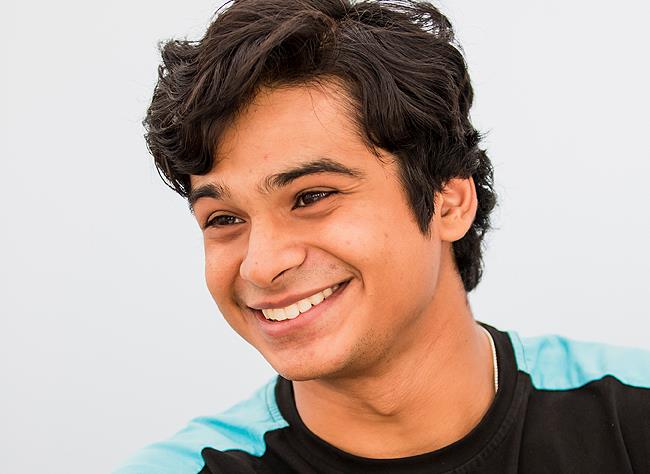
Arjun Maini….carrying Indian hopes. Photo: Formula 2 Bahrain, April 5: India’s Arjun Maini, who moved from GP3 series, will launch his campaign in FIA Formula 2, here at the Bahrain International Circuit in Sakhir this weekend, with Trident team, hoping to build on his fine showing during the pre-season testing at this very venue.
This year’s Formula 2 field is jam-packed with talent and 2017 runner-up Artem Markelov returns for another bite at the cherry along with fellow race-winners Nyck de Vries, Nicholas Latifi, Luca Ghiotto, Sergio Sette Camara and Antonio Fuoco.
Joining them is reigning GP3 Series winner George Russell along with fellow “Class of 2017” graduates Jack Aitken, Nirei Fukuzumi and Arjun Maini, as they all prepare for battle with the goal of becoming the 2018 F2 Champion.
The teams and drivers return to Bahrain, for the first of the 12 rounds, having completed a pre-season test at the venue two weeks ago. Rookie Maximilian Günther ended the test with the quickest time. The BWT Arden driver clocked in a 1:42.756 in the opening session of the final day, beating the benchmark set by Trident’s Arjun Maini in the previous morning.
With hot temperatures, Bahrain promises to deliver a challenging opening round for all the drivers, who will have to contend with plenty of tyre management – Pirelli providing the Soft and Medium compounds – and heavy braking zones. With the field proving to be close in testing, the first round of 2018 should be thrilling.
The 45-minute Free Practice session will be run on Friday, followed by the qualifying session later in the day under lights. Saturday will see the 32-lap feature race with the Sprint race (23 laps) on Sunday bringing the curtains down on the season-opener.
Some interesting Season Stats:
21.2 – The average age of this year’s drivers.
7 – The number of rookie drivers joining the 2018 grid, including last year’s GP3 Series Top 3.
7 – The number of different competition licenses held by this year’s 10 teams.
7,085 – The number of laps completed in both 2018 FIA F2 pre-season tests with the new F2 2018 car.This will be the first Formula 2 season with the brand new car, the F2 2018, which was conceived with the aim of better preparing drivers for contemporary Formula 1 while still retaining the characteristics required to provide fans with thrilling on-track action and great racing.
Last year’s champion Charles Leclerc underlined F2’s position as the ultimate feeder series to F1 by stepping up to an immediate race seat from which this year’s crop of young talents will draw inspiration as they seek to reach the pinnacle of international motorsport.
Mario Isola, Head of Car Racing at Pirelli, said: “Bahrain is a circuit that’s all about traction, so the drivers will have to manage their rear tyres in particular. Generally speaking, wear is not especially high in Bahrain, but unlike Formula 1, Formula 2 is often running in the heat of the day rather than the cooler conditions of the evening and so thermal degradation will certainly play a part.
“There haven’t been any big changes to the Formula 2 tyres since last year, but we modified the construction slightly to take into account the new turbo engine which generates more torque as well as the increased front downforce of the latest F2 chassis.
“Strategy as always will be very important. Formula 2 drivers don’t have to start the race using the tyres on which they qualify which opens up the possibility of different tactics. Charles Leclerc used an innovative strategy in the sprint race last year by making a pit stop. While it seems an unlikely option again, motorsport is a constant learning process for everyone, so I’m sure that all the teams will have paid close attention to see if they can learn anything from it for this year.”
Source: FIA Formula 2 Press Release
-
2018 Formula One Esports Series to commence on April 13
Paris, April 5: Formula 1, the pinnacle of motorsport, announced that the second season of the Formula 1 Esports Series will start on April 13. The teams who compete in this season’s FIA Formula One World Championship will set up their own Esports outfits to compete in the F1Esports Series 2018.
This season will be split in two parts – a qualifier and a Pro-series. In the first, online racers will be offered the incredible opportunity to earn a place on the official Esports driver line-up for one of the official F1 teams. Mercedes AMG Petronas Motorsport, Red Bull Racing, Force India F1 Team, Williams, Renault Sport F1 Team, Haas F1 Team, McLaren, Toro Rosso and Alfa Romeo Sauber F1 Team will all be offering positions in their Esports driver line ups.
The F1 Esports Series will see the World’s top online racers battle it out on F1 2017, the official game of the FIA Formula 1 World Championship, in an effort to win a place in the first-ever Pro Draft in July. This is where the official Formula 1 teams will select their drivers for the second part of the season.
Every team must select at least one of its drivers from the Pro Draft. F1 2017 players on the PlayStation 4 computer entertainment system, Xbox One and PC will be able to enter the first of the four qualifying events from April 13. The first event sees them take control of Valtteri Bottas’ Mercedes in Shanghai, hunting down a podium finish from sixth place with five laps remaining on a wet, but drying, track.
The fastest 10 players on each platform will then race off in a live-streamed event final, where the top three will qualify for the Pro Draft.
At the end of stage one, the top 40 drivers in the World will be eligible for selection by the Formula 1 teams for their respective Esports teams.
Stage two, which launches in September, will see the official Esports drivers represent their teams in the second half of the season, as they race in the three live events that will determine the 2018 F1 Esports Series Teams’ and Drivers’ World Champions with a prize fund of at least $200,000.
Following the success of the inaugural competition last year, which saw Great Britain’s Brendon Leigh crowned as the first-ever champion in Abu Dhabi, Formula 1 has renewed its partnership with Codemasters and Gfinity for the 2018 F1 Esports Series. Also, DHL have joined the Series as an official sponsor as part of the extension of their partnership with Formula 1.
Julian Tan, Head of Digital Growth & F1 Esports at Formula 1, said: “It has always been our goal to get the teams involved as soon as possible and we are delighted that they have recognised the potential of the F1 Esports Series at such an early stage. Last year’s series was a great success and demonstrated that there is a clear audience and interest in this innovative, exciting form of racing. We will continue to invest in the Esports Series as we feel it is a great way for us to interact and engage with a new audience.”
Frank Sagnier, CEO at Codemasters said: “Codemasters is extremely proud to be involved in the F1 Esports Series. The quality of the racing we saw during last year’s series was spectacular and the integration of the teams for the coming season is going to take the competition and its promotion to the next level. We strongly believe that Esports is a platform that allows us to engage with a wide, diverse audience in addition to our traditional gaming community.”
Neville Upton, CEO at Gfinity said: “We are excited to be retained by Formula 1 as the events partner. F1 and Codemasters maximised the true potential last year by fully integrating the F1 Esports Series into the final Grand Prix weekend in Abu Dhabi through both their linear TV partners and streaming platforms and we look forward to building on that success in season two with more events and broadcast opportunities.”
For more information on the F1 Esports Series, visit www.f1esports.com.
F1 Press Release
-
Top 10 finishes in opener puts McLaren team in positive frame for Bahrain
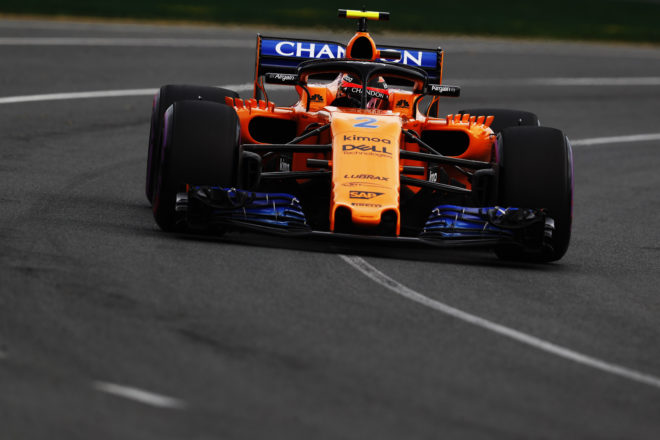
Photo – McLaren F1 team Bahrain, April 4: Having finished fifth after starting 10th on the grid at the Rolex Australian Formula One Grand Prix in Melbourne a fortnight ago, Fernando Alonso heads to Bahrain feeling positive, as also his McLaren team-mate Stoffel Vandoorne who made two places for a ninth place finish.
Fernando Alonso said: “After a positive start to the season I’m already really excited to head to Bahrain and get back in the car. Australia gave us a positive feeling and I hope we can continue that momentum as we head into these back-to-back races.
“I know the team is working hard back at the factory to push through the upgrades that are in the pipeline, as these, along with the development work we’re doing on the chassis and with the power unit, are what will be key to unlocking further performance from our car.
“We mustn’t get complacent – these two races in Bahrain and Shanghai are tough on the cars and it’s important that we maintain good reliability if we are to maximise our potential. The competition is very strong and we need to keep pushing forward for more points.”
Stoffel Vandoorne said: “I’m very happy to be heading to Bahrain on the back of a positive weekend for us in Australia. There’s a good feeling in the team and we’re all working hard to keep that going. We know there’s a lot to do and every race brings a new set of challenges.
“Bahrain is a great venue – it’s where I started my F1 career when I filled in for Fernando as reserve driver in 2016, and it’s an important race for us thanks to our shareholders. The weather is good and the later-than-usual programme for the weekend sets it apart from a lot of other tracks we visit.
“Racing from day to night always feels special and makes this grand prix so unique – it means it’s very different from Australia in terms of set-up so I’m keen to maximise track time to work on preparation with the engineers. Last year I had a lot of bad luck there reliability-wise so I’m hoping we can have better fortunes there this time around.”
Eric Boullier, Racing Director, said: “Bahrain is an exciting event for the whole team and a special venue for McLaren. It’s our second home due to the team’s ownership and we always receive a fantastic welcome from our Bahraini hosts. The facilities are world-class and it’s a very enjoyable venue at which to host a Grand Prix.
“The back-to-back races of Bahrain and China pose very different challenges, and, given that most of our personnel don’t travel back to the UK between them, both logistics and car development are two tricky issues that everyone needs to get on top of.
“Speaking of car development, we’re working hard to bring updates to the next two grands prix, which we hope will help our boys continue to put up a good fight. As we saw in Melbourne, our competition is tough. We can’t take anything for granted and we know that despite a stronger performance than we’ve seen in recent months, we also benefitted from circumstances around us. Our principal targets are further up the grid ahead of us, so we know there’s work to do and our focus is on the development race as well as the race on track.
“The result at Albert Park was a boost that we all needed, but now we must move on, look firmly ahead and keep pushing forward.”
A run-down on the race from McLaren team’s perspective:
The toughest corner is Turn 10, a downhill left-hander taken in second gear (85kmph/53mph). The cars are simultaneously turning left and braking, which makes it easy to lock the unloaded inside front wheel. The drivers need to drive in a progressive and controlled fashion because the second DRS zone follows and a good exit is vital.
Temperatures: In 2014, the time of the race was switched from day to night, from 14:00hrs to 18:00hrs. The race starts seven minutes after sunset, meaning the track and ambient temperatures drop as the race progresses. That alters the balance of the cars and affects tyrewear.
The Bahrain International Circuit is the only track on the calendar that is located in a desert. It is windy and sand from the surrounding wilderness gets blown onto the track surface, which affects grip levels and forces the teams to attach filters onto the brake and engine inlets.
Brakes: There are eight significant braking zones, the toughest of which are into Turns One and 14. It is also the first hot race of the year and the combination of high ambient temperatures and heavier cars (734kg) means brakes will need to be monitored closely during the race.
Fuel consumption: The cars use 1.8kg of fuel per lap, which is high. Without a Safety Car period, it will be difficult for the cars to make the end of the race without some degree of fuel saving. Fuel consumption is negatively affected by the large number of acceleration zones from low speed.
Aero balance: The cars run in a medium downforce configuration. The aero balance is slightly different to elsewhere on the calendar because the cars are set-up to under-steer in an effort to protect the rear tyres
McLaren Press Release
-
ŠKODA Motorsport with Kopecký, Veiby well prepared for 10,000 corners of Tour de Corse
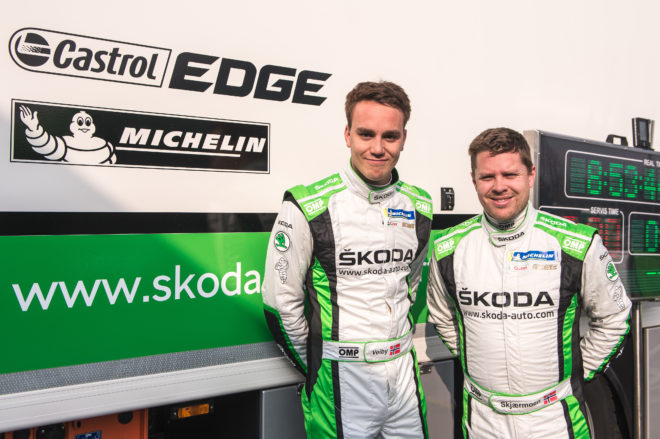
Ole Christian Veiby (left) and Stig Rune Skjaermœn. Photo: SKODA AUTO Mladá Boleslav, March 30: For the first time in the 2018 season of the FIA World Rally Championship, ŠKODA Motorsport factory crews Jan Kopecký / Pavel Dresler (CZE/CZE) and Ole Christian Veiby / Stig Rune Skjaermœn (NOR / NOR) face pure tarmac roads on the fourth round of the WRC 2, the Rally France / Tour de Corse (April 5-8), also known as the “Rally of the 10.000 corners”.
While Kopecký and Veiby successfully honed their tarmac driving skills in the opening round of the Czech Championship, the Rally Valašská, two weeks before, the ŠKODA FABIA R5 got an engine upgrade, improving engine power, performance and torque.
Kopecký said: “I finished second in the WRC 2 category in Corsica in 2016. And in 2011, 2012 and 2013 I also achieved a second place each time. Last year, I had some power steering issues, which cost me the chance to fight for a podium result. Now I want to take a revenge for last year’s mishap.”
Ahead of the Tour de Corse, the Czech champion prepared himself with a special asphalt warm-up, scoring a dominant win with his ŠKODA FABIA R5 at the first round of the Czech Rally Championship 2018, the Rally Valašská.
Kopecký, who won the WRC 2 category at Rally Monte Carlo, the opening round of the 2018 FIA World Rally Championship (WRC), could take the lead in the 2018 WRC 2 championship standings by winning in Corsica.
Team-mates Ole Christian Veiby and co-driver Stig Rune Skjaermœn prepared themselves as well on the Rally Valašská by finishing in third place. “I did not compete on tarmac since the Tour de Corse last year, so it was a welcome experience to get the feeling again for the ŠKODA FABIA R5 on asphalt. After my fifth place in 2017, I want to achieve another top result,” said Veiby.
Not only the crews but also the ŠKODA FABIA R5 are travelling well prepared to the Mediterranean island. To maintain the global success of the ŠKODA FABIA R5, the ŠKODA Motorsport recently upgraded the currently most successful rally car in its category.
ŠKODA Motorsport boss Michal Hrabánek explains: “In the past, our work on the ŠKODA FABIA R5 focused on reliability. As a result, none of the factory cars had to retire due to technical issues so far. Thanks to the presence of our works team in the FIA World Rally Championship, we got the experience to continuously develop the car making the FABIA R5 the best car in its category.
“In 2018, we are facing new R5 cars from our competitors. As a result, we are now offering an engine upgrade to our customer teams which improves torque, power output, drivability and the throttle response of the engine. At the Tour de Corse, Jan and OC will benefit from this upgrade which offers on top of that nine horse powers more.”
The Rally France / Tour de Corse features only 12 timed stages which are notorious for their length and the fact that virtually no straight is longer than 50 metres. Hence, the organisers call it the “Rally of the 10.000 corners”. Nevertheless, the competitive mileage sums up to more than 333 kms.
On Sunday, the penultimate monster test Vero – Sarrola – Carcopino will bring men and machine to their limits on a grueling, non-stop sequence of corners over more than 55 Kms. The winner will reach the island’s capital Ajaccio at 3 pm on the “Place du Diamant”.
ŠKODA Motorsport Overview
ŠKODA has been successful on the motorsport scene since 1901. Be it on the circuit or in rallies, ŠKODA has celebrated victories and won titles all around the world. Historical highlights include winning the title in the FIA World Rally Championship (WRC 2) for the first time in 2016, numerous title wins in the FIA European Rally Championship (ERC), the FIA Asia-Pacific Rally Championship (APRC) and the Intercontinental Rally Challenge (IRC), as well as the victory in the European Touring Car Championship in 1981. ŠKODA teams have also triumphed in the world’s oldest and most famous rally, taking several class victories in the legendary Monte Carlo, which was first held in 1911.
The ŠKODA FABIA R5, a high-tech 4×4, was homologated by the International Automobile Federation FIA on 1 April 2015. ŠKODA’s new FABIA R5 is successfully continuing the long tradition of ŠKODA Motorsport. Its predecessor, the FABIA Super 2000, won 50 national and international titles around the world. In the FIA World Rally Championship (WRC 2) 2016, Esapekka Lappi / Janne Ferm (FIN/FIN) won the title for the Czech car maker. In total, 10 of the 2016 season’s races in the World Rally Championship were won by a ŠKODA FABIA R5.
ŠKODA drivers Gustavo Saba (PRY) and Gaurav Gill (IND) also won the continental championships in South America and the Asia-Pacific region at the wheel of the successful ŠKODA FABIA R5. Nasser Al-Attiyah (QAT) was unbeatable in the Middle East Rally Championship (MERC) while a further 10 national titles also went the way of ŠKODA drivers.
The 2017 season was the most successful year in the history of ŠKODA Motorsport. Works duo Pontus Tidemand / Jonas Andersson (Swe/Swe) became WRC 2 Champions, ŠKODA Motorsport won the Team Championship. Jan Kopecký / Pavel Dresler (CZ/CZ) won the Czech Rally Championship (MČR) for the third time in a row and are the spearhead of in total 14 crews winning their country’s national titles. Furthermore, the FIA Asia-Pacific Rally Championship (APRC), the FIA South American Rally Championship (CODASUR) and the FIA African Rally Championship (ARC) have been won by teams competing in a ŠKODA FABIA R5.
ŠKODA AUTO
- Is one of the longest-established vehicle manufacturers in the World. The company was founded in 1895 during the pioneering days of the automobile. Today, the company’s headquarters remain in Mladá Boleslav
- Offers the following models in the range: CITIGO, FABIA, RAPID, OCTAVIA, KAROQ, KODIAQ and SUPERB
- In 2017, delivered more than 1,2 million vehicles to customers Worldwide
- Has belonged to Volkswagen Group since 1991. The Volkswagen Group is one of the most successful vehicle manufacturers in the world. ŠKODA, in association with the Group, independently manufactures and develops vehicles, as well as components, engines and gear transmissions
- Operates at three locations in the Czech Republic, produces in China, Russia, Slovakia, Algeria and India mainly through Group partnerships, as well as in Ukraine and Kazakhstan through local partners
- Employs over 35,000 people globally and is active in more than 100 markets
Skoda Motorsport release
-
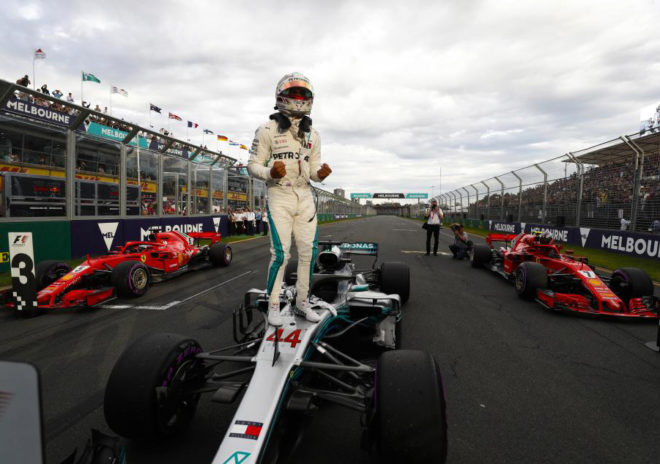
Hamilton powers to Melbourne pole ahead of Ferraris as Bottas crashes out
Lewis Hamilton celebrating pole position in Melbourne on Saturday. Photo: FIA Melbourne, March 24: Lewis Hamilton took his first pole position of the 2018 season in imperious fashion, beating Ferrari’s Kimi Räikkönen and third-placed Sebastian Vettel by nearly seven tenths of a second. It was a bittersweet session for Hamilton’s Mercedes team, however, as the defending team-mate, Valtteri Bottas, crashed out heavily at the start of the final session.
Räikkönen set the pace early in Q1, eventually rising to a time of 1:23.096s ahead of the Red Bulls of Daniel Ricciardo and Max Verstappen. The order changed when Hamilton began to put together laps and five minutes before the flag the defending champion jumped to the top of the order with a lap of 1:22.824.
That put him 0.272 ahead of Räikkönen who finished ahead of Sebastian Vettel and the Red Bulls Verstappen and Ricciardo.
At the lower end of the order, it looked like Toro Rosso’s Brendon Hartley was going to prop up the table, as he sat in P20 ahead of the final runs. The New Zealander rose to the challenge, though, and put in a superb final flyer to climb up the order. His time of 1:24.532 was only good for P16, however, and he missed out on progress to Q2 by just 0.029s, as Force India’s Esteban Ocon scraped through in P15.
Eliminated behind Hartley were the Saubers of Marcus Ericsson and Charles Leclerc in P17 and P18 respectively, while Williams’ Sergey Sirotkin went out in P19 ahead of the second Toro Rosso of Pierre Gasly who had an off on his final run.
Q2 saw Verstappen set the first quick lap on supersofts, but that of the ultra soft-shod Räikkönen quickly bypassed his lap of 1:22.830. This time top honours went to Vettel, with the Ferrari driving rising to P1 with a second-run time of 1:21.944. That put him a tenth clear of Hamilton, who stayed on his first-run time of 1:22.051. Bottas took third ahead of Verstappen and Ricciardo.
Alonso was the main driver to miss out. Ahead of the final runs the Spaniard sat in P7, but once the final times came in the McLaren driver had been edged out to P11, some 1500ths of a second behind 10th-placed Nico Hulkenberg of Renault.
Alonso’s McLaren team-mate Stoffel Vandoorne was meanwhile eliminated in P11 ahead of Force India’s Sergio Perez, Stroll and Ocon.
Q3 began in dramatic fashion, with the first runs being interrupted by a red flag being shown when Bottas crashed heavily in Turn 2. The Finn lost control on the approach to the corner and broadsided the wall, causing severe damage to his Mercedes.
When running resumed, Hamilton led the way, with a time identical to his Q2 best. That left him just three hundredths of a second clear of Vettel, with Verstappen third ahead of Räikkönen and Ricciardo.
In the second runs, though, Mercedes turned up the heat and Hamilton simply powered ahead, taking almost nine tenths of a second out of his first-run time to claim his 73rd career pole position with a time of 1:21.194.
Räikkönen took second place, though the Finn was 0.664s behind Hamilton. Vettel was third, just one hundredth of a second behind his Ferrari team-mate.
Ferrari were pushed hard, however, by Red Bull Racing who looked closer to the Italian team than last season. Verstappen qualified just four hundredths of a second behind Vettel, with Ricciardo fifth on a time of 1:22.152.
Behind them, Haas confirmed their dark horse status, with Kevin Magnussen taking sixth place ahead of team-mate Romain Grosjean. Hulkenberg was eighth ahead of Renault team-mate Sainz, while the unfortunate Bottas qualified 10th.
2018 Australian Grand Prix – Qualifying:
- Lewis Hamilton (Mercedes) 1:21.164
2. Kimi Raikkonen (Ferrari) 1:21.828
3. Sebastian Vettel (Ferrari) 1:21.838
4. Max Verstappen (Red Bull Racing) 1:21.879
5. Daniel Ricciardo (Red Bull Racing) 1:22.152
6. Kevin Magnussen (Haas) 1:23.187
7. Romain Grosjean (Haas) 1:23.339
8. Nico Hulkenberg (Renault) 1:23.532
9. Carlos Sainz Jr. (Renault) 1:23.577
10. Valtteri Bottas (Mercedes)
11. Fernando Alonso (McLaren) 1:23.692
12. Stoffel Vandoorne (McLaren) 1:23.853
13. Sergio Perez (Force India) 1:24.005
14. Lance Stroll (Williams) 1:24.230
15. Esteban Ocon (Force India) 1:24.786
16. Brendon Hartley (Toro Rosso) 1:24.532
17. Marcus Ericsson (Sauber) 1:24.556
18. Charles Leclerc (Sauber) 1:24.636
19. Sergey Sirotkin (Williams) 1:24.922
20. Pierre Gasly (Toro Rosso) 1:25.295
FIA News
- Lewis Hamilton (Mercedes) 1:21.164
-
Drivers’ safety: Biometric gloves make F1 debut
Melbourne, March 24: Starting from this weekend’s Australian Grand Prix, the FIA is introducing a new race glove into Formula One that sends potentially life-saving data from driver to medical crew.
The gloves will be worn by every F1 driver and monitor their vital signs during the race via a flexible 3mm sensor stitched into the palm area of the fabric. The FIA has worked closely with F1 glove manufacturers Puma, OMP, Alpinestars and Sparco to integrate these sensors into fire-resistant clothing for the first time.
Initially, the optical sensor will measure ‘pulse oximetry’, or the amount of oxygen in the blood, alongside the pulse rate, enabling the trackside medical team to receive important information as soon as there is an incident. This is potentially important in the context of a racing driver because if they have an injury that is affecting breathing, the oxygen content of the blood will diminish rapidly.
Drivers’ Safety is of paramount importance for the FIA, and together with its Research Body, Global Institute, alongside its doctors and engineers, it has been examining how state-of-the-art technology could help medical teams and drivers.
Biometric data helps to assess the driver’s conditions before, at the time of the crash and after the crash as far as the rescue operations are concerned. Further developments in this area are planned throughout the season to improve the device and set new benchmarks for motor sport safety.”
The project is the result of a partnership between the Global Institute and Signal Biometrics Ltd, the company set up by Dr Ian Roberts and the engineer Alain van der Merwe, who have both been involved in Formula One with the FIA for many years respectively as FIA F1 Deputy Medical Delegate and FIA F1 Medical Car Driver.
Ian Roberts said: “We know that the monitoring of people is essential in terms of their medical care and drivers in incidents are no different. We would like to start monitoring and assessing them as soon as we possibly can. There are also times when the driver isn’t immediately accessible to us, so if we can’t see him or we’re not actually next to him, there’s limited information that we can get.”
F1 driver Carlos Sainz’s accident during the 2015 Russian GP is a case in point. The Spaniard lost control of his Toro Rosso at Turn 13 during the third practice session and hit the barrier head-on at 153km/h. Fortunately, Sainz was unhurt, but it was difficult for the F1 medical team to know this, as the first row of the barrier came to rest on top of the driver. So when they arrived at the scene, they found that they had limited contact with him and had to wait until the barrier was removed from the car before a more direct medical assessment could begin.
With this new technology, the moment a driver has an incident, the trackside medical team will receive physiological readings and biometrics, so he is continually monitored from point zero right through to the initial response and on to the medical centre.
Alan van der Merwe added: “This will enable monitoring of the driver not only when still in the car, but also offer the benefit of continuous monitoring during patient transport.”
Going forward, there are already plans to implement sensors for respiratory rate and temperature. In addition to the safety benefits, these will help teams and drivers with performance monitoring. Respiratory rate gives a very good indication of a driver’s state of health and stress, while temperature is well known for affecting performance.
F1 is just the first step for the device in motor sport as the idea is to filter down the technology to other championships.
FIA News
-
Karan Kadam wins Round 4: MRF National Supercross
Kolhapur, 23 August 2017: Young TVS rider Karan Kadam of Bengaluru won the best rider title in the fourth round of the MRF National Supercross Championship at the Mohite Racing Academy track near Tamgaon village in Karvir tehsil on Sunday August 20?.
The 17-year-old rider secured 40 points in the fourth round in the ‘A’ group and lifted the best rider title. The fourth round of the M R F national championship was conducted here jointly by the Mohite Racing Academy and Sports Track, Pune, in eight different groups.
The fifth round of the tournament will be held in goa on October 14, and the sixth and final round will be held at Bangalore on December 9.
-
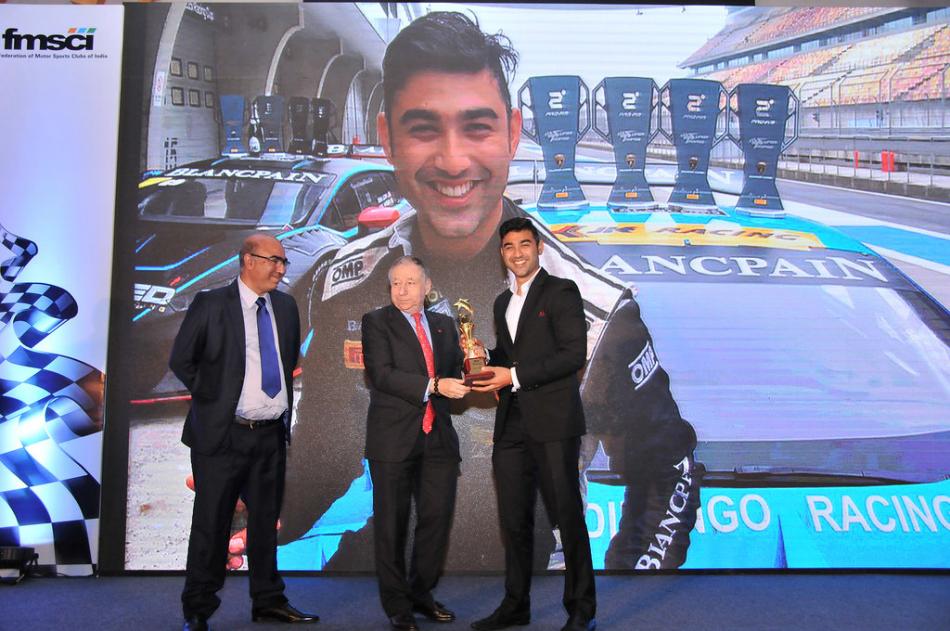
FMSCI awards 2016: Gaurav Gill awarded
FMSCI has a long history and has firmly established the concept of motor sport in India, spreading the passion far and wide. It has discovered many talented racers and helped them make a name for themselves. Every year FMSCI conducts an Annual Awards Function to acknowledge and celebrate such champions.
“There is enormous possibility in India for the enhancement of racing culture,” said FIA President Jean Todt at this year’s event. “It is a fascinating country to race in. But to develop motor sports road safety should also be given utmost priority.”
Among the many prize winners at the event were Gaurav Gill (FIA APRC Rally Champion 2016), who was awarded the coveted Motor Sport Person of the Year award. The Lifetime Achievement Award went to B. Vijayakumar while D. Vidyaprakash was celebrated with a presentation for his 50 years in motor sport. Indian motor sport’s most outstanding women, such as Bani Yadav, Sneha Sharma, Aishwarya Pissay , Mira Erda and Shruthi Nagarajan were also honoured with the Outstanding Women in Motor Sport Award.
Akbar Ebrahim, President of FMSCI added that Indian races need more international participants which would be of help to the Indian drivers. “Indian motor sport is on a good platform,” he said. “Our job right now is to ensure that we are stable here. We need to make motor sport more vibrant”.“I hope that sooner or later India can soon add to its motor sport calendar and a host a big city FIA Formula E race,” added Todt.